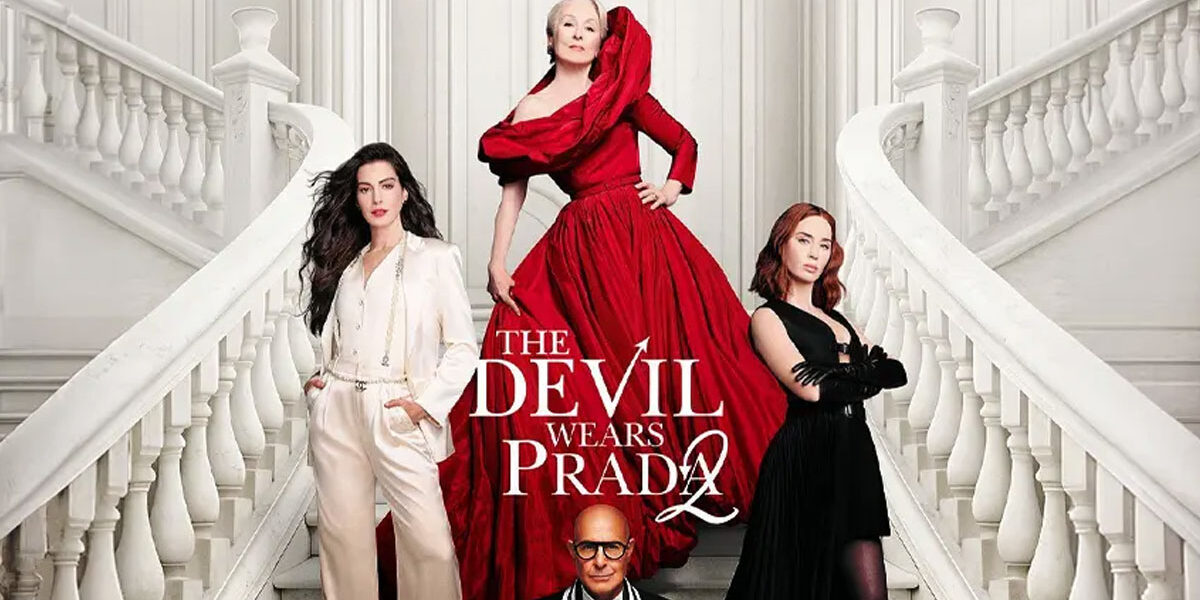
It has been exactly two decades since a little movie about cerulean sweaters, impossibly demanding bosses, and the cutthroat world of high fashion completely dominated the cultural zeitgeist. Now, twenty years later, the queens of Runway magazine have returned to the silver screen. If you’re searching for a comprehensive The Devil Wears Prada 2 review, you have come to the right place. Today, as the film officially hits US theaters, we are unpacking whether this long-awaited sequel is a stunning haute couture masterpiece or just a cheap knockoff from the bargain bin.
Let me be perfectly honest with you right out of the gate: walking into the theater, my expectations were a complicated mix of desperate excitement and deep-seated dread. Sequels to beloved classics, especially those separated by decades, often feel like unnecessary cash grabs that tarnish the legacy of the original. However, sitting in the dark theater as the familiar, albeit slightly remixed, opening notes played, a wave of pure, unadulterated nostalgia washed over the audience. But is nostalgia enough to carry a two-hour film in 2026? Let’s break it down.
The Magnetic Pull of the Original Cast
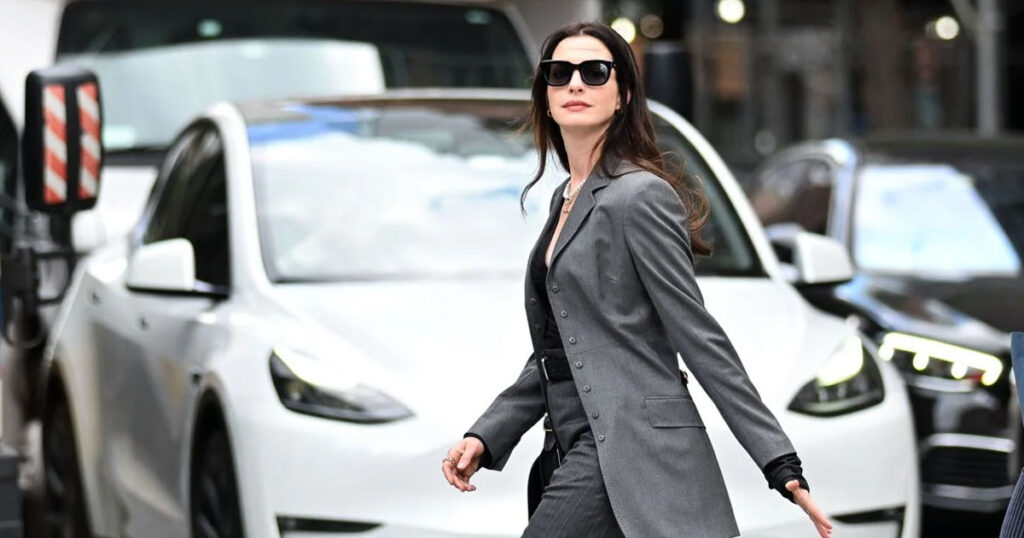
Let’s start with the absolute highlight of the movie, and a point where almost every The Devil Wears Prada 2 review is in complete agreement: the cast. The chemistry between Meryl Streep, Anne Hathaway, Emily Blunt, and Stanley Tucci is not just intact; it has aged like a fine, extremely expensive vintage wine.
Meryl Streep slips back into the icy, terrifying, yet magnetically brilliant persona of Miranda Priestly with effortless grace. But this isn’t exactly the Miranda we left behind in 2006. Streep infuses the character with a new layer of vulnerability. Now in her seventies, Miranda is navigating a media landscape that doesn’t just challenge her authority—it actively tries to render her obsolete. Her micro-expressions, the subtle tightening of her jaw when faced with a teenage TikTok fashion influencer, and her quiet resilience provide some of the best acting you will see this summer.
Anne Hathaway’s Andy Sachs has also evolved wonderfully. She is no longer the wide-eyed, slightly judgmental outsider in sensible shoes. Andy is now a formidable force in the journalism world, carrying her own emotional baggage and professional scars. Watching her toe-to-toe interactions with Miranda—now as an equal rather than a terrified subordinate—is wildly satisfying. And Emily Blunt? She steals absolutely every scene she is in. Emily Charlton is sharper, more cynical, and delivers witty, venomous one-liners with a comedic timing that reminds us why she became a superstar in the first place.
Satirizing the Modern Media Circus
Where the original film tackled the exclusivity and brutality of the print magazine era, this sequel takes a sharp, satirical scalpel to the digital age. The screenplay does a surprisingly excellent job of portraying the current state of journalism in 2026. We see the very real, very depressing realities of dying print media, the rise of algorithm-obsessed corporate overlords, and the relentless pressure to create “snackable content” at the expense of true art.
The movie doesn’t pull its punches when commenting on how the fashion industry has been hijacked by fast fashion, viral internet trends, and influencers who care more about their ring lights than the construction of a garment. It’s a clever, biting commentary that gives the film a relevant edge, ensuring it doesn’t just rely on the glory days of the 2000s.
The Flaws in the Fabric: Where the Sequel Stumbles
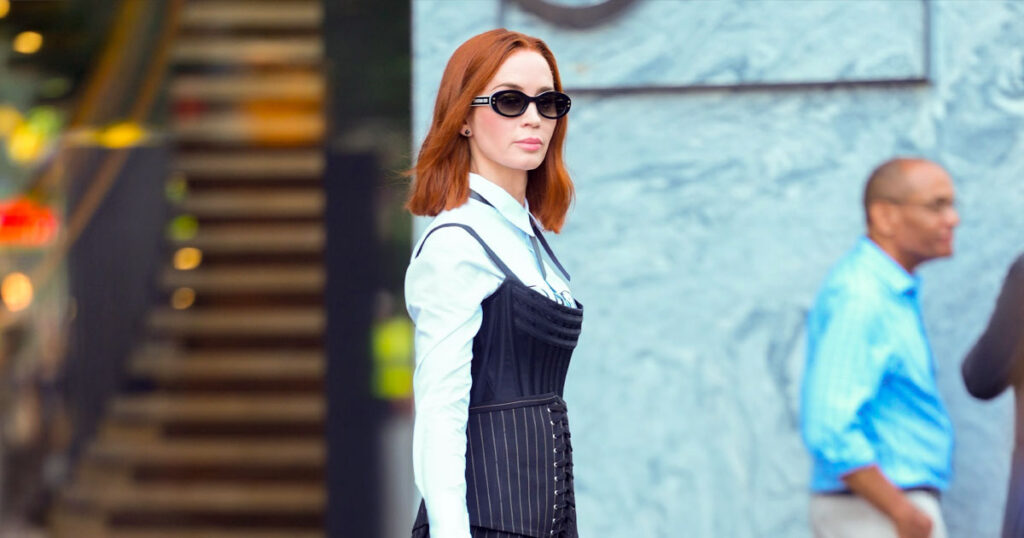
However, as we dive deeper into this The Devil Wears Prada 2 review, we have to address the elephant in the fitting room. The movie is far from perfect, and it suffers from a few glaring missteps that keep it from reaching the iconic status of its predecessor.
Firstly, there is the undeniable feeling of déjà vu in the third act. Without giving away major spoilers, the narrative structure leans far too heavily on the exact same conflict resolution beats we saw twenty years ago. The central conflict between personal integrity and professional ambition is rehashed in a way that feels a bit too safe. It’s as if the writers were terrified of alienating the original fanbase, so they essentially traced over the original blueprint rather than daring to design something entirely new.
Then, there is the visual aesthetic. Several critics and fans on social media have rightfully pointed out that the cinematography suffers from what is commonly known as the “Netflix look.” Despite having a massive budget, the lighting often feels flat, overly bright, and lacks the rich, cinematic contrast that made the 2006 film feel so glamorous and tactile. The clothes are still stunning—kudos to the costume department for pulling off miracles—but the way they are filmed sometimes feels more like a high-end television commercial than a major motion picture.
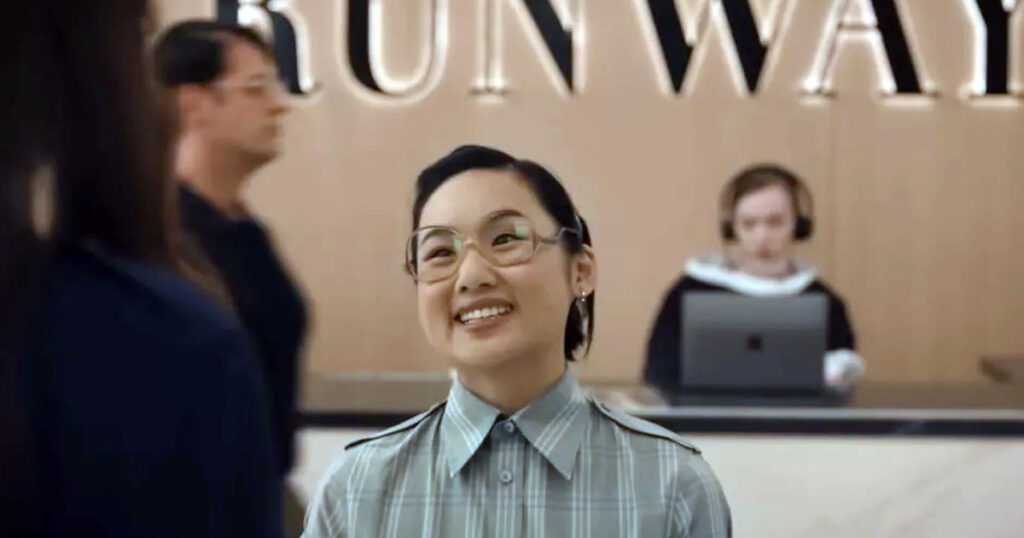
Furthermore, we cannot ignore the controversy surrounding the character of Jin Chao, played by Helen J. Shen. In an era where Hollywood has made significant strides in diverse representation, the writing for her character feels oddly regressive. Jin is written with heavy-handed tropes—the socially awkward, heavily bespectacled, overly serious Asian tech-nerd—which feels totally out of place in a 2026 narrative. It’s a distracting and disappointing creative choice that has rightfully earned the ire of audiences on platforms like X and TikTok. It stands out as a glaring smudge on an otherwise beautifully tailored garment.
The Wardrobe: A Character of Its Own
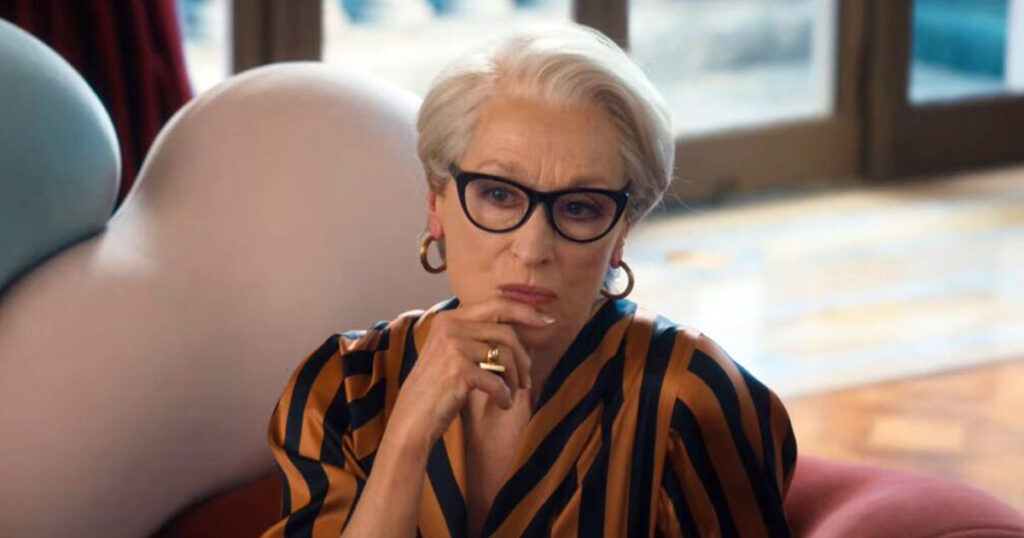
We can’t talk about this franchise without dedicating a moment to the fashion. The costume design is, as expected, spectacular. It perfectly balances archive designer pieces with futuristic, cutting-edge 2026 trends. You will find yourself pausing (or wishing you could pause) just to take in the details of Miranda’s power suits and Emily’s impossibly chic, avant-garde office wear. The film knows exactly what its audience wants visually, and it delivers a feast for the eyes that will undoubtedly launch a thousand Pinterest boards and TikTok fashion breakdowns.
The Final Verdict
To wrap up our The Devil Wears Prada 2 review, it’s clear that this sequel is a beautiful, deeply entertaining, yet slightly flawed creation. If we look at the broader cultural conversation—merging the steady 75% approval rating on Rotten Tomatoes with the enthusiastic, meme-filled reactions across social media—the consensus is surprisingly unified.
We at the site wholeheartedly agree with the general sentiment: The Devil Wears Prada 2 doesn’t reinvent the wheel, nor does it quite capture the lightning-in-a-bottle magic of the original masterpiece. The third act plays it too safe, and some character tropes feel undeniably dated. However, the sheer gravitational pull of seeing Streep, Hathaway, Blunt, and Tucci back together, firing on all cylinders, is worth the price of admission alone. It is a razor-sharp, delightfully bitchy, and surprisingly poignant look at aging, ambition, and the changing tides of the media world.
It may not be the groundbreaking cinematic event of the decade, but it is undeniably the perfect, stylish summer popcorn movie we didn’t know we needed. Grab your largest iced coffee, put on your best sunglasses, and enjoy the reunion. That’s all.