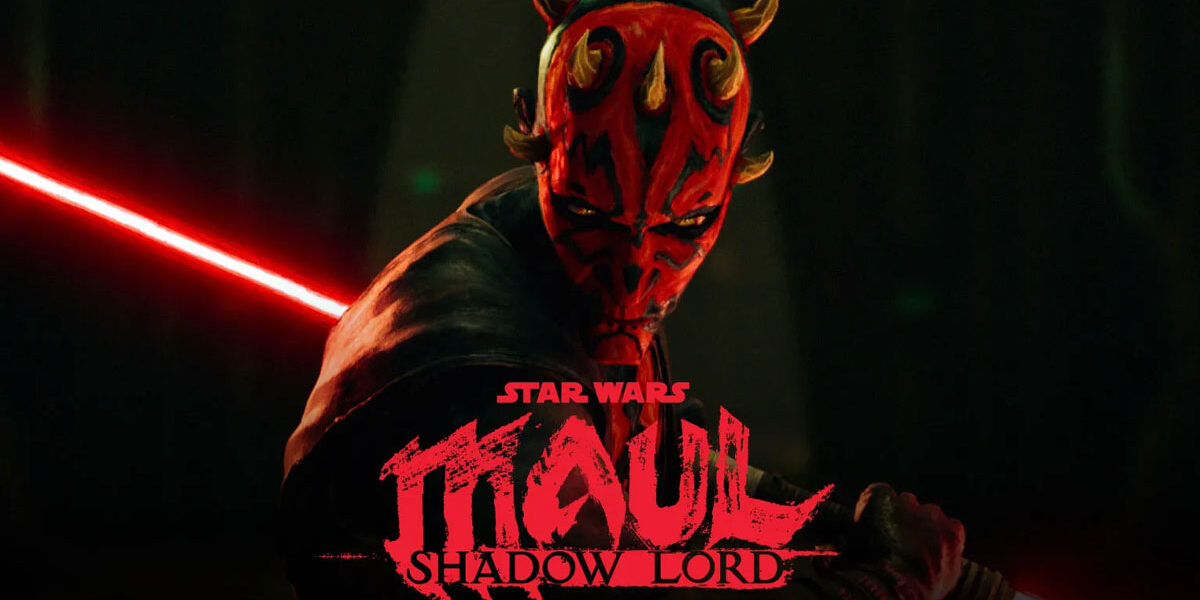
If there is one thing the Star Wars universe has proven over the past decade, it is that some villains are simply too fascinating to stay dead. Lucasfilm Animation has struck gold once again, delivering what is arguably one of their most mature and visually stunning projects to date. When the highly anticipated Maul Shadow Lord premiered on Disney+, fans were unsure of what to expect. Would it be a rehash of The Clone Wars? A simple filler story? The answer is a resounding no. This series is a dark, gritty, and deeply emotional character study of a broken warrior trying to carve out a place in a galaxy that has repeatedly chewed him up and spat him out.
From its breathtaking lightsaber choreography to its rich noir atmosphere, Maul Shadow Lord is a masterpiece of animated storytelling. Today, we are breaking down every aspect of the series, pinpointing exactly where it fits in the Star Wars timeline, analyzing the lingering mysteries it leaves behind, and dissecting that explosive ending that is already setting the stage for highly anticipated future projects.
The Timeline: Where Does the Series Fit?
To fully appreciate the gravity of the narrative, we must first establish exactly where Maul Shadow Lord sits within the complex Star Wars timeline. The series takes place roughly one year after the tragic events of Revenge of the Sith and the finale of The Clone Wars. In the official timeline, this places the show around 18 BBY (Before the Battle of Yavin).
This is a profoundly dark era for the galaxy. Order 66 has just wiped out the Jedi Order, and the Galactic Empire is tightening its iron-fisted grip on the core worlds and the Outer Rim. For Maul, this is a period of immense vulnerability. His former criminal empire, the Shadow Collective, has fractured. His brother, Savage Opress, and his mother, Talzin, are dead. He has been entirely discarded by his former master, Darth Sidious.
Chronologically, the series acts as a vital bridge. It connects the manic, war-torn Maul we saw escaping Mandalore during The Clone Wars to the powerful, calculating crime boss we see briefly at the end of Solo: A Star Wars Story (set around 10 BBY), and ultimately, to the desperate hermit Ezra Bridger finds on Malachor in Star Wars Rebels (3 BBY). By placing the story right at the dawn of the Empire, the creators have given themselves a massive sandbox to explore the criminal underworld without the immediate interference of the Jedi.
A Visual and Thematic Triumph
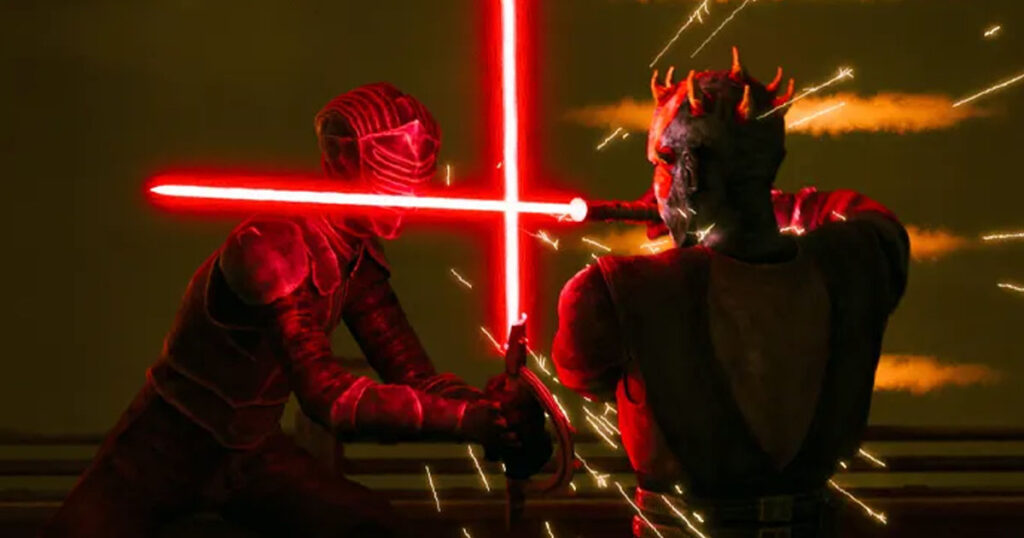
Let’s talk about the sheer quality of the production. Fans across the internet, particularly in massive Reddit communities, have been absolutely raving about the animation style. It represents a significant evolution from the already stellar final season of The Clone Wars and The Bad Batch. The backgrounds look like living concept art, and the character models move with a heavy, deliberate realism that grounds the action.
The tone is undeniably mature. This is not a show designed strictly to sell toys to young children; it is a space-noir detective story wrapped in Sith mythology. The series introduces us to fascinating original characters like Lawson, a former bounty hunter turned cynical survivor whose modified blasters and trench-coat aesthetic give the show a gritty, Blade Runner-esque vibe.
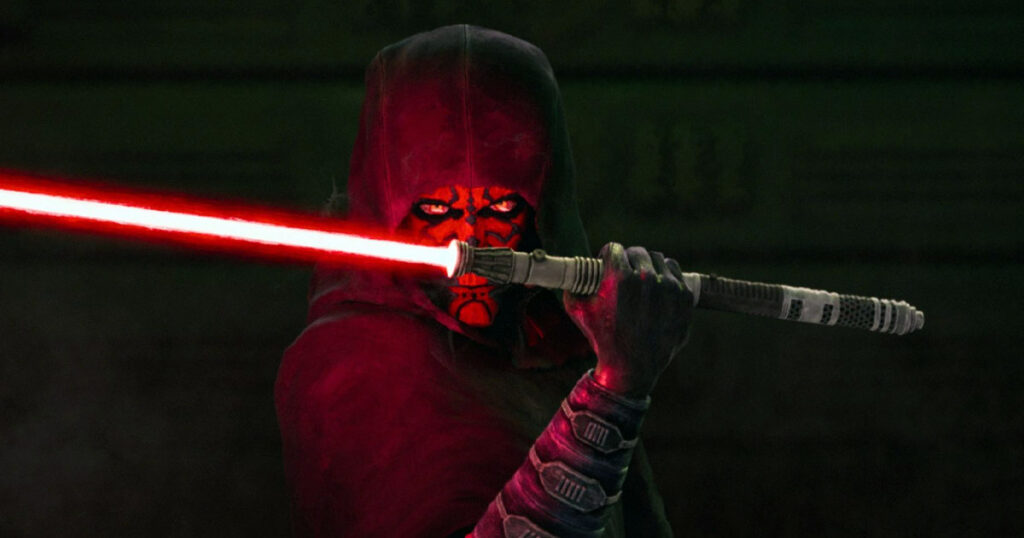
But the absolute highlight is the action. The lightsaber choreography is some of the best ever put to screen, live-action or animated. A standout moment that broke the internet was the intense duel on the moving tram in the middle of the season. The animators managed to make Maul’s movements feel heavier, more violent, and less disciplined than his prequel-era acrobatics. He fights like a wounded animal. In a brilliant audio detail, sound designers incorporated actor Sam Witwer’s agonizing screams into the very hum and clash of the lightsaber swings, perfectly illustrating the canonical agony of a “bled” red kyber crystal.
Character Arc: The Tragedy of a Monster
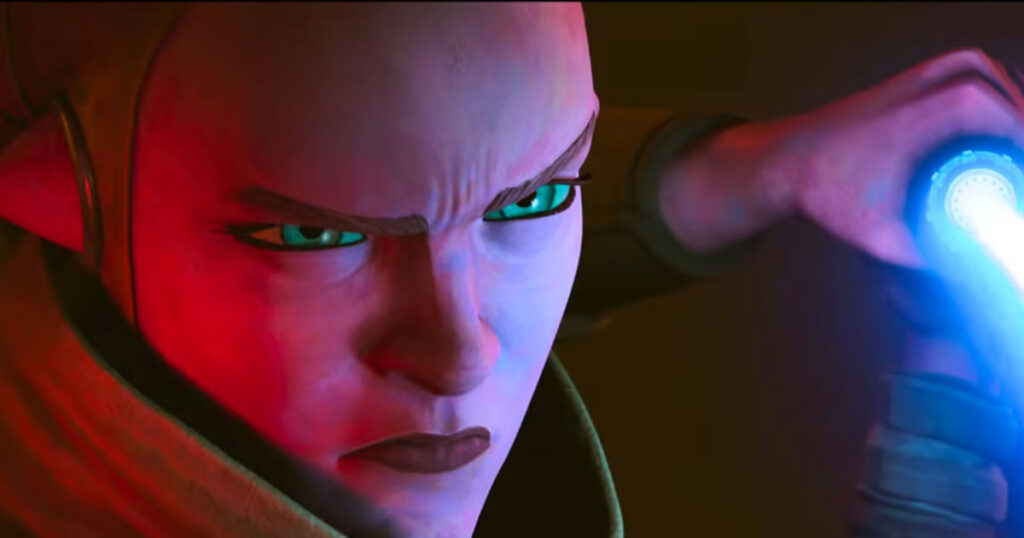
You cannot talk about Maul Shadow Lord without praising Sam Witwer. His voice acting elevates the character to Shakespearean levels of tragedy. This series takes a deep dive into Maul’s psyche, revealing a soul in absolute agony. He is lashing out because violence is the only language he was ever taught.
One of the most compelling aspects of the series is Maul’s evolving perspective on the Force and the Jedi. While he still views the Jedi Order as a flawed and weak institution, his hatred has shifted entirely toward Darth Sidious. In a surprisingly emotional turn, Maul takes on a young Jedi Padawan survivor, Devon Izara, as an apprentice figure.
However, Maul’s manipulations of Devon are incredibly complex. He uses Sith-like tactics, planting seeds of doubt in her mind about the Jedi’s failures, yet his underlying motivation is shockingly empathetic. In a profound moment of character growth, Maul vows that he will never let what Sidious did to him happen to Devon. He wants to save her from being manipulated by a master, even if he is doing it through his own twisted, dark-side methods. He has become a fascinating amalgamation of Jedi and Sith ideologies—a monster who hates himself, trying desperately to find a noble purpose in bringing down the Emperor.
The Lingering Mysteries
While the first season tied up several emotional arcs, it purposefully left massive mysteries dangling for the audience to obsess over.
What is the ultimate fate of Devon Izara? The Star Wars fandom is deeply concerned for Devon. Maul is famously a character defined by loss. Everyone he cares about, or tries to mold, ends up dead or alienated. Will Devon fully embrace the Dark Side and become part of Crimson Dawn? Will she be hunted down by the Inquisitorius? Or will Maul make the ultimate, uncharacteristically selfless sacrifice to let her go and hide, ensuring she doesn’t end up like him?
The Malachor Connection. We know from Star Wars Rebels that Maul eventually ends up stranded on the Sith world of Malachor, cut off from his criminal empire. Maul Shadow Lord is currently charting his rise back to power, but the shadow of his inevitable fall looms large. How does he lose Crimson Dawn? Why does he go to Malachor? The series is meticulously dropping breadcrumbs, showing the internal friction within the criminal syndicates as the Empire’s presence grows, suggesting that his empire will crumble from within.
The Ending Explained: Setting Up the Future
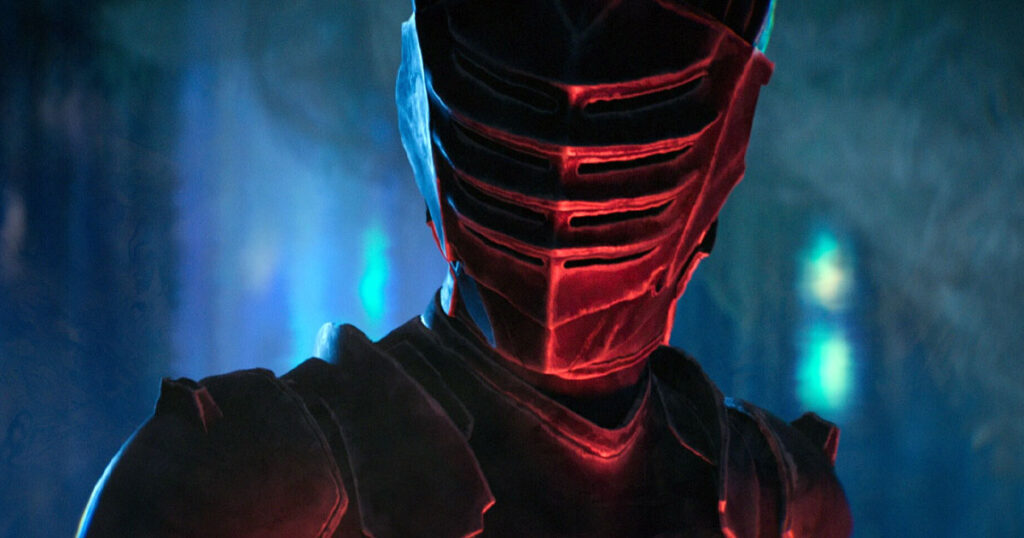
The two-part finale of the season delivered on every level, providing an explosive climax while kicking the doors wide open for the future of the franchise.
In the final moments of Episode 8, after a grueling confrontation with Imperial Inquisitors, the narrative shifts toward the galactic underworld. Maul is informed that Dryden Vos is requesting an audience. For fans of Solo: A Star Wars Story, this was a massive, cheer-out-loud moment. Dryden Vos is the public face of the Crimson Dawn syndicate. This scene officially marks the genesis of the Crimson Dawn era, perfectly aligning the animated timeline with the live-action films. It confirms that the upcoming seasons will focus heavily on Maul Shadow Lord building the vast criminal network we saw in Solo.
But the ending held an even darker tease. As Maul and his remaining allies consolidate their power, the camera shifts to reveal that the Empire is well aware of his survival. A shadowy figure is shown monitoring the reports of the dead Inquisitors. While the face is not fully shown, the implication is heavy: Darth Vader is coming.
Throughout the season, Maul has suffered from Force-induced flashbacks, reminding him of the trauma inflicted by Sidious. The Emperor is not going to let a former apprentice roam the galaxy unchecked, especially one uniting the criminal underworld. Reddit theories are already running wild, speculating that Season 2 will feature a catastrophic collision between Maul and Darth Vader. The two iconic villains have practically never interacted in the current canon, and setting Vader loose on Crimson Dawn would explain exactly why Maul is eventually forced into hiding on Malachor. It sets up a high-stakes game of cat and mouse where Maul must fight the Empire’s ultimate enforcer.
Conclusion
Ultimately, the first season of the series is a staggering achievement. Synthesizing the general consensus from top entertainment critics and the passionate discussions across social media, it is clear that Lucasfilm Animation has crafted something truly special. It is not just a gap-filler; it is a poignant, action-packed, and beautifully tragic exploration of one of cinema’s most iconic antagonists.
Maul Shadow Lord respects the intelligence of its audience, offering complex moral dilemmas, breathtaking animation, and deep lore connections without relying solely on cheap cameos. By masterfully bridging the gap between The Clone Wars, Solo, and Rebels, the show has cemented itself as mandatory viewing for any Star Wars fan. With the arrival of Crimson Dawn and the looming threat of Darth Vader on the horizon, the wait for Season 2 is going to feel longer than a trip through hyperspace. If this first season is any indication, the future of Star Wars animation is in incredibly safe, albeit dark, hands.