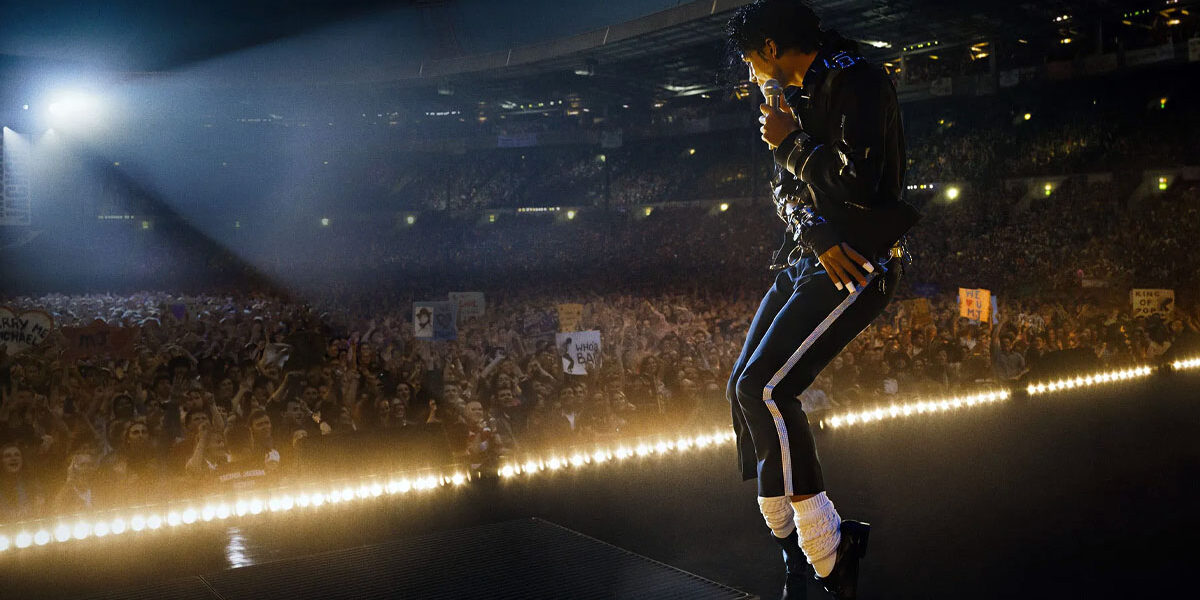
When discussing the most influential and transformative figures in the history of contemporary pop music, the name “Michael Jackson” is undeniably etched at the very pinnacle. His life was a whirlwind of unparalleled magic, shattering ceilings of human achievement and redefining global entertainment. Yet, simultaneously, it was a life deeply marred by profound tragedy, immense pain, and sensational controversies that remain hotly debated to this very day. Bringing the complex life of the “King of Pop” to the silver screen as a biographical film (biopic) is arguably one of the most daunting challenges a filmmaker could undertake. And when Michael (2025) finally moonwalked into theaters worldwide, it immediately became one of the most polarizing and divisive cinematic experiences of the decade.
The film arrived burdened with sky-high expectations. Millions of devoted fans across the globe eagerly awaited the chance to see their idol’s essence resurrected on the big screen. However, as the premiere concluded and the dust settled, a stark and undeniable “disconnect” emerged between the general audience’s emotional reaction and the harsh critical consensus. If you were to check the film’s standing on the renowned review aggregator Rotten Tomatoes, you might be genuinely shocked to see the critics’ Tomatometer plummeting deep into the dreaded “rotten” territory. This abysmal critical reception stands in jarring contrast to the gargantuan legacy of Michael Jackson. The burning question arises: How could a production of this magnitude, boasting such astronomical production values, fail so spectacularly to win over the critics?
A Sanitized Narrative: Ignoring the Elephants in the Room
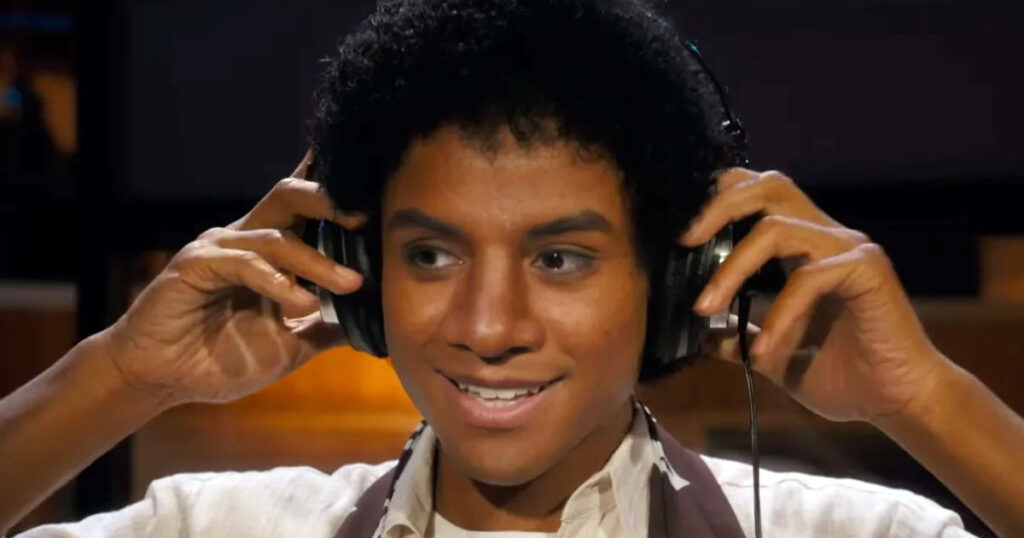
The answer to this critical panning does not lie in substandard filmmaking or poor cinematography. Rather, it stems from a blatant absence of “narrative courage.” Michael was produced under the strict supervision and ultimate approval of the Michael Jackson Estate. The inevitable, perhaps unavoidable, result of this partnership is a film that chooses to present the safest, most sanitized, and overwhelmingly “white-washed” version of the pop icon imaginable.
The primary reason critics have ruthlessly torn this film apart is its deliberate and glaring omission of the most infamous and heavily publicized scandals of Jackson’s life. Whether it is the horrific child sexual abuse allegations, the highly publicized and world-stopping court trials, or even the deeply unsettling and eccentric behaviors that defined his later years, the film chooses to sweep these dark, gray areas entirely under the rug. It operates under a baffling pretense that these paradigm-shifting events simply never occurred. By actively avoiding these incredibly sensitive but historically vital chapters of Michael’s life, the film tragically loses the multi-dimensional depth required for a compelling, humanizing biopic. Instead of a nuanced exploration of a tortured genius, the final product feels uncomfortably close to a feature-length promotional video—a highly polished piece of PR machinery designed solely to glorify and vehemently protect the flawless image of the King of Pop.
Joe Jackson: The Convenient Villain
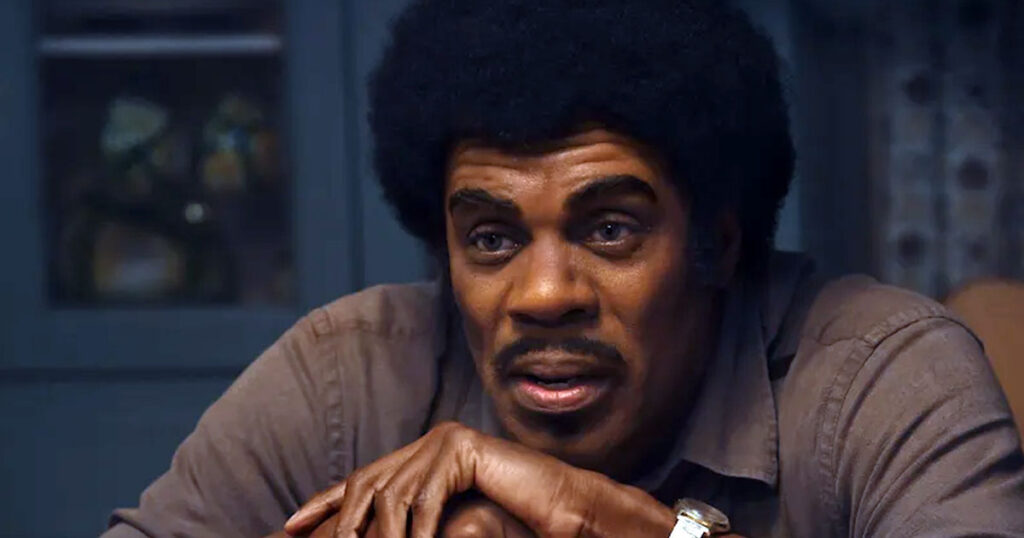
Because the screenplay is forbidden from utilizing Jackson’s adult controversies and personal flaws as the central conflict or narrative climax, the director and writers were forced to manufacture a definitive “villain” to drive the story forward. Unsurprisingly, the heavy burden of being the antagonist falls squarely on the shoulders of Joe Jackson, Michael’s fiercely demanding father.
Michael goes out of its way to establish Joe Jackson as the ultimate, unforgiving villain of the narrative. The film dedicates a significant amount of its runtime to thoroughly detailing his cruel, abusive, and borderline tyrannical methods of parenting and managing his children. The beatings, the relentless verbal abuse, and the systematic theft of Michael’s childhood are presented with brutal honesty. This is clearly done to establish a direct psychological through-line: these deep-seated childhood traumas are the sole reason Michael grew into a deeply fragile adult who desperately yearned for love and attempted to construct his own lost “Neverland.” While the harsh reality of Joe Jackson’s parenting is an undeniable historical fact, within the context of this specific movie, it functions far too conveniently as a scapegoat. By piling all the narrative darkness onto the father, the film successfully paints Michael Jackson purely as a tragic “victim” of circumstance and family abuse, thereby absolving the film from having to examine any of Michael’s own personal missteps or questionable decisions in his adult life.
The Saving Grace: A Masterclass in Performance and Music
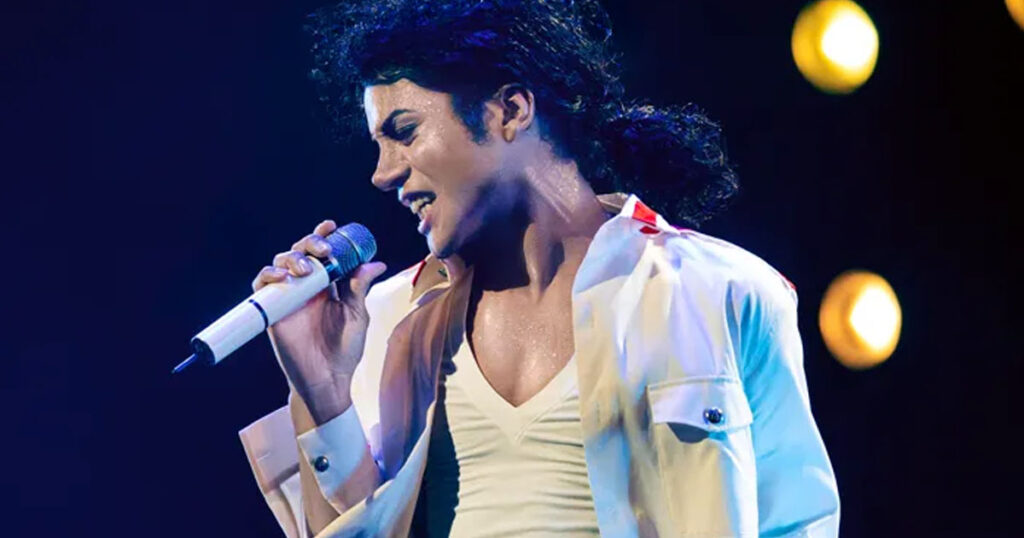
However, despite the heavy—and highly justified—criticism regarding its biased screenplay and unbalanced storytelling, Michael possesses a secret weapon. It is an element so undeniably powerful that it allows the audience (especially the legions of fans) to completely overlook the narrative flaws and leap to their feet for a standing ovation as the credits roll. That weapon is the staggering quality of the acting and the sheer, unadulterated perfection of the musical sequences.
It is no exaggeration to use words like “masterpiece” and “miraculous” when describing the lead actor’s performance as Michael Jackson. Stepping into the shoes of a man whose every facial expression, vocal tic, and physical movement is ingrained in the collective global consciousness is a pressure few could withstand. Yet, the lead actor doesn’t just mimic Michael; he fully embodies his spirit. From the impossibly soft, breathy speaking voice and the painfully shy demeanor to the eyes that constantly harbor a deep, isolating loneliness, every ounce of the dramatic performance is meticulously crafted. The actor captures the profound vulnerability hidden behind the superstar’s smile, making us genuinely believe that the real Michael Jackson is standing right there in front of the camera.
And when the film transitions into the “musical scenes” or the live concert recreations, it transcends all critical panning and achieves a state of flawless cinematic nirvana.
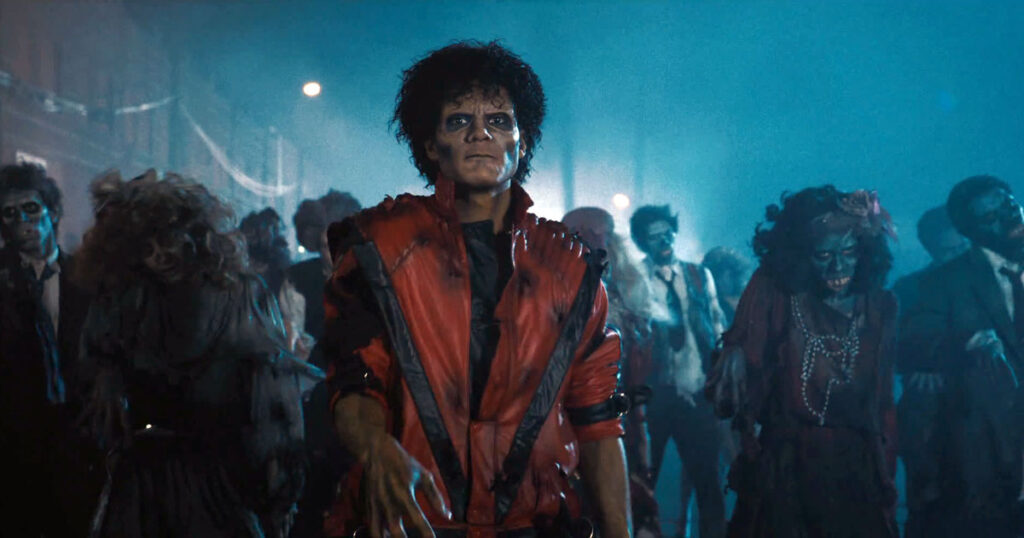
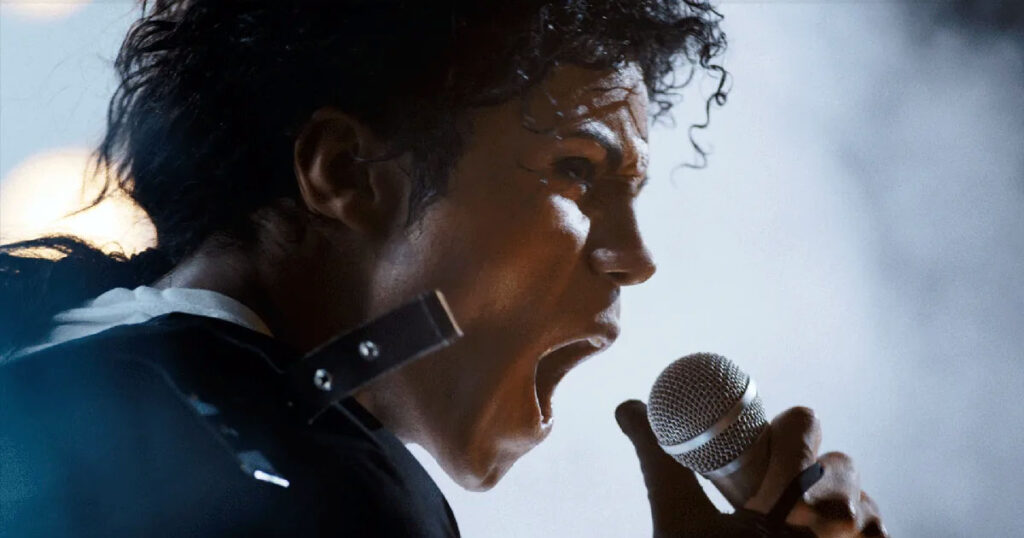
The set design, the dynamic lighting, the kinetic cinematography, and the razor-sharp editing during the on-stage performances are executed at a masterclass level. Every single time the character steps onto the stage, the blinding spotlights hit, and the iconic basslines kick in, the movie instantly shifts gears. It transforms from a flawed biographical drama into the most electrifying, world-class concert experience imaginable. The signature Moonwalk, the gravity-defying spins, the aggressive high kicks, and the legendary, crowd-stopping “freezes” are all recreated with terrifying precision and an explosive, infectious energy.
During these sequences, the phenomenal acting combined with the booming, theater-rattling audio mix creates an atmosphere of pure, unfiltered magic. It never once feels like you are watching an actor attempting a high-budget cover performance. Instead, it evokes the hair-raising sensation that Michael Jackson himself has descended from the heavens to perform for us one last time. The sheer energy pulsating from the screen is so overwhelming that you will find yourself unconsciously tapping your feet, fighting the urge to scream along with the cinematic crowd. Whether the film is meticulously reconstructing the legendary music videos of Thriller, Beat It, or Smooth Criminal, everything is handled with the utmost respect and the highest echelon of artistic craftsmanship. These scenes serve as a breathtaking, undeniable love letter to his unparalleled musical genius.
Final Verdict: A Flawed Masterpiece
In the end, Michael is far from a perfect biographical film. If you are a viewer seeking dark truths, an unflinching examination of his famous scandals, or a screenplay that dissects the moral gray areas of a deeply flawed human being, you will walk away disappointed. You will instantly understand exactly why the Rotten Tomatoes critics dragged its score through the mud. The film cowardly runs away from harsh realities and conveniently dumps all the narrative blame onto a cruel father.
But on the flip side, if you buy a ticket to absorb pure “art” and to witness the undeniable majesty of the man who single-handedly altered the landscape of global music forever, this movie is an absolute treasure. The powerhouse, award-worthy lead performance and the flawless, magical concert recreations essentially resurrect Michael Jackson to bring us joy once more. Those two elements alone are worth far more than the price of admission. Michael may have completely failed to tell the whole truth about the “man,” but it succeeds beyond measure in honoring, elevating, and immortalizing the “King of Pop” in the most glorious way possible.