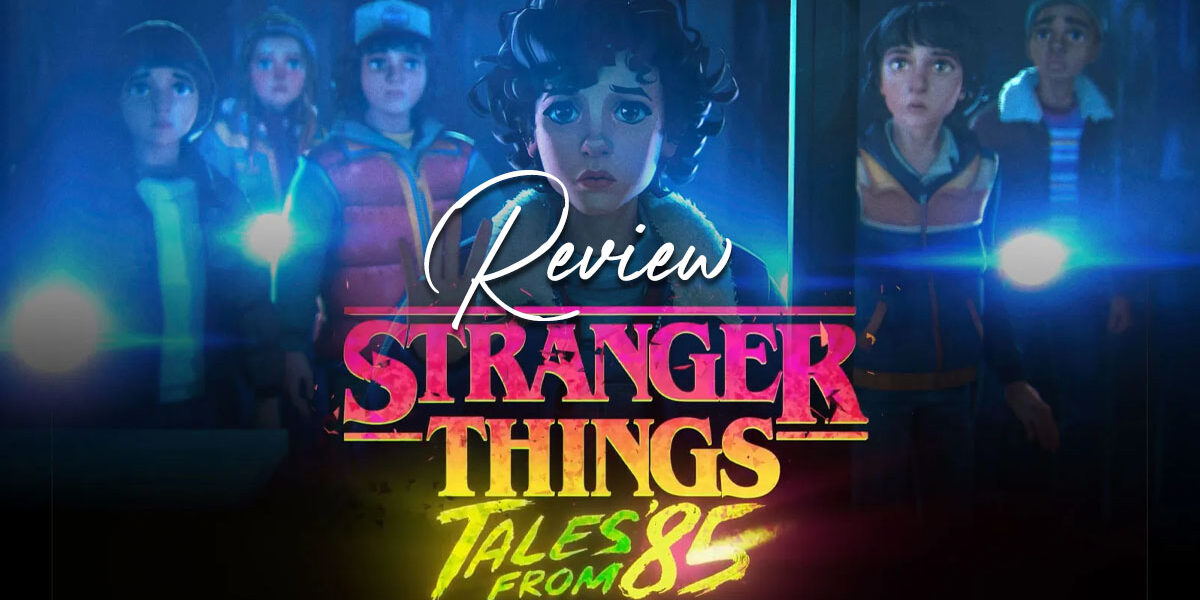
When Netflix first announced Stranger Things: Tales from ’85, the promise was incredibly enticing. Set in the relatively quiet winter period between the traumatic events of Season 2 and the neon-drenched summer chaos of Season 3, this animated spin-off was billed as a Saturday morning cartoon homage. It aimed to deliver a lighter, more family-friendly slice of life in Hawkins, Indiana. Now that all 10 episodes have dropped, the critical consensus—and the fan reaction—is predictably divided.
After binge-watching the entire season, it’s clear that Tales from ’85 is a visually stunning love letter to the era it portrays, complete with phenomenal voice acting that roots the animated characters in reality. However, it suffers from a massive identity crisis. By trying to serve two wildly different audiences, it ends up in an awkward middle ground. It is undeniably fun to look at, but as a cohesive, standalone piece of television, it struggles to justify its existence.
Here is our deep dive into what works, what doesn’t, and why this return to Hawkins might leave you with mixed feelings.
The Good: A Visual Feast of 80s Aesthetics
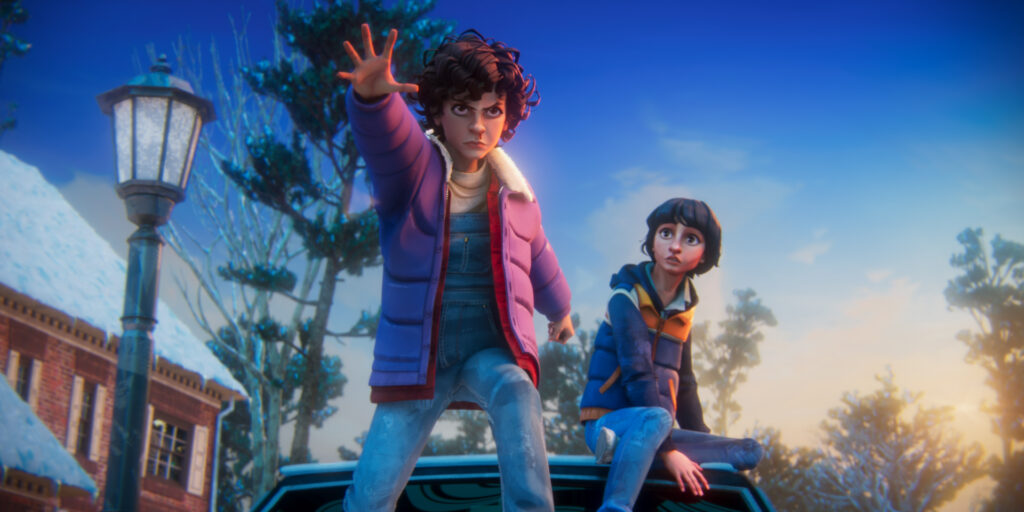
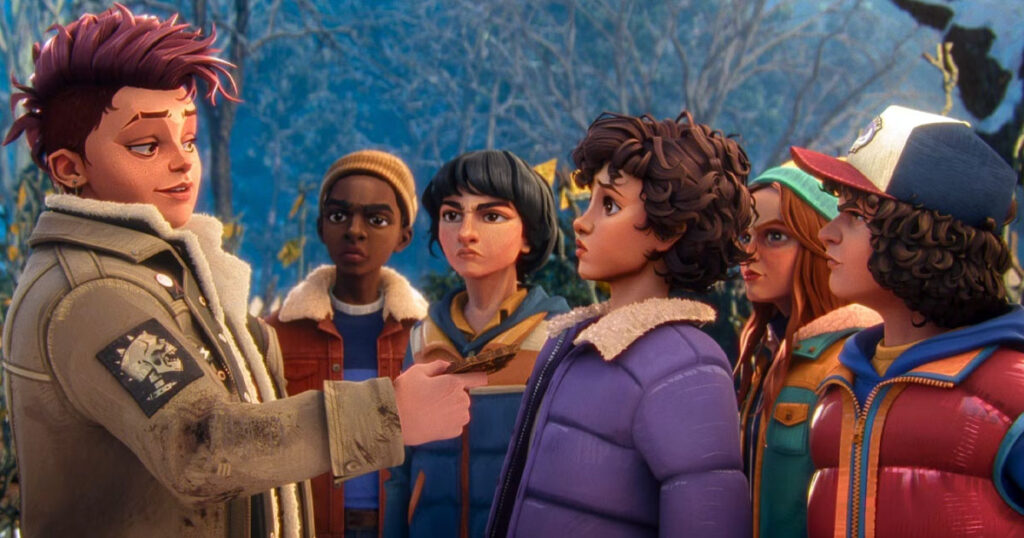
If there is one aspect of Tales from ’85 that deserves universal praise, it is the art direction and animation style. While some purists may have hoped for a traditional, hand-drawn 2D aesthetic reminiscent of He-Man or G.I. Joe, the studio opted for a modernized, highly polished 3D animation style. And honestly? It works beautifully.
The show perfectly captures the bright, vibrant, and colorful theme of the 1980s. The winter setting adds a fresh visual layer to Hawkins that we haven’t explored much in the live-action series. The contrast between the stark white snow, the cozy, warm-glowing interiors of the Wheeler basement, and the vibrant neon lights of the local arcade creates a breathtaking atmosphere. The character designs are exaggerated just enough to feel animated, yet grounded enough to remain recognizable as the kids we’ve watched grow up over the last decade.
Every frame is packed with nostalgic details. From the retro action figures scattered on the floor to the cassette tapes and vintage winter gear, the animators clearly poured their hearts into making this world feel authentic. It is an absolute treat for the eyes, and you will easily find yourself immersed in the comforting, nostalgic warmth of the show’s visual landscape.
The Voice Acting: Familiar Echoes in a New Medium
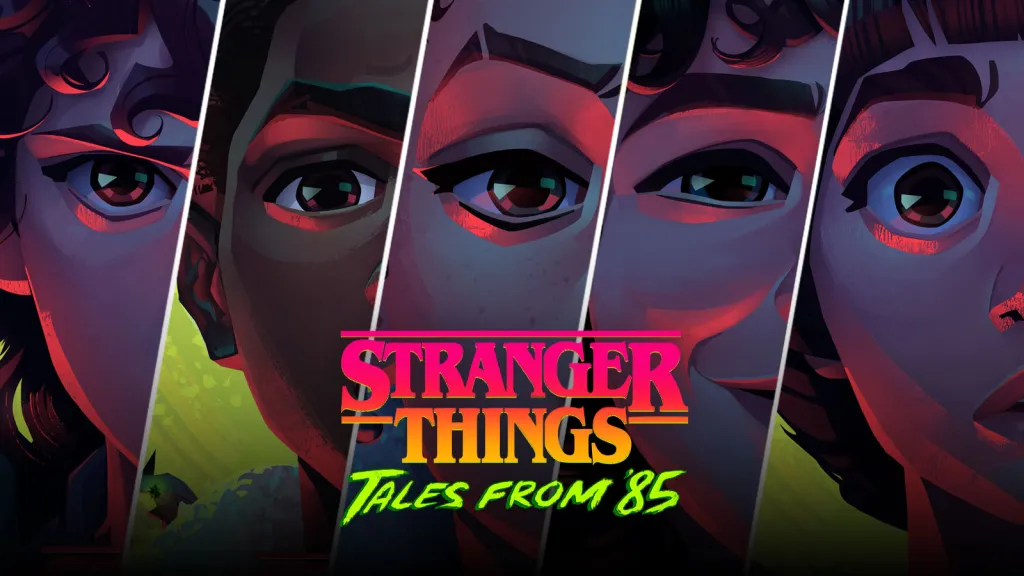
Transitioning live-action characters into an animated format is always a risky gamble, especially when the original actors are largely absent. Recasting iconic roles often leads to a disconnect for the audience. However, Tales from ’85 pulls off a minor miracle with its voice cast.
The voice actors have done an exceptional job of capturing the cadence, tone, and specific quirks of the original cast. The standout, without a doubt, is the performance behind Mike Wheeler. There were multiple moments throughout the 10 episodes where I genuinely had to pause and check the credits, convinced that Finn Wolfhard had secretly stepped into the recording booth. The voice actor captures Mike’s specific brand of awkward, pre-teen angst and leadership with uncanny precision.
This high caliber of voice acting extends to the rest of the party as well. It bridges the gap between the live-action universe and this new animated reality, anchoring the emotional beats and ensuring that, despite the change in medium, these still feel like the characters we know and love.
The Bad: An Unwelcoming Entry Point
This brings us to the core issue of Tales from ’85—its fundamental failure as a welcoming piece of media for new viewers.
The aesthetic, the marketing, and the overall lighter tone heavily imply that this animated series is designed to open the door for a younger demographic. It feels like an attempt to invite children—who are perhaps too young for the PG-13/TV-14 rated horror and gore of the mainline series—into the Stranger Things universe.
Unfortunately, it completely fails to act as a standalone entry point. If you have not seen the first two seasons of the flagship show, you will be entirely lost. The series drops you right into the emotional aftermath of Season 2 without offering a life raft. Who is this telekinetic girl? Why is everyone so protective of Will? What is this “Upside Down” they keep vaguely referring to? The show assumes you already know the answers.
It creates a frustrating paradox: it is too cartoonish and brightly toned to fully satisfy the hardcore adult fans who crave the dark, Lovecraftian horror of the original series, yet it is too steeped in established, complex lore to be accessible to the children it seemingly wants to attract. It doesn’t hold the hands of newcomers, leaving them confused by character dynamics and referenced traumas that occurred in a completely different, much scarier television show.
The “Inessential Spin-off” Syndrome
Because the show is sandwiched between Season 2 and Season 3, the stakes are inherently nonexistent. We know where these characters end up in the summer of 1985. We know who lives, who dies, and how their relationships evolve. Because of this, Tales from ’85 is restricted from making any significant narrative moves.
Instead of pushing the overall plot forward, the series relies on “monster-of-the-week” style mini-adventures and slice-of-life interpersonal drama. While it is certainly charming to see Lucas and Max navigate the early, awkward stages of their relationship, or to watch the boys play an uninterrupted game of Dungeons & Dragons, these moments feel like extended deleted scenes rather than essential viewing.
Furthermore, as noted by several critics, there are moments where the narrative dances dangerously close to contradicting established canon. Minor retcons and timeline inconsistencies might not bother the casual viewer, but for the dedicated fanbase—the only audience truly equipped to understand the context of this show—these narrative hiccups can be glaring and annoying.
The Final Verdict: A Mixed Bag of Nostalgia
Stranger Things: Tales from ’85 is an experiment that yields distinctly mixed results.
If you view it purely as a supplementary visual companion piece—a chance to spend a few more hours with beloved characters in a beautifully rendered, cozy winter setting—you will likely enjoy the ride. The stunning animation, the perfect 80s synth-wave vibe, and the shockingly accurate voice acting make it an easy, pleasant binge-watch for a lazy weekend.
However, if you are looking for a show with narrative weight, or if you were hoping to use this as a gateway to introduce your younger siblings or children to the franchise, you will be disappointed. It is an exclusive club disguised as a welcoming party. It demands prior knowledge but rewards that knowledge with relatively low stakes and a completely different tonal atmosphere.
It is a beautiful, nostalgic distraction, but in the grand tapestry of the Stranger Things universe, it remains a heavily flawed, entirely optional side quest.