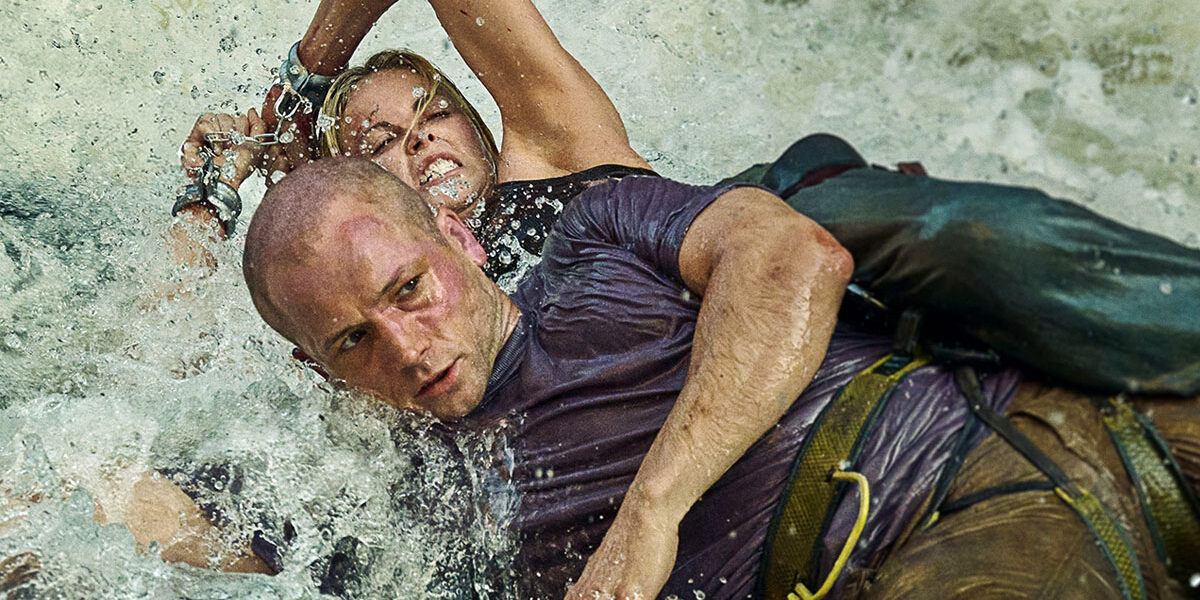
When you combine the relentless on-screen presence of Charlize Theron, the subversive casting of Taron Egerton, and the nature-battling directorial sensibilities of Baltasar Kormákur (Everest, Beast), expectations are bound to skyrocket. Apex, Netflix’s latest high-stakes survival thriller released in April 2026, aims to deliver a visceral punch to the gut. It promises a harrowing journey of grief, physical endurance, and a deadly cat-and-mouse game set against the breathtaking yet unforgiving backdrop of the Australian wilderness.
But does this blood-soaked trek through the outback actually reach the summit, or does it lose its grip and take a fatal tumble? Let’s dive deep into every aspect of Apex, exploring its dizzying highs, its frustrating lows, and why this movie presents one of the most fascinating modern dilemmas of the streaming era.
The Setup: A Descent into Madness
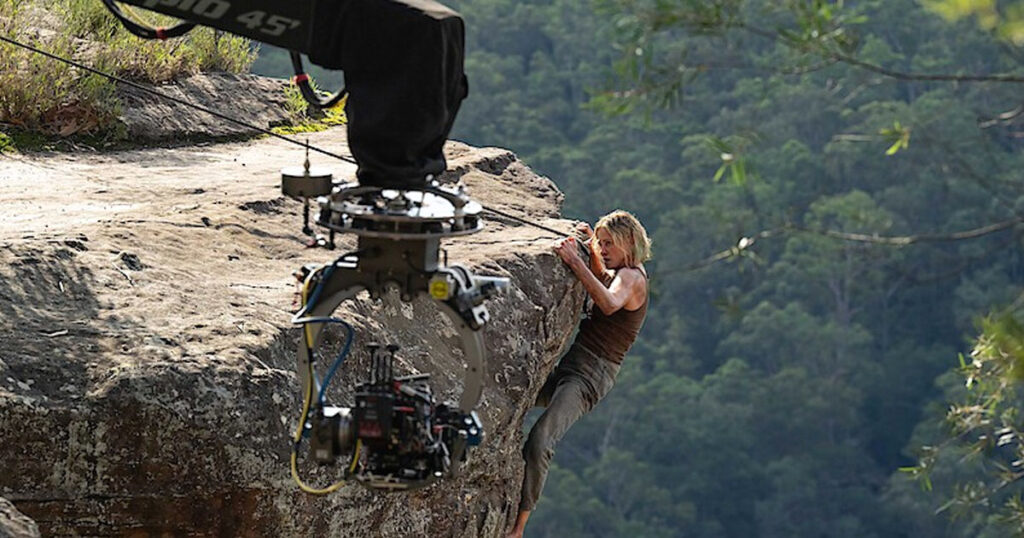
Written by Jeremy Robbins, Apex wastes absolutely no time establishing its high-altitude stakes. The film opens with a sequence that firmly cements its popcorn survival-movie credentials. We are introduced to Sasha (Charlize Theron) and her partner Tommy (Eric Bana), a deeply committed couple who share an insatiable thirst for extreme sports. We find them dangling off the side of a massive, frozen rock face in a portaledge. It is an opening that immediately induces vertigo.
Unfortunately, mother nature has other plans. A sudden, violent avalanche strikes, resulting in a tragic, albeit entirely predictable, accident that sends Tommy plummeting to his doom and leaves Sasha grappling with unbearable survivor’s guilt. The sheer efficiency of this opening is a double-edged sword; while it gets the plot moving at breakneck speed, it barely gives us enough time to emotionally invest in Sasha and Tommy’s relationship before it is abruptly severed.
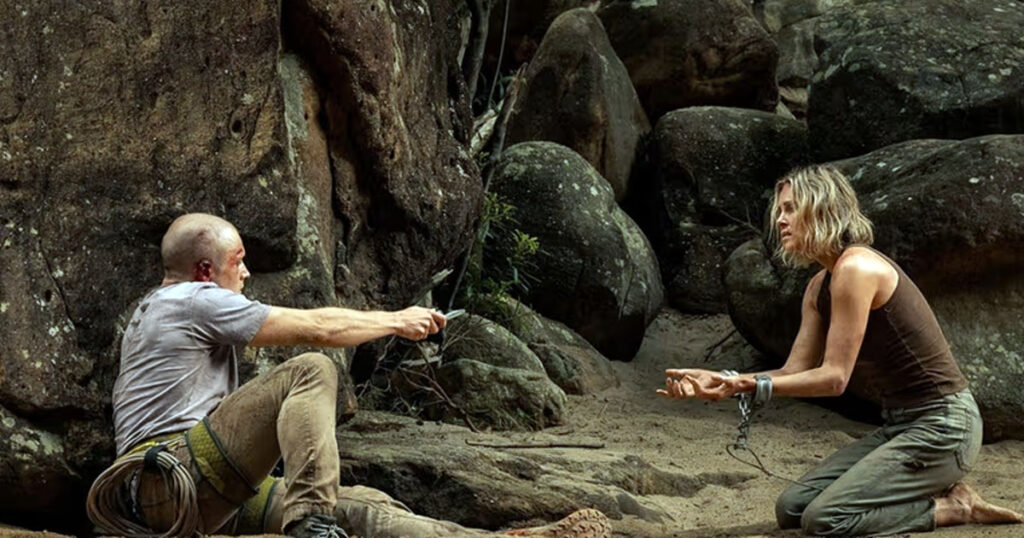
Seeking solace and a way to process her monumental grief, Sasha travels to the remote, rugged wilderness of Australia. Her goal is a solitary white-water kayaking expedition to find peace in isolation. Instead, she finds Ben. Played with a terrifyingly deadpan menace by Taron Egerton, Ben initially presents himself as a ruggedly charming, helpful local. However, the facade quickly melts away, revealing a deeply misogynistic, crossbow-wielding psychopath who hunts human beings for sport. What begins as a journey of spiritual healing rapidly deteriorates into a brutal, bloody fight for basic survival.
The Peaks: What Apex Gets Right

If there is one undeniable truth in modern action cinema, it is that Charlize Theron is an absolute titan. Continuing her legacy from Mad Max: Fury Road, Atomic Blonde, and The Old Guard, Theron brings a staggering level of physical commitment to the role of Sasha. She reportedly did a vast majority of her own stunts and trained rigorously to convincingly portray a seasoned rock climber. Her performance is the bedrock of the film. Sasha is not a helpless damsel in distress; she is incredibly capable, resilient, and intelligent. Theron conveys oceans of pain and exhaustion through sheer body language, carrying the emotional weight of the movie entirely on her bruised shoulders.
Opposite her, Taron Egerton takes a massive swing against his usual heroic typecasting (think Kingsman or Rocketman). Egerton’s Ben is chilling precisely because of how ordinary he initially seems. When his mask slips, Egerton unleashes a maniacal, almost feral energy. The juxtaposition of his boyish features with his sadistic actions creates a deeply unsettling villain. The physical confrontations between Theron and Egerton are gritty, desperate, and incredibly well-choreographed. You feel every punch, every fall, and every bone-crunching impact.
Furthermore, Baltasar Kormákur knows how to shoot the wild. Aided by cinematographer Lawrence Sher, the Australian landscape is captured in all its sun-drenched, terrifying glory. The environment is treated as the third major character in the film. From claustrophobic, uncharted cave systems to raging, untamed rivers, the sheer geographical scale of Apex is consistently awe-inspiring. The camera work during the chase sequences brings a much-needed kinetic grunt to the film, raising the blood pressure and creating genuinely pressure-packed set pieces.
The Valleys: Where Apex Loses Its Grip
For all its visual flair and strong central performances, Apex suffers from a surprisingly hollow core. The script is, unfortunately, the film’s weakest link. At a brisk 95 minutes, the movie prioritizes momentum over meaningful character development.
The exploration of Sasha’s grief—the very catalyst for the entire narrative—feels entirely surface-level. The opening tragedy happens so quickly that it serves merely as a plot device to get her into the woods, rather than a thematic anchor for her journey. When she is running for her life, the emotional weight of her loss is almost entirely forgotten, replaced solely by the immediate need to not get shot by a crossbow.
Similarly, the villain’s motivations are incredibly shallow. Ben is eventually revealed to be driven by generic “mommy issues” and a deeply ingrained, toxic misogyny. While Egerton acts the hell out of the material he is given, the character ultimately devolves into a boilerplate, backwoods boogeyman. He lacks the psychological complexity that made villains in similar films (like Hannibal Lecter in The Silence of the Lambs or even John Jarratt’s Mick Taylor in Wolf Creek) so enduringly terrifying.
This leads to the film’s most glaring issue: the pacing and tone of the second act. Apex occasionally crosses the line from being a tense thriller into the realm of sadistic unpleasantness. There is an undercurrent of torture-porn aesthetics—glimpses of rusted hooks, bloated corpses, and relentless brutality directed at the female protagonist—that becomes exhausting. The cat-and-mouse game, while initially thrilling, begins to feel repetitive as Sasha escapes by the skin of her teeth, only to be cornered again, in a loop that stretches the limits of believability.
A Unique Perspective: The Streaming Paradox and the “Trauma Trope”
Watching Apex, it is impossible not to feel a profound sense of irony. Here is a film whose greatest asset is its sweeping, jaw-dropping cinematography. It is a movie that practically screams to be projected onto a massive 50-foot cinema screen, where the sheer vastness of the Australian outback can physically overwhelm the viewer. Instead, Apex is a Netflix release. Consumed on flat-screen TVs, laptops, or—heaven forbid—smartphones, the majestic scale of Kormákur’s vision is inherently compressed and diluted. It highlights the modern streaming paradox: we now have big-budget, big-screen spectacles trapped in small boxes, which ultimately robs them of their primary power.
Furthermore, Apex inadvertently invites a critical conversation about the current landscape of female-led action thrillers. There is an increasingly tired trope in Hollywood where, in order to show a woman triumphing and being “strong,” the narrative forces the audience to watch her be relentlessly brutalized, tortured, and hunted by a toxic male figure first.
Apex falls into this trap headfirst. Sasha is introduced as a woman who is already strong, fiercely independent, and capable of conquering the Troll Wall. Why, then, must her ultimate test of strength be surviving a misogynistic serial killer? While there is undoubtedly a cathartic thrill in watching her eventually turn the tables and outsmart her abuser, one has to wonder if we have exhausted this specific formula. Can we not have a female survivalist movie where the primary antagonist is just the harsh, unforgiving nature itself, rather than a heavy-handed metaphor for toxic masculinity? The film would have arguably been much stronger, and certainly more unique, if Sasha was simply battling the elements, finding her will to live in the face of natural adversity, rather than dodging crossbow bolts from a lunatic.
The Final Verdict
Apex is an undeniably slick, well-produced thriller that is elevated significantly by the sheer star power and commitment of Charlize Theron and Taron Egerton. If you are looking for a Saturday night popcorn flick that offers high-octane thrills, stunning landscapes, and brutal action choreography, you will find plenty to enjoy here. It delivers exactly what its trailer promises: a relentless, bloody chase through the woods.
However, if you scratch beneath the surface, you will find a surprisingly empty calorie experience. Bound by a predictable script, superficial character depth, and an over-reliance on brutalization tropes, it fails to reach the upper echelons of the survival thriller genre. It is a movie that makes you sweat, but rarely makes you feel.