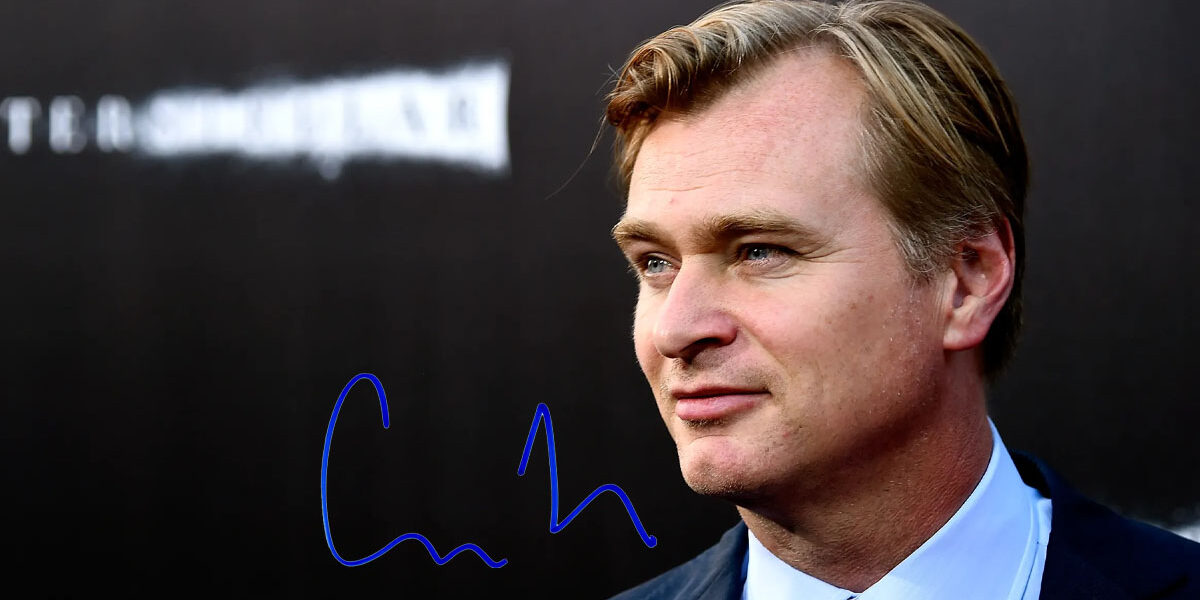
When analyzing the landscape of modern cinema, few trajectories are as fascinating or as heavily scrutinized as the Christopher Nolan career. He stands as a rare breed of filmmaker in the 21st century—an absolute auteur who commands massive blockbuster budgets while retaining total creative control over his vision. In an era dominated by cinematic universes, committee-driven storytelling, and green-screen reliance, Nolan has become a franchise unto himself. Audiences do not just flock to theaters to see a movie about space, dreams, or historical figures; they buy tickets specifically for a “Christopher Nolan film.” This level of brand recognition and audience trust was not built overnight. It is the result of decades of uncompromising dedication to the theatrical experience, a meticulous approach to the craft of filmmaking, and an unwavering belief in the intelligence of the moviegoing public.
The Indie Origins: Following and the Genius of Memento

Long before he was synonymous with massive IMAX cameras and billion-dollar box office returns, Nolan was a passionate independent filmmaker armed with little more than a 16mm camera, a shoestring budget, and an incredibly sharp mind for narrative structure. The Christopher Nolan career truly began with Following (1998), a neo-noir crime thriller made for a mere $6,000. Shot on weekends over the course of a year using his friends as actors, the film established his early fascination with non-linear storytelling, obsessive characters, and the fluid nature of identity.
However, it was his sophomore effort that truly sent shockwaves through the industry. Released in 2000, Memento was a masterclass in subjective storytelling. Following Leonard Shelby, a man suffering from anterograde amnesia who must use tattoos and Polaroid photographs to track down his wife’s killer, the film famously unfolds its narrative in two alternating timelines—one moving forward in black and white, and the other moving backward in color. To say Memento put Nolan on the map is a vast understatement; it fundamentally changed how screenwriters viewed narrative architecture. Today, Memento is a mandatory case study in film classes, screenwriting workshops, and universities across the globe. Professors use it as the ultimate example of how a filmmaker can completely manipulate conventional structure without ever losing the audience’s emotional investment or the logical consistency of the plot.
The Blockbuster Era: Earning the Hollywood Blank Check
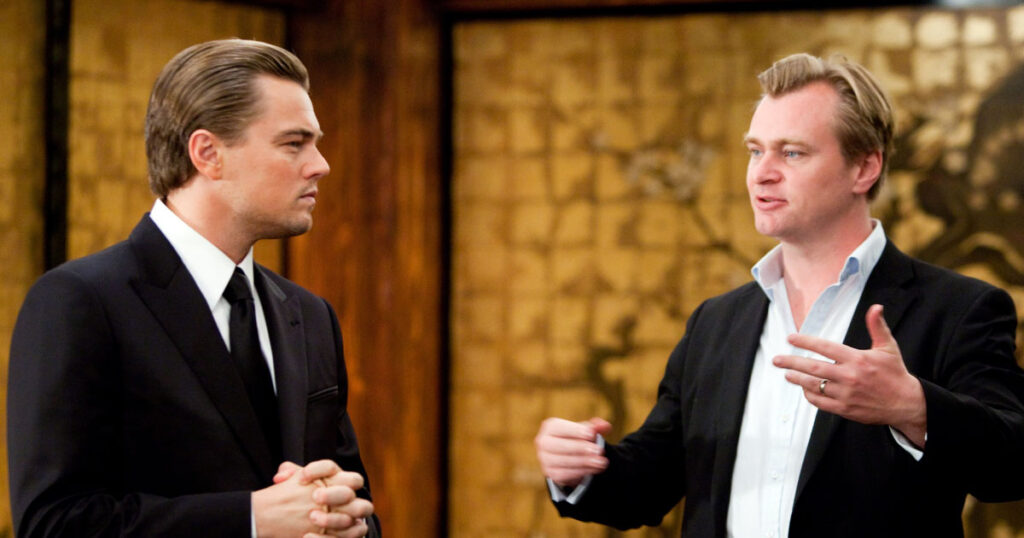
The critical and financial success of his early psychological thrillers led to a monumental shift. When Warner Bros. was looking to revive their dormant Batman franchise, they took a calculated risk on the young British director. Batman Begins (2005) did not just reboot a character; it redefined the modern superhero film, grounding comic book mythology in gritty, psychological realism. When The Dark Knight (2008) hit theaters, it shattered box office records, earned Heath Ledger a posthumous Academy Award, and cemented Nolan’s status as a Hollywood titan.
With this newfound leverage, the Christopher Nolan career entered its “blank check” era. Studios were willing to greenlight virtually anything he wanted to make. He used this unprecedented freedom to champion original, high-concept intellectual properties that most executives would consider too risky. Inception (2010) proved that a complex, cerebral heist movie set within the architecture of the human subconscious could gross over $800 million. Interstellar (2014) pushed the boundaries of theoretical astrophysics on screen, and Dunkirk (2017) reinvented the war film by stripping away excessive dialogue and focusing purely on the visceral, ticking-clock tension of survival. He had become the rare filmmaker who could demand massive budgets for original ideas, knowing his name alone would guarantee a massive return on investment.
A Signature Style: Unyielding Meticulousness and the IMAX Obsession

A defining hallmark of the Christopher Nolan career is his unwavering commitment to practical effects and his almost legendary meticulousness on set. In an industry that increasingly relies on Computer-Generated Imagery (CGI) to solve problems in post-production, Nolan prefers to capture the magic in-camera. Whether it is flipping an eighteen-wheeler truck in the streets of Chicago, crashing a real Boeing 747 into a hangar for Tenet, or recreating the blinding terror of the Trinity nuclear test without CGI for Oppenheimer, his dedication to tactile reality is unparalleled.
This professional rigor extends to the atmosphere of his sets. Nolan is famously disciplined. He does not allow cell phones on his sets, firmly believing they distract the crew from the immersive reality of the scene. He even famously eschews the traditional “video village” tent, preferring to stand right beside the camera to watch the actors’ performances with his own eyes. Moreover, he treats the craft with deep reverence, arriving on set every day wearing a tailored suit, a sartorial choice he claims is a sign of respect for the hard work of his crew.
Coupled with this meticulousness is his profound obsession with IMAX technology. Nolan did not just adopt large-format film; he revolutionized how it is used in Hollywood. Beginning with The Dark Knight, he was the first director to use massive 70mm IMAX cameras for a major feature film. These cameras are notoriously loud, incredibly heavy, and difficult to reload, but the visual payoff—an image of unparalleled resolution, depth, and clarity—is something Nolan considers non-negotiable. Over the years, he has continuously pushed IMAX technology to its absolute limits, even working with Kodak and Panavision to invent new black-and-white 70mm film stock specifically for the intimate, dialogue-heavy interrogation scenes in Oppenheimer.
The Breaking Point: The Warner Bros. Fallout
Perhaps the most dramatic turning point in the Christopher Nolan career occurred not on a film set, but in a corporate boardroom. For nearly two decades, Nolan and Warner Bros. enjoyed one of the most fruitful and loyal partnerships in cinema history. However, the COVID-19 pandemic brought underlying industry tensions to a boiling point.
When WarnerMedia (under former CEO Jason Kilar) announced “Project Popcorn” in late 2020—a unilateral decision to release their entire 2021 film slate simultaneously in theaters and on their streaming service, HBO Max—Nolan was furious. He has always been cinema’s most vocal champion, believing firmly in the sanctity of the theatrical window. He publicly condemned the move, famously stating that some of the industry’s biggest filmmakers went to bed thinking they were working for the greatest movie studio, only to wake up and find out they were working for the “worst streaming service.”
Refusing to compromise his principles, Nolan severed his two-decade tie with Warner Bros. When it came time to shop his next project, the atomic bomb biographical epic Oppenheimer, he sparked a massive bidding war. Universal Pictures ultimately won, agreeing to his strict demands: an exclusive theatrical window of at least 100 days, total creative control, a massive budget, and a blackout period where the studio would not release another film for several weeks before and after his movie. The gamble paid off spectacularly, resulting in a nearly billion-dollar gross and sweeping the Academy Awards, including his long-overdue wins for Best Director and Best Picture.
The Next Chapter: A Return to Antiquity with The Odyssey
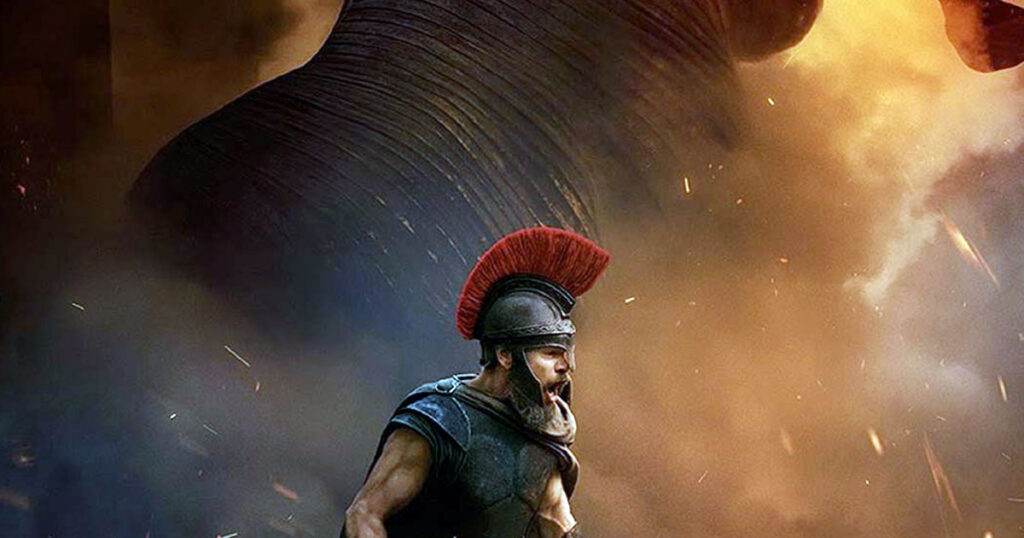
Looking ahead, the next monumental step in the Christopher Nolan career takes him from the atomic age back to the mythological past. Following the colossal success of Oppenheimer, fans and industry insiders eagerly awaited news of his next move. Confirming the rumors, Universal Pictures announced that Nolan’s next cinematic event will be an epic adaptation of Homer’s ancient Greek masterpiece, The Odyssey, slated for a global theatrical release on July 17, 2026.
This upcoming project promises to be his most ambitious visual spectacle yet. Reteaming with Universal, Nolan has assembled a staggering, star-studded cast. Matt Damon is taking on the monumental lead role of Odysseus, the Greek king attempting to navigate a ten-year journey home after the Trojan War. The ensemble also includes Tom Holland as his son Telemachus, Anne Hathaway as his fiercely loyal wife Penelope, and Robert Pattinson as the villainous Antinous, alongside Zendaya and Charlize Theron in crucial mythological roles.
Early buzz surrounding The Odyssey is deafening. Recent trailer drops have showcased Nolan’s ability to blend ancient mythology with his signature grounded realism. Shooting entirely on large-format IMAX cameras, the film is set to feature awe-inspiring practical interpretations of mythical threats, from naval battles in raging whirlpools to terrifying encounters with the Cyclops. It is a bold leap into the epic fantasy and historical adventure genre, proving that even after winning every major award in the industry, Nolan is still eager to challenge himself and push the boundaries of what a summer blockbuster can be.
Conclusion: The Auteur Who Saved the Blockbuster
In conclusion, assessing the Christopher Nolan career requires looking beyond just box office receipts and award statues. Synthesizing the broader media consensus, Nolan is widely regarded as the crucial bridge between the golden age of auteur-driven cinema and the modern era of franchise-dominated entertainment. He has repeatedly proven that mass-market audiences are deeply hungry for complex, challenging, and emotionally resonant narratives, provided they are delivered with uncompromising cinematic scale. In an age where the theatrical experience has faced existential threats from streaming platforms and changing consumer habits, Nolan’s stubborn, passionate advocacy for the big screen has been vital. He doesn’t just make movies; he crafts massive cultural events. Through his precise craftsmanship, his respect for the audience, and his continued evolution from indie darling to the undisputed king of the IMAX epic, Christopher Nolan has fundamentally secured the future of the theatrical blockbuster.