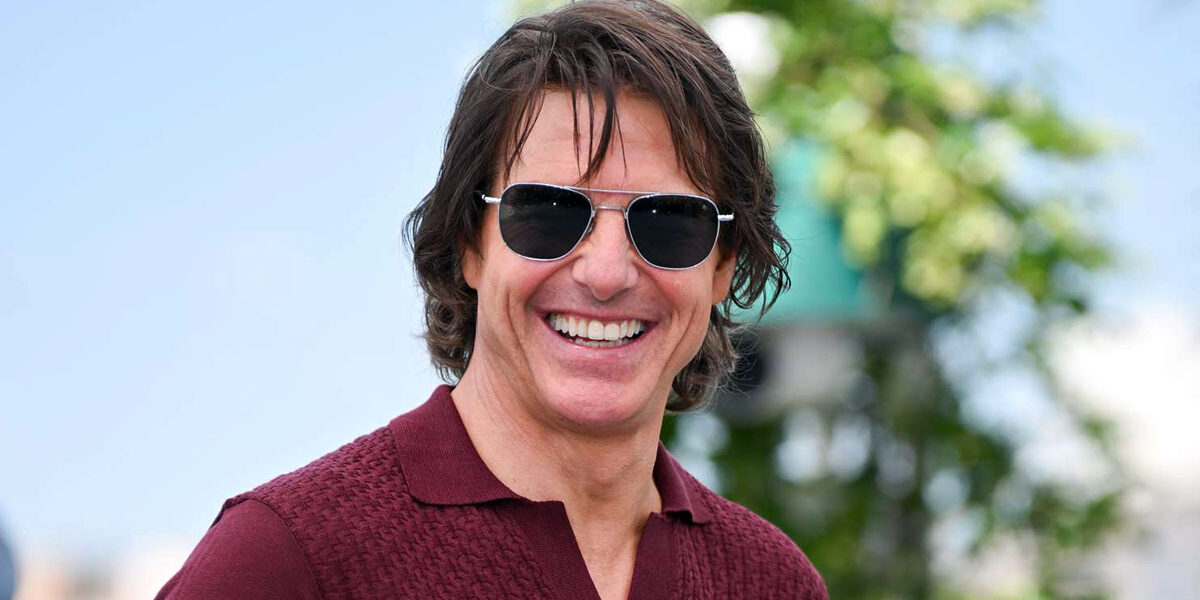
When diving into a comprehensive Tom Cruise biography, one quickly realizes that the story of this Hollywood icon is completely unprecedented in the history of cinema. For over four decades, he has remained at the absolute pinnacle of the entertainment industry. He has defied the natural laws of aging, navigated shifting pop culture trends, and conquered the unpredictable nature of the global box office. Today, he is not just an actor; he is a cinematic event.
From his infectious, megawatt smile to his sheer physical dedication, Cruise has crafted a career built on an uncompromising work ethic. He is widely regarded by industry insiders and critics alike as one of the last true movie stars—a figure whose name alone on a marquee can guarantee a massive global audience. To truly understand the man behind the iconic aviators and the death-defying stunts, we must look deeply at the evolution of his career across different decades, his deep-seated perfectionism, his private life, and the personal convictions that continue to drive him forward.
Early Years and the Path to Hollywood
Before the blockbuster franchises and red carpet premieres, Tom Cruise’s life was shaped by challenges that would eventually forge his legendary work ethic.
A Challenging Childhood
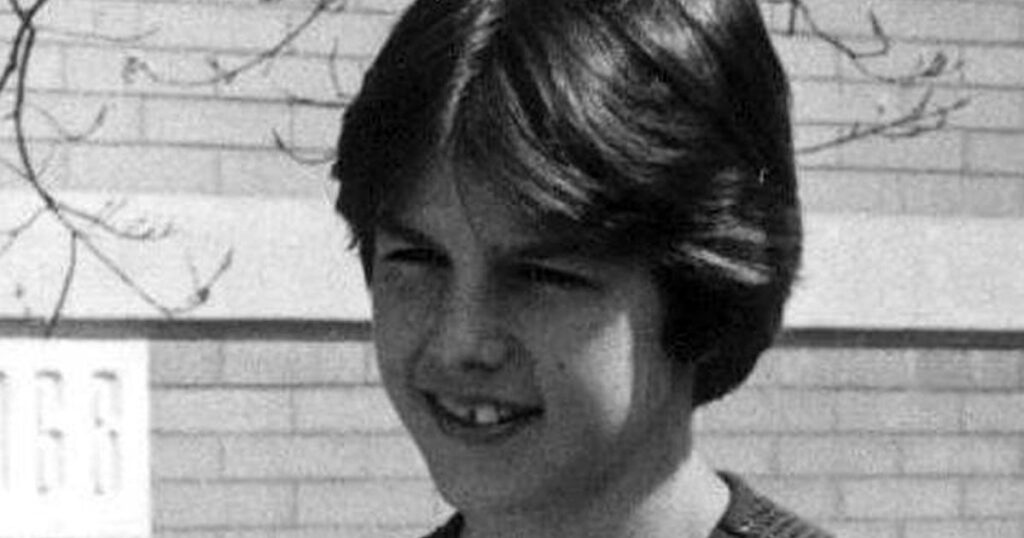
Born Thomas Cruise Mapother IV on July 3, 1962, in Syracuse, New York, his early life was far removed from the glamorous world he would eventually conquer. Growing up in near poverty with a highly nomadic childhood, Cruise’s family moved frequently across the United States and even spent time living in Canada. By the time he was a teenager, he had attended over a dozen different schools in a very short span of time. During these formative years, he struggled significantly with dyslexia, which made traditional academic learning a massive hurdle.
His relationship with his father was deeply complicated. Cruise later described his father as a “merchant of chaos” and a “bully,” an unpredictable and abusive figure who taught the young boy early, harsh lessons about trust, self-reliance, and survival. However, this difficult upbringing seemed to forge a resilient, hyper-focused mindset within him. He learned to adapt quickly to new environments and read the people around him.
The Spark of Acting
Initially, acting was not his primary goal. Deeply influenced by his Catholic upbringing at the time, he actually attended a Franciscan seminary in Cincinnati, Ohio, contemplating a path in the priesthood. His trajectory changed during high school when a severe knee injury permanently sidelined his ambitions in amateur wrestling.
Looking for a new outlet to channel his intense energy, he auditioned for his high school’s production of the musical Guys and Dolls. Stepping onto the stage illuminated something profound within him. Almost immediately, the intense, laser-focused drive that would define his entire life clicked into place. Dropping his previous plans, he moved to New York City, determined to become a professional actor, armed with nothing but raw ambition and an unmatched work ethic.
The Evolution of a Movie Star
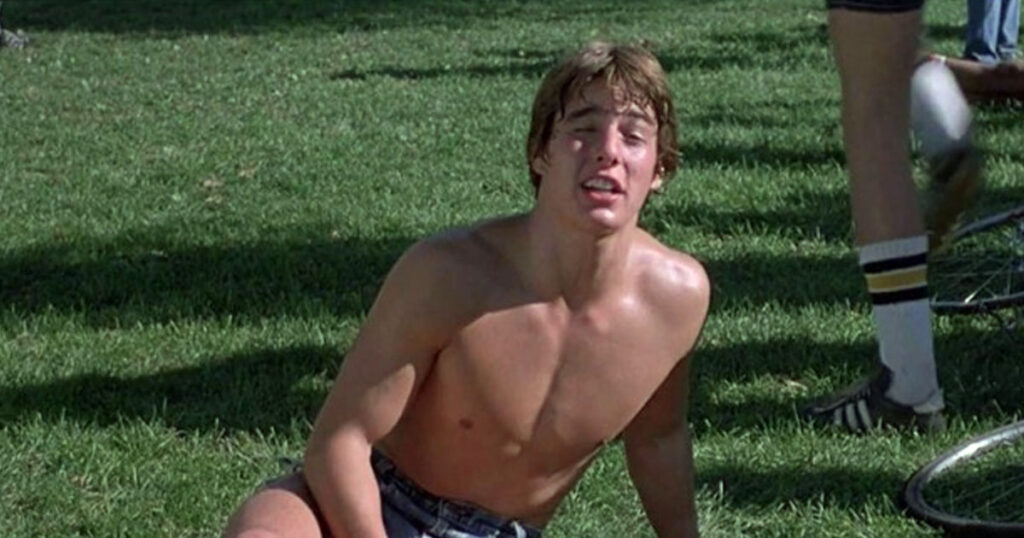
The progression of Cruise’s career is a masterclass in navigating Hollywood. He evolved from a teenage heartthrob to a serious dramatic actor, and eventually, a powerhouse producer.
The 1980s: The Rise of a Global Phenomenon
Every great Tom Cruise biography pinpoints the 1980s as the definitive era that cemented his status as a worldwide cultural phenomenon. He started with minor but memorable roles in films like Endless Love (1981) and Taps (1981). He also joined an ensemble of future A-listers in Francis Ford Coppola’s The Outsiders (1983). However, his major solo breakthrough came later in 1983 with the teen comedy Risky Business. Sliding across the living room floor in a pink button-down shirt, tighty-whities, and socks to the tune of “Old Time Rock and Roll,” Cruise perfectly captured the rebellious, entrepreneurial spirit of American youth. His on-screen charisma was absolutely undeniable.
Yet, it was 1986’s Top Gun that launched him into the cinematic stratosphere. Playing the arrogant, impulsive, but brilliantly talented Navy fighter pilot Pete “Maverick” Mitchell, Cruise became an overnight global sex symbol and an archetype of Reagan-era American confidence. The film was a colossal box office smash. More than just a movie, it became a cultural touchstone; his Ray-Ban aviator sunglasses, leather bomber jackets, and Kawasaki motorcycles became instant, worldwide fashion staples.
Despite this monumental success, Cruise was never satisfied with simply being a teen idol. In The Color of Money (1986), he boldly stood toe-to-toe with the legendary Paul Newman. In 1988, he starred in Rain Man, delivering a nuanced, emotional character arc alongside Dustin Hoffman. He closed the decade with Oliver Stone’s Born on the Fourth of July (1989), shattering his golden-boy image entirely and earning his first Academy Award nomination for Best Actor.
The 1990s: Dramatic Heavyweight and Franchise Architect
If the 80s made him a superstar, the 1990s proved he was a cinematic heavyweight who could dominate any genre. Cruise deliberately took on challenging, morally complex roles. In A Few Good Men (1992), his explosive courtroom showdown with cinema titan Jack Nicholson became instantly iconic. He then shocked audiences by playing the bloodthirsty vampire Lestat in Interview with the Vampire (1994), winning over even the most skeptical critics. In 1996, he showcased his immense emotional range in Jerry Maguire, earning another Oscar nomination.
However, 1996 was significant for a much more structural reason in his career. Realizing the power of ownership in Hollywood, Cruise established his own production company and launched the Mission: Impossible cinematic franchise. Playing IMF agent Ethan Hunt, Cruise finally took complete control of his own destiny.
He ended the 90s by taking massive creative risks, working with Stanley Kubrick in the notoriously gruelling Eyes Wide Shut (1999). Shortly after, he delivered what many consider his absolute greatest acting performance as the manic motivational speaker Frank T.J. Mackey in Magnolia (1999), securing his third Oscar nomination.
Behind the Camera and Personal Life
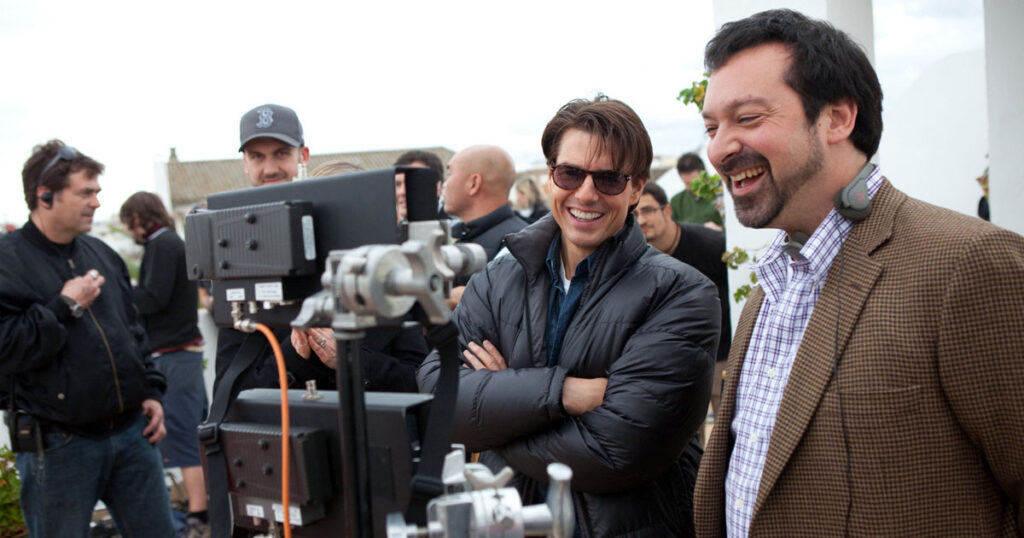
To understand the actor, one must look at the principles that guide him on set and the personal beliefs that center him when the cameras stop rolling.
The Relentless Pursuit of Perfection
What truly separates Tom Cruise from his Hollywood peers is his obsessive, almost mythical perfectionism. Directors, co-stars, and seasoned crew members consistently tell identical stories of a man who is always the first to arrive on set in the morning and the very last to leave at night. He deeply understands the technical aspects of filmmaking—camera lenses, frame rates, lighting rigs, and sound design.
This intense perfectionism is deeply rooted in his profound, unwavering respect for the paying audience. Cruise flatly refuses to give them anything less than 100 percent of his physical and emotional effort. If a scene requires him to sprint multiple blocks, he will not use a double. He will do it twenty times from different angles until the framing, the lighting, and the raw energy are absolutely flawless. For Cruise, the authenticity of the cinematic image is a sacred pact with the viewer.
Love, Life, and the Glare of the Spotlight
Behind the monumental career is a personal life that has been heavily scrutinized by the global media. Cruise has been married three times, and each relationship became deeply embedded in the pop culture consciousness.
His first marriage to actress Mimi Rogers in 1987 was brief but deeply impactful on his life’s trajectory. His second marriage, to Australian actress Nicole Kidman in 1990, created Hollywood’s ultimate golden couple. For over a decade, they were industry royalty before their highly publicized split in 2001.
In 2006, he married actress Katie Holmes in a whirlwind, highly public romance that dominated global tabloid headlines. The couple had a daughter, Suri, before going through a heavily covered divorce in 2012. Since that separation, Cruise has made a deliberate, successful effort to keep his romantic life fiercely private, redirecting the media’s focus entirely back to his blockbuster work.
Faith and Personal Beliefs
Parallel to his high-profile romances is his deep, unwavering commitment to the Church of Scientology. While his religion has often been a major point of fascination and controversy in the mainstream media, for Cruise, it serves as the absolute central pillar of his existence.
He has credited the teachings of the church with fundamentally helping him overcome his debilitating childhood dyslexia and providing him with the philosophical tools to maintain his intense focus. While he was highly vocal about his faith in the mid-2000s, his strategy has shifted dramatically. Rather than engaging in defensive public battles, he has chosen to step back, keeping his religious practices as a private, foundational element that quietly fuels his legendary drive.
The Unrivaled Action Legend
As the industry shifted heavily towards green screens and computer-generated imagery, Cruise rebelled by putting his own life on the line to deliver authentic cinematic thrills.
The 2000s to 2010s: The Extreme Daredevil Era
As the new millennium dawned, Cruise collaborated with visionary directors like Steven Spielberg (Minority Report, War of the Worlds) and Michael Mann (Collateral). However, as CGI began to completely dominate Hollywood action films, Cruise made a highly rebellious choice: he would do the exact opposite.
He transformed himself into a real-life daredevil, single-handedly pushing the absolute boundaries of practical filmmaking. In Mission: Impossible – Ghost Protocol (2011), he genuinely scaled the glass exterior of the Burj Khalifa. In Rogue Nation (2015), he strapped himself to the outside door of a massive military cargo plane as it took off. By the time Fallout (2018) arrived, Cruise was performing high-altitude military HALO jumps and piloting helicopters for dangerous aerial chases. His dedication to stunt work had entirely transcended traditional acting.
The 2020s: The Savior of the Theatrical Experience
When the global COVID-19 pandemic struck, it brought the movie theater industry to its knees. Streaming services were aggressively positioned to take over distribution completely. During this dark time, Tom Cruise fiercely and stubbornly refused to let his highly anticipated Top Gun: Maverick be sold off to a streaming platform.
When the film finally hit theaters in the summer of 2022, it was a cultural event. Earning nearly $1.5 billion worldwide, it miraculously brought audiences back to the cinemas. Legendary director Steven Spielberg was even caught on camera telling him, “You saved Hollywood’s ass, and you might have saved theatrical distribution.” He capitalized on this triumph with Mission: Impossible – Dead Reckoning Part One (2023), casually driving a custom-built motorcycle off a massive cliff in Norway.
Conclusion: The Ultimate Movie Star
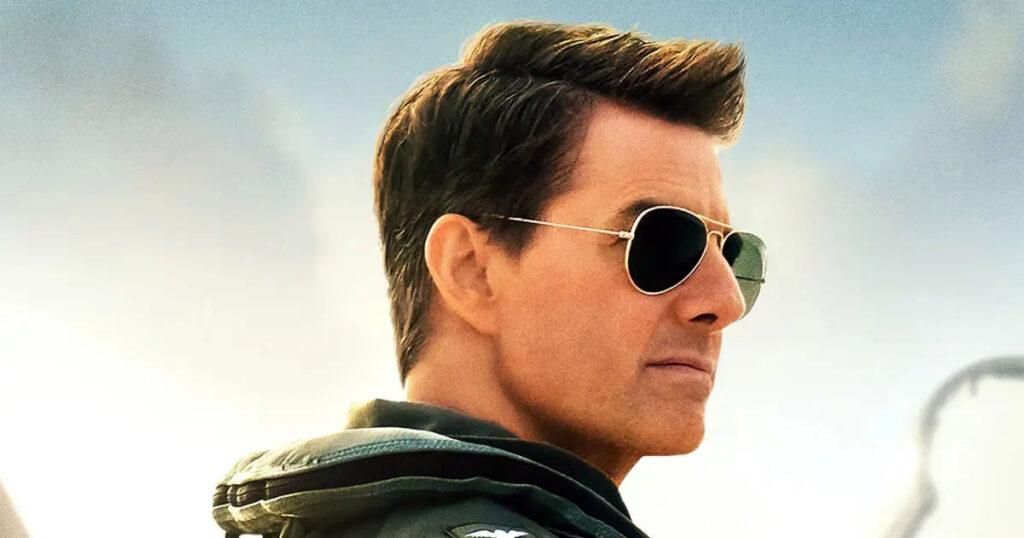
A Legacy Written in Celluloid
Looking at the full, spectacular scope of a Tom Cruise biography, the prevailing sentiment across the entire entertainment landscape is one of sheer, unadulterated awe. When synthesizing the opinions of global media, seasoned film critics, and industry veterans, a unified picture emerges. He is often viewed as a complex paradox: a highly guarded, deeply private individual who is simultaneously willing to bleed, break bones, and risk his very life just to entertain millions of strangers sitting in a dark room.
While the media has occasionally criticized his intense personality or questioned his private beliefs over the years, there is a universal, undeniable respect for his craft. He represents the glorious final chapter of the classic Hollywood movie star era. In a modern landscape completely dominated by comic book characters and cinematic universes, Tom Cruise himself is the franchise. His enduring legacy is his relentless, uncompromising pursuit of perfection, leaving behind an astonishing filmography that will continue to thrill and inspire generations long after the cameras finally stop rolling.