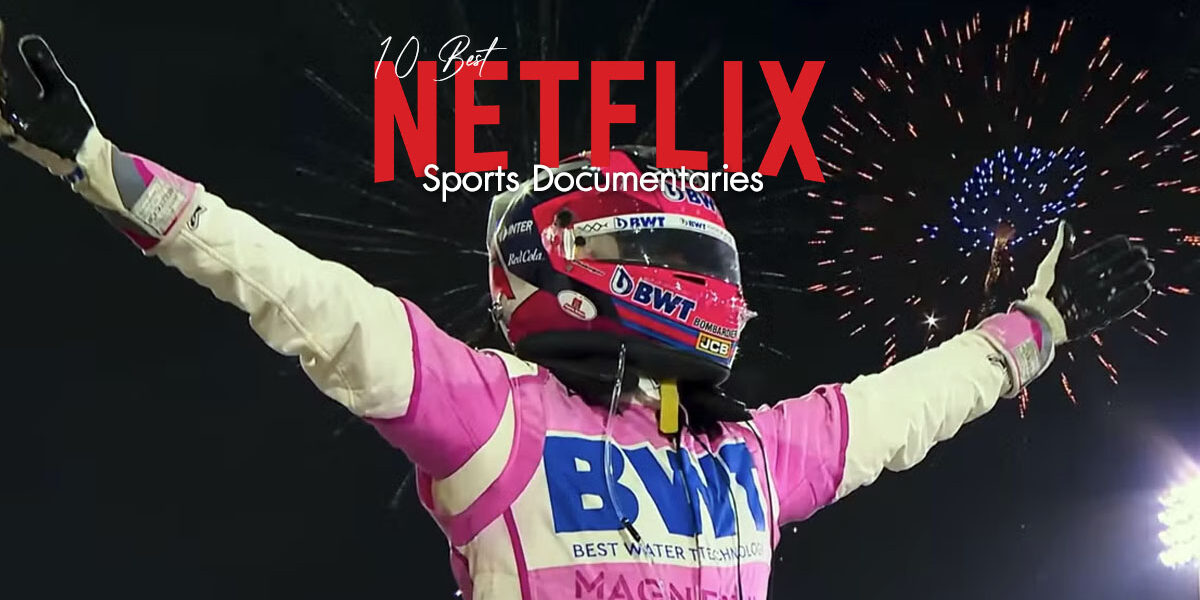
If there is one genre of entertainment that has completely revolutionized the way we consume athletic competition over the past decade, it is undoubtedly the behind-the-scenes docuseries. You no longer have to be a die-hard fan who memorizes batting averages or perfectly understands the offside rule to feel deeply, emotionally invested in an athlete’s personal journey. Today, if you are searching for the best Netflix sports documentaries, you are looking for human drama, unbelievable stakes, and unprecedented access to the locker rooms and personal lives of global superstars. Streaming platforms have figured out that what happens away from the stadium lights—the tears, the rage, the contract disputes, and the injuries—is often far more captivating than the actual game itself.
Netflix has, without a doubt, mastered this specific art form. They have successfully blended the high-stakes reality of competitive, professional sports with the narrative structure and character development of a premium television drama. Whether you are a lifelong fanatic who watches every single match or someone who barely knows the basic rules of the game, these shows are engineered from the ground up to keep you on the edge of your seat. From the pristine, quiet grass courts of Wimbledon to the terrifyingly fast, burning asphalt of Formula 1 circuits, we have ranked the absolute top-tier athletic content available on the platform.
The Cultural Shift: Why Behind-the-Scenes Storytelling Matters More Than Ever
Before we dive into the list, it is worth examining exactly why these shows have become cultural touchstones. For decades, sports journalism was largely restricted to live broadcasts, post-game press conferences, and morning debate shows. Athletes were trained by public relations teams to give the most boring, non-controversial answers possible. Fans were given a sanitized, heavily filtered version of reality.
Then came the streaming era. Production companies realized that fans were starving for authenticity. When you compile a list of the best Netflix sports documentaries, you are essentially curating a list of shows that strip away that PR filter. These series show athletes throwing helmets in frustration, coaches swearing at the top of their lungs, and executives making cold, calculating decisions that ruin careers. This level of access has democratized fandom. It has proven that the universal themes of failure, redemption, aging, and legacy are compelling regardless of the sport being played. You do not need to care about the final score to care deeply about the people playing the game.
With that context in mind, here are the 10 greatest sports documentaries and docuseries currently streaming on Netflix that absolutely deserve a spot at the top of your watch list.
Ranked: The Top 10 Best Netflix Sports Documentaries
10. Untold (Anthology Series)

While most sports documentaries focus on a single championship team or a specific triumphant season, the Untold anthology takes a completely different, and arguably more fascinating, approach. It acts as an investigative, journalistic series, pulling back the curtain on some of the most controversial, bizarre, and widely misunderstood moments in sports history. Instead of glorifying athletes or building them up as flawless heroes, Untold humanizes them by giving them the floor to tell their side of stories that the media often sensationalized or entirely misrepresented.
Standout episodes like “Malice at the Palace” revisit the infamous, violent NBA brawl between the Indiana Pacers and Detroit Pistons fans. Instead of just showing the punches, the documentary offers incredible unseen footage and profound context about the players’ fragile mental states and the toxic atmosphere of the arena. Another gripping chapter, “Crime & Penalties,” follows a minor league hockey team secretly run by a notorious mobster’s teenage son. Untold earns its spot on this list because it thrives in the messy gray areas of sports lore. It forces the audience to reconsider what they thought they knew about headline-grabbing scandals, proving that the truth is always more complicated, tragic, and fascinating than a front-page news snippet.
9. Cheer
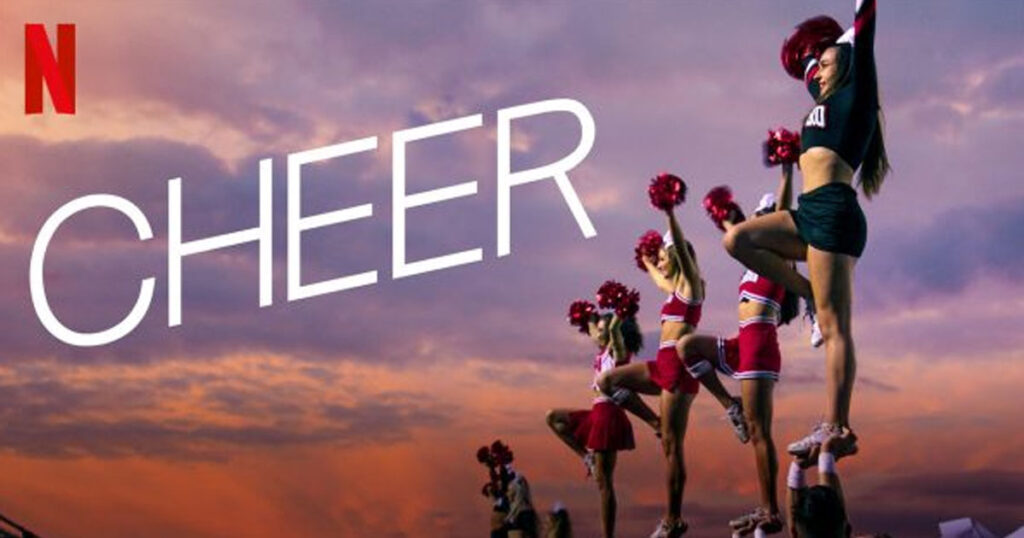
When Cheer first dropped on Netflix, it became an immediate, undeniable cultural phenomenon, dominating social media conversations for weeks. It took a sport that is often unfairly dismissed by traditionalists as mere sideline entertainment and violently exposed it as one of the most physically brutal, intensely competitive, and psychologically demanding activities on the planet. Directed by Greg Whiteley (the brilliant mastermind behind the acclaimed Last Chance U), the series intimately follows the elite competitive cheerleaders of Navarro College in Corsicana, Texas, under the relentless, perfectionist leadership of head coach Monica Aldama.
What makes Cheer so compelling is its unflinching look at the severe physical toll the sport takes on these young, vulnerable athletes. The cameras do not shy away from concussions, shattered limbs, bruised ribs, and the immense, suffocating pressure of performing gravity-defying stunts where a single millimeter of error means catastrophic disaster. Beyond the physical trauma, it is a profoundly moving exploration of troubled youth finding salvation, discipline, and a desperately needed surrogate family on the mat. You will find yourself holding your breath during their chaotic routines and wiping away tears during their vulnerable personal interviews.
8. Tour de France: Unchained

Cycling might not be the most mainstream televised sport in certain parts of the world, particularly in North America, but Tour de France: Unchained proves that you absolutely do not need to understand the complex strategic nuances of a peloton to appreciate pure, unadulterated human suffering and triumph. Produced by the same brilliant creative minds behind our number one pick on this list, this series plunges viewers directly into the chaotic, exhausting, and incredibly dangerous world of the most famous cycling race on earth.
The documentary masterfully captures the sheer madness of 176 elite riders pedaling at breakneck speeds through the treacherous, freezing French Alps and navigating tight, historic village roads. It highlights the fascinating, often contradictory team dynamics—where incredibly talented individuals must sacrifice their own personal glory and endure agonizing pain simply to help a designated team leader win. The bitter rivalries that erupt when massive egos clash are caught entirely on camera. The cinematography is nothing short of breathtaking, but it is the terrifying high-speed crashes, the grueling physical pain, and the incomprehensible mental fortitude of these riders that make Unchained a masterclass in sports storytelling.
7. Sunderland ‘Til I Die
If you are looking for a traditional, uplifting story about glorious victory and athletes lifting shiny trophies amidst falling confetti, you need to look elsewhere. Sunderland ‘Til I Die is the ultimate anti-sports documentary, and that is precisely why it is an absolute masterpiece. This raw series chronicles the catastrophic, humiliating decline of Sunderland Association Football Club, a historic and fiercely beloved English team, following their devastating relegation from the highly lucrative Premier League.
Instead of a triumphant underdog narrative, viewers are treated to a raw, painfully honest look at staggering institutional mismanagement, constant managerial turnover, and the soul-crushing, weekly disappointment of a passionate fanbase that treats football as a religion. The true stars of this documentary are not the wealthy, detached players, but the working-class people of Sunderland. For them, the football club is the beating heart and soul of their entire city. Watching their hopes get systematically dashed week after week is heartbreaking, yet utterly compelling. It perfectly captures the emotional agony of being a dedicated sports fan, earning its place among the best Netflix sports documentaries by reminding us that for every single champion, there are dozens of teams trapped in a miserable cycle of heartbreak.
6. Full Swing

Golf has long carried a pervasive reputation as a slow, quiet, exceptionally polite, and perhaps overly elitist sport. Full Swing violently shatters that outdated perception by throwing viewers directly into the middle of the most chaotic, divisive, and financially turbulent period in professional golf history. Coinciding perfectly with the highly controversial rise of the Saudi-backed LIV Golf league, this documentary captures the historic PGA Tour at a moment of sheer existential crisis, forcing players to choose between historic sporting legacy and life-altering, massive, guaranteed paychecks.
The series is undeniably brilliant at contrasting the wildly different personalities of the sport’s biggest stars. You get an inside look at the relentless, intense perfectionism of Justin Thomas, the heartbreaking self-doubt and relatable imposter syndrome of fan-favorite Joel Dahmen, and the unapologetic, aggressive swagger of Brooks Koepka. By completely removing the polite, whispered commentary of traditional Sunday afternoon golf broadcasts, Full Swing reveals the agonizing mental pressure of a sport where you are entirely on your own. There are no teammates to bail you out; it is just a deeply flawed man, a metal club, and his own internal demons.
5. Break Point

Tennis is arguably the most psychologically isolating and mentally taxing sport in the world, and Break Point does an exceptionally thorough job of capturing the silent mental warfare that happens on the court between every single point. Following the next generation of hungry tennis stars as they travel the globe competing in gruelling Grand Slams, the series serves as a fascinating documentation of the passing of the torch. With legendary, foundational figures like Serena Williams, Roger Federer, and Rafael Nadal stepping away or aging out of the game, a massive vacuum has opened at the top of the sport, and the desperate scramble to fill it is intense.
The show excels by getting deeply, uncomfortably personal with highly scrutinized players like Nick Kyrgios, Taylor Fritz, and Paula Badosa. It prominently showcases the dark, rarely discussed side of solo elite sports: the crippling anxiety, the toxic, damaging relationship with social media criticism, and the immense, lonely pressure of living out of a suitcase in hotel rooms while trying to maintain normal personal relationships. Break Point effectively highlights the razor-thin margins between being a solidly good player and an immortal Grand Slam champion.
4. Quarterback

The National Football League is notoriously, frustratingly guarded when it comes to granting behind-the-scenes access to its players, which is exactly what makes Quarterback such a rare and spectacular cinematic achievement. Following three very distinctly different quarterbacks—generational superstar Patrick Mahomes, reliable veteran Kirk Cousins, and struggling journeyman Marcus Mariota—throughout the entirety of the grueling 2022 season, the series provides unprecedented, unfiltered insight into what is widely considered the most difficult individual position in professional team sports.
Viewers are treated to the intense, agonizing physical recovery required in the training room after taking massive, car-crash-like hits on Sunday afternoons. The documentary highlights the endless, exhausting hours of intricate film study, and the complex challenge of balancing a growing family life with the all-consuming, obsessive nature of the NFL. Hearing the live, mic’d-up audio during actual games reveals the chaotic, violent, and deafening nature of the sport in a way traditional television broadcasts simply never can. It is an absolute must-watch for American football fans and solidifies itself as one of the best Netflix sports documentaries by providing a brilliant study in leadership, resilience, and sheer intellectual capacity.
3. The Redeem Team
While many of the documentaries on this list focus on a whole season or a prolonged career arc, The Redeem Team zeroes in on a highly specific, historically high-stakes mission: the United States Men’s Basketball team’s desperate quest to reclaim global dominance and win gold at the 2008 Beijing Olympics. Following the embarrassing, highly publicized bronze-medal finish in Athens in 2004, the entire US basketball program needed a total philosophical overhaul. This feature-length documentary chronicles exactly how legendary Coach Mike Krzyzewski managed the massive, fragile egos of NBA superstars to create a cohesive, patriotic, and unstoppable unit.
At the emotional center of the film is the late, great Kobe Bryant. The documentary serves as a beautiful, intense, and moving tribute to his legendary, ruthless “Mamba Mentality.” Seeing unseen, behind-the-scenes footage of Kobe setting the strict tone for younger, developing stars like LeBron James and Dwyane Wade—whether it is hitting the weight room at 4:00 AM or intentionally, violently running through the chest of his own Los Angeles Lakers teammate, Pau Gasol, in the opening play of the gold medal game—is nothing short of absolute cinematic magic. It is a phenomenal, tightly paced story of redemption, brotherhood, and intense national pride.
2. The Last Dance
Though originally co-produced with ESPN and aired on traditional television, The Last Dance found its massive, unprecedented global audience on Netflix, becoming a vital cultural touchstone during the 2020 global lockdowns. It is not an exaggeration to say it remains one of the greatest achievements in the entire history of sports filmmaking. The sprawling 10-part miniseries chronicles the legendary, mythic career of Michael Jordan and the 1990s Chicago Bulls dynasty, specifically focusing the narrative lens on their dramatic final championship run in the 1997-98 season.
What truly elevates The Last Dance from a standard highlight reel to high art is its uncompromising, brutally honest look at Jordan’s tyrannical, hyper-competitive leadership style. It does not just show the beautiful, gravity-defying dunks and iconic game-winning shots; it explicitly shows Jordan verbally bullying teammates, holding petty grudges for literally decades, and operating with a near-sociopathic desire to win at all costs. Supported by an incredibly curated 90s hip-hop soundtrack and phenomenal, surprisingly candid interviews with Scottie Pippen, Dennis Rodman, and Phil Jackson, it is a masterfully edited time capsule of a bygone era when one single man essentially owned and dictated global pop culture.
1. Formula 1: Drive to Survive
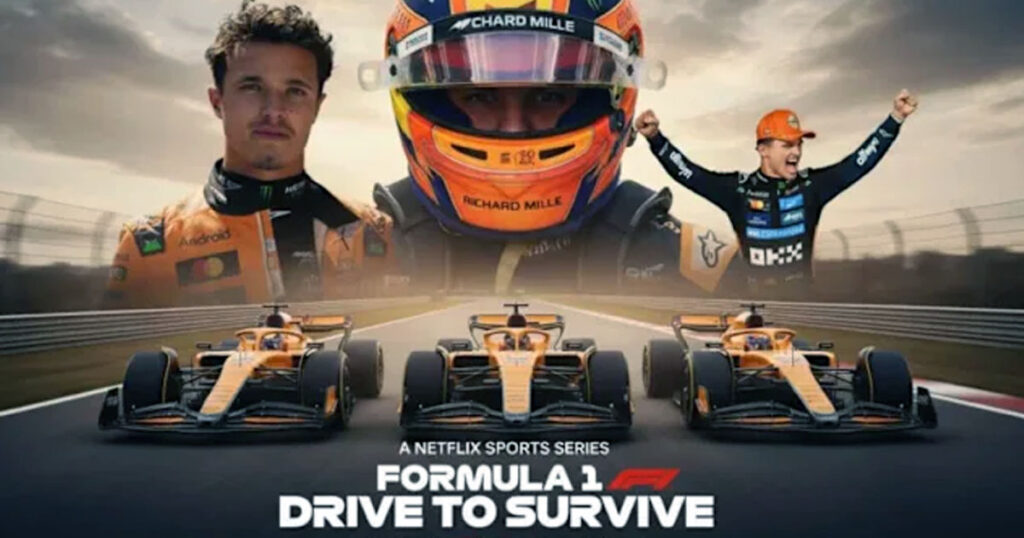
It is simply impossible to have a serious conversation about the best Netflix sports documentaries without deeply acknowledging the absolute, undisputed king of the entire genre. Formula 1: Drive to Survive did not just document a racing series; it fundamentally, permanently changed the global financial trajectory of a multi-billion-dollar sporting industry. Before this series existed, F1 was largely viewed by outsiders—particularly in the United States—as an elite, slightly snobby, and somewhat repetitive European racing procession. Drive to Survive aggressively transformed it into the most dramatic, soap-opera-like spectacle on television.
The absolute genius of Drive to Survive lies in its incredibly smart shifting focus. While the fierce championship battles at the front of the grid between titans like Lewis Hamilton and Max Verstappen are undeniably thrilling, the show deeply understands that the desperate fight for seventh place at the back of the pack is often just as dramatically compelling. It brilliantly introduced the wider world to charismatic, highly stressed, and notoriously foul-mouthed team principals like Haas’s Guenther Steiner and Red Bull’s Christian Horner. It highlighted the terrifying, cutthroat reality where young drivers can lose their multi-million-dollar career seats after just a few bad afternoons on the track.
The technical execution of the show is flawless. The visceral sound design makes you physically feel the heavy vibrations of the V6 hybrid engines rattling in your chest. The incredibly tight editing turns routine, two-second pit stops into heart-stopping, sweaty-palm thrillers. But above all the technical achievements, it is the unfiltered garage politics, the bitter interpersonal rivalries, and the intense, ever-present danger of piloting a fragile carbon-fiber missile at 200 mph that makes this the absolute pinnacle of sports television. Drive to Survive is the modern blueprint that every single other sports documentary in production today is currently trying to aggressively copy, yet it proudly remains entirely undisputed at number one.
Final Thoughts on the Era of Sports Storytelling
When we look back comprehensively at the massive explosion of these behind-the-scenes docuseries over the past few years, it becomes abundantly clear that they represent a massive, permanent paradigm shift in modern media consumption. The general consensus among leading cultural critics, veteran sports journalists, and media analysts is that the traditional post-game interview—filled with boring, repetitive clichés and heavily PR-trained, robotic responses—is completely dead and buried. Audiences today demand the messy, complicated, human truth.
While sports purists and some traditional journalists will occasionally argue that these blockbuster shows dangerous blur the ethical line between objective sports journalism and dramatized reality television—often leaning heavily into artificially fabricated rivalries and utilizing selective editing to craft a specific, dramatic narrative—their massive cultural impact is entirely undeniable. They have effectively democratized global fandom. They have proven, time and time again, that you do not need to care about the final box score to care deeply, passionately about the people playing the game.
By taking individuals who were previously viewed simply as athletes and turning them into fully realized, deeply flawed, and incredibly vulnerable human characters, these documentaries have forever changed the landscape. They have ensured that the emotional stories told off the field, in the quiet moments of the locker room or the tense silence of a hotel suite, will forever be just as important, if not more so, than the live action happening under the stadium lights.