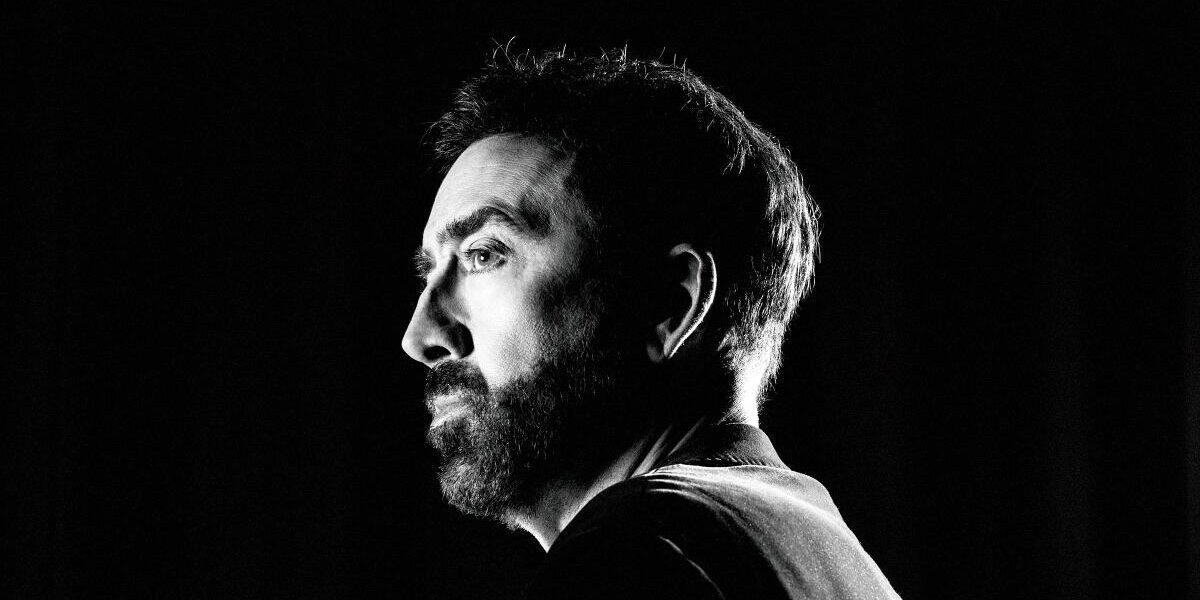
There is perhaps no actor in modern cinematic history quite as polarizing, fascinating, and thoroughly unpredictable as the man born Nicolas Kim Coppola. When you examine the Nicolas Cage career, you are not simply looking at a chronological list of film credits. Instead, you are bearing witness to a wild, chaotic, and utterly triumphant roller-coaster narrative.
He is an actor who has touched the absolute zenith of Hollywood prestige, plummeted into the deepest trenches of direct-to-video obscurity, and somehow, against all conventional industry logic, clawed his way back to critical adoration.
To understand Cage is to accept a paradox. He is a man capable of delivering nuanced, heartbreaking performances that can move audiences to tears. Conversely, he is equally capable of screaming the alphabet while wearing vampire teeth, completely unmoored from the reality of the scene around him. Consequently, people often ask: Is Nicolas Cage a good actor, or a bad one? The truth, as his decades-spanning career proves, is that he is neither. He is simply Nicolas Cage, a genre unto himself.
This is the story of how a young man desperate to escape a famous shadow became an Oscar-winning heavyweight, transformed into a global action superstar, lost everything to eccentric financial ruin, became a living internet meme, and ultimately orchestrated one of the greatest comebacks in entertainment history.
Escaping the Shadow: The Coppola Dilemma
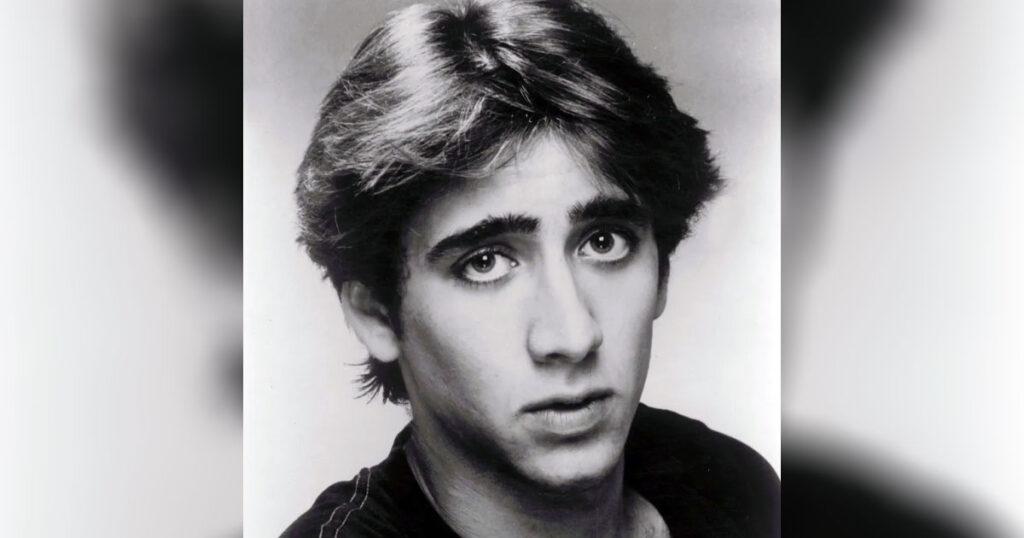
To begin with, we must look at his roots. Nicolas Kim Coppola was born on January 7, 1964, into what can only be described as Hollywood royalty. His uncle is Francis Ford Coppola, the legendary director of The Godfather and Apocalypse Now. His aunt is Talia Shire. Naturally, growing up in such a profoundly artistic environment gave him early access to the magic of cinema. However, it also handed him a suffocating burden.
When a young Nicolas began auditioning for roles in the early 1980s, he found the Coppola name to be more of a curse than a blessing. Casting directors either wanted to use him to get closer to his famous uncle, or they judged him far more harshly, assuming he was merely a product of nepotism. Furthermore, his fellow actors would mock him on set. He needed an out. He needed a clean slate.
Therefore, he legally changed his name to Nicolas Cage. The inspiration was twofold: he drew from the Marvel comic book superhero Luke Cage, a character known for unbreakable skin (something the young actor desperately needed), and the avant-garde composer John Cage, representing his innate desire to push artistic boundaries.
Armed with a new identity, Cage began to carve his own path. He wasn’t the classic leading man. He was lanky, had a receding hairline even in his twenties, and spoke with a distinctive, slightly nasal drawl. Yet, he possessed a raw, manic energy that was impossible to ignore. His breakthrough came in 1983’s Valley Girl, where he played a charming punk rocker. Subsequently, he delivered memorable, eccentric performances in films like Raising Arizona (1987) and Moonstruck (1987).
During this era, Cage began developing his own acting methodology. While his peers were studying the quiet, internal realism of Stanislavski and Lee Strasberg, Cage was looking backward. He studied the exaggerated, highly expressive acting of the silent film era, particularly German Expressionism. He eventually coined a term for his personal acting style: “Nouveau Shamanic.” It was loud, it was physical, and it was entirely unrestrained.
The Taste of Gold: Leaving Las Vegas
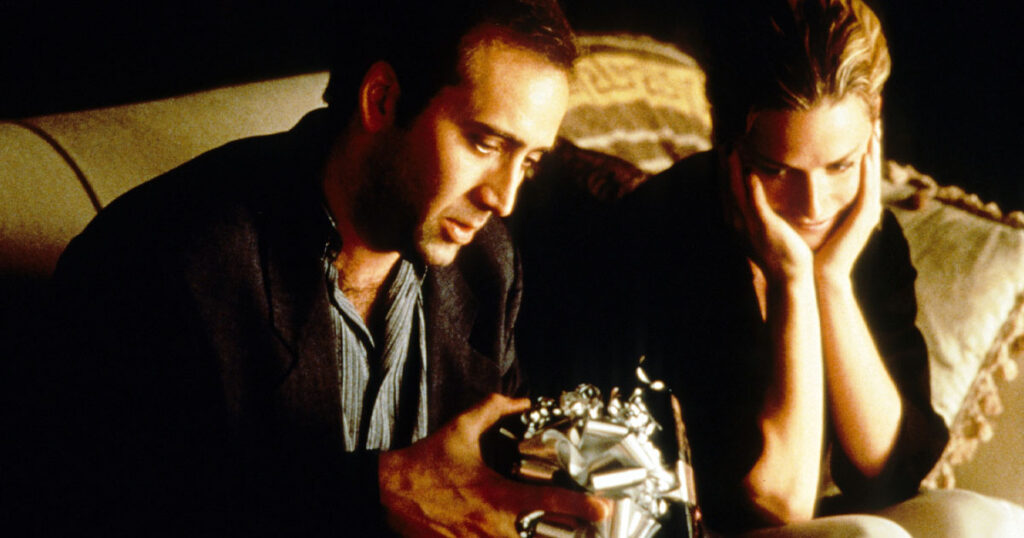
Despite his growing reputation as Hollywood’s favorite weirdo, few critics were prepared for what he would unleash in the mid-1990s. In 1995, Cage took on the role of Ben Sanderson in Mike Figgis’s bleak, micro-budget drama Leaving Las Vegas.
The film tells the harrowing story of a severe alcoholic who travels to Las Vegas with the express intention of drinking himself to death, only to form a tragic bond with a sex worker played by Elisabeth Shue. For this role, Cage pushed himself to the absolute limit. He famously filmed himself heavily intoxicated to study his own slurred speech and erratic movements. He interviewed chronic alcoholics and visited treatment centers.
The result was nothing short of a masterpiece. Cage’s performance was terrifying, heartbreaking, and profoundly human. He didn’t just play a drunk; he embodied the desperate, physical agony of addiction. Consequently, the industry could no longer write him off as just a quirky character actor.
In March 1996, the ultimate validation arrived. Nicolas Cage won the Academy Award for Best Actor. He had officially reached the pinnacle of his profession. He wasn’t Francis Ford Coppola’s nephew anymore. He was an Oscar winner.
The Unlikely Action God of the 90s
Winning an Academy Award usually dictates an actor’s next steps. Typically, they pursue more prestige dramas, hoping to secure further nominations. Nicolas Cage, however, has never followed the traditional playbook. Instead of making another quiet indie film, he immediately pivoted and became the biggest action star on the planet.
Between 1996 and 1997, Cage starred in a holy trinity of blockbuster action movies: The Rock, Con Air, and Face/Off.
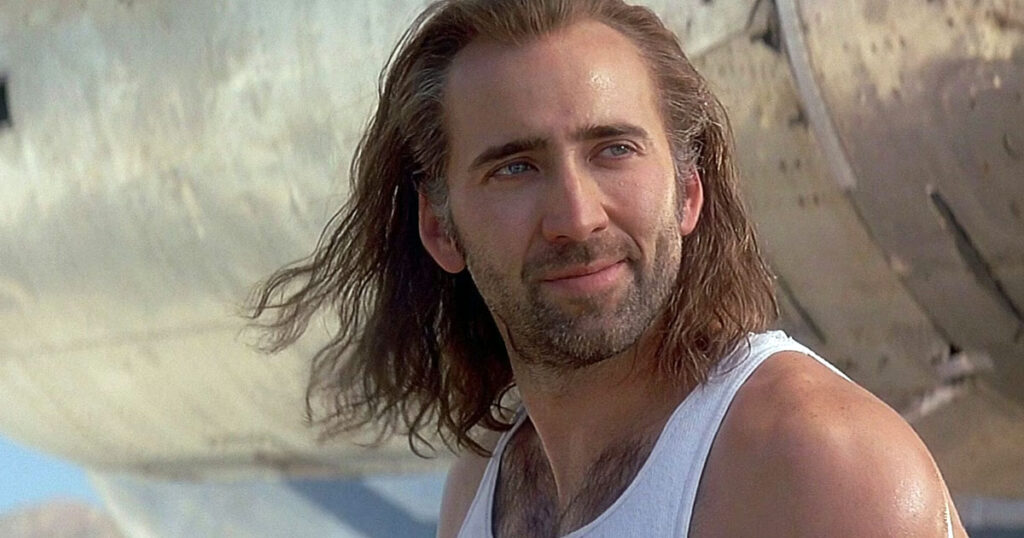
In The Rock, he played Stanley Goodspeed, a mild-mannered chemical weapons specialist thrust into a high-stakes hostage situation. He brought an anxious, neurotic energy to the role, perfectly complementing Sean Connery’s stoic presence. The following year, he grew out his hair, adopted a thick Southern drawl, and played the paroled Army Ranger Cameron Poe in Con Air. Finally, he reached the apex of beautiful cinematic madness in John Woo’s Face/Off, where he and John Travolta literally swapped faces—and acting styles—in a masterclass of over-the-top theatricality.
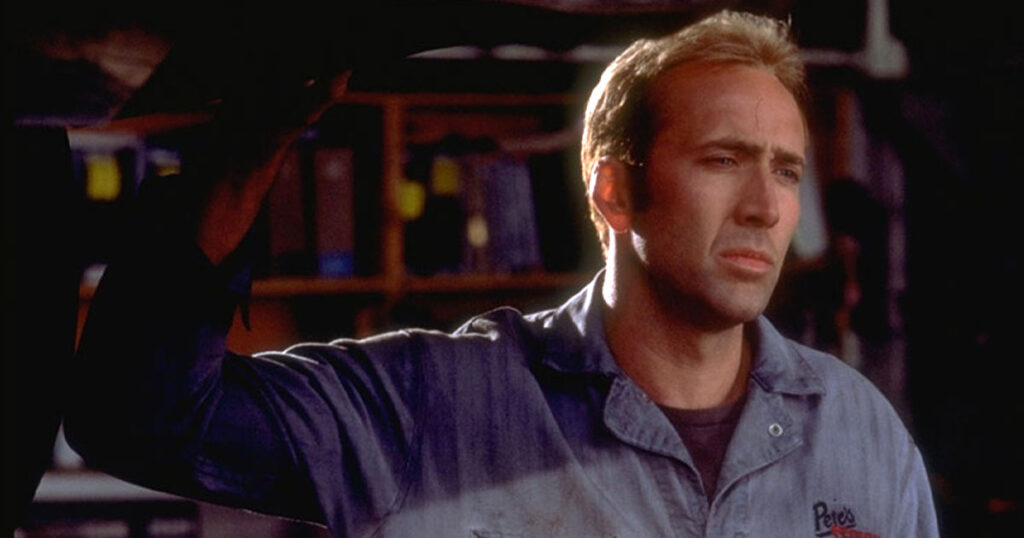
These films were massive global hits. Furthermore, they established a new archetype: the thinking man’s action hero. Cage wasn’t built like Arnold Schwarzenegger or Sylvester Stallone. He looked like a regular guy who had been pushed past his breaking point. Audiences loved it. By the early 2000s, he was commanding $20 million a picture. He followed up with massive hits like Gone in 60 Seconds (2000) and National Treasure (2004), solidifying his status as a box-office titan.
He was on top of the world. But as the old saying goes, the bigger they are, the harder they fall.
Castles, Skulls, and Financial Ruin

To understand the downfall of Nicolas Cage, one must understand his spending habits. Cage did not spend his millions like a standard wealthy celebrity buying yachts and penthouses. Instead, he spent his money like a 12-year-old boy who had suddenly been granted infinite wishes.
His acquisitions became the stuff of Hollywood legend. He purchased a 67-million-year-old Tarbosaurus dinosaur skull for $276,000 (outbidding Leonardo DiCaprio in the process), which he later had to return when it was discovered the skull had been stolen from Mongolia. Moreover, he bought two European castles, a deserted island in the Bahamas, a fleet of Rolls Royces, shrunken pygmy heads, a pet octopus (which he claimed helped him with his acting), and an incredibly rare, pristine copy of Action Comics #1 (the first appearance of Superman).
Perhaps most notoriously, he purchased the infamous LaLaurie Mansion in New Orleans, widely considered to be one of the most haunted houses in America. Cage reportedly bought it to find inspiration to write a horror novel, though the novel never materialized.
For a while, his massive paychecks could support this eccentric lifestyle. However, the 2008 global financial crisis hit his real estate portfolio hard. Simultaneously, the Internal Revenue Service (IRS) came knocking. It was revealed that Cage owed an astonishing $14 million in back taxes.
Suddenly, the Oscar winner and box-office king was completely broke. He faced financial ruin and the very real threat of losing everything. He needed money, and he needed it immediately. This desperate financial situation triggered the most criticized—and misunderstood—era of his career.
The VOD Wilderness and Meme Culture
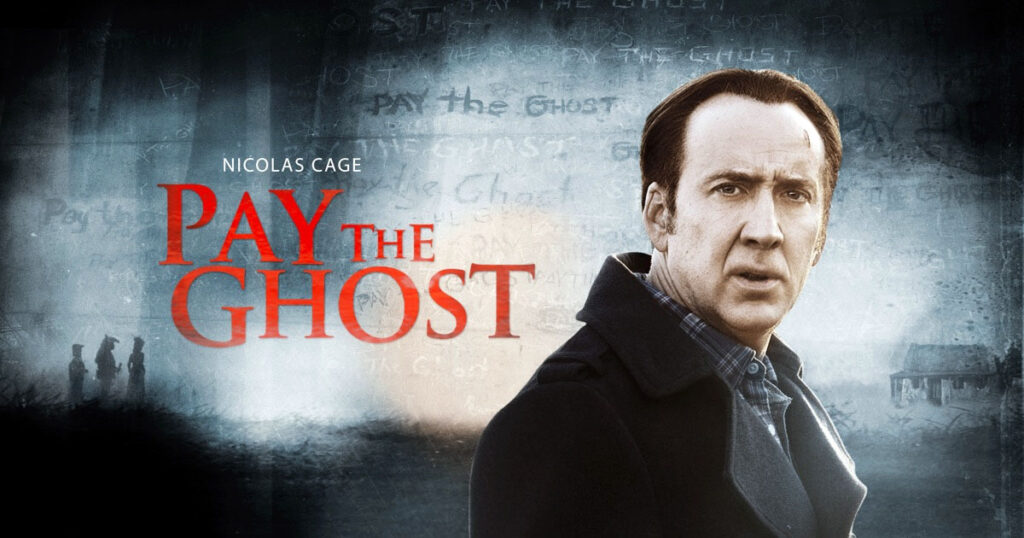
To pay off the IRS and avoid bankruptcy, Cage adopted a simple philosophy: never say no to a paycheck. From roughly 2010 to 2018, Cage entered what fans refer to as the VOD (Video on Demand) era.
He starred in dozens of low-budget, direct-to-video thrillers, sci-fi B-movies, and poorly written action flicks. Films like Left Behind, Pay the Ghost, Arsenal, and Grand Isle flooded streaming services and Walmart discount bins. The quality of these films was generally abysmal. Consequently, critics mercilessly mocked him, declaring his career dead and buried.
During this period, the internet culture evolved, and Cage found himself becoming something he never intended: a living meme. Supercuts of his most unhinged acting moments—screaming about bees in The Wicker Man remake, wildly laughing in Face/Off, or exhibiting bizarre facial expressions in Vampire’s Kiss—garnered millions of views on YouTube. “Nicolas Cage Losing His Mind” became a viral genre.
Many actors would have been destroyed by this. They would have retreated into hiding, humiliated by the public mockery. Yet, Cage kept working. And if you look closely at those terrible VOD movies, you will notice something fascinating. Even in the worst script, with the cheapest sets and the most incompetent directors, Nicolas Cage never phoned it in. He gave 100% of his manic energy to every single role, treating a B-movie monster flick with the same gravity he gave to a Martin Scorsese picture.
He was slowly paying off his debts, one terrible movie at a time. And in doing so, he was unknowingly setting the stage for his redemption.
The Cage-aissance: Reclaiming the Crown
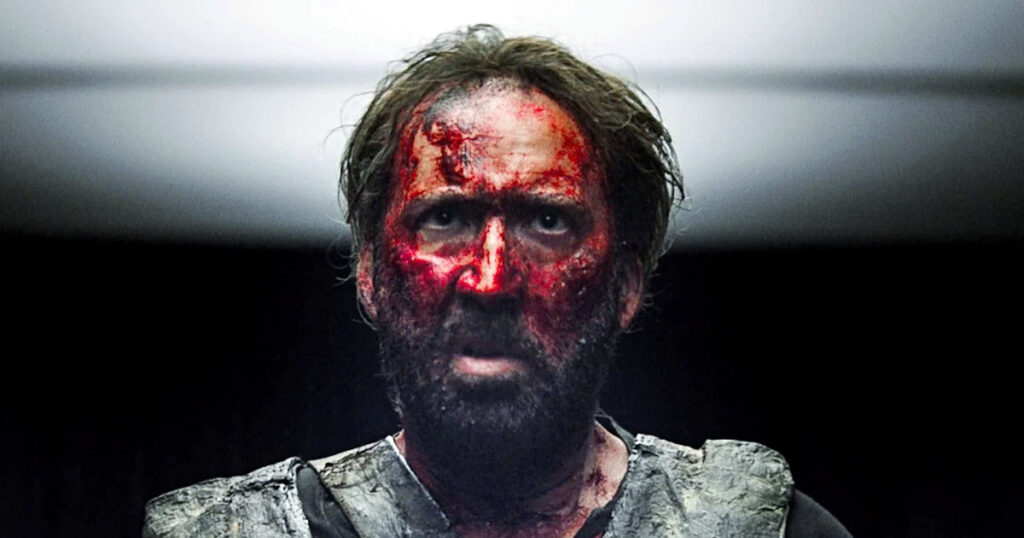
The turning point began subtly around 2018. Having finally cleared the bulk of his massive IRS debt, Cage suddenly had the freedom to choose his roles based on artistic merit rather than sheer financial desperation. The renaissance—affectionately dubbed the “Cage-aissance”—had begun.
It started with Panos Cosmatos’s Mandy (2018). In this psychedelic, neon-drenched revenge horror, Cage delivered a performance of terrifying, grief-stricken rage. The film was a critical darling, and audiences suddenly remembered: Oh right, this guy is actually a genius. He followed this with a delightfully bizarre turn in the H.P. Lovecraft adaptation Color Out of Space (2019).
However, the true masterpiece of his modern era arrived in 2021 with the independent drama Pig. When the premise was announced—Nicolas Cage plays a truffle hunter whose beloved foraging pig is kidnapped—audiences expected a ridiculous, hyper-violent John Wick clone. What director Michael Sarnoski delivered instead was a profound, quiet meditation on grief, loss, and the artistic soul.
Cage’s performance as Rob was a revelation. Stripped of his usual manic tics and explosive outbursts, he gave a quiet, soulful, and deeply restrained performance. It was widely considered his best work since Leaving Las Vegas. He won numerous critical awards and was heartbreakingly snubbed for an Oscar nomination. Pig proved definitively that the raw talent had never left him; it had merely been buried under a mountain of debt and bad scripts.
Subsequently, he embraced his own mythical status. In 2022, he starred in The Unbearable Weight of Massive Talent, an action-comedy where he played a fictionalized, highly neurotic version of himself. It was a brilliant, meta-textual celebration of his entire career, proving he possessed a wonderful sense of humor about his own chaotic legacy.
The Future and an Indelible Legacy
As we look toward the future, the Nicolas Cage career has entered an exciting, unpredictable new phase. He is no longer defined by his uncle’s name, nor is he bound by the IRS. He is a free agent, moving seamlessly between mainstream projects and bizarre indie experiments.
Recently, his performance in the A24 surrealist comedy Dream Scenario (2023) earned him a Golden Globe nomination, proving that his appetite for unique, challenging cinema remains unsated. Furthermore, his terrifying turn as an occult serial killer in the 2024 horror hit Longlegs showcased an actor who is entirely unafraid to make audiences profoundly uncomfortable. He is currently attached to several high-profile projects, including a live-action Spider-Man Noir series, bringing his lifelong love of comic books full circle.
Ultimately, when analyzing the trajectory of this fascinating man, standard Hollywood metrics simply do not apply. If you ask industry insiders, critics, and film historians to define his legacy today, a clear consensus emerges. Nicolas Cage is not a standard movie star, nor is he a conventional method actor. He is something much rarer: a genuine cinematic risk-taker.
In a modern entertainment landscape increasingly dominated by safe choices, focus groups, and sanitized performances, Cage stands as a beacon of artistic rebellion. He reminds us that movies should sometimes be weird, that performances should sometimes make us uncomfortable, and that true art requires the courage to occasionally look foolish. He survived the crucible of fame, the crushing weight of debt, and the cynical mockery of the internet, emerging on the other side as a beloved cultural icon. We are fortunate to have him, madness and all.