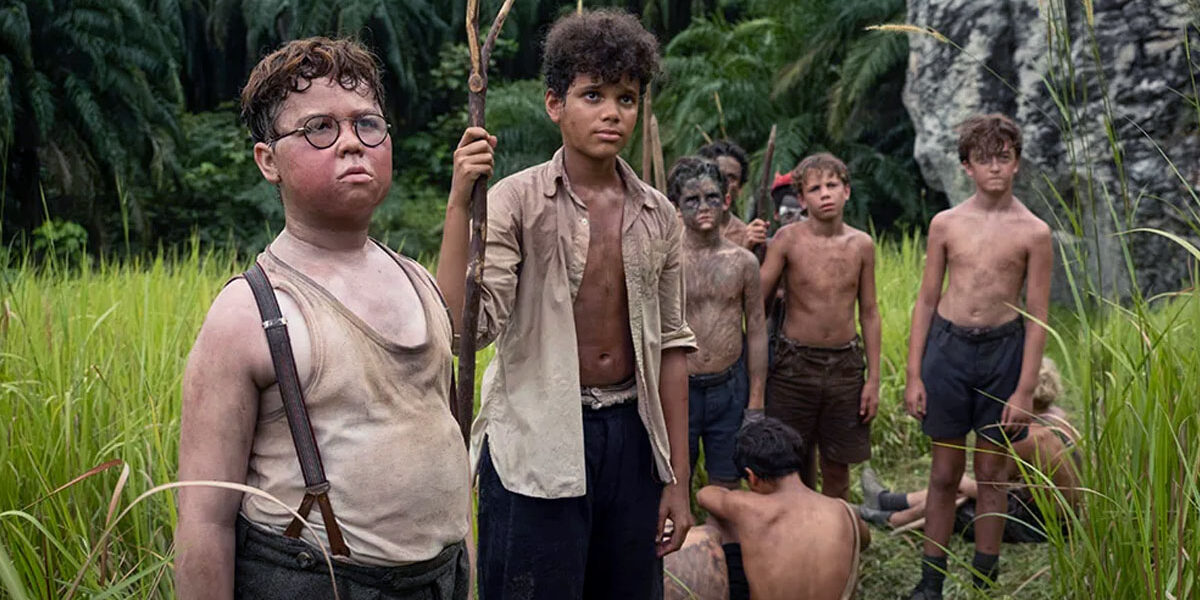
When you pick up a book about a group of British schoolboys stranded on a beautiful, uninhabited tropical island, you might initially expect a lighthearted tale of adventure. Perhaps something resembling Swiss Family Robinson or a playful story of childhood resilience. However, as any honest Lord of the Flies review will tell you, William Golding had a much darker, much more profound vision in mind.
Published in 1954, Lord of the Flies is not a story about the triumph of the human spirit. Instead, it is a chilling, meticulous dissection of how quickly the veneer of civilization can peel away to reveal the raw, unbridled savagery beneath.
Even decades after its release, Golding’s masterpiece remains a staple in classrooms and a cornerstone of 20th-century literature. But does it still hold up for modern readers? In this comprehensive Lord of the Flies review, we will dive deep into the island’s dense jungles to explore why this novel continues to terrify, fascinate, and provoke thought.
The Illusion of Paradise

The premise is brilliantly simple. During an unnamed wartime evacuation, an airplane carrying a group of young boys crashes on a deserted coral island. No adults survive. At first, the island seems like a utopia. There are no rules, no bedtimes, and no parents to dictate their lives.
The early chapters are filled with the kind of pure, unadulterated joy you would expect from children let loose in a tropical playground. They swim in the lagoon, feast on abundant fruit, and revel in their newfound absolute freedom.
However, Golding wastes no time in introducing the underlying tension. The boys quickly realize that survival requires structure. They hold an assembly, establish a makeshift democracy using a beautiful conch shell to determine who has the right to speak, and elect a leader. For a brief, fleeting moment, it seems like order might actually prevail.
A Clash of Ideals: Ralph vs. Jack
The heart of the novel’s conflict beats through its two central characters: Ralph and Jack. Their dynamic is the engine that drives the story from a tale of survival into a psychological thriller.
Ralph represents the desperate cling to civilization. He is pragmatic, focused on building shelters, maintaining a signal fire for rescue, and upholding the rules of the conch. Ralph isn’t a perfect leader—he frequently doubts himself and sometimes loses sight of his own goals—but he genuinely wants what is best for the group’s collective future.
On the other end of the spectrum is Jack Merridew. Initially the leader of a choir group, Jack is authoritative, aggressive, and fiercely drawn to the thrill of the hunt. While Ralph looks at the horizon hoping for a ship, Jack looks into the jungle hunting for pigs.
Jack represents our primal instincts: the desire for power, the allure of violence, and the intoxicating rush of dominating others. As the story progresses, Jack’s transformation from a disciplined choirboy to a painted savage is one of the most unsettling character arcs in modern literature.
The Voice of Reason and the Visionary
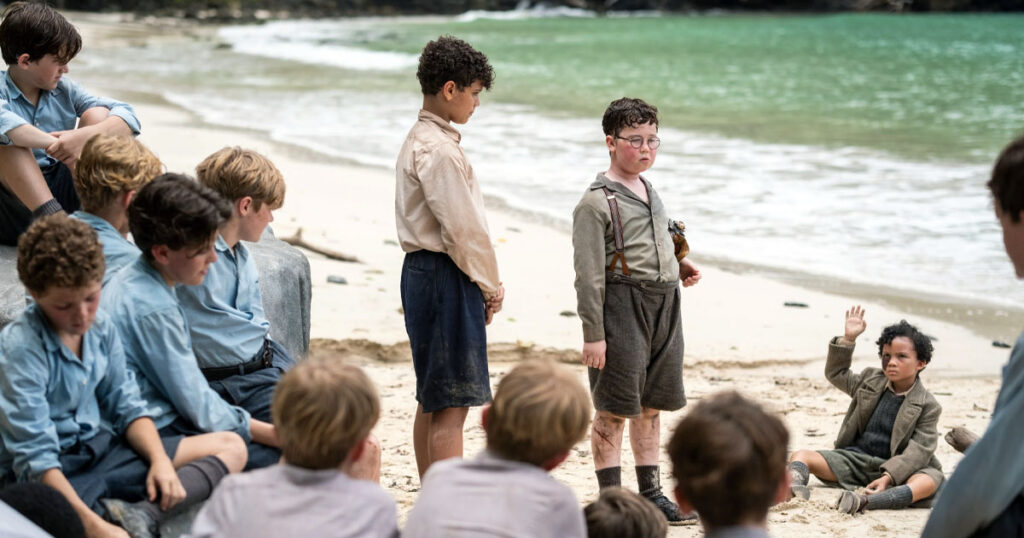
No Lord of the Flies review would be complete without acknowledging two of the most tragic and essential characters: Piggy and Simon.
Piggy is the intellectual backbone of the group. Overweight, asthmatic, and nearsighted, he is the classic outcast. Yet, Piggy is the only one who truly understands the importance of rules and the devastating consequences of abandoning them. His glasses, which are used to start the vital signal fire, are a brilliant symbol of science, clarity, and intellectualism. Watching the other boys slowly strip Piggy of his dignity—and eventually his humanity—is agonizing.
Then there is Simon. While the other boys are busy either building shelters or hunting pigs, Simon wanders alone into the heart of the jungle. He is the mystic of the group, deeply connected to nature and perceptive in a way the others are not.
Simon is the only character who realizes the terrifying truth about the “beast” that the boys believe is hunting them. He understands that the beast isn’t a physical monster hiding in the dark, but the inherent evil residing within each of them. His realization provides the novel’s philosophical core, leading to one of the most haunting and beautifully written sequences in the book.
Masterful Use of Symbolism
One of the reasons Lord of the Flies is endlessly analyzed is Golding’s heavy, yet effective, use of symbolism. He does not simply tell us that society is collapsing; he shows us through the degradation of physical objects.
The conch shell, initially vibrant and deeply respected, slowly loses its color and its authority as the boys descend into chaos. It becomes fragile, much like the democratic systems it represents.
Piggy’s glasses undergo a similar fate. As one lens is broken, the group’s vision of logic and reason becomes fractured. When the glasses are completely stolen by Jack’s tribe, the light of intellect goes out completely, plunging the island into metaphorical darkness.
And then, of course, there is the titular “Lord of the Flies”—a severed pig’s head mounted on a sharpened stick, swarming with insects. It is a grotesque monument to fear and savagery. When Simon confronts it, the head “speaks” to him, confirming the novel’s darkest thesis: evil cannot be hunted or killed, because it lives inside the hunters themselves.
Pacing and Prose
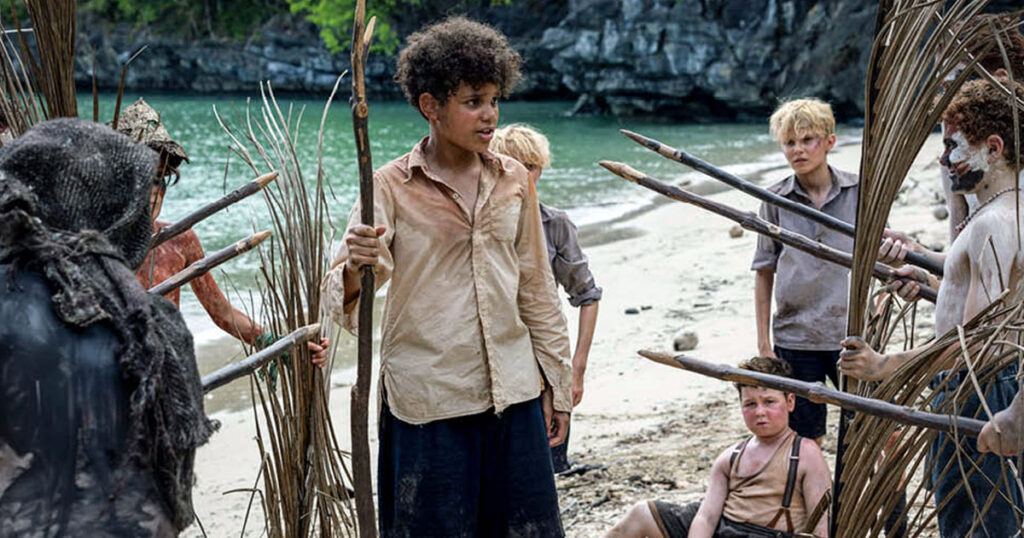
Golding’s writing style is a fascinating mix of lush, poetic descriptions and stark, brutal action. His descriptions of the island are breathtaking. You can almost feel the heat of the tropical sun burning your shoulders and hear the deafening roar of the ocean crashing against the reef.
However, the pacing can occasionally feel slightly uneven for modern readers. The middle chapters, detailing the slow, creeping dread and the endless meetings, can feel a bit repetitive. But this is arguably intentional. Golding makes the reader feel the exhausting, draining reality of being stranded.
When the violence finally erupts in the third act, it happens with terrifying speed. The transition from minor bullying to absolute, tribal warfare is jarring, leaving the reader breathless as the island is consumed by madness and literal fire.
Why It Still Matters Today
It is easy to look at Lord of the Flies as a product of its time. Written shortly after the horrors of World War II, Golding—who served in the Royal Navy—witnessed firsthand the atrocities humans were capable of inflicting upon one another. He wrote the book as a direct rebuttal to the optimistic Victorian adventure stories that claimed British boys would always behave like proper gentlemen.
But reading it today, the novel feels disturbingly relevant. You do not need an isolated island to see Golding’s themes play out. We see the fracturing of society, the appeal of charismatic but dangerous leaders, and the silencing of reason in our modern political landscapes and even in the toxic echo chambers of social media.
The novel forces us to ask uncomfortable questions. If the rules of society were suddenly removed tomorrow, how long would it take for our own inner savages to emerge? Are we truly inherently good, or are we simply kept in check by the fear of punishment and the comfort of laws?
The Verdict and Final Thoughts
In concluding this Lord of the Flies review, it is important to address how the novel is perceived in the wider literary landscape today. Many modern critics and media outlets point out that Golding’s view of humanity is unyieldingly cynical, perhaps even overly pessimistic. Some argue that real-life instances of castaways have shown humans acting with far more cooperation and empathy than Jack’s tribe of hunters.
However, looking at the broader spectrum of global history and contemporary society, it is hard to dismiss Golding’s warning. Lord of the Flies is not necessarily claiming that humanity is purely evil, but rather that civilization is incredibly fragile. It is a thin, delicate shell that requires constant, conscious effort to maintain.
The novel remains a devastatingly brilliant piece of literature. It is an uncomfortable mirror held up to our own faces, reflecting the dark corners of our psychology that we would rather ignore. We read Golding’s masterpiece not to wallow in despair about our inherent darkness, but to recognize it, understand it, and consciously choose to protect the light of civilization every single day. If you have not read it since high school, or if you have never picked it up at all, it is time to return to the island. Just be prepared for what you might find hiding in the jungle.