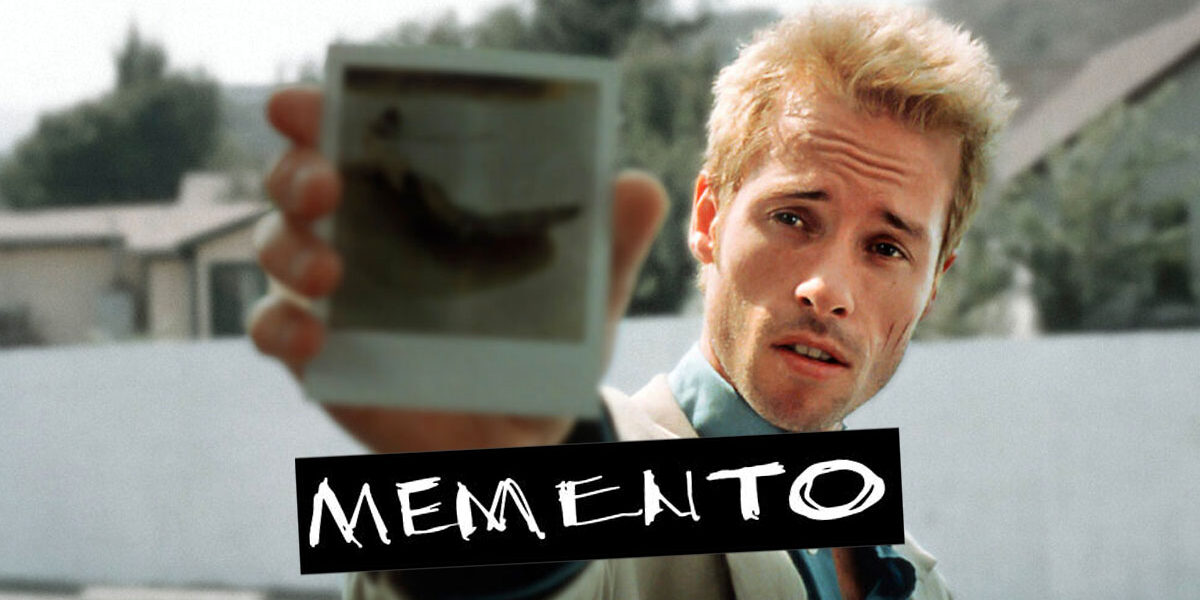
When Christopher Nolan first burst onto the mainstream cinematic stage, he didn’t just knock on the door; he dismantled it, reassembled it backward, and left audiences entirely disoriented. Released in 2000, Memento remains one of the most rigorously analyzed psychological thrillers in film history. For anyone looking for the ultimate Memento movie explained, you have to understand that this film is not just a murder mystery. It is an exploration of grief, self-deception, and the fragile architecture of human memory.
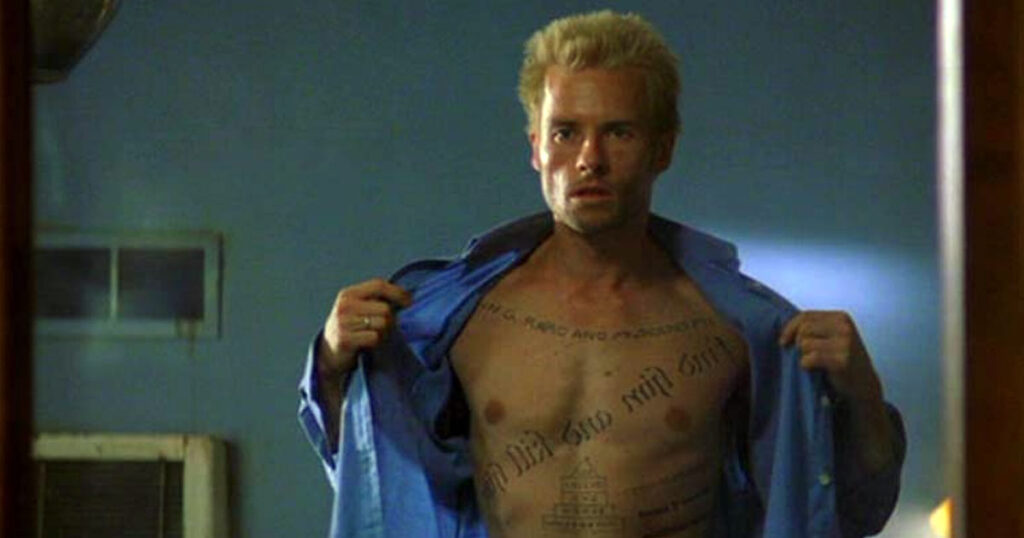
Starring Guy Pearce as Leonard Shelby, a man suffering from anterograde amnesia after a brutal home invasion, the film forces us into the shoes of a protagonist who can remember his past perfectly, but cannot form a single new memory. To find his wife’s killer—a man he only knows as “John G.”—Leonard relies on a convoluted system of Polaroid photographs, handwritten notes, and a body completely covered in tattooed facts.
But why is the film so notoriously confusing? Let’s dive deep into the timeline mechanics, the brilliant directorial techniques, and the hidden secrets that make Memento a timeless puzzle.
The Architecture of Confusion: Decoding the Timelines
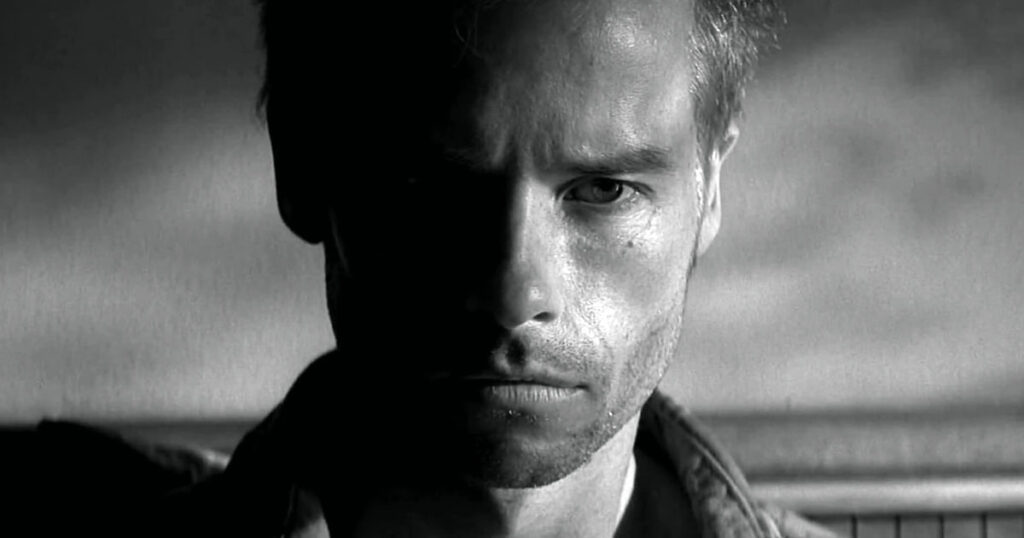
The primary reason viewers leave Memento scratching their heads is Nolan’s audacious narrative structure. To genuinely align the audience with Leonard’s chaotic, unmoored state of mind, Nolan refuses to tell the story chronologically. Instead, he presents two distinct timelines that move in opposite directions.
The Color Sequences (Moving Backward)
The bulk of the movie is presented in vibrant color. These scenes are told in reverse chronological order. A scene begins, plays out, and ends exactly where the previous color scene began. This brilliant mechanic strips the audience of context. Just like Leonard, when we enter a scene, we have absolutely no idea where we are, who we are talking to, or what we just did five minutes ago. We are forced to assess the immediate environment and trust the evidence at hand.
The Black-and-White Sequences (Moving Forward)
Interspersed between the backward-moving color scenes are objective, clinical black-and-white sequences. These scenes move in normal chronological order. They predominantly feature Leonard alone in a motel room, talking on the phone to an unseen caller (who we later learn is Teddy), explaining his condition and the tragic backstory of Sammy Jankis.
The Hairpin Convergence
The true genius of Memento lies in its climax. The “ending” of the film is actually the midpoint of the story chronologically. In the final act, the forward-moving black-and-white timeline perfectly crashes into the backward-moving color timeline. As Leonard develops a Polaroid of a freshly killed Teddy, the black-and-white image fades into color, signaling the precise moment the two narratives intertwine. From a structural standpoint, the story is shaped like a hairpin, starting at the extreme ends of the timeline and folding inward to meet in the middle.
Cinematography and Directorial Sleight of Hand
Christopher Nolan and his trusted cinematographer, Wally Pfister, used specific visual cues to subconsciously guide the audience through this labyrinth.
The black-and-white scenes are shot with an almost documentary-like detachment. The camera is steady, the lighting is flat and unforgiving, acting as a seemingly objective reality. Conversely, the color sequences utilize a highly subjective lens. The camera often mimics Leonard’s gaze—panning quickly to read a tattoo, zooming in on a Polaroid, or blurring the periphery to simulate his panic when his “condition” resets.
Furthermore, the sound design plays a crucial role. The ambient noise in the color scenes is often overwhelming and chaotic, mirroring the sensory overload of waking up in the middle of a high-stakes situation. Nolan manipulates the editing pace; hard cuts mimic the exact moment Leonard’s short-term memory wipes clean, violently dropping both the protagonist and the viewer into a new reality without a safety net.
Hidden Secrets and Easter Eggs You Missed
Memento is designed to be watched multiple times. Once you understand the structure, subsequent viewings reveal a treasure trove of hidden details and visual foreshadowing that fundamentally change how you view Leonard.
The Sammy Jankis Illusion
The most famous hidden secret in the film involves the tragic tale of Sammy Jankis (Stephen Tobolowsky), a man who supposedly suffered from the same condition as Leonard. Leonard claims Sammy accidentally killed his own wife with an insulin overdose because he couldn’t remember giving her previous shots.
However, during a pivotal black-and-white scene where Leonard is recounting Sammy’s story, there is a subliminal visual trick. For a fraction of a second—just a few frames—as Sammy sits in a mental institution with someone walking across the camera, Sammy’s face is replaced by Leonard’s face.
This micro-second detail confirms Teddy’s later revelation: Sammy’s wife didn’t have diabetes; Leonard’s wife did. Leonard is projecting his own supreme guilt onto a con man he once investigated. Leonard killed his own wife via an insulin overdose after the home invasion, a trauma his brain simply refused to accept.
The Manipulative Tattoos
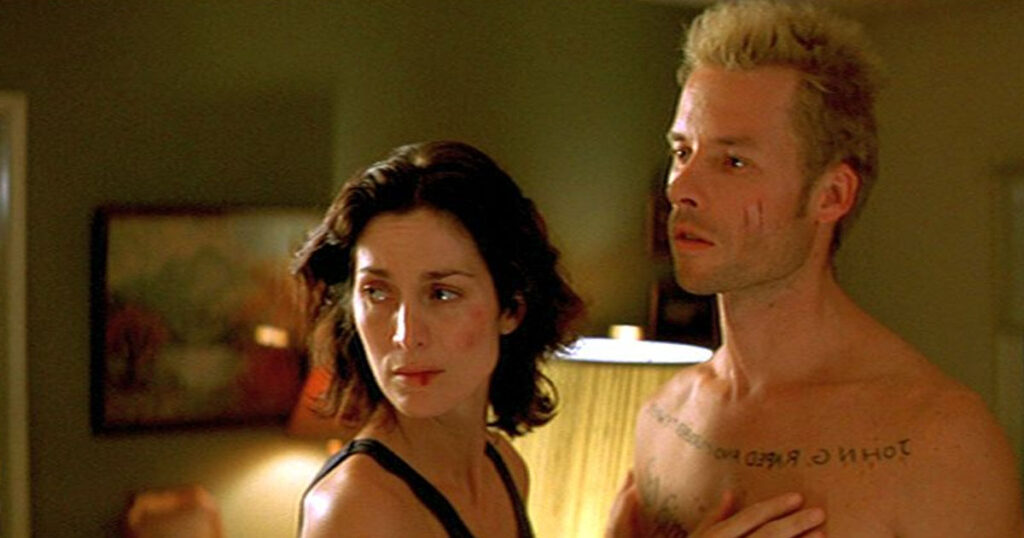
Leonard treats his tattoos as an infallible gospel. “The notes can be altered,” he says, “but the tattoos are permanent.” Yet, the film shows us that Leonard controls what becomes permanent. When Teddy tries to warn him about Natalie’s true nature, Leonard aggressively ignores him and writes “Do Not Trust Him” on Teddy’s Polaroid. This note eventually leads to a tattoo, proving that Leonard’s “facts” are merely subjective, emotional decisions written in ink.
Natalie’s Cruelty
We see Natalie (Carrie-Anne Moss) acting as an ally in the early color scenes (which are chronologically late). But the backward structure reveals her true viciousness. Knowing Leonard won’t remember, she intentionally provokes him into beating her, manipulating him into believing a man named Dodd did it, so Leonard will act as her personal hitman. It highlights the vulnerability of a man who cannot learn from his mistakes, surrounded by people eager to exploit him.
The Ultimate Twist: The Lie We Tell Ourselves
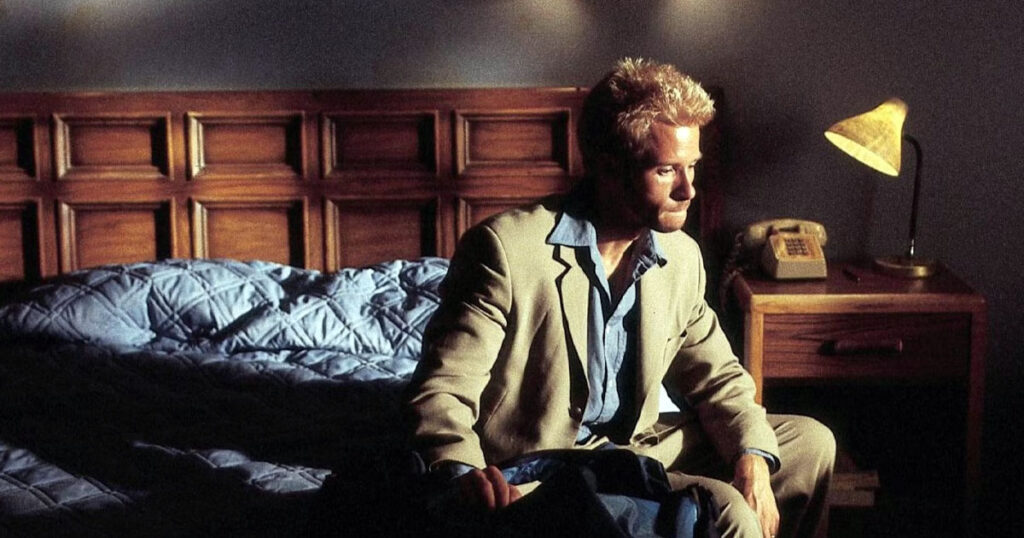
To get a complete Memento movie explained, we have to confront the brutal truth revealed in the final moments (the chronological middle). Teddy (Joe Pantoliano) reveals that “John G.” is dead. Leonard already killed him a year ago with Teddy’s help.
Teddy, a corrupt cop, has been using Leonard’s condition to hunt down other criminals named John G. for profit and twisted amusement. But the real tragedy is Leonard’s reaction to this truth. Upon realizing Teddy is using him—and faced with the devastating reality that his quest is built on a lie—Leonard makes a conscious, chilling choice.
He records Teddy’s license plate as the new “Fact 6,” ensuring that Teddy will become his next target. He intentionally sets himself up to murder a man who, while corrupt, did not rape his wife. Leonard throws away the keys to his truck so he will forget his own manipulation.
Leonard proves that his condition isn’t just a disability; it is a shield. He chooses to remain trapped in a cycle of vengeance because it gives his life purpose. Without the hunt, he is just a broken man who accidentally killed the woman he loved. He willingly burns the truth to keep himself warm.
A Legacy of Subjective Reality
At its core, Memento remains a towering achievement in modern cinema because it transcends its own gimmick. While critics initially praised its brilliant editing and puzzle-box structure, the film has endured because of its profound philosophical implications. It suggests that none of us are truly reliable narrators of our own lives. We all edit our memories, deleting our failures and highlighting our justifications, to craft a narrative we can live with. Leonard’s literal amnesia is merely a cinematic exaggeration of our own willful ignorance. We might not need tattoos and Polaroids to navigate our day, but Memento hauntingly reminds us that we all lie to ourselves to be happy; we just have the luxury of remembering that we did it.