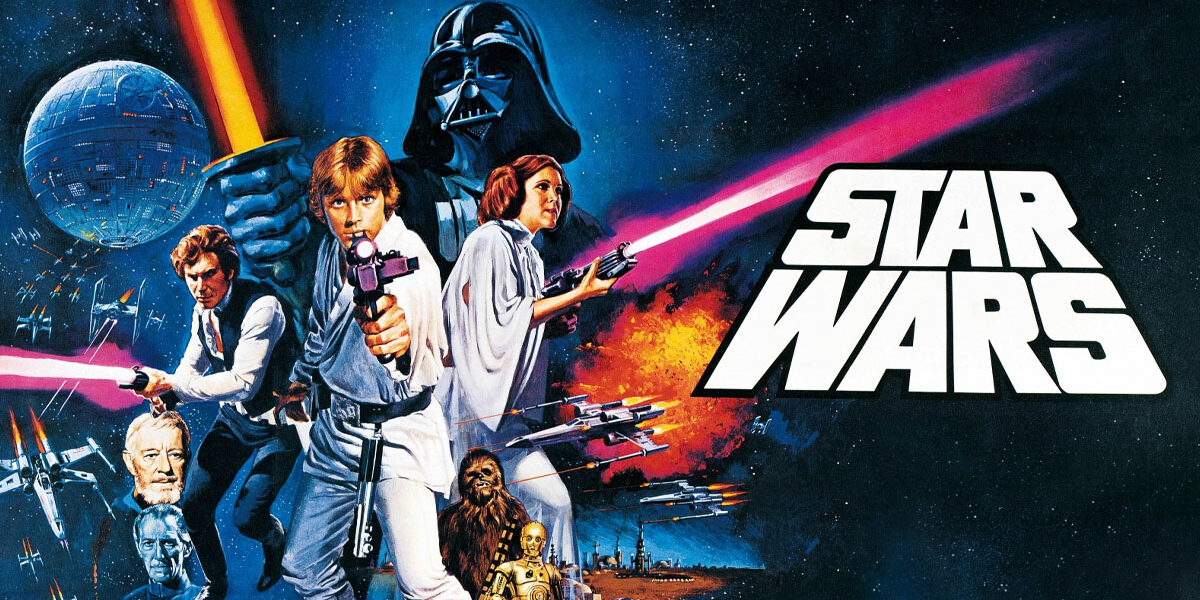
In the gritty, cynical landscape of 1970s American cinema—an era dominated by anti-heroes, moral ambiguity, and the celebrated bleakness of the New Hollywood movement—a young filmmaker named George Lucas dared to look to the stars. He envisioned a sweeping space opera that would reject the prevailing cinematic despair and resurrect the earnest, swashbuckling spirit of Flash Gordon serials and Akira Kurosawa samurai epics. The result was the original Star Wars trilogy, a cinematic triptych that didn’t just change the film industry; it swallowed it whole, remaking global pop culture in its image.
To review these three films today is not merely to critique a series of science fiction movies. It is an archaeological dig into the foundation of the modern blockbuster. Through A New Hope (1977), The Empire Strikes Back (1980), and Return of the Jedi (1983), Lucas and his army of visionary collaborators crafted a modern mythology that continues to dictate the terms of mainstream entertainment. Let us strip away decades of franchise expansion, merchandise, and digital tinkering to examine the raw, lightning-in-a-bottle magic of the original trilogy.
Episode IV: A New Hope (1977) – Forging the Monomyth
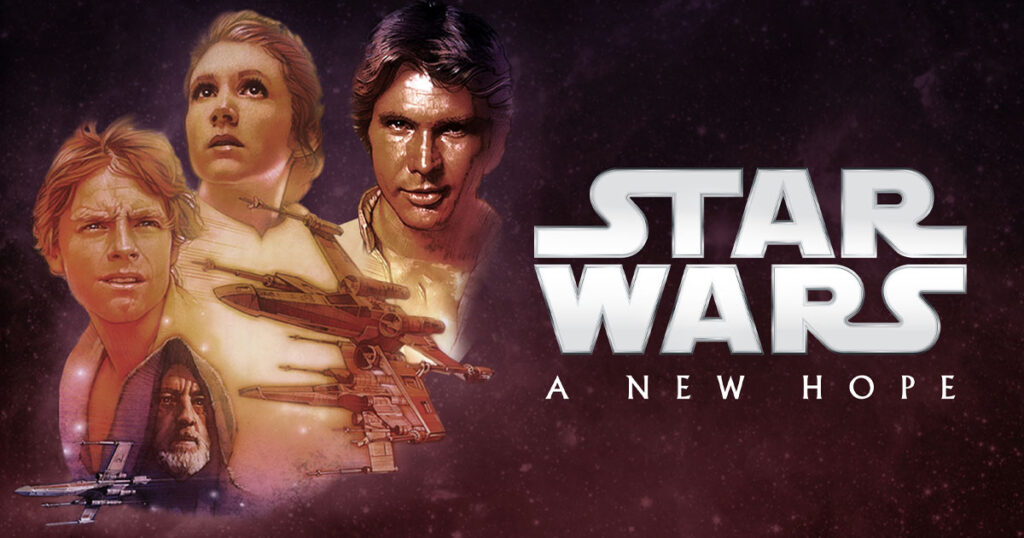
It is almost impossible for a modern audience to fully comprehend the shockwave that Star Wars (later subtitled Episode IV – A New Hope) sent through theaters in the summer of 1977. The production was infamously disastrous. The crew endured punishing sandstorms in Tunisia, the mechanical props completely failed to function, and the studio, 20th Century Fox, heavily anticipated a spectacular flop. Yet, out of this chaos emerged a masterclass in cinematic world-building.
The Power of the “Used Future”
Before 1977, science fiction cinema was generally characterized by sterile, gleaming utopias or dystopias—think of the pristine white corridors of 2001: A Space Odyssey or the spandex-clad crew of Star Trek. Lucas, working intimately with conceptual artist Ralph McQuarrie and production designer John Barry, introduced a radical aesthetic concept: the “used future.”
The galaxy of A New Hope was undeniably rusted, dented, and leaking oil. The Millennium Falcon famously looked like a piece of junk. Tatooine was a harsh, impoverished dustbowl. This aesthetic choice grounded the fantastical elements in a tactile reality. When Luke Skywalker stared out at the binary sunset, he wasn’t just a sci-fi protagonist; he was a restless farm boy desperate to escape a dead-end town. The dirt beneath his fingernails made the subsequent journey into the stars profoundly relatable.
A Symphony in Space
Two crucial elements elevated A New Hope from a B-movie homage to a cinematic triumph: sound and music. Sound designer Ben Burtt constructed an entirely new auditory lexicon. By blending organic, real-world noises—the hum of an old film projector motor paired with television static for the lightsaber, the manipulated squeals of a baby elephant for TIE fighters—Burtt gave the galaxy weight and texture.
Simultaneously, composer John Williams resuscitated the grand, romantic symphonic score. In an era where synth-heavy or pop-music soundtracks were becoming the norm, Williams looked to the Golden Age of Hollywood, utilizing Richard Wagner’s concept of the leitmotif (musical themes associated with specific characters or ideas). The music provided the emotional scaffolding that the sometimes-clunky dialogue could not, transforming a farm boy, a rogue, and a princess into figures of mythic importance.
The Magic in the Edit Room
For all its visionary design, A New Hope was reportedly a disjointed mess in its early cuts. It was the phenomenal work in the editing room, spearheaded by Marcia Lucas, Richard Chew, and Paul Hirsch, that injected the film with its propulsive, breathless pacing. The final act, the assault on the Death Star, is a marvel of parallel editing, building unbearable tension out of model ships and actors sitting in isolated plywood cockpits. The film’s success was not inevitable; it was forged in the crucible of post-production.
Episode V: The Empire Strikes Back (1980) – The Benchmark of the Sequel
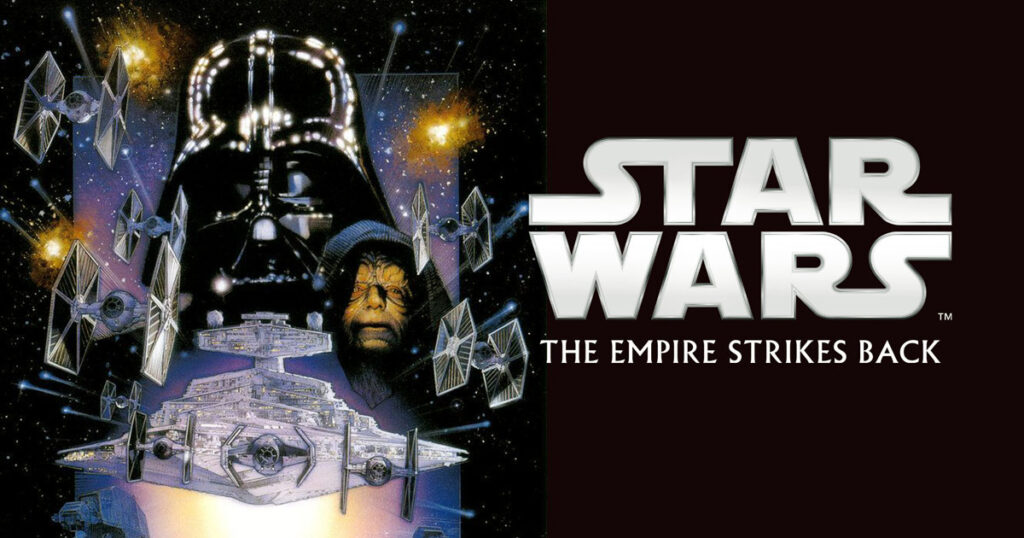
If A New Hope was a joyous revival of the matinee serial, The Empire Strikes Back was a plunge into the psychological depths of the characters. Facing immense pressure to replicate an unprecedented success, George Lucas made the brilliant, ego-free decision to step back from the director’s chair. He handed the reins to his former USC professor, Irvin Kershner, and brought in Lawrence Kasdan (alongside Leigh Brackett) to refine the screenplay.
Shadows, Psychology, and Dagobah
Empire is a distinctly darker, more mature film. Cinematographer Peter Suschitzky traded the flat, documentary-style lighting of the first film for rich, moody contrast. The narrative fractures our heroes almost immediately. After the breathtaking, stop-motion brilliance of the Battle of Hoth—a sequence that expanded the visual language of the saga—Luke Skywalker is separated from Han Solo and Princess Leia.
Luke’s journey to the swamp planet of Dagobah represents the trilogy’s most profound thematic detour. Here, the Force ceases to be merely a tool for telekinesis or a targeting computer alternative; it becomes a spiritual philosophy, deeply influenced by Eastern mysticism. The introduction of Yoda, brought to life through the unparalleled puppetry and vocal performance of Frank Oz, was a massive cinematic risk. Had the audience not believed in this two-foot-tall rubber alien, the entire film would have collapsed. Instead, Yoda became the philosophical anchor of the franchise. The cave sequence on Dagobah, where Luke confronts a phantom Darth Vader only to see his own face beneath the mask, introduced a psychological complexity that transcended typical blockbuster fare.
Romance and Tragedy in the Clouds
While Luke wrestles with his soul, Han and Leia engage in a remarkably sophisticated screwball romance amidst a desperate game of cat-and-mouse with the Empire. Harrison Ford and Carrie Fisher brought a sharp, crackling chemistry to the screen. Their storyline culminates in Cloud City, a breathtaking Art Deco floating metropolis that serves as a glamorous facade for a brutal trap.
The climax of Empire shattered the rules of Hollywood storytelling. The heroes lose comprehensively. Han Solo is frozen in carbonite and shipped off to a gangster. Luke loses his hand, his lightsaber, and his naive worldview in a brilliantly choreographed, emotionally exhausting duel with Darth Vader.
Then comes the twist: “No, I am your father.”
This revelation retroactively transformed the entire narrative from a simple good-versus-evil adventure into an intergenerational familial tragedy. It is widely considered one of the greatest plot twists in cinematic history, but its true power lies not in shock value, but in how it permanently raises the emotional stakes of the saga. Empire left audiences hanging on a melancholic, uncertain note, proving that a blockbuster could be challenging, unresolved, and emotionally devastating.
Episode VI: Return of the Jedi (1983) – Tying the Mythic Threads
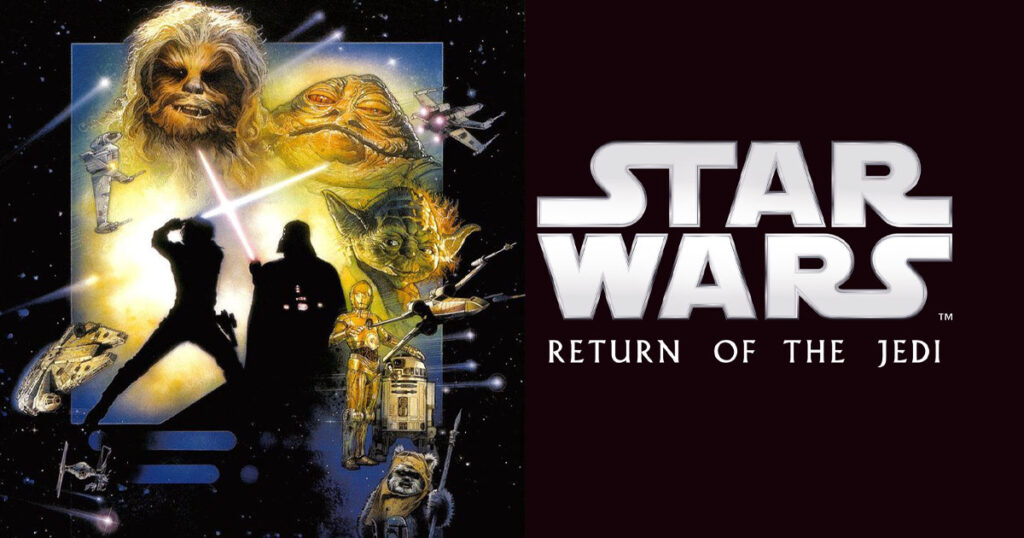
Concluding a narrative of this magnitude is a notoriously perilous task, and Return of the Jedi arrived carrying the impossible weight of global expectations. Directed by Richard Marquand, Jedi is arguably the most tonally uneven of the original trilogy. It oscillates between grotesque underworld grit, controversial toy-friendly cuteness, and unparalleled operatic tragedy. Yet, where it counts the most, it delivers a deeply satisfying emotional resolution.
Puppetry, Prosthetics, and the Underworld
The first act of the film is a masterclass in creature design and practical effects. Jabba’s Palace is a chaotic, immersive dive into the galactic criminal underworld. Stuart Freeborn’s makeup and the sprawling team of puppeteers created a menagerie of monsters that felt astonishingly real. Jabba the Hutt himself, a massive, multi-operator animatronic, remains one of the most impressive practical effects ever committed to film. This sequence serves as a rite of passage for our heroes, proving their growth. Luke returns not as a whiny farm boy, but as a calm, capable Jedi Knight, clad in stark black.
The Endor Dilemma
The film’s middle act on the forest moon of Endor often draws the heaviest criticism, primarily due to the introduction of the Ewoks. Critics argued—not entirely without merit—that the teddy-bear-like warriors were a calculated move by Lucas to dominate the burgeoning toy market. However, from a thematic standpoint, the Ewoks serve a vital narrative purpose.
The original trilogy is deeply rooted in the context of the Vietnam War and the counterculture movements of the 1960s and 70s. The Ewoks represent the ultimate triumph of primitive, harmonious nature over the cold, mechanical, and arrogant machinery of a fascist empire. While their execution may lean toward the saccharine, their presence reinforces Lucas’s core thesis: that technological supremacy is ultimately hollow when faced with indomitable spirit.
A Masterclass in Climax
Whatever minor missteps Return of the Jedi takes in the forest, it more than makes up for in its staggering three-tiered climax. Marquand and his editors orchestrate a dizzying symphony of cross-cutting between the ground battle on Endor, the breathtaking, kinetic space battle around the Death Star, and the intimate, soul-baring confrontation in the Emperor’s throne room.
Ian McDiarmid’s performance as Emperor Palpatine introduces a figure of pure, manipulative malevolence, serving as the necessary catalyst for the conflict between Luke and Vader. The throne room sequence is the emotional zenith of the entire saga. It is not about who has the superior combat skills; it is a battle for a father’s soul. When Luke fiercely defeats Vader, looks at his own mechanical hand, and throws his weapon away, declaring, “I am a Jedi, like my father before me,” he achieves true heroism through non-violence and compassion. Vader’s subsequent sacrifice—the redemption of the unredeemable—provides a cathartic, emotionally resonant conclusion that cements the trilogy’s mythic status.
The Architecture of an Empire: Revolutionizing the Medium
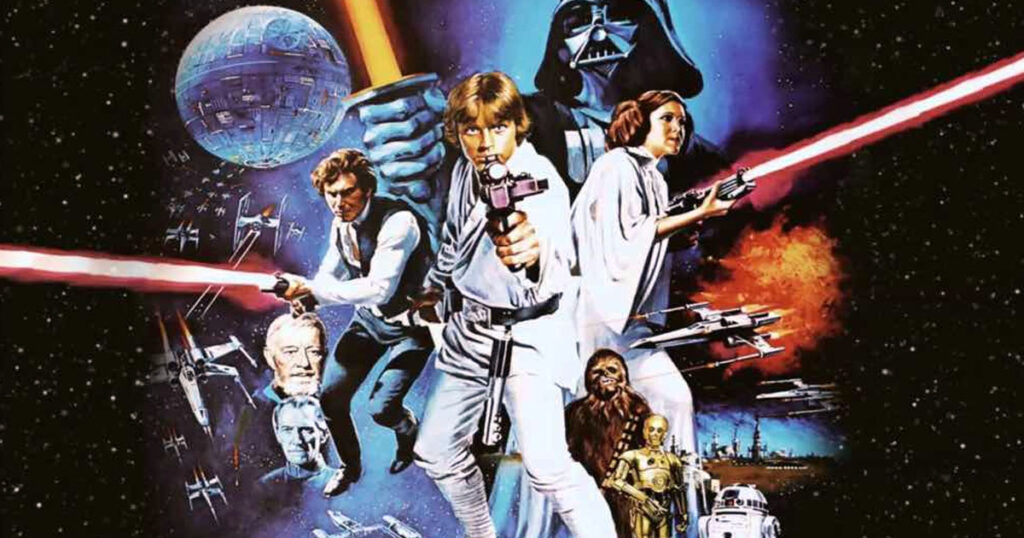
It is impossible to adequately review the original Star Wars trilogy without acknowledging its role as the catalyst for the modern visual effects industry. When George Lucas realized the technology he needed to bring his vision to life did not exist, he essentially willed it into being by founding Industrial Light & Magic (ILM).
Pioneers like John Dykstra, Dennis Muren, and Richard Edlund revolutionized the art of the illusion. They developed the Dykstraflex motion-control camera system, which allowed for infinitely repeatable, perfectly smooth camera movements over intricate miniature models, enabling the dizzying dogfights that defined the films. They pushed the boundaries of matte painting, optical compositing, and stop-motion animation.
Every spaceship, alien landscape, and laser blast was painstakingly crafted by hand, layer upon layer of film stock. This handcrafted nature gives the original trilogy a tactile, physical quality that modern, purely CGI-driven films often struggle to replicate. The imperfections—the slight matte lines, the grain of the film—do not detract from the experience; rather, they serve as the brushstrokes of master artisans working at the absolute frontier of their craft.
Beyond the screen, the original trilogy fundamentally altered the business of Hollywood. Lucas’s legendary decision to forgo a higher directing fee in exchange for sequel and merchandising rights birthed the modern ancillary market. Star Wars proved that a film could be a sprawling ecosystem of toys, comic books, novels, and clothing. While this shift eventually led to the corporatized franchise models of today, in its infancy, it was a testament to how deeply the audience wanted to interact with and inhabit this fictional universe.
A Legacy Written in the Stars
Looking back at the original Star Wars trilogy from our current vantage point—an era saturated with sprawling cinematic universes, endless prequels, sequels, and spin-offs—the 1977 to 1983 run stands as a monolith of self-contained storytelling.
What makes A New Hope, The Empire Strikes Back, and Return of the Jedi endure is not simply the groundbreaking special effects or the iconic character designs. It is the sincerity of its thematic core. Beneath the blasters and the hyperdrives, this trilogy is an achingly human story about the transition from adolescence to adulthood, the burden of legacy, the insidious nature of power, and the terrifying, beautiful realization that redemption is always possible.
In a cinematic landscape that increasingly prioritizes algorithm-driven content and relentless brand expansion, the original Star Wars trilogy remains a handcrafted artifact of profound cultural resonance. It did not just entertain a generation; it provided them with a shared modern mythology, proving that even in a galaxy far, far away, the most spectacular battles are the ones fought within the human heart.