When the iconic Luxo Jr. lamp first hopped onto our screens back in 1995, nobody could have predicted that a buddy comedy about a pull-string cowboy and a deluded space ranger would become the emotional anchor for multiple generations of moviegoers. Yet, nearly three decades later, the playroom doors have swung open once again. Whenever a new chapter of this seemingly bulletproof franchise is announced, a familiar and entirely justified chorus of skepticism arises. Didn’t we say our final, tear-soaked goodbyes twice already? As the theatrical release dominates the global box office, the internet is absolutely flooded with Toy Story 5 reviews, painting a remarkably complex picture. This isn’t just another lighthearted adventure; it’s a fascinating, polarizing reflection of modern parenthood where the ultimate villain isn’t a vindictive prospector or a strawberry-scented bear, but a glowing glass screen.
The Premise: Tangible Play in a Digital Sandbox
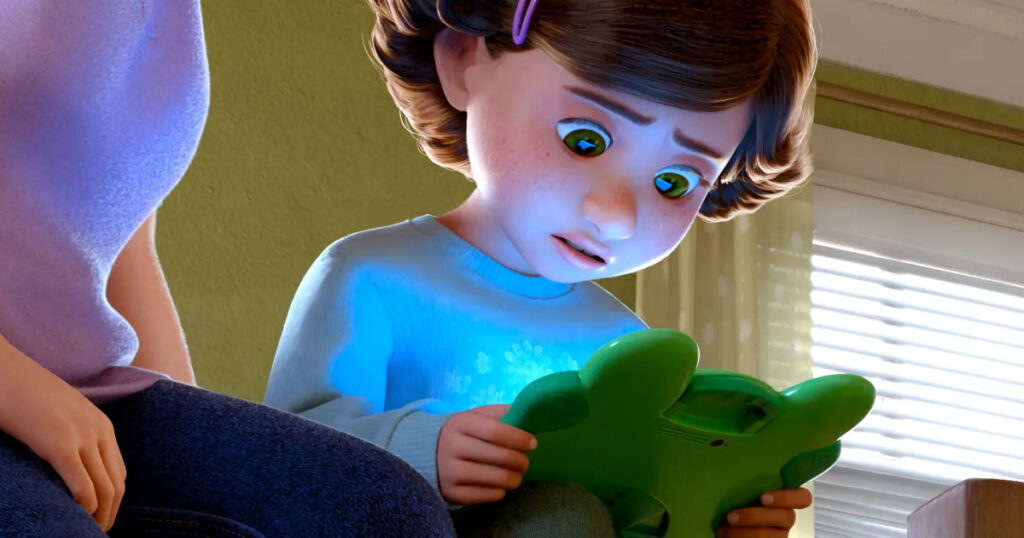
Before diving into the critical consensus, it is vital to understand the battlefield onto which Woody, Buzz, and the gang have been deployed. Directed by Pixar veteran Andrew Stanton (Finding Nemo, WALL-E), this fifth installment takes our beloved plastic protagonists into uncharted, yet profoundly familiar, territory. Bonnie, the young girl who inherited the toys from Andy, is growing up in the 2020s. She is navigating the labyrinthine social complexities of modern childhood, a vulnerability that prompts her parents to gift her a “Lilypad”—a sleek, alluring smart tablet device voiced with an eerie, soothing detachment by Greta Lee.
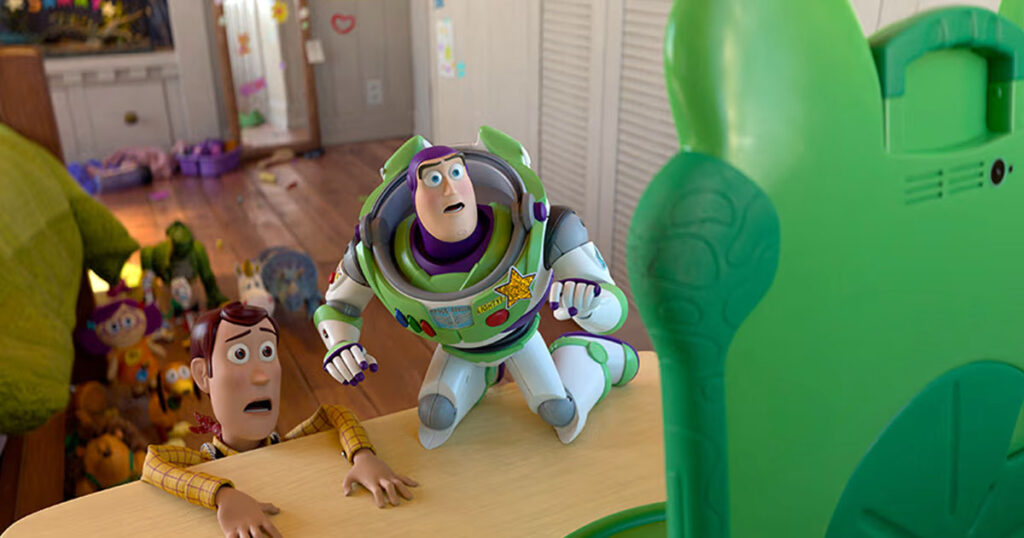
For Jessie, Bullseye, Rex, and the returning Woody (Tom Hanks, bringing his signature gravitas), this represents an existential threat unlike any they have previously faced. The toys watch in silent horror as Bonnie’s vibrant, tactile imagination is slowly hijacked by the infinite scroll of online group chats, algorithmic video feeds, and digital micro-transactions. The conflict transcends the simple fear of being forgotten in a dusty closet; it questions the fundamental nature of childhood itself. How do physical playthings compete with the engineered dopamine hits of a touch screen? This chillingly relatable premise serves as the battleground for the film, and it is exactly where the critical landscape begins to beautifully and violently fracture.
Aggregators and Audience Disconnect: What the Numbers Say
To get a macro view of the film’s reception, one must first look at the holy trinity of review aggregators: Rotten Tomatoes, Metacritic, and IMDb. The numbers tell a story of a film that is highly respected but perhaps less universally adored than its predecessors.
The Rotten Tomatoes and Metacritic Metrics
At the time of writing, the film holds a “Certified Fresh” rating of 84% on Rotten Tomatoes based on over 250 reviews. While robust for any standard blockbuster, it is notably the lowest score in the franchise’s pristine history. Over on Metacritic, the film sits comfortably with a score of 72 out of 100, indicating “generally favorable reviews” but signaling a clear departure from the universal acclaim of the first three films. Critics are grappling with the heavy themes, leading to a wider spread of scores than Pixar is accustomed to.
The IMDb Fan Reception
Interestingly, the audience metrics present a slightly different narrative. On IMDb, the film is currently holding a solid 8.1/10 rating. This discrepancy suggests that while some high-brow critics are analyzing the socio-cultural implications and franchise fatigue, general audiences and families are still finding immense joy and emotional resonance in reuniting with these deeply familiar characters. The emotional manipulation, a signature Pixar tool, still works wonders on the average moviegoer.
The Masterpiece Camp: Holding a Black Mirror to Parents
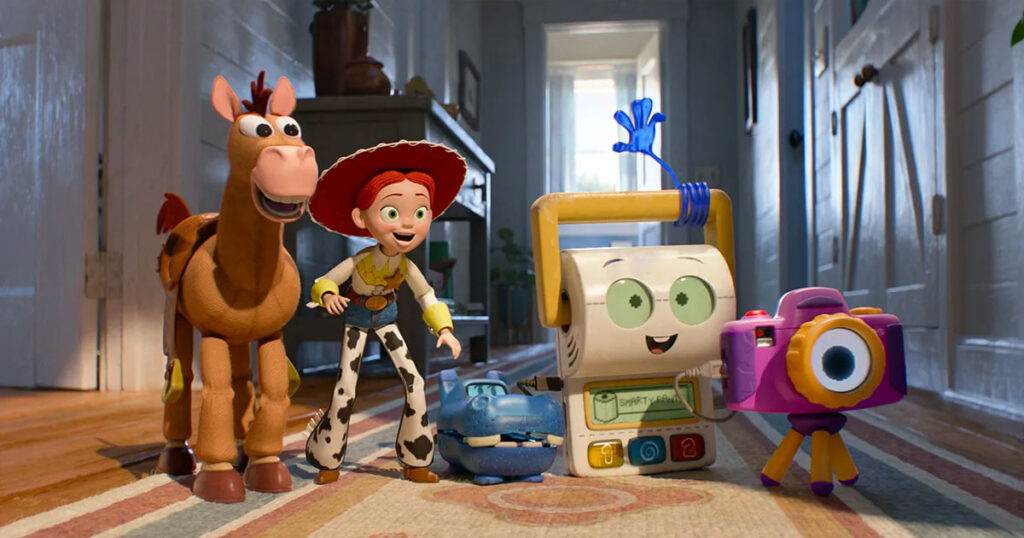
For a significant contingent of reviewers, this fifth outing is a salient, uncomfortable masterpiece. It takes the core theme of the franchise—mortality, obsolescence, and purpose—and aggressively updates it for an era where physical play feels endangered.
IndieWire and Collider’s High Praise
David Ehrlich of IndieWire awarded the film a glowing “A-“, noting that parents are squarely in the line of fire. He praises Stanton’s direction for being “refreshingly unafraid to make modern parents deeply uncomfortable with our complacency in the face of an ever-changing, hyper-connected world.” Similarly, Collider praised the film’s visual storytelling, pointing out that the animation of the digital world inside the tablet contrasts brilliantly with the tangible, scratched-up textures of the toys. They argue that Pixar has crafted a necessary fable for the iPad generation.
Variety and The Hollywood Reporter Weigh In
Peter Debruge at Variety highlighted the sheer audacity of the screenplay. He noted that framing technology not as a malicious evil, but as a passive, addictive void, is “one of the most mature thematic leaps Pixar has ever taken.” Over at The Hollywood Reporter, David Rooney echoed this sentiment, stating that while franchise fatigue is a real concern, the execution of Toy Story 5 justifies its existence. “It is a poignant exploration of letting go,” Rooney writes, “not just of our childhoods, but of the ways we used to experience the world before the screens took over.”
The Skeptics: Have We Outgrown the Toy Box?
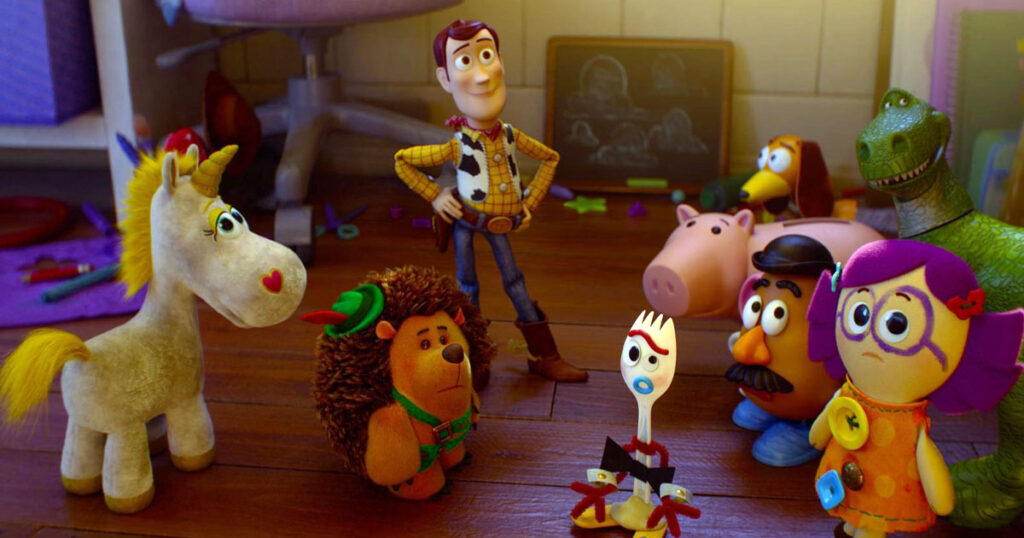
However, the critical landscape is far from unanimous. A highly vocal and influential minority of critics view the film’s very existence as a cynical affront to the perfect, tear-jerking conclusion of Toy Story 3 (and the surprisingly poignant coda of the fourth film). For these writers, the franchise has overstayed its welcome, and the critique of technology feels hypocritical.
The Guardian’s Scathing Critique
Peter Bradshaw of The Guardian delivered one of the most blistering and widely discussed critiques of the year, stamping the film with a meager 2 out of 5 stars. He lamented that Disney and Pixar “seem to have a pathological inability to let sleeping dogs lie.” Bradshaw argued fiercely that “the odour of corporate greed on Toy Story 5 is foul enough to deter me from whatever emotional message it’s peddling.” His argument centers on the idea that the corpse of a beloved IP is being continuously resurrected merely to satisfy quarterly shareholder reports, rather than to fulfill a genuine artistic necessity.
Rolling Stone’s Accusation of Hypocrisy
David Fear at Rolling Stone was equally unsparing. He pointed out the glaring, inescapable irony of Pixar—a massive arm of the Disney entertainment monopoly—making a movie that decries antisocial screen time. “They know full well that millions of children will inevitably watch this very movie on streaming devices exactly like the fictional Lilypad they are villainizing,” Fear observed. For him, the film is a “beautifully animated screed in search of a justified story.”
IGN and Empire Magazine’s Mixed Feelings
More centrist publications found themselves torn. IGN scored the film a 7/10, praising the action sequences and voice acting but criticizing the pacing in the second act. “It feels like two different movies fighting for dominance,” their review stated. Empire Magazine offered a 3/5 star review, noting that while the nostalgic emotional beats hit exactly as intended, the narrative feels undeniably repetitive. “We have seen Woody deal with the fear of being replaced four times already; the fact that the replacement is a computer this time doesn’t entirely mask the recycled emotional arcs,” they concluded.
Standout Performances and Visual Marvels
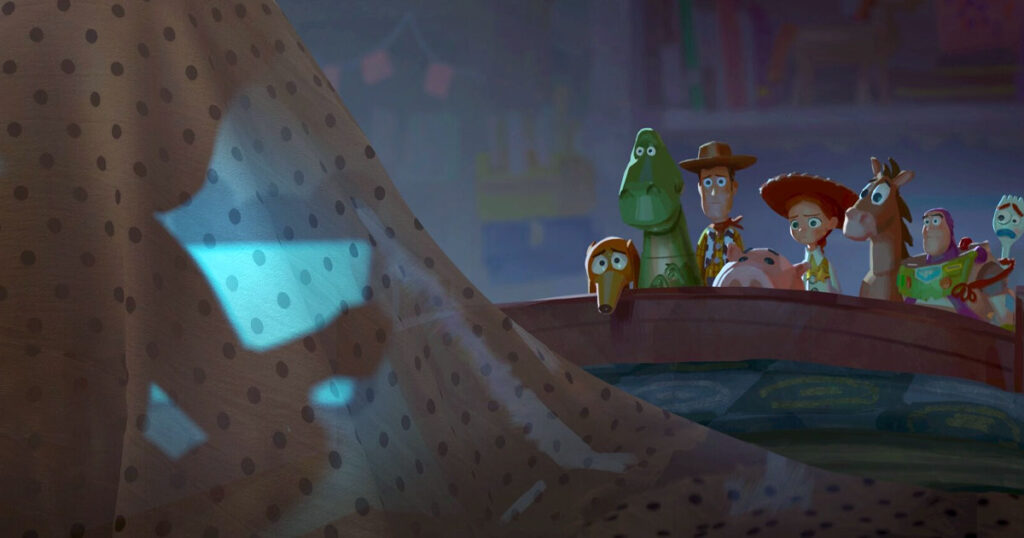
Despite the fierce philosophical tug-of-war happening in the review columns, almost all critics—even the harshest detractors—agree that the technical craftsmanship remains unparalleled.
Greta Lee and the Voice Cast
Tom Hanks and Tim Allen slide back into their iconic roles with the ease of a well-worn baseball glove, but it is the new additions that steal the show. Greta Lee’s performance as the voice of the Lilypad operating system is being hailed as a stroke of genius. As noted by RogerEbert.com, she delivers a performance that is “terrifyingly soothing, capturing the exact cadence of algorithmic appeasement.” Joan Cusack’s Jessie also receives a vastly expanded role, providing the film’s most potent, heart-tugging moments as she tries to physically blockade Bonnie from her devices.
Animation Pushing the Boundaries
From a visual standpoint, Pixar continues to flex its muscles. Several reviews highlighted a specific, horror-tinged sequence where the toys venture out of the house at night. Outlets like Ready Steady Cut described a masterful tracking shot panning across a suburban neighborhood, revealing children illuminated only by the sickly, cool blue glow of their screens—zombified in their bedrooms. It’s a bold, cinematic swing for a family film, showcasing lighting and texture rendering that is photorealistic without losing its stylized charm.
The Synthesized Verdict: More Than Just Child’s Play
As the dust settles on the theatrical release and the initial wave of hot takes subsides, it becomes undeniably clear that this installment is less of a simple children’s movie and more of a cultural Rorschach test for modern audiences.
If you approach the cinema cynical about the endless Hollywood sequel machine and Disney’s dominance over pop culture, you will undoubtedly find ample evidence of a franchise running on fumes, repeating familiar existential crises to sell merchandise. However, if you walk into the theater as a parent grappling with the daily realities of raising a child in a hyper-connected yet emotionally disconnected world, the film might just break your heart in entirely new ways.
Toy Story 5 does not offer easy answers. It doesn’t end with Bonnie throwing her tablet into the garbage and playing with wooden blocks forever. Instead, it forces a conversation. By elevating the toys from mere playthings to the very guardians of childhood innocence, Pixar has crafted a tragic, beautiful elegy for the tactile world. Whether it’s a brilliant sociological warning wrapped in a colorful package or a hypocritical exercise in corporate IP management, it has sparked a dialogue that extends far beyond the multiplex. The toys may be made of digital pixels mimicking plastic, but the questions they are forcing us to ask about human connection, the fleeting nature of youth, and the digital walls we build around our children are entirely, undeniably real.