Let’s be brutally honest for a second. When the 2021 Mortal Kombat reboot dropped, it was a decidedly mixed bag. It successfully delivered the R-rated gore fans craved, gave us a phenomenal Sub-Zero vs. Scorpion opening sequence that felt ripped straight from the games, but stumbled hard on the overarching narrative and, ironically, omitted the actual tournament entirely. So, heading into the sequel, the expectations were a strange cocktail of cautious optimism and desperate hope for a proper, blood-soaked tournament arc. Did director Simon McQuoid and his team manage to pull off a Fatality on our lingering doubts, or did they just trip over their own shoelaces in the arena once again? Welcome to our comprehensive Mortal Kombat 2 review.
Stepping Out of the Shadows: The Good, The Bad, and The Brutal
The immediate, palpable relief when watching Mortal Kombat 2 is that the film feels significantly more confident in its own skin. The narrative training wheels have been violently kicked off. The film dives headfirst into the dense, often chaotic mythology of the games, expanding the cinematic universe far beyond the confined, almost claustrophobic feel of the first movie’s desert compound.
We finally get to see more of Outworld, and it is precisely as oppressive, bizarre, and visually arresting as you’d hope. The production design has taken a noticeable step up. The realms feel distinct; Earthrealm remains grounded, while the glimpses into other dimensions embrace a dark, pulpy fantasy aesthetic. It’s clear that the creators listened to the criticism that the first film felt too “small” for an interdimensional deathmatch.
Enter Johnny Cage: The Arrogant Heartbeat
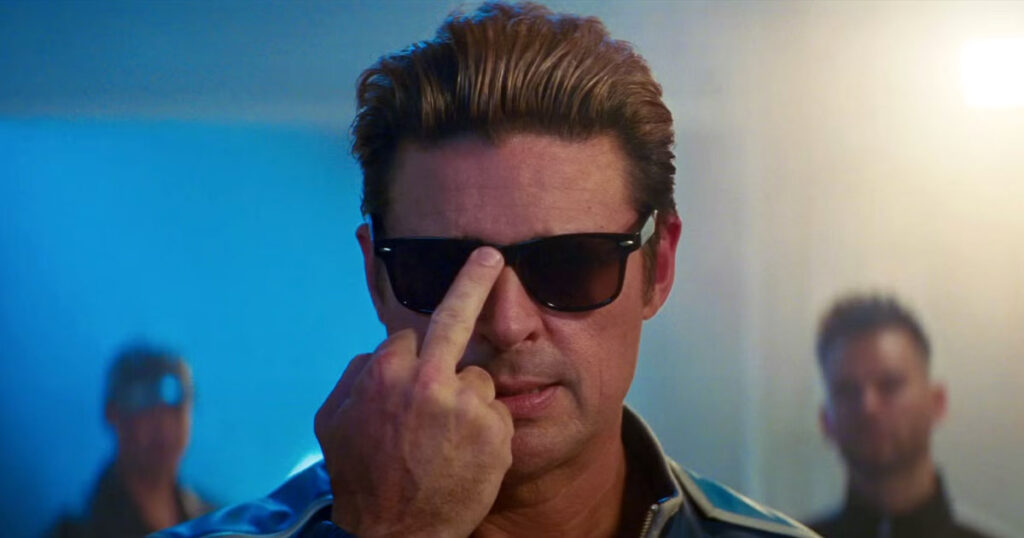
Let’s address the elephant in the room—or rather, the Hollywood star demanding a bigger trailer in the room. The inclusion of Johnny Cage was the biggest, most agonizing tease at the end of the 2021 film, and the subsequent casting of Karl Urban was… divisive, to say the least. Urban is an undeniably talented actor with serious geek cred, but is he the slick, narcissistic, pretty-boy martial artist we know from decades of games?
Surprisingly, the answer is yes, but with a necessary twist. Urban brings a seasoned, slightly cynical edge to Cage. He’s less the fresh-faced starlet relying solely on his looks and more the aging, perhaps slightly desperate action hero trying to prove he’s still got the physical chops in a changing industry. This adds a layer of unexpected pathos to a character usually known exclusively for arrogant quips and spectacular crotch punches.
His interactions with the stoic Cole Young (Lewis Tan), the disciplined Liu Kang (Ludi Lin), and the ever-serious Sonya Blade (Jessica McNamee) provide much-needed levity. Mortal Kombat 2 is a dark movie, and Urban’s Cage cuts through the relentless grimness of the impending inter-realm war with perfect comedic timing. He isn’t just comic relief, though; when it’s time to fight, Urban sells the physical capability of the character, proving he belongs in this brutal arena.
The Action: Leveling Up the Kombos and Choreography
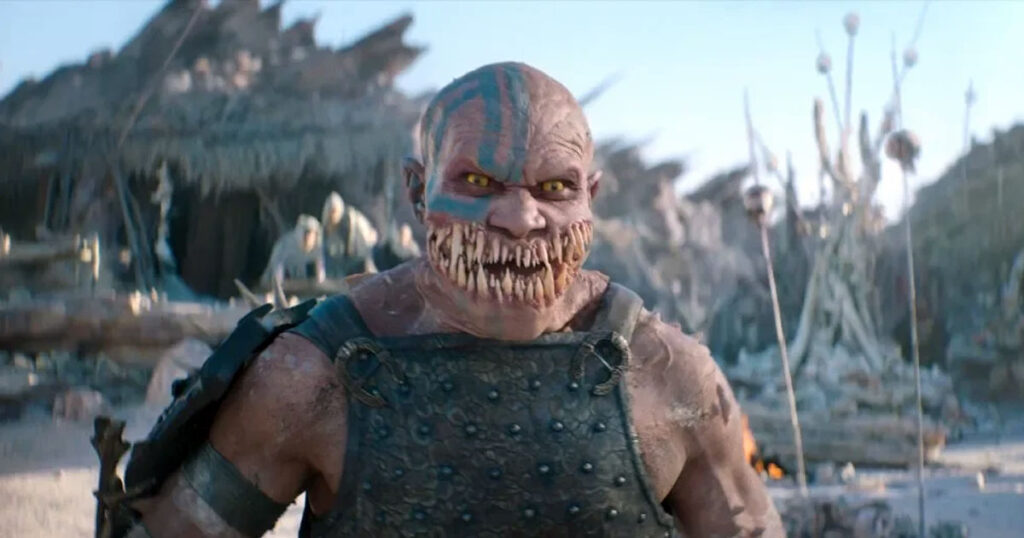
Where the 2021 film occasionally felt like a series of disconnected, albeit violent, skirmishes, the sequel attempts to weave the action more organically into the progressing plot. The choreography has undeniably leveled up. It’s faster, more visceral, and leans much heavier into the distinctive, signature fighting styles of the characters that fans have memorized.
Fans of the games will be thrilled to see more recognizable special moves translated directly to the screen, and integrated smoothly into the flow of combat rather than just presented as isolated “hero moments.” Furthermore, the fights feel more consequential. It’s not just about waiting for the final, bloody kill; the journey to the Fatality is far more engaging and dynamically shot.
However, a Mortal Kombat 2 review wouldn’t be complete without pointing out that the film still struggles occasionally with its editing during combat. While an improvement over the first film, some of the most intricate hand-to-hand sequences are still chopped up a bit too frenetically. When you have highly skilled martial artists on set, the camera needs to pull back and let them work. We want to see the unbroken flow of the martial arts, not just a flurry of quick, disorienting cuts designed to manufacture artificial kinetic energy.
The Lore Dump Dilemma: Narrative Missteps in Outworld
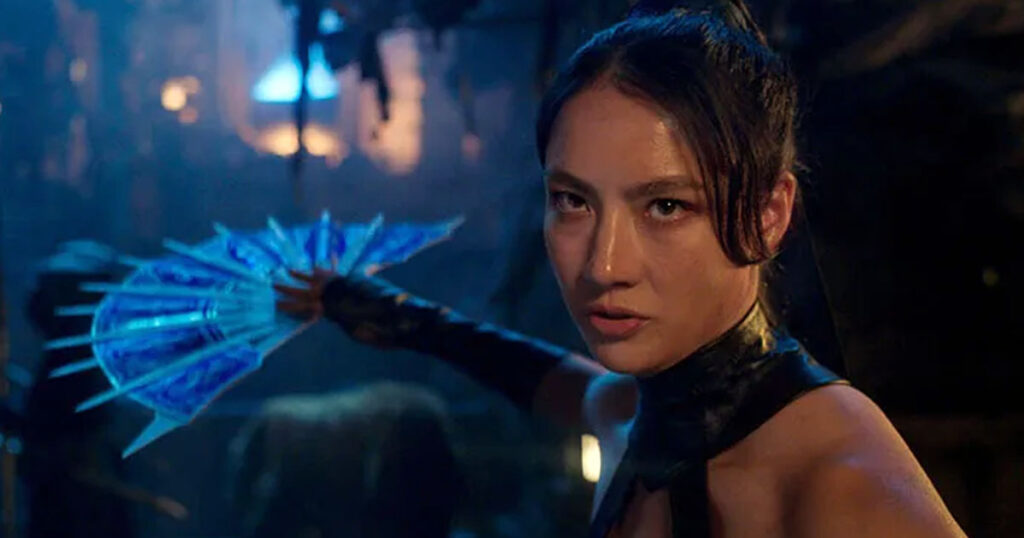
If there’s a persistent, frustrating weakness in this burgeoning cinematic universe, it remains the handling of the lore. Mortal Kombat has decades of convoluted, frequently retconned, and frankly insane mythology. It involves elder gods, cyborg ninjas, resurrected specters, and interdimensional warlords. Mortal Kombat 2 attempts to pack an enormous amount of this world-building into its runtime, and it shows the strain.
The introduction of Edenian politics, the deeper mechanics of the realms, and the menacing machinations of Shao Kahn—who is finally given the terrifying, imposing presence he deserves—are fascinating concepts. However, they are too often delivered through clunky exposition dumps. Characters frequently stop in their tracks to explain why someone is punching someone else, or the historical significance of a specific artifact, rather than letting the conflict breathe and allowing the audience to infer the stakes through action and character interaction.
Furthermore, with an expanded roster that brings in more fan favorites, the screen time real estate becomes incredibly scarce. Some characters we were eager to see fleshed out are reduced to glorified cameos or, worse, simple fodder designed to make another character look formidable. It’s a delicate balancing act managing an ensemble this large, and the film doesn’t always stick the landing, leaving some highly anticipated fighters feeling underutilized.
Embracing the Absurdity: The Tone and Pacing
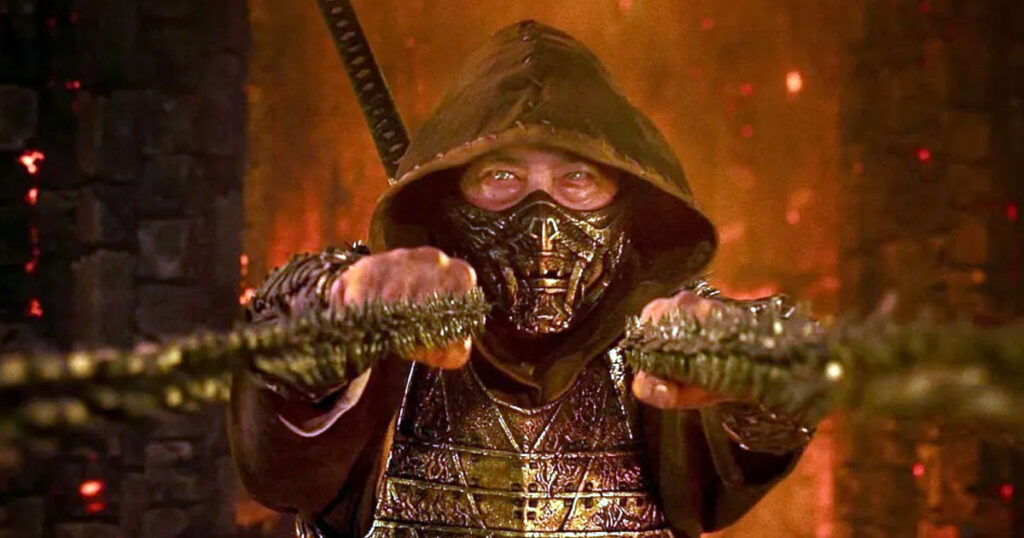
One of the smartest decisions McQuoid and the writers made for this sequel was fully embracing the inherent absurdity of the premise. Mortal Kombat is, at its core, ridiculous. It’s about a thunder god recruiting a washed-up actor and a special forces soldier to fight four-armed monsters in a tournament for the fate of reality.
The first film occasionally took itself a bit too seriously. Mortal Kombat 2 walks a finer line. It plays the stakes straight—the threat to Earthrealm feels real—but it allows the characters to acknowledge the sheer insanity of their situation. This tonal shift, aided greatly by Urban’s Johnny Cage, makes the movie significantly more enjoyable. It’s a pulpy, aggressively violent martial arts fantasy that knows exactly what its target audience wants: spine-ripping, fire-breathing, head-crushing spectacle.
The pacing, however, can be uneven. The rush to include so many characters and explain so much lore means the middle act sags slightly under the weight of exposition before ramping back up for a chaotic, explosive final act.
Flawless Victory or Brutality?
So, where does that leave us at the end of this Mortal Kombat 2 review? The sequel is undeniably a step up from its predecessor in almost every measurable way. It’s bigger in scope, bolder in its narrative choices, and significantly bloodier in its execution. It embraces the inherent absurdity of its video game origins with a straighter face, which paradoxically makes it work so much better as a cinematic experience.
Is it high cinematic art? Absolutely not, and it never tries to be. If you are looking for deep thematic resonance, you are in the wrong arena. It is a loud, brash, aggressively entertaining martial arts spectacle.
While the narrative might occasionally stumble under the immense weight of its own complex mythology, and the editing can sometimes obscure the truly impressive fight choreography, the sheer entertainment value is incredibly hard to deny. Karl Urban’s Johnny Cage injects a necessary, vital dose of charismatic arrogance that the franchise desperately needed, and the expansion of the universe promises even grander, gorier things to come in inevitable future installments.
Ultimately, Mortal Kombat 2 is a crowd-pleaser that successfully bridges the difficult gap between cinematic storytelling and raw video game visceral thrills. It honors the source material while trying to build a viable film franchise. While it might not achieve a pristine, flawless Victory due to some structural and pacing issues, it’s definitely a solid, bloody win for fans who just want to see their favorite characters tear each other apart in glorious live-action. It’s exactly the kind of popcorn movie you want it to be.