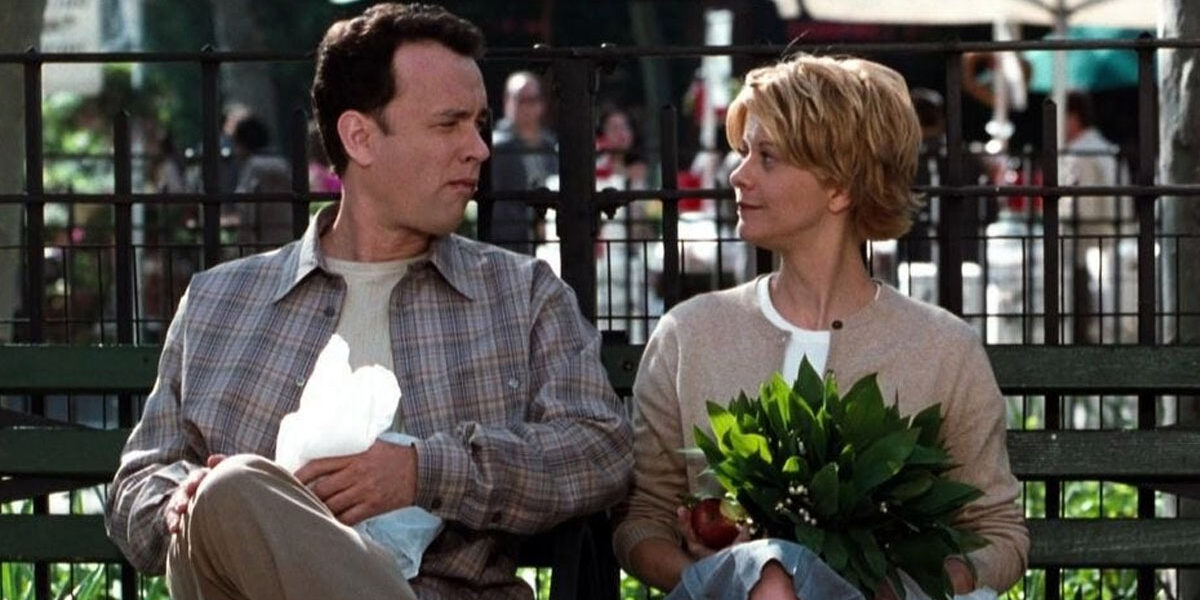
If there is one thing film historians and casual moviegoers can universally agree upon, it is that the 1990s were the undisputed golden age of the romantic comedy. Before the era of dating apps, algorithmic matchmaking, and cynical modern romance, the silver screen was dominated by grand gestures, serendipitous encounters, and the kind of undeniable chemistry that could single-handedly carry a two-hour film. When we talk about the best 90s rom-coms, we are not just talking about movies; we are talking about cultural touchstones that defined a generation’s understanding of love.
This was a decade where filmmakers perfected the formula. They gave us the “meet-cute,” the misunderstanding, the dramatic dash through an airport, and the rain-soaked declaration of love. But beyond the tropes, these films possessed a profound sincerity. They were anchored by megastars—Julia Roberts, Tom Hanks, Meg Ryan, Hugh Grant—whose sheer charisma made even the most far-fetched plotlines feel entirely plausible.
In this retrospective, we are not ranking these cinematic treasures. How could anyone possibly choose between an American bookstore rivalry and a British travel bookshop romance? Instead, we are celebrating ten masterpieces from this era of romance. Let’s dial back our modems, put on our best slip dresses, and dive into the unranked list of the most unforgettable love stories of the 90s.
Pretty Woman (1990)
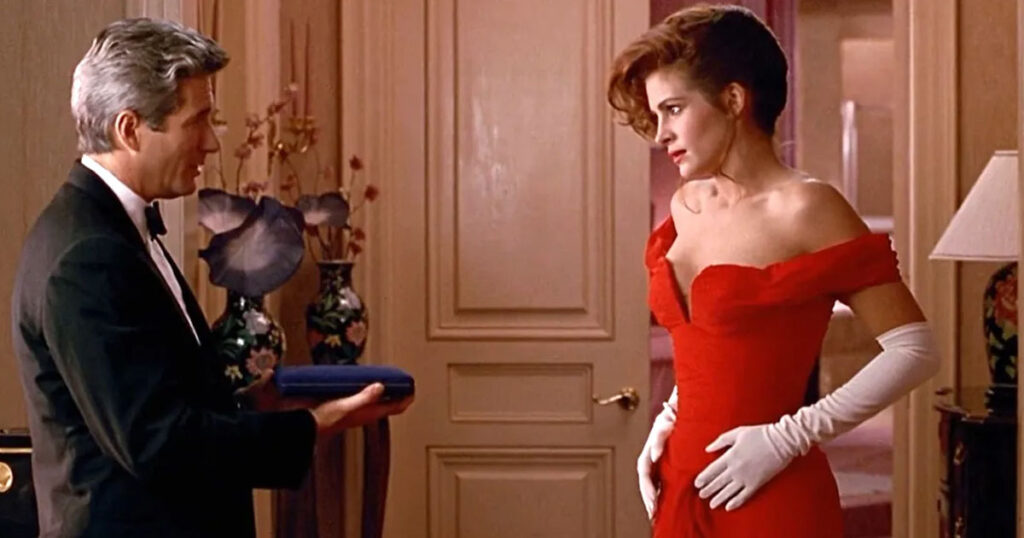
Directed by the legendary Garry Marshall, Pretty Woman didn’t just kick off the decade; it set the impossible standard for every romantic comedy that followed. On paper, the story of a ruthless corporate raider hiring a Hollywood Boulevard sex worker for a week sounds more like a gritty indie drama. Yet, through the alchemy of Richard Gere’s suave restraint and Julia Roberts’ incandescent breakout performance, it became a modern-day Cinderella story.
What makes Pretty Woman endure isn’t just the lavish shopping montage on Rodeo Drive—though that remains iconic. It is the evolution of the characters. Edward doesn’t just “rescue” Vivian; she rescues him right back, thawing his icy, capitalist heart. Roberts’ infectious, wide-mouthed laugh and her undeniable vulnerability made her America’s Sweetheart overnight. The film taught us that fairy tales could happen on fire escapes, set to the tune of a soaring Roy Orbison soundtrack.
10 Things I Hate About You (1999)
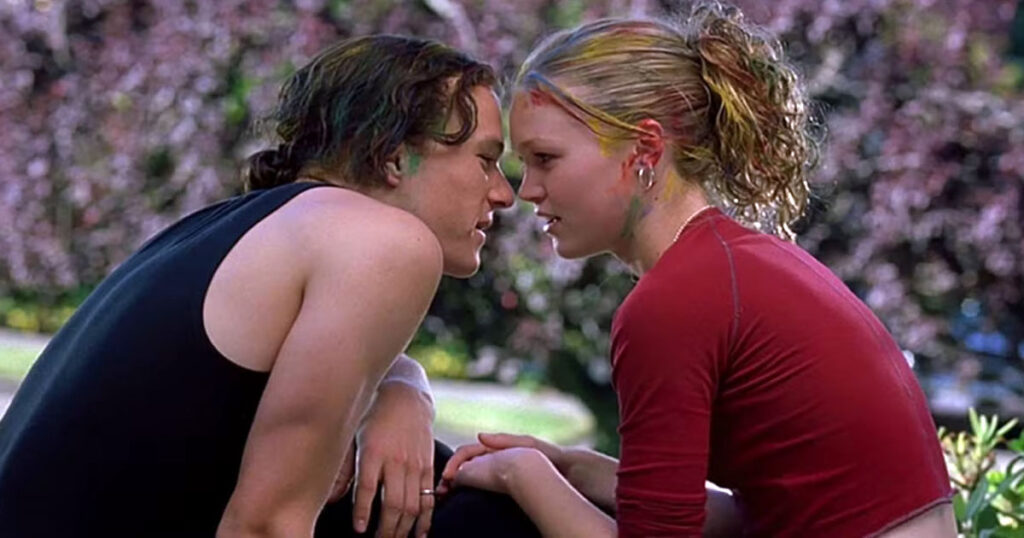
Adapting William Shakespeare for an audience of 90s teenagers was a bold move, but 10 Things I Hate About You transformed The Taming of the Shrew into an alt-rock, feminist masterpiece of the high school movie genre. The film thrives on the razor-sharp, quick-witted script and the explosive chemistry between Julia Stiles’ abrasive, riot-grrrl-loving Kat Stratford and Heath Ledger’s mysterious “bad boy,” Patrick Verona.
This film sits comfortably among the best 90s rom-coms because it respects its teenage audience. It deals with genuine high school angst, sisterhood, and the fear of letting your guard down. Ledger’s legendary rendition of “Can’t Take My Eyes Off You,” performed on stadium bleachers while dodging security guards, remains one of the most delightfully grand and joyful romantic gestures in cinematic history. It’s a film that proves a romance can be deeply cynical and unapologetically sweet at exactly the same time.
Clueless (1995)
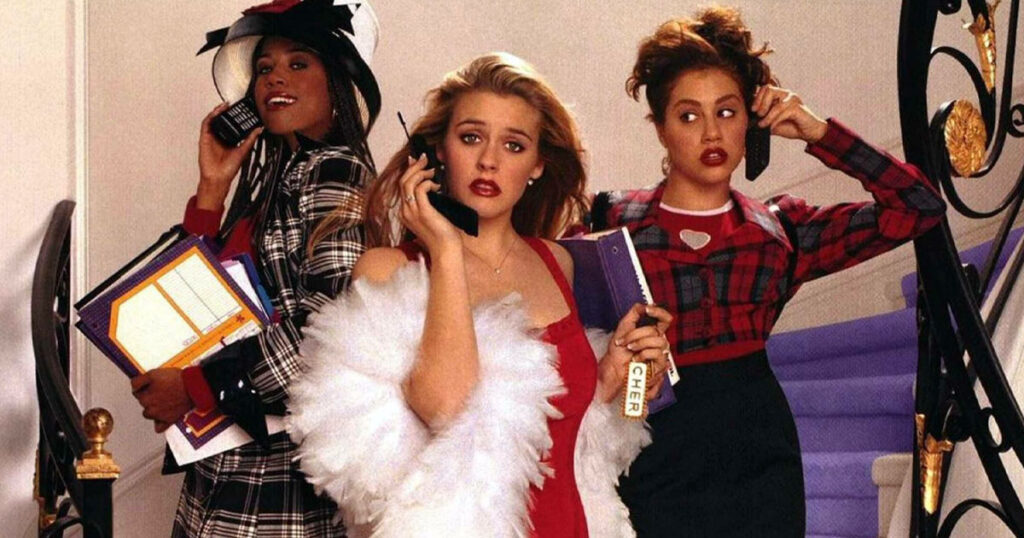
If 10 Things I Hate About You conquered Shakespeare, Clueless successfully modernized Jane Austen. Amy Heckerling’s brilliant adaptation of Emma transported the 19th-century comedy of manners straight into the heart of Beverly Hills. Alicia Silverstone shines as Cher Horowitz, a wealthy, well-meaning, and fashion-obsessed teenager who fancies herself a master matchmaker.
Clueless is a visual and cultural feast. It dictated 90s fashion—giving us the immortal yellow plaid suit—and introduced a lexicon of slang that is still used today (“As if!”). But beneath its shiny, Valley Girl exterior beats a surprisingly tender heart. Cher’s realization that she is “clueless” about her own feelings for her socially conscious, Radiohead-listening ex-stepbrother, Josh (a perpetually ageless Paul Rudd), is handled with a charming mix of humor and sincerity. It remains a masterclass in satire that never sacrifices its romantic core.
Sleepless in Seattle (1993)
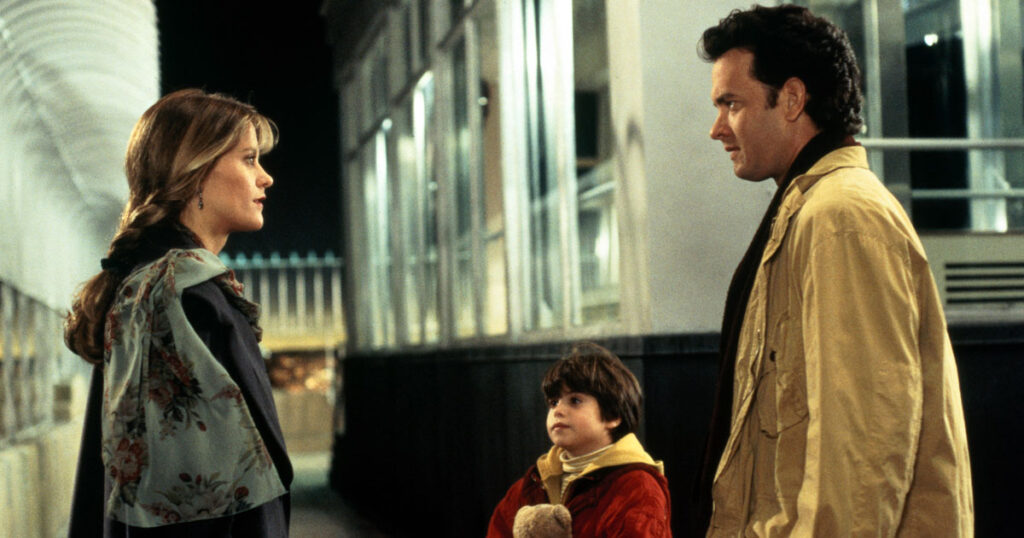
Nora Ephron was the reigning architect of 90s romance, and Sleepless in Seattle is her magnum opus of destiny. What makes this film a structural marvel is that its two romantic leads—Tom Hanks (Sam) and Meg Ryan (Annie)—share less than three minutes of screen time together. Yet, you spend the entire film desperately rooting for them to unite.
This movie captures a specific 90s longing. It uses late-night talk radio as a vehicle for emotional connection across the vast American landscape. Sam is a grieving widower; Annie is a woman engaged to a perfectly nice but fundamentally wrong man (a trope the 90s loved). The film relies heavily on the concept of magic—the idea that you can hear a stranger’s voice on the radio and know, deep in your soul, that you belong with them. The climax atop the Empire State Building pays homage to An Affair to Remember, cementing its status as a timeless classic for hopeless romantics.
There’s Something About Mary (1998)
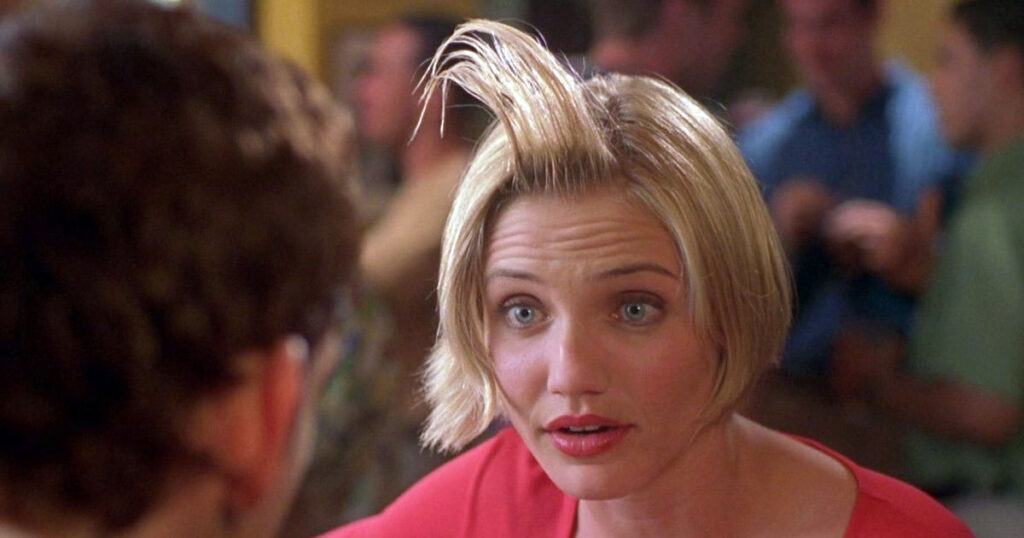
Just when audiences thought they had figured out the romantic comedy formula, the Farrelly Brothers released There’s Something About Mary and completely disrupted the genre. It is an unapologetic, R-rated, gross-out comedy that somehow manages to be one of the sweetest films of the decade.
Cameron Diaz is radiant as Mary, the ultimate dream girl whose innate kindness and love for sports make every man who meets her develop a neurotic obsession. Ben Stiller plays the perpetually unlucky Ted, desperate to reconnect with his high school crush. While the film is infamous for its visual gags—particularly the notorious “hair gel” scene—it works because at its core, it explores the lengths people will go to for love. It broadened the scope of what a rom-com could be, proving that raunchy humor and genuine romance are not mutually exclusive.
She’s All That (1999)
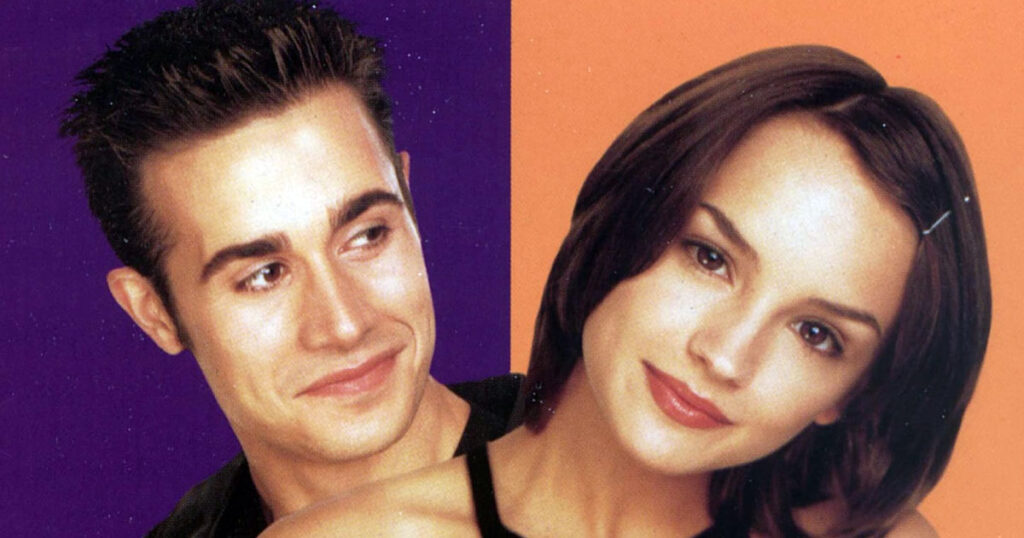
You cannot discuss 90s cinema without acknowledging the ultimate makeover movie. She’s All That is the quintessential high school bet-gone-wrong narrative. Freddie Prinze Jr. plays Zack Siler, the big man on campus who, after being dumped by the prom queen, bets he can turn the school’s most introverted, art-loving outcast, Laney Boggs (Rachael Leigh Cook), into the next prom queen.
Yes, the premise is highly problematic by today’s standards, and yes, Laney’s “ugliness” consisted merely of wearing glasses and paint-splattered overalls. But that is exactly what makes it a delicious 90s time capsule. The moment Laney walks down the stairs in a red dress while “Kiss Me” by Sixpence None the Richer plays in the background is permanently etched into the millennial subconscious. It is a guilty pleasure that delivers exactly what it promises: a predictable, comforting, and thoroughly satisfying teenage romance.
You’ve Got Mail (1998)
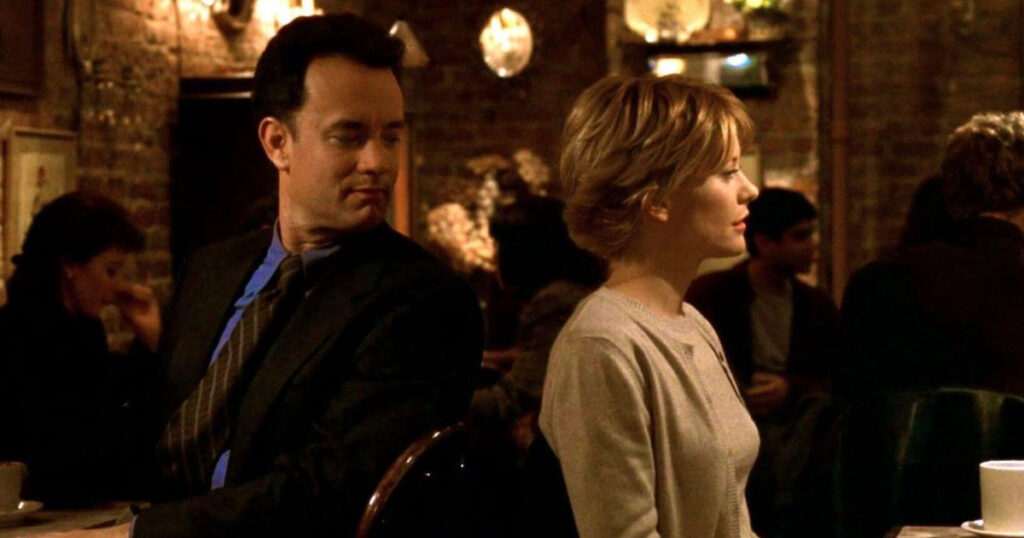
Tom Hanks, Meg Ryan, and Nora Ephron teamed up once again to capture the zeitgeist of the late 90s: the dawn of dial-up internet. You’ve Got Mail (an adaptation of the play The Shop Around the Corner) is a fascinating historical document of a time when the World Wide Web felt anonymous, intimate, and magical.
Hanks plays Joe Fox, a ruthless corporate book superstore executive, while Ryan is Kathleen Kelly, the owner of a beloved independent children’s bookstore he is actively running out of business. In real life, they are bitter enemies; in the anonymous AOL chatrooms, they are soulmates falling deeply in love. The film explores the dichotomy between our public personas and our private vulnerabilities. Ryan and Hanks have a crackling, lived-in chemistry that makes their transition from corporate rivals to lovers feel completely earned. It’s a warm, autumn-hued love letter to New York City’s Upper West Side.
My Best Friend’s Wedding (1997)
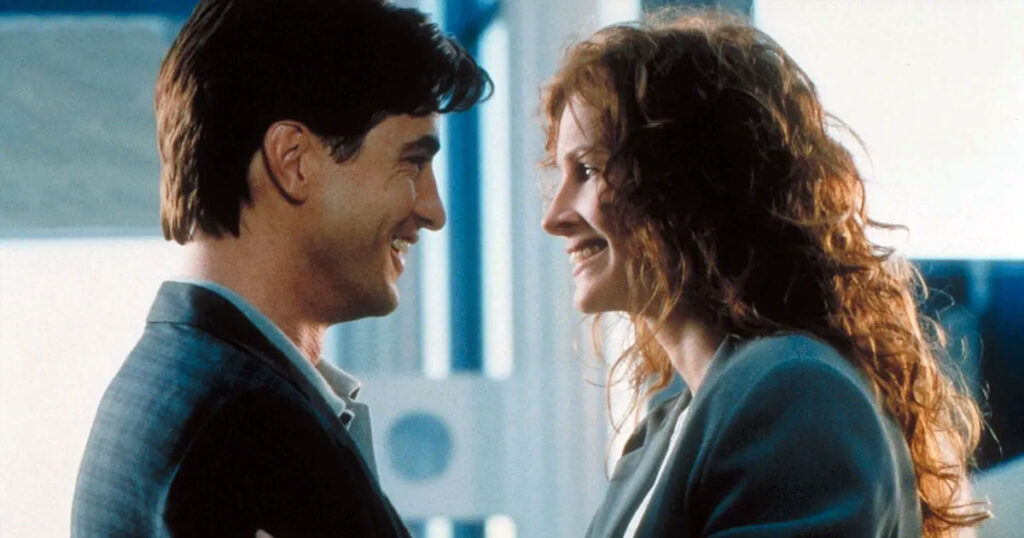
Most romantic comedies of this era followed a strict set of rules, but My Best Friend’s Wedding threw the rulebook out the window. Julia Roberts stars as Julianne Potter, a food critic who realizes she is in love with her long-time best friend, Michael (Dermot Mulroney), only after he announces his engagement to the impossibly sweet, obscenely wealthy Kimmy (Cameron Diaz).
What makes this film brilliant is that Julianne is, essentially, the villain. She lies, manipulates, and tries to ruin a perfectly happy relationship out of sheer jealousy. Yet, because she is played by Roberts, we still sort of root for her. The film is famous for its iconic restaurant sing-along to Dionne Warwick’s “I Say a Little Prayer,” led by the scene-stealing Rupert Everett. Most importantly, it delivered a groundbreaking ending for the genre: the heroine doesn’t get the guy, but she learns to be okay with it, dancing the night away with her gay best friend. It was refreshing, realistic, and highly ahead of its time.
Jerry Maguire (1996)
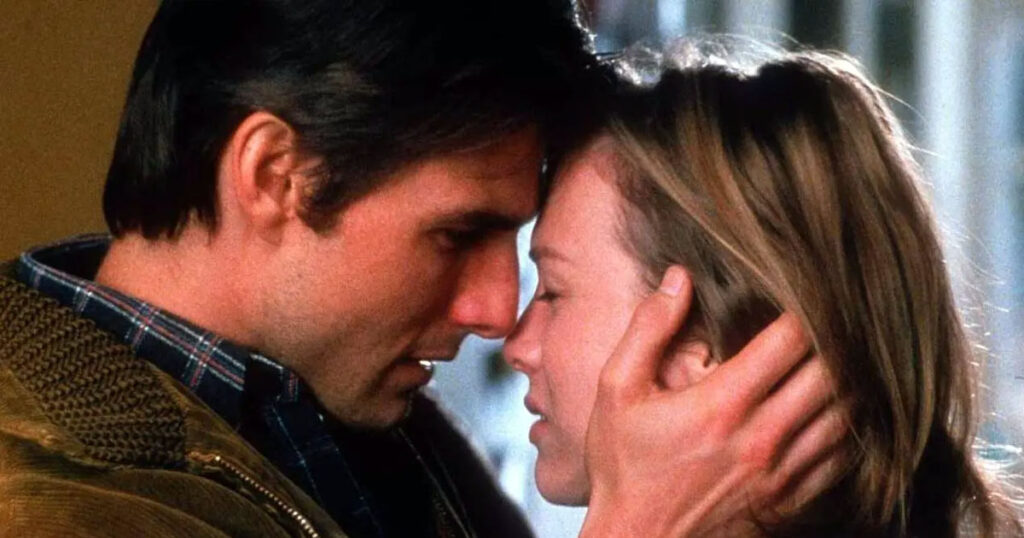
“You had me at hello.” “Show me the money!” “You complete me.” Very few films have injected as many catchphrases into the global cultural lexicon as Cameron Crowe’s Jerry Maguire. Blurring the lines between a sports drama and a romantic comedy, the film follows a slick, cynical sports agent (Tom Cruise) who has a moral epiphany, loses his job, and starts his own agency with only one erratic client (Cuba Gooding Jr.) and one hopelessly devoted single mother/accountant (Renée Zellweger).
Cruise is at his absolute charismatic peak, utilizing his trademark intensity to portray a man slowly learning how to care for someone other than himself. Zellweger’s Dorothy Boyd provides the emotional anchor, a woman who takes a leap of faith for a man she believes in. It is a mature, complex look at how intimacy requires vulnerability, and it proves that romance isn’t just about grand passion; it’s about loyalty in the face of failure.
Notting Hill (1999)

Closing out the decade was a film that felt like the ultimate romantic fantasy grounded in everyday reality. Written by Richard Curtis, the maestro of British rom-coms, Notting Hill asks the question: What happens when the most famous movie star in the world walks into a dusty little travel bookshop in London?
Julia Roberts essentially plays a magnified version of herself as Anna Scott, while Hugh Grant charms the pants off the audience as William Thacker, the floppy-haired, self-deprecating bookstore owner. The film brilliantly contrasts the surreal, isolating bubble of global fame with the warm, messy, and hilarious reality of William’s eccentric group of friends (including Rhys Ifans in a legendary comedic performance as Spike).
The climax of the film strips away the fame and the glamour, boiling down to one of the most famous pieces of dialogue in cinema history: “I’m also just a girl, standing in front of a boy, asking him to love her.” It was the perfect send-off for the 90s rom-com era.
The Enduring Legacy of 90s Romance
When we look back at the best 90s rom-coms, it is easy for cynics to point out their formulaic nature or the occasional lack of realism. But viewing these films merely as predictable fluff is a massive miscalculation of their cinematic value.
General media often praises these films purely for their nostalgic comfort, but their true legacy lies in their unparalleled craftsmanship. Filmmakers like Nora Ephron, Richard Curtis, and Garry Marshall treated the genre with deep respect. They understood that to make audiences laugh and swoon simultaneously requires airtight screenwriting, impeccable comedic timing, and actors possessing a rare, lightning-in-a-bottle chemistry.
These films didn’t just give us unrealistic expectations of love; they gave us a framework for hope. They taught us that while the journey to finding your person might involve spilled coffee, corporate takeovers, high school bets, or transatlantic flights, the destination is always worth the chaos. In a modern cinematic landscape increasingly devoid of mid-budget, character-driven romances, the rom-coms of the 1990s stand as beautifully crafted monuments to the simple, profound idea that love conquers all. And frankly, that is an era we should never stop revisiting.