When discussing the greatest television series ever created, titles like The Wire, Breaking Bad, and The Sopranos frequently dominate the conversation. However, in 2019, a five-part historical drama quietly arrived and instantly cemented its place in the pantheon of television masterpieces. This HBO Chernobyl review aims to explore exactly why Craig Mazin and Johan Renck’s retelling of the 1986 nuclear disaster is not just a triumph of historical storytelling, but arguably the most terrifying horror experience and deeply heartbreaking emotional journey ever put to screen.
Chernobyl is a masterclass in tension, dread, and the devastating consequences of systemic deceit. It asks a singular, haunting question right from its opening moments: “What is the cost of lies?” Over the course of five grueling, mesmerizing hours, it provides an answer that is so profound and unsettling that it will stay with you long after the final credits roll.
More Terrifying Than the Greatest Horror Movies
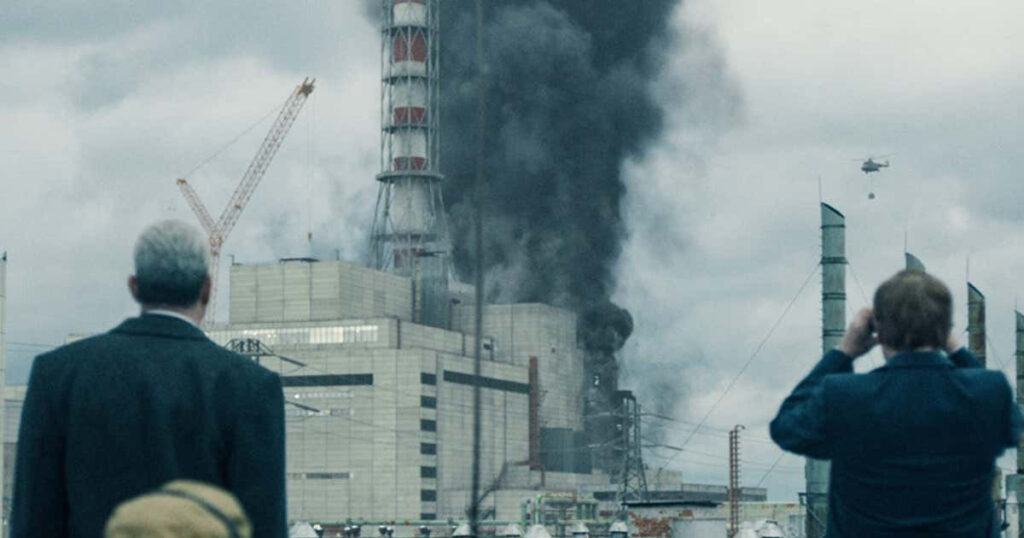
If you ask audiences what scares them, they might list ghosts, demons, serial killers, or jump scares. Yet, Chernobyl achieves a level of visceral terror that traditional horror movies can only dream of, and it does so without a single supernatural element. The horror of Chernobyl stems from reality—from an enemy that is invisible, silent, and inescapable.
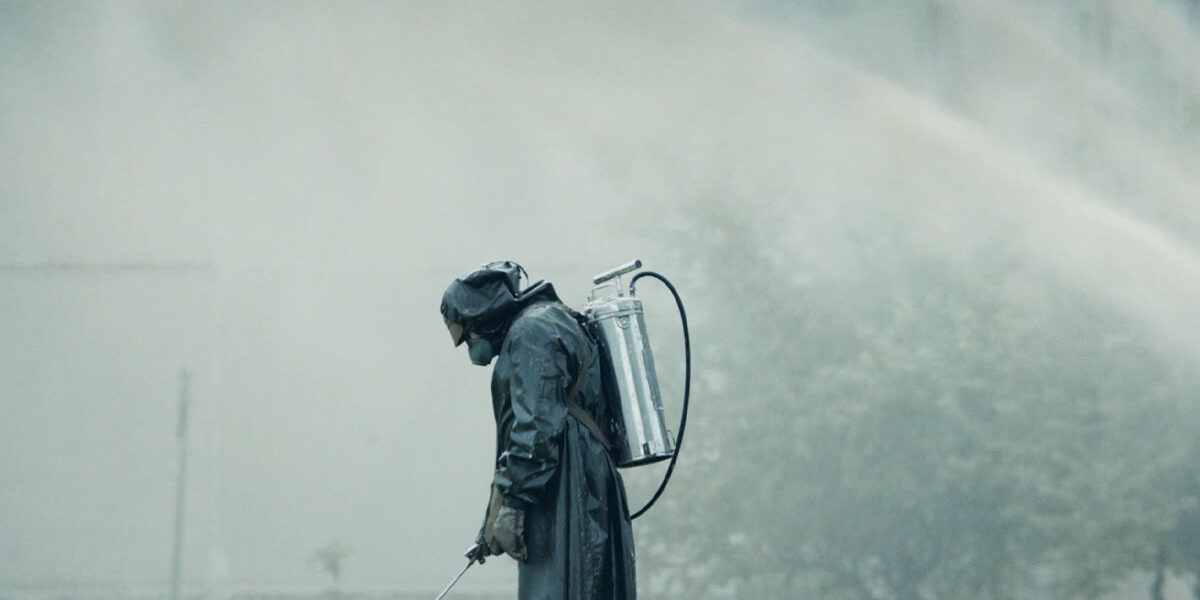
The true monster in this series is radiation. The creators masterfully depict radiation not just as a scientific phenomenon, but as a predatory entity. You cannot see it, taste it, or feel it, yet it rips human DNA apart from the inside out. The show builds unbearable suspense through the relentless, clicking sound of dosimeters. That erratic tick-tick-tick becomes the heartbeat of the show, a harbinger of invisible death that is infinitely more anxiety-inducing than the ticking clock of a slasher film.
Consider the terrifying sequence where three volunteer divers (the “suicide squad”) must wade through the pitch-black, flooded basement of the reactor to open the sluice gates. Their flashlights fail one by one as the clicking of their dosimeters grows to a deafening roar. The darkness, the claustrophobia, and the knowledge that they are swimming in radioactive poison create an atmosphere of pure, suffocating dread. No jump scare could ever match the sheer, stomach-churning terror of watching men slowly march toward an agonizing fate for the greater good.
Furthermore, the bodily horror depicted in the series is profoundly disturbing. The physical deterioration of the first responders—the firefighters who unwittingly picked up pieces of radioactive graphite—is shown with unflinching realism. The progression of Acute Radiation Syndrome (ARS) is presented not for gratuitous gore, but to confront the audience with the brutal reality of the disaster. The hospital scenes, hidden behind plastic curtains, showcase a slow, melting demise that makes the body horror of David Cronenberg films look like child’s play. It is terrifying precisely because it actually happened.
More Heartbreaking Than Any Romance
While the atmospheric dread fuels the narrative engine, it is the profound human tragedy that gives Chernobyl its soul. In many ways, the series delivers an emotional payload that is far more devastating and memorable than the most acclaimed romantic dramas.
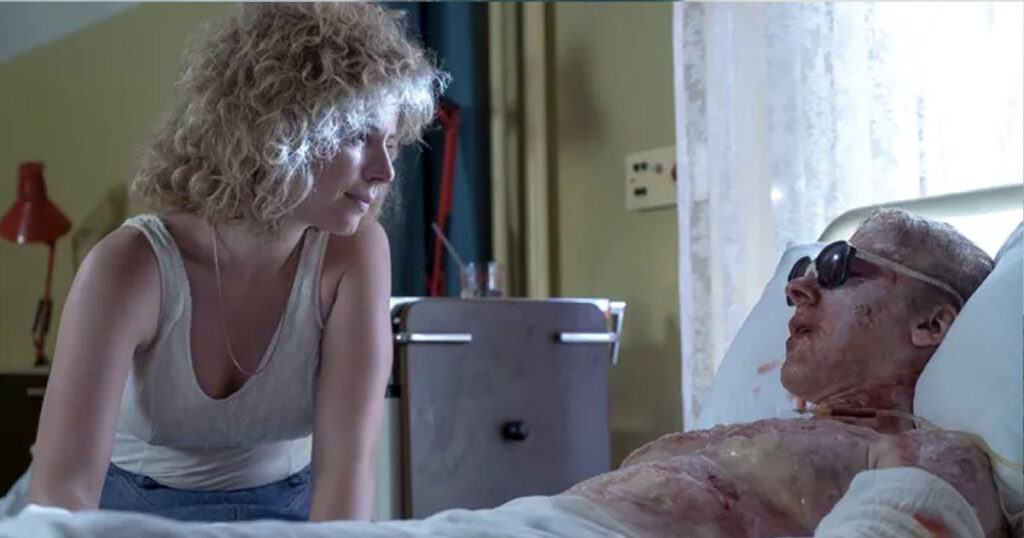
The heart of this tragedy is beautifully, yet painfully, encapsulated in the story of Lyudmilla Ignatenko and her husband, Vasily, a firefighter who was among the first to arrive at the burning reactor. Their story begins with the warmth of young love and the simple promise of a future together. But as Vasily succumbs to radiation poisoning, Lyudmilla’s relentless devotion becomes a tragic symphony of love and loss.
She breaks every hospital rule, ignoring the warnings of nurses and doctors, just to sit by his bedside, to touch him, to be with him as his body literally falls apart. The love she displays is fierce and unconditional, but the tragedy lies in the fact that her proximity to the man she loves ultimately harms her and her unborn child. Watching Lyudmilla hold her dying husband is a tear-jerking experience that transcends typical television romance. It is a raw, bleeding portrait of devotion in the face of inevitable destruction.
Beyond romantic love, the series portrays a profound platonic love and respect between its two central figures: Valery Legasov, the brilliant but conflicted scientist, and Boris Shcherbina, the rigid Soviet bureaucrat. Their relationship is the emotional backbone of the series. They begin as adversaries, separated by the immense gulf between science and the state. However, as they stand together on the edge of the abyss, a deep, unspoken bond forms between them.
The scene where a sickly Shcherbina tells Legasov, “They heard me, but they listened to you,” is a masterclass in understated emotional payoff. They both know they are walking dead men, poisoned by the very air they are breathing in Chornobyl, yet they find solace in their shared burden. It is a tragic brotherhood built on sacrifice and truth, and it is undeniably beautiful.
The Cost of Lies: Fact vs. Fiction
A crucial aspect of any HBO Chernobyl review is addressing the historical accuracy of the series. How close did Craig Mazin get to the actual events of April 1986? The answer is: astonishingly close in spirit and aesthetic, but with deliberate narrative adjustments necessary for a dramatic television series.
What the Series Got Perfectly Right
The level of detail in Chernobyl is staggering. The creators went to extraordinary lengths to ensure the material culture of the Soviet Union in the 1980s was represented flawlessly. Everything from the clothing, the wallpaper, the eyeglasses, and the teacups feels as though it was lifted directly from a time capsule.
The sequence of events leading up to the explosion of Reactor 4 is explained with brilliant clarity. The fatal combination of a flawed reactor design (the RBMK positive void coefficient and graphite-tipped control rods) and a culture of bureaucratic obedience is presented accurately.
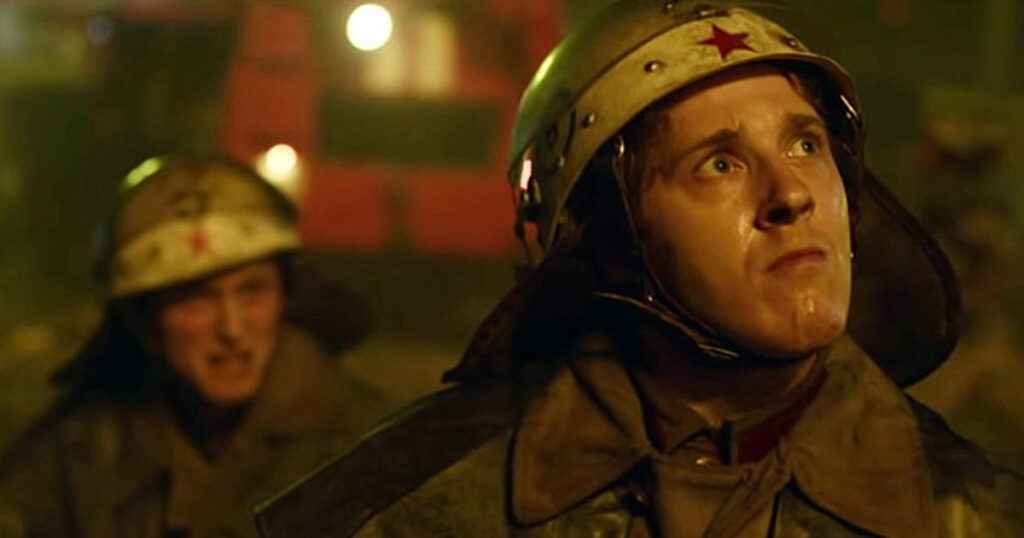
Furthermore, the heroism depicted is very real. The firefighters, the coal miners working naked in the sweltering heat beneath the reactor, and the “bio-robots” (the men tasked with manually clearing radioactive debris off the roof in 90-second intervals) did exactly what was shown on screen. Their bravery saved Europe from an unimaginable secondary disaster. The terrifying 90-second single-take shot on the roof of the reactor is visually and historically grounded in the actual footage taken during the cleanup.
Where the Series Took Creative Liberties
However, it is important to remember that Chernobyl is a dramatization, not a documentary. Some changes were made to condense the timeline or streamline the narrative.
1. Ulana Khomyuk is a Composite Character: The character of Ulana Khomyuk, played brilliantly by Emily Watson, did not exist. She was created by the writers as a composite character to represent the dozens of brave Soviet scientists who worked alongside Legasov to uncover the truth and manage the disaster. Introducing all of them would have been narratively confusing, so Khomyuk serves as a powerful stand-in for the scientific community’s conscience.
2. The Helicopter Crash Timeline: In the series, shortly after the explosion, we see a helicopter attempting to drop sand on the exposed core, only to fly too close to the reactor and crash. This crash did happen in reality, and it looked exactly as it did in the show. However, it did not happen on the first day. The real helicopter crash occurred months later, in October 1986. The showrunners moved it up in the timeline to heighten the immediate sense of danger and to visually demonstrate the lethal radiation “beam.”
3. The Trial of Dyatlov, Bryukhanov, and Fomin: The climactic trial in Episode 5 is one of the most compelling hours of television ever written. Legasov uses red and blue placards to brilliantly explain the mechanics of the nuclear disaster to the judge (and the audience). In reality, the trial was a much longer, more tedious affair, and Legasov was not present. He had already recorded his findings on audio tapes (as seen in the show’s opening). The trial in the show is a narrative device used to deliver the final, crushing blow of truth regarding the state’s complicity.
4. The “Bridge of Death”: The series shows citizens of Pripyat gathering on a railway bridge to watch the beautiful, glowing fire, as radioactive ash falls on them like snow. The show implies that everyone on this bridge eventually died, earning it the moniker “The Bridge of Death.” While people did gather to watch the fire, historians and survivors have debated the lethality of this specific location, with many noting that the “everyone died” claim is an urban legend that the show treats as fact for dramatic effect.
Conclusion: A Monumental Achievement
Ultimately, the deviations from the exact historical record do not diminish the power of the series. The showrunner’s intent was not to write a textbook, but to capture the emotional truth, the profound horror, and the incredible human sacrifice of the tragedy.
This HBO Chernobyl review concludes with a simple truth: the series is a flawless masterpiece. It utilizes the terrifying reality of nuclear radiation to create a horror story more gripping than any fictional monster. It explores the depths of human grief, sacrifice, and loyalty to deliver a narrative more heartbreaking than any traditional romance.
Chernobyl forces us to look into the abyss of human error and state-sponsored deceit. It reminds us that every lie we tell incurs a debt to the truth, and sooner or later, that debt is paid. It is not an easy series to watch, but it is an absolutely essential one. It is television at its absolute, most undeniable peak.