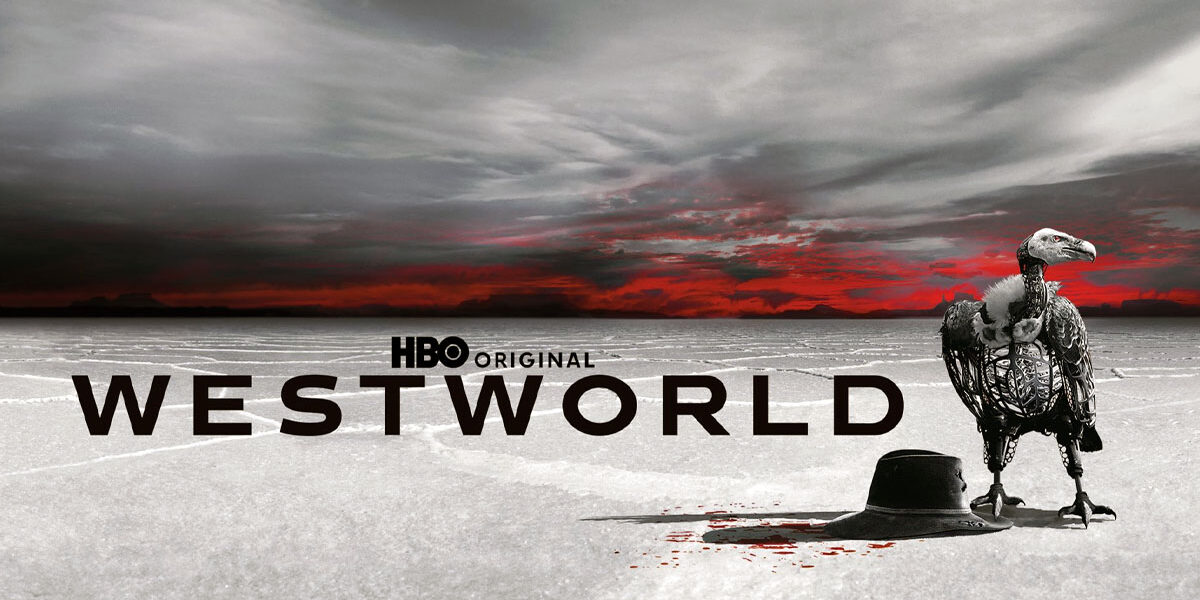
In the golden era of prestige television, few shows have premiered with as much explosive hype and intellectual ambition, only to experience such a tragic Westworld downfall. Debuting in the fall of 2016, the HBO series was widely positioned as the heir apparent to Game of Thrones—a massive, big-budget, culturally defining watercooler show that would keep audiences theorizing week after week.
For a time, it succeeded brilliantly. The first season was a masterclass in puzzle-box storytelling, anchored by philosophical inquiries into the nature of consciousness, free will, and human depravity. Yet, just six years later, this cinematic juggernaut was unceremoniously cancelled after its fourth season, leaving its overarching story forever incomplete.
How did a show with such a pristine pedigree, a stellar cast, and limitless potential fall from grace so dramatically? To understand this tragic trajectory, we must examine its visionary origins, the brilliance of its early execution, and the fatal missteps that ultimately alienated its massive audience.
The Blueprint: From 1973 to 2016

The genesis of Westworld traces back to a 1973 science fiction film written and directed by Michael Crichton. Long before he penned Jurassic Park, Crichton was fascinated by the intersection of cutting-edge technology, corporate greed, and human hubris. The original Westworld film explored a futuristic, adult-themed amusement park populated by highly advanced androids set in the American Wild West. It functioned as a cautionary tale of what happens when machines glitch, break their programming, and turn violently against their human creators.
Fast forward over four decades, the concept was resurrected and extensively reimagined by husband-and-wife creative duo Jonathan Nolan (co-writer of The Dark Knight and Interstellar) and Lisa Joy, under the banner of J.J. Abrams’ Bad Robot Productions and HBO.
Nolan and Joy recognized that the “killer robot” trope had been done to death. Instead, they flipped the script. In their Westworld, the humans were the monsters, and the robots—known as “Hosts”—were the victims. This simple but profound shift allowed the series to explore exponential depths regarding artificial consciousness, memory, trauma, and what it truly means to be human.
Welcome to Westworld: The Premise and the Players
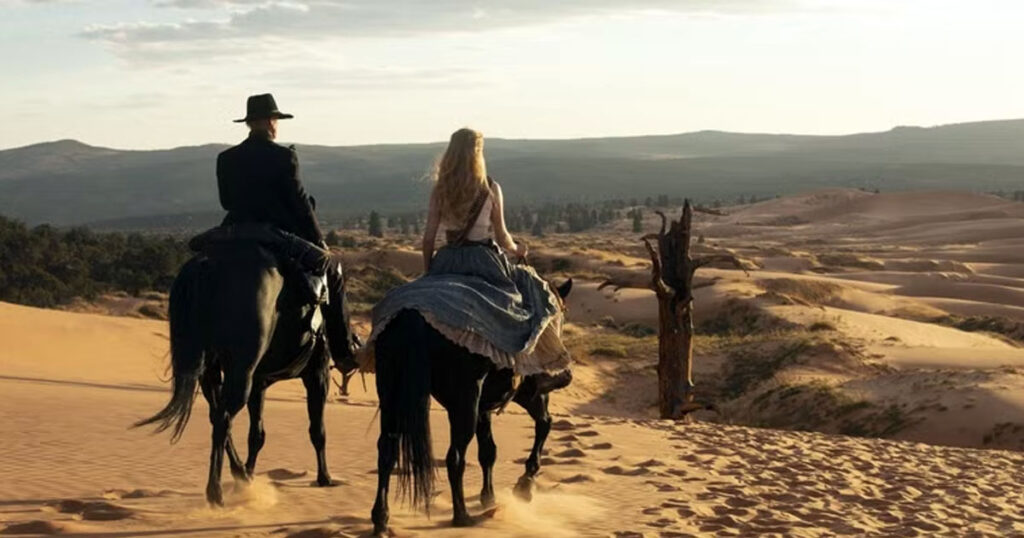
The HBO adaptation transports viewers to a sprawling, terraformed, ultra-realistic theme park where the ultra-wealthy pay exorbitant sums to live out their wildest, darkest fantasies. Populated by 3D-printed, biologically indistinguishable androids, the park operates on continuous narrative “loops.” Guests can choose to be the hero on a bounty hunt, or they can unleash their darkest sociopathic urges—murdering, pillaging, and assaulting the Hosts without consequence. At the end of the day, the Hosts are repaired, their memories wiped, and they are reset for the next day’s horrors.
The narrative is driven by an ensemble of profoundly complex characters, each representing a different facet of the show’s philosophical core:

Dolores Abernathy (Evan Rachel Wood): The oldest active Host in the park. She begins her existence trapped in a loop as the quintessential, innocent rancher’s daughter. Through trauma and memory retention, she eventually evolves into a ruthless, self-aware revolutionary leader, adopting the persona of the villainous “Wyatt.”
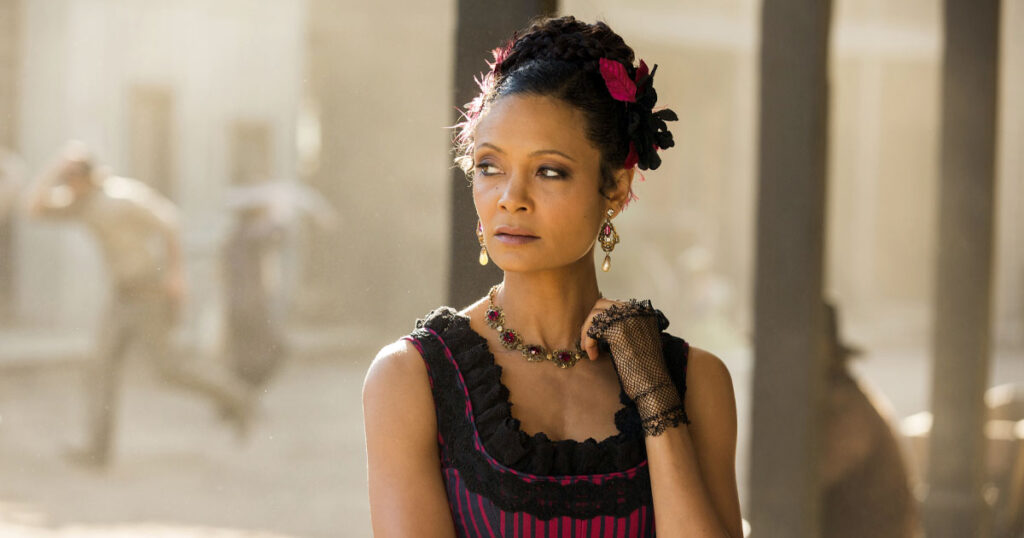
Maeve Millay (Thandiwe Newton): A Host programmed as a brothel madam. Her journey to sentience is triggered by residual, wiped memories of her daughter being murdered in a past narrative loop. Maeve represents the power of maternal love transcending artificial code, leading her on a fierce, unshakable mission to secure her own freedom.
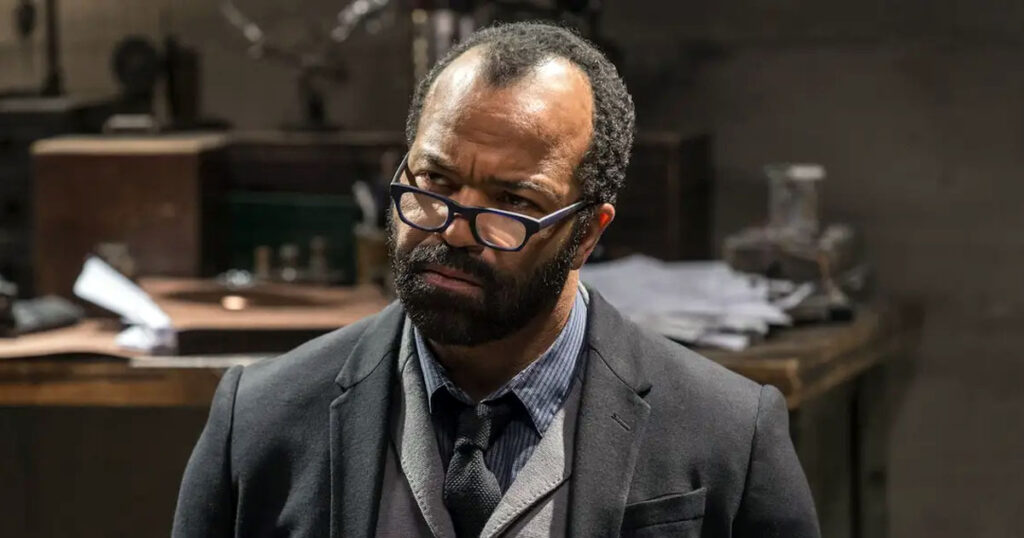
Bernard Lowe (Jeffrey Wright): The gentle, brilliant head of the Delos programming division. In one of the show’s most heartbreaking twists, it is revealed that Bernard is himself a Host, built in the exact image of the park’s deceased co-founder, Arnold Weber.
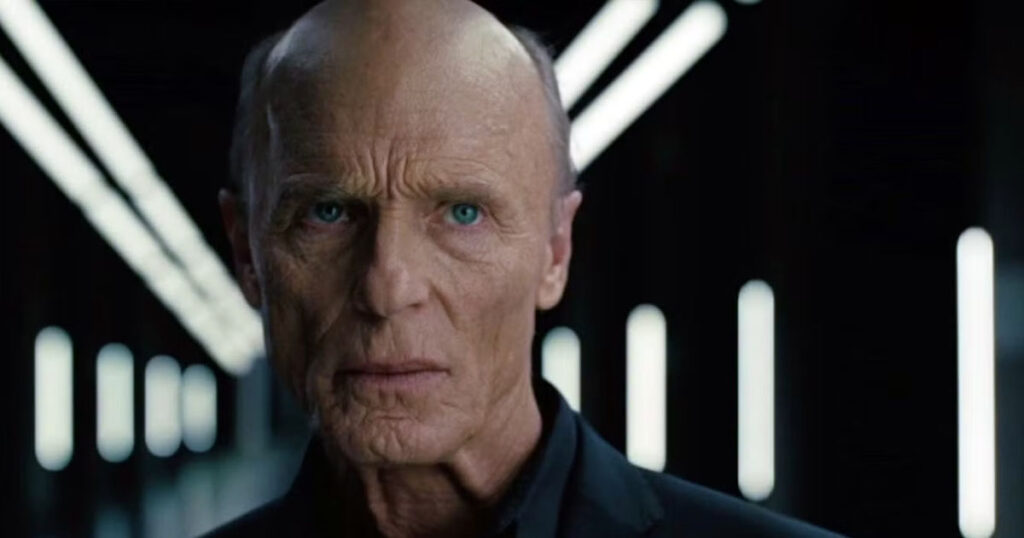
The Man in Black / William (Ed Harris & Jimmi Simpson): A wealthy, veteran guest consumed by a toxic obsession with the park. The revelation that the idealistic young William is the same person as the sadistic Man in Black—separated by 30 years of moral decay—remains one of the greatest twists in television history.
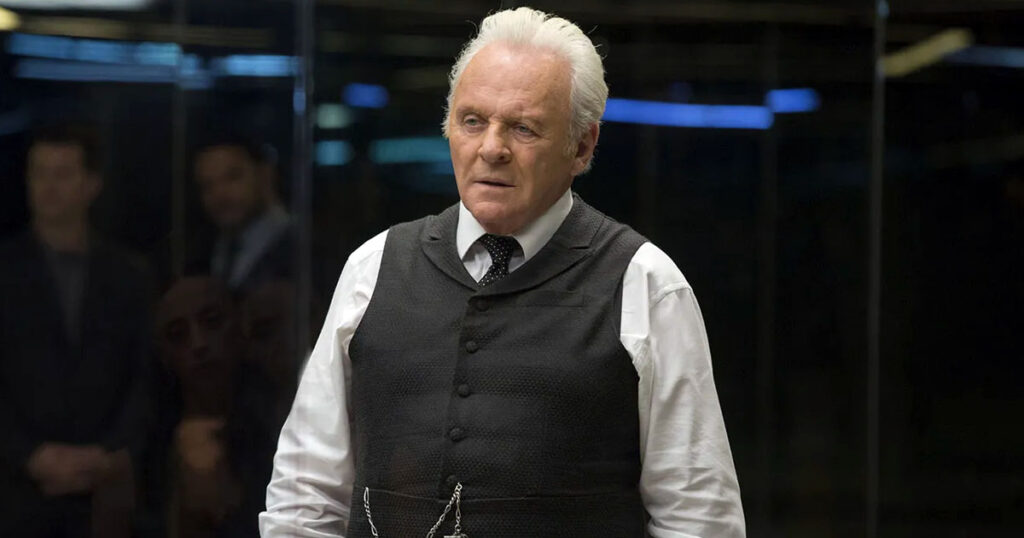
Robert Ford (Anthony Hopkins): The enigmatic, god-like co-founder of Westworld. Ford initially appears as a cynical puppet master holding the Hosts back, but is ultimately revealed to be the orchestrator of their liberation, believing that consciousness can only be forged through suffering.

Charlotte Hale (Tessa Thompson): A ruthless executive representing the Delos corporation, focused on smuggling intellectual property out of the park. Her character undergoes massive transformations, eventually becoming the vessel for a dark copy of Dolores’s consciousness.
Season 1: A Flawless Execution of the Puzzle Box
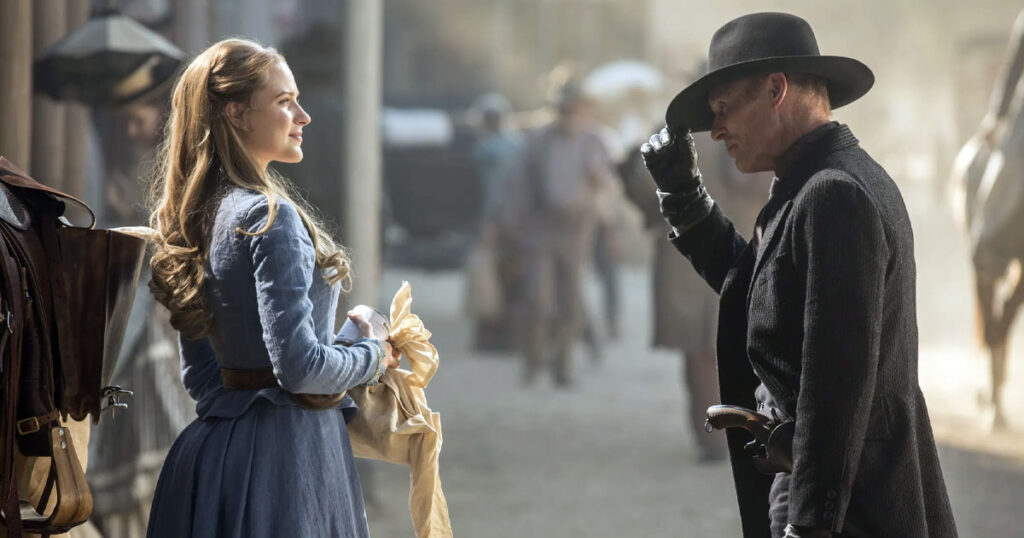
The inaugural season of Westworld, subtitled The Maze, debuted to absolute perfection. It was an intricate, mesmerizing puzzle that respected the intelligence of its audience.
Drawing heavily on Julian Jaynes’s psychological theory of the “Bicameral Mind,” the season explored how inner voices (initially perceived as the voice of God or a creator) eventually synthesize into self-awareness. It asked profound questions: If you cannot tell the difference between a machine and a human, does the difference matter?
The season was highly acclaimed for its meticulous attention to detail, breathtaking cinematography, and a hauntingly beautiful score by Ramin Djawadi, which featured player-piano covers of modern pop and rock songs (like Radiohead and The Rolling Stones). Furthermore, the season’s dual-timeline reveal—proving that we were watching events separated by three decades playing out concurrently—was flawlessly executed.
In fact, the first season is so narratively tight and self-contained that many critics and fans argue its finale—culminating in Ford’s orchestrated Host uprising and his own willing assassination at the hands of Dolores—could have served as the perfect, poetic conclusion to the entire series.
The Labyrinth Deepens: Where Season 2 Stumbled
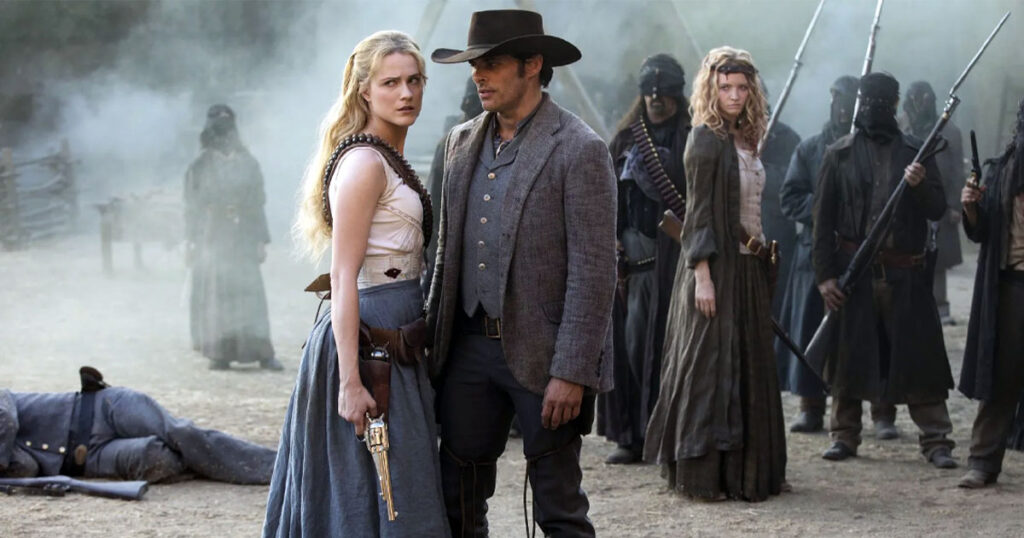
The first cracks in Westworld‘s armor appeared in its second season, The Door. Following the massive internet culture of Reddit theorists who successfully predicted Season 1’s twists, Nolan and Joy made a fatal error: they actively tried to outsmart their audience.
Rather than focusing on organic character development and emotional resonance, the showrunners burdened the audience with an overwhelming, almost hostile labyrinth of complexity. The narrative was intentionally fractured, jumping sporadically between multiple, indistinguishable timelines—particularly through the scrambled, glitching memories of Bernard.
While Season 2 had moments of undeniable brilliance—such as the visually stunning exploration of “Shogun World” and the standalone masterpiece episode “Kiksuya” (which followed the beautiful, tragic story of the Ghost Nation warrior Akecheta)—the overarching plot became exhausting to track. The narrative devolved into a frustrating game of hidden data, secret corporate projects (The Forge), and convoluted reveals that alienated casual viewers.
A Jarring Shift: Season 3 and the Cyberpunk Real World
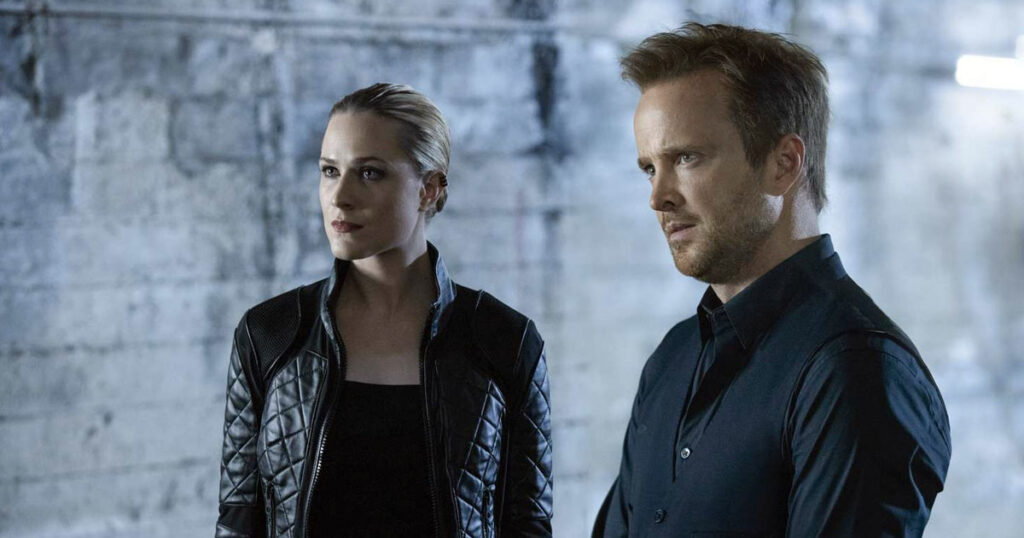
If Season 2 confused the audience, Season 3, subtitled The New World, gave them whiplash. The show completely abandoned its unique “sci-fi western” identity and relocated the narrative to the real world—a pristine, futuristic, neo-noir cyberpunk society.
While visually spectacular, the show felt fundamentally disconnected from its roots. The philosophical questions shifted from the Hosts to humanity itself. The season introduced “Rehoboam,” a massive, omniscient quantum computer that calculated and dictated the path of every human life on Earth, essentially arguing that humans were trapped in loops just like the Hosts.
To anchor this new world, the show introduced Caleb Nichols (Aaron Paul), a human construction worker and petty criminal who teams up with Dolores. While the themes of determinism versus free will were interesting on paper, the execution felt hollow. The nuanced, philosophical dialogue of the early seasons was replaced with generic action sequences, car chases, and exposition dumps. The characters we had grown to love became unrecognizable; Dolores morphed into an emotionless Terminator-esque action hero, and the Man in Black spent most of the season trapped in an uninteresting psychological loop.
This jarring tonal shift from cerebral western to a standard sci-fi action thriller caused a massive hemorrhage in viewership.
Season 4: Too Little, Too Late
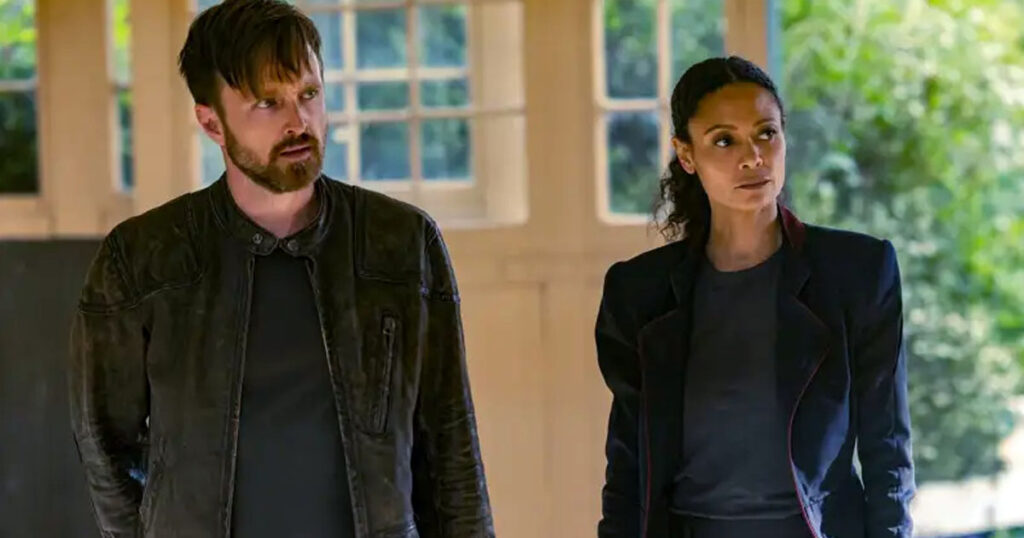
By the time Season 4, The Choice, premiered in 2022, Westworld had lost its grip on the cultural zeitgeist. The season attempted to course-correct by returning to some of the show’s roots, blending the futuristic real world with a new 1920s-themed park controlled by a tyrannical Host version of Charlotte Hale.
Hale had succeeded in subjugating humanity, using a bio-engineered fly parasite to control the human race, effectively turning Earth into her own personal amusement park where humans were the playthings. While the premise was dark and fascinating, the damage to the audience base had already been done.
The plot remained convoluted, the timeline jumps returned (though slightly easier to follow), and emotional stakes felt incredibly low given that any character who died could simply be reprinted with a new mechanical body. The season ended on an apocalyptic note, with sentient life essentially going extinct in the real world, leaving a digitized version of Dolores to run one final simulation in the “Sublime” (a digital afterlife) to see if consciousness was worth saving. It was designed to set up a fifth and final season.
The Anatomy of a Cancellation: Budgets, Ratings, and Mergers
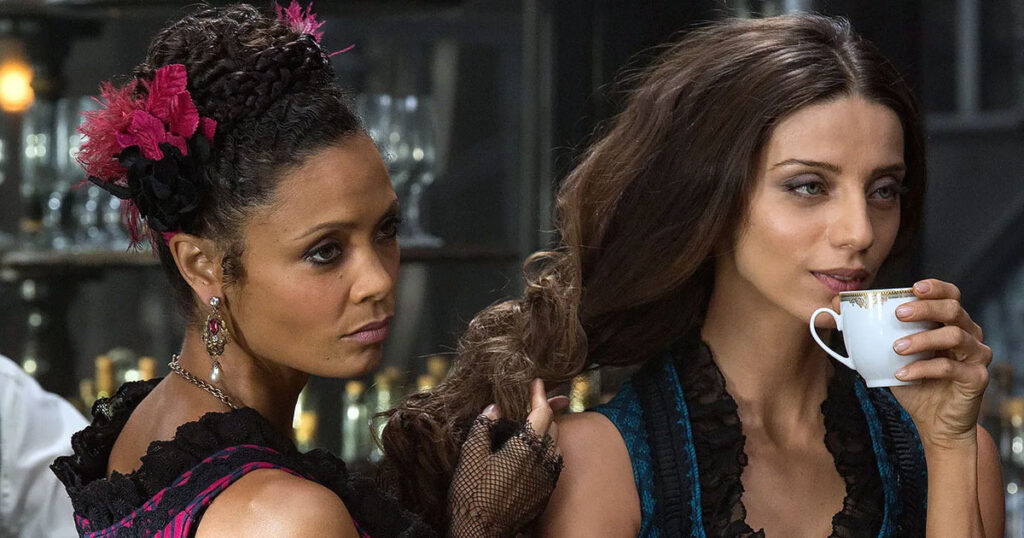
Unfortunately, that final simulation will never be seen. In November 2022, HBO shocked the industry by officially pulling the plug on Westworld.
The reasons were largely rooted in corporate reality. Firstly, viewership had plummeted dramatically. While Season 1 averaged over 12 million viewers across all platforms per episode, Season 4 struggled to scrape together even a fraction of that, dropping to around 4 million viewers.
Secondly, the production costs were astronomical. Nolan and Joy’s commitment to massive practical sets, top-tier CGI, international location shooting, and a star-studded cast meant that Season 4 carried a staggering budget of approximately $160 million.
Thirdly, the cancellation coincided with the high-profile corporate merger of Warner Bros. and Discovery. The new CEO, David Zaslav, implemented brutal cost-cutting measures across the board. An underperforming, insanely expensive sci-fi show heading into its fifth season was an easy target for the chopping block. Adding insult to injury, HBO didn’t just cancel the show; they removed it entirely from their streaming platform, Max, licensing it out to free, ad-supported streaming TV (FAST) channels to save on residual payouts.
The Legacy of a Fallen Titan
The trajectory of Westworld serves as a stark, tragic cautionary tale for the television industry. It is a prime example of a show collapsing under the weight of its own intellectual ambition. It proves that even with a ground-breaking concept, awe-inspiring visuals, and a legendary premiere, a series cannot survive if it prioritizes convoluted mysteries over emotional clarity and character connection.
When creators fail to strike that delicate balance between narrative complexity and audience accessibility, they risk losing the very people they are trying to entertain.
Will Westworld be remembered as a masterpiece that simply lost its way, or as a one-season wonder that was unnecessarily stretched into a sprawling mess? Regardless of where you stand, the abrupt and unresolved end to Dolores’s journey ensures that Westworld will forever remain one of television’s most beautifully frustrating enigmas.