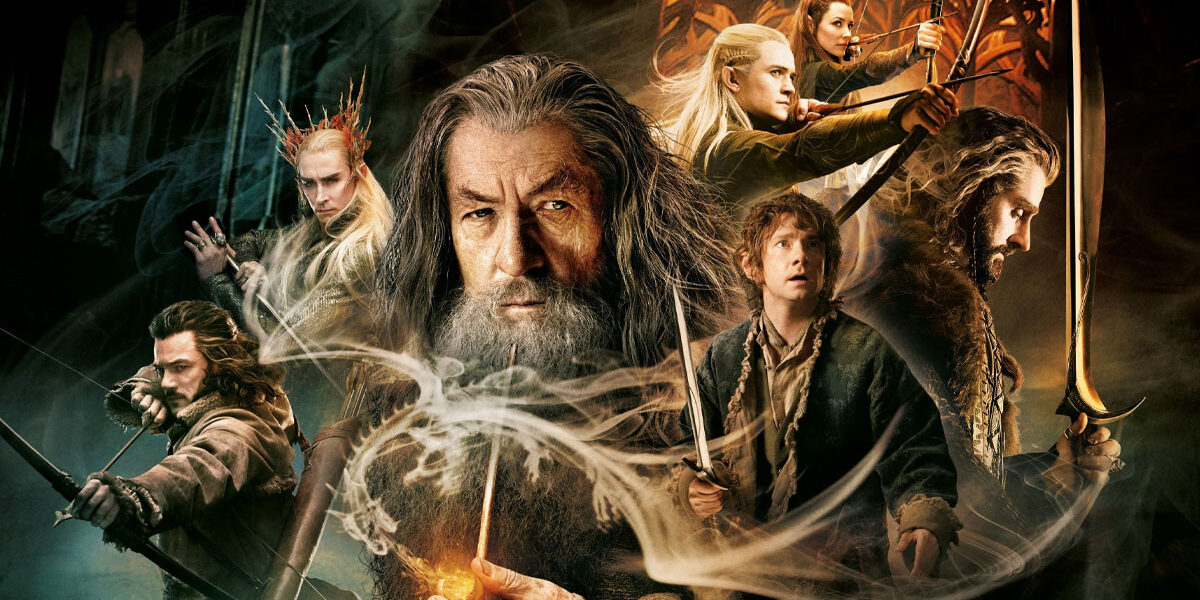
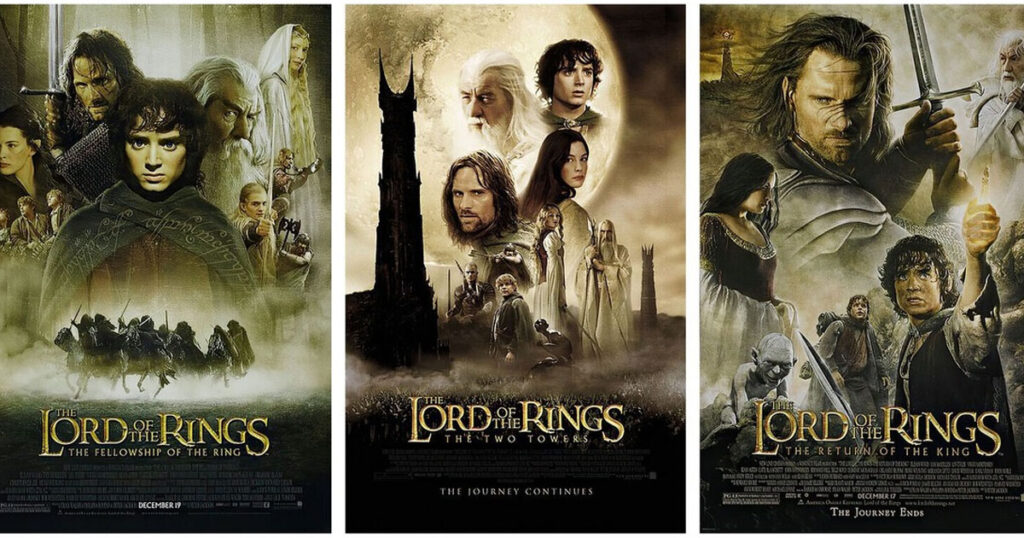
Over two decades have passed since audiences first heard the haunting, ethereal whispers of Galadriel recounting the forging of the Great Rings. When Peter Jackson’s The Lord of the Rings: The Fellowship of the Ring premiered in 2001, it didn’t just adapt a beloved book; it reshaped the landscape of modern cinema. Followed by The Two Towers (2002) and The Return of the King (2003), this trilogy remains an unparalleled triumph of filmmaking, storytelling, and sheer human dedication.
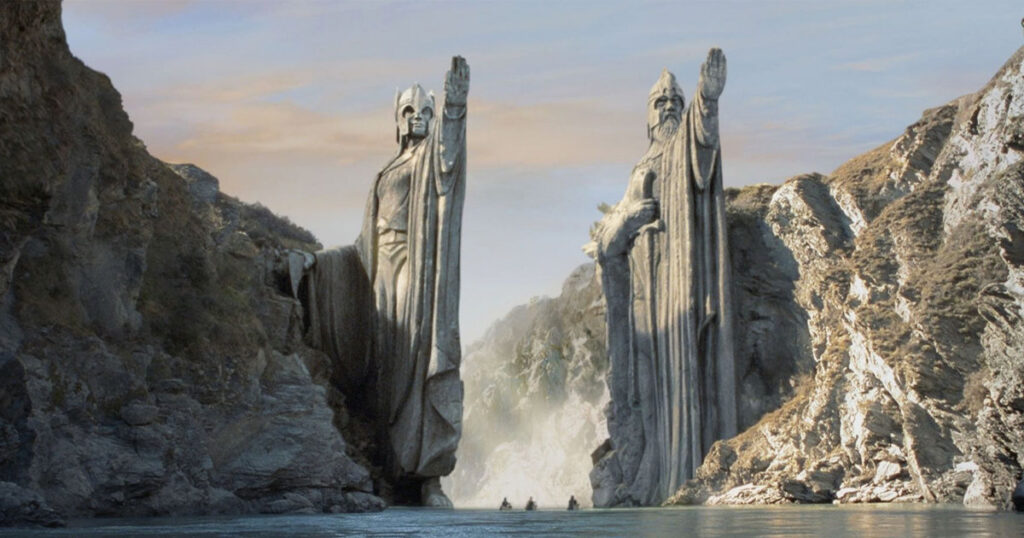
But how does it hold up today? And more importantly, how did a New Zealand director known primarily for low-budget splatter-comedy horror manage to convince a major Hollywood studio to bankroll three massive fantasy epics shot simultaneously? Let’s dive into a comprehensive review of the trilogy, followed by the legendary behind-the-scenes history of how this cinematic miracle came to be.
The Review: A Timeless Triumph of Fantasy
To review The Lord of the Rings is to evaluate the absolute gold standard of the fantasy genre. Even today, in an era dominated by relentless CGI and superhero cinematic universes, Jackson’s Middle-earth feels tangibly real, grounded in a gritty authenticity that modern blockbusters rarely achieve.
Narrative Pacing and Emotional Depth
The overarching narrative is elegantly balanced across the three films. The Fellowship of the Ring is a masterclass in world-building and character introduction. It takes its time establishing the idyllic, innocent life in the Shire, which makes the impending threat of Sauron all the more terrifying. The forming of the Fellowship and its eventual tragic fracturing at Amon Hen remains one of the most emotionally resonant arcs in fantasy cinema.
The Two Towers faced the difficult task of being the “middle child,” splitting the narrative into three distinct threads. Yet, it succeeds brilliantly. The introduction of the Kingdom of Rohan expands the political landscape of Middle-earth, culminating in the Battle of Helm’s Deep. This sequence remains the benchmark for cinematic siege warfare—dark, desperate, physically exhausting, and perfectly paced.
Finally, The Return of the King delivers a monumental climax. The Battle of the Pelennor Fields is staggering in its scale, and the emotional crescendo at Mount Doom is deeply moving. While critics often joke about the film’s “multiple endings,” those concluding 20 minutes are entirely necessary. You cannot put characters through a grueling 9-hour cinematic ordeal and not give them (and the audience) the time to properly say goodbye.
Groundbreaking Performances
The ensemble cast is universally phenomenal, achieving a rare alchemy where actors become entirely indistinguishable from their characters. Elijah Wood captures Frodo Baggins’ gradual decay—both physical and spiritual—as the Ring slowly poisons his mind. Beside him, Sean Astin delivers the trilogy’s emotional anchor as Samwise Gamgee, portraying a pure, unyielding loyalty that has left audiences weeping for decades.
Viggo Mortensen brings a quiet, rugged nobility to Aragorn, perfectly portraying a man running from his lineage who must ultimately embrace his destiny. Ian McKellen is Gandalf. He oscillates flawlessly between a warm, mischievous grandfather figure and a terrifying, commanding angelic being.
However, the most revolutionary performance belongs to Andy Serkis as Gollum. Before The Lord of the Rings, motion capture was a nascent technology. Serkis imbued Gollum with such intense psychological duality and physical desperation that he single-handedly legitimized motion-capture acting as a serious, award-worthy art form.
Visuals, Practical Effects, and The Score
What makes the trilogy age so beautifully is Jackson’s reliance on practical effects, “bigatures” (massive, highly detailed miniature models), and on-location shooting. Real actors in real chainmail, holding real steel swords, riding real horses across the breathtaking landscapes of New Zealand give the films weight. When CGI is used, it is used to enhance reality, not replace it.
Tying it all together is Howard Shore’s legendary musical score. Shore utilized the operatic technique of leitmotifs—specific musical themes assigned to characters, places, and cultures. From the comforting, rustic fiddles of the Shire to the blaring, industrial brass of Isengard, the music is the true lifeblood of Middle-earth.
The Impossible Pitch: Finding the Money
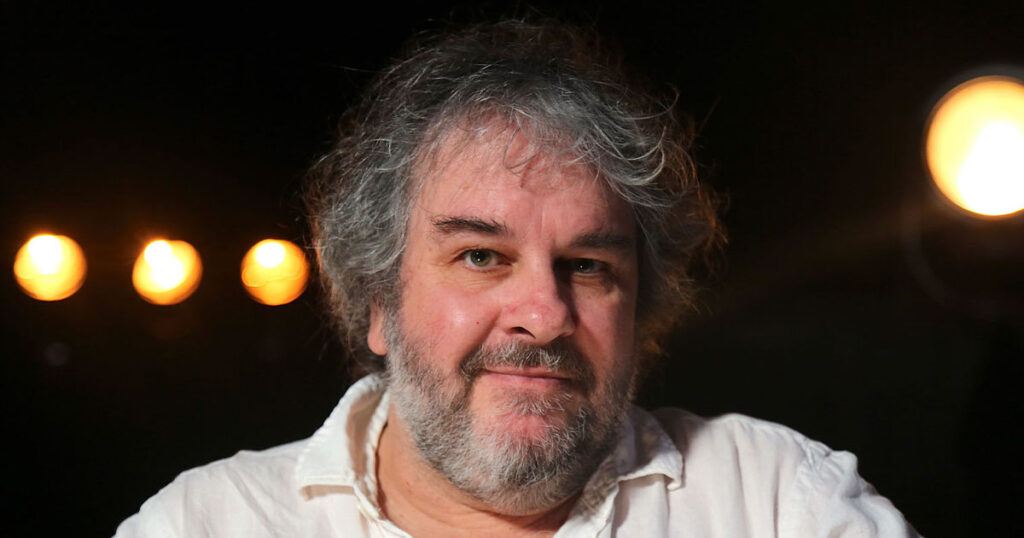
The fact that these movies exist at all is nothing short of a Hollywood miracle. In the mid-1990s, Peter Jackson was far from an A-list director. His filmography consisted mostly of cult horror-comedies like Bad Taste and Braindead (also known as Dead Alive), and the critically acclaimed psychological drama Heavenly Creatures. Pitching a massive, multi-film adaptation of J.R.R. Tolkien’s magnum opus seemed like career suicide.
The Miramax Nightmare
Jackson initially pitched the project to Harvey Weinstein at Miramax. At first, Miramax agreed to a two-film adaptation. Jackson and his partner, Fran Walsh, spent over a year working on scripts and pre-production conceptual designs with Wētā Workshop. However, Miramax’s parent company, Disney, imposed a strict budget cap.
In a shocking move, Weinstein demanded that Jackson compress the entire story into one two-hour movie. To achieve this, Weinstein suggested cutting Helm’s Deep entirely, losing the Balrog, having Eowyn replace Boromir’s role, and merging Rohan and Gondor into one kingdom. Jackson flatly refused to butcher Tolkien’s work. Weinstein then gave Jackson a brutal ultimatum: he had just a few weeks to find another studio to buy the rights and the money already spent on pre-production, or Weinstein would fire Jackson and hire John Madden (director of Shakespeare in Love) to make the single film.
The New Line Cinema Miracle
Desperate, Jackson prepared a 35-minute documentary showcasing the incredible pre-production art, armor, and location scouting they had already completed. He leaked the scripts to various studios, hoping for a bite. Most turned him down; the risk was simply too high.
Finally, Jackson secured a meeting with Bob Shaye, the founder and CEO of New Line Cinema. Jackson pitched a two-film adaptation. Shaye watched the documentary reel in silence. When it finished, Shaye looked at Jackson and uttered a sentence that would change cinematic history forever:
“I don’t get it. Why make two movies when there are three books? Let’s make three films.”
In an industry built on risk aversion, Bob Shaye bet the entire future of New Line Cinema—nearly $300 million—on an unproven director aiming to shoot three massive blockbusters concurrently in New Zealand. It was the biggest gamble in film history.
Behind the Scenes: A Grueling Production
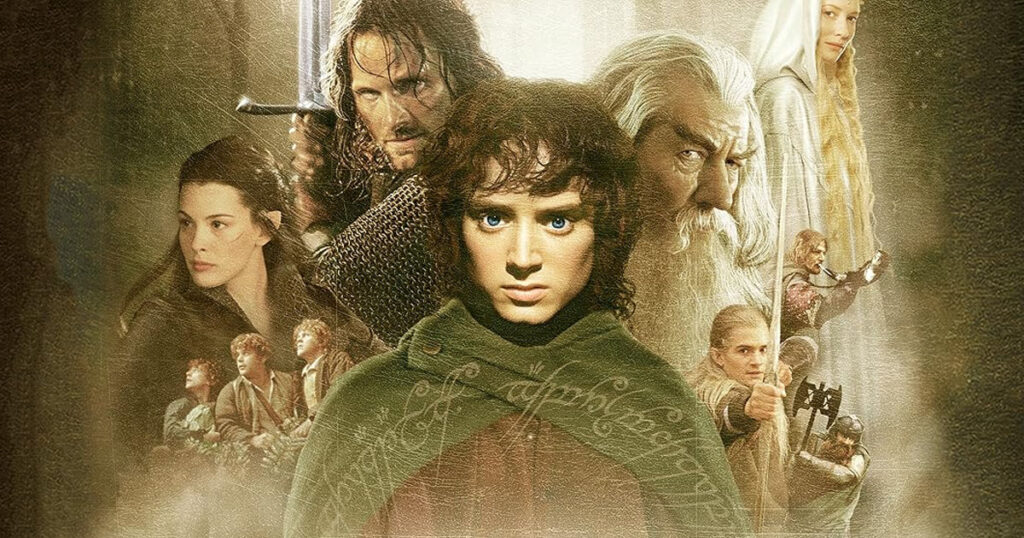
With the green light secured, Jackson embarked on an unprecedented production schedule. Principal photography took place simultaneously across New Zealand over a staggering 274 days between October 1999 and December 2000, with additional pick-up shoots over the following three years.
The Magic of Wētā Workshop
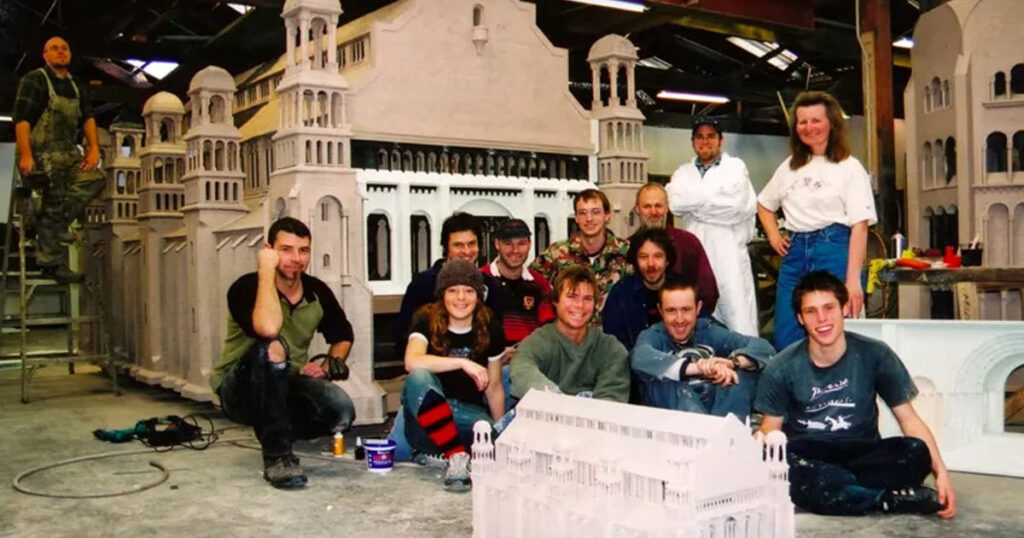
To bring Middle-earth to life, Richard Taylor and the team at Wētā Workshop had to manufacture a staggering amount of props. Because Jackson demanded historical authenticity, Wētā couldn’t just use cheap plastic.
They forged 48,000 individual pieces of armor, crafted 10,000 real arrows, created 2,000 rubber and safety weapons, and hand-forged 100 actual steel hero weapons. The chainmail worn by the actors was made by hand, linking over 12 million individual plastic rings—a task so repetitive that the two crew members assigned to it actually wore the fingerprints off their thumbs.
Forced Perspective
Because Hobbits and Dwarves are significantly shorter than Men and Elves, Jackson had to use a variety of in-camera tricks to create the illusion of different heights. Instead of relying solely on blue screens, the crew used “forced perspective.”
This technique involves placing one actor much further away from the camera than another while aligning the set pieces and props to make them appear side-by-side. They even built moving sets and utilized motion-control cameras so that the camera could pan and track while maintaining the illusion of the size difference between Elijah Wood and Ian McKellen.
Fascinating Trivia and Fun Facts
A production of this scale is bound to generate legendary stories. Here are some of the most fascinating behind-the-scenes facts:
- The Casting of Aragorn: Viggo Mortensen was not the original Aragorn. Actor Stuart Townsend was initially cast and had trained for weeks. Just days before filming began, Jackson realized Townsend was simply too young to play the grizzled, world-weary Ranger. Mortensen was brought in at the absolute last minute, convinced to take the role by his son, Henry, who was a massive fan of the books.
- The Broken Toe: In The Two Towers, when Aragorn, Legolas, and Gimli find the burned pile of Orc bodies and believe Merry and Pippin are dead, Aragorn kicks an Uruk-hai helmet in frustration and lets out a visceral scream of anguish. That scream was completely real—Viggo Mortensen had just broken two of his toes kicking the heavy steel prop. Jackson loved the raw emotion so much, he used that take in the final film.
- Sean Connery as Gandalf: The studio originally wanted Sean Connery to play Gandalf. They offered him $30 million plus 15% of the worldwide box office receipts (which would have eventually netted him around $450 million). Connery turned it down, famously stating that he “didn’t understand the script.”
- Christopher Lee’s Tolkien Connection: The late, great Sir Christopher Lee (Saruman) was the only member of the cast and crew to have actually met J.R.R. Tolkien in person. Lee read the books every single year for decades and originally auditioned for the role of Gandalf, though Jackson felt he was better suited for the villainous Saruman.
- The Fellowship Tattoos: Towards the end of filming, eight of the nine actors who played the Fellowship got matching tattoos of the Elvish word for “nine.” John Rhys-Davies (Gimli) was the only one to decline, sending his stunt double to get the tattoo instead.
Final Verdict and Conclusion
The Lord of the Rings trilogy is more than just a series of films; it is a monumental achievement in human creativity, passion, and endurance. It proved that fantasy, when treated with deep respect and earnest sincerity, can transcend genre tropes to explore profound themes of friendship, sacrifice, the corrupting nature of absolute power, and the courage of ordinary people against overwhelming darkness.
Peter Jackson’s vision, combined with the tireless dedication of thousands of artists, technicians, and actors, captured lightning in a bottle. The trilogy swept the Academy Awards, with The Return of the King winning all 11 of its nominations, tying the record for the most Oscars ever won by a single film.
Today, The Lord of the Rings trilogy remains untouched. It has not aged; rather, it has matured, standing as a stark reminder of what blockbuster cinema can achieve when filmmakers prioritize art, story, and practical craftsmanship over assembly-line corporate mandates.
Final Score: 4.5/5 – An absolute masterpiece that will be celebrated for generations to come.