
If I had to summarize the landscape of big-budget sci-fi movies over the last decade, the words “bleak,” “dystopian,” and “mind-bendingly existential” would probably be at the top of the list. From the soul-crushing vastness of space in Gravity to the complex, time-altering philosophy of Interstellar, it seems like Hollywood has trained us to expect anxiety whenever an astronaut puts on a helmet.
But then comes “Project Hail Mary” (2026).
Adapted from the smash-hit, best-selling novel by Andy Weir (the brilliant mind who gave us The Martian) and directed by the famously comedic duo Phil Lord and Christopher Miller (The Lego Movie, Spider-Man: Into the Spider-Verse), this film is a massive pivot from the genre’s usual grim tone. Starring Ryan Gosling as a lone astronaut trying to save Earth from an impending ice age, the movie asks a bold question: Can an apocalyptic, extinction-level space thriller actually be… endearing? Funny? And dare I say, overwhelmingly optimistic?
After catching a packed screening and spending the last few days scrolling through endless Reddit threads, critic reviews, and hardcore book-fan forums, I’m here to break down exactly why Project Hail Mary is the most uniquely heartwarming sci-fi blockbuster in years—and why its very specific flavor might not be for absolutely everyone. (Don’t worry, this review is completely free of major plot spoilers!).
The Premise: A Suicide Mission to Save Humanity
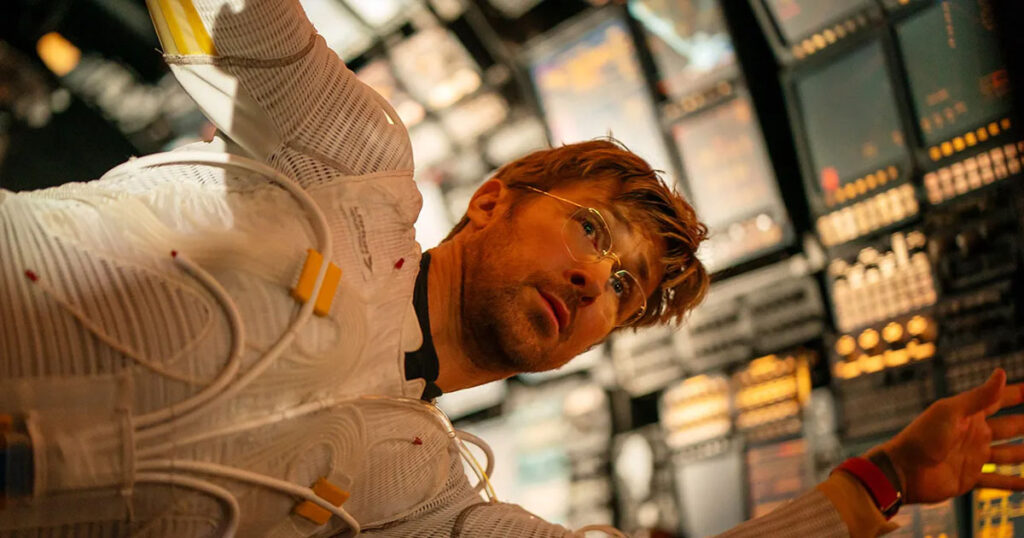
The movie opens with a classic, highly effective sci-fi trope: amnesia. We meet Dr. Ryland Grace (Ryan Gosling) as he wakes from a coma aboard a sterile, unfamiliar spacecraft. He has tubes sticking out of him, he doesn’t know his own name, and, horrifyingly, he quickly discovers that his two crewmates did not survive the long journey. He is utterly and completely alone.
Through a series of incredibly well-placed and emotionally resonant flashbacks, Grace’s memory—and the audience’s understanding of the stakes—slowly pieces itself together. We learn that Earth is facing an unprecedented existential threat. A mysterious, energy-eating alien microbe, dubbed the “Astrophage,” is feeding on our Sun, causing global temperatures to plummet. If left unchecked, humanity will freeze to death and go extinct within a generation.
Grace, a former hot-shot molecular biologist who left academia to become a quirky, beloved middle school science teacher, is reluctantly thrust into a desperate, last-ditch global effort. He is sent on a one-way trip to the Tau Ceti star system—the only nearby star not infected by the Astrophage—to find an answer.
On paper, this sounds like the setup for a terrifying, claustrophobic psychological thriller. However, the execution is entirely different. Instead of wallowing in the despair of his situation, Grace does what he does best: he starts sciencing the sh*t out of it.
The Lord & Miller Effect: “Competence Porn” Meets Cutesy Humor
The defining characteristic of Project Hail Mary—and its most polarizing element—is its tone. If you loved the witty, sarcastic, never-say-die attitude of Mark Watney in The Martian, you will instantly connect with Ryland Grace. The film is essentially two and a half hours of “competence porn”—watching a highly intelligent person use real-world physics, chemistry, and biology to solve seemingly impossible problems.
Directors Lord and Miller lean heavily into Grace’s background as a middle-school teacher. He explains complex scientific concepts aloud (mostly to himself, or to the ship’s computer) in a way that is accessible, enthusiastic, and genuinely fun. The movie goes out of its way to make science look cool, treating every successful experiment like an action-movie explosion.
However, this is where the critical consensus splits. Many audience members and fans of the book are praising the film’s unyielding optimism. In a cinematic era dominated by cynicism, watching a protagonist face certain doom with a dad joke and a whiteboard is incredibly refreshing. It feels hopeful.
On the flip side, some hardcore sci-fi purists and critics have argued that the directors went a little too far with the comedy. The humor is very “quippy”—almost Marvel-esque at times. When your character is facing the potential extinction of the entire human race, throwing out a goofy one-liner can occasionally undercut the dramatic tension. There are moments where you wish the movie would just let the silence and the terror of space breathe for a second. Whether this works for you will depend entirely on your tolerance for lightheartedness in the face of the apocalypse.
Ryan Gosling Carries the Ship (and Sandra Hüller Commands the Earth)
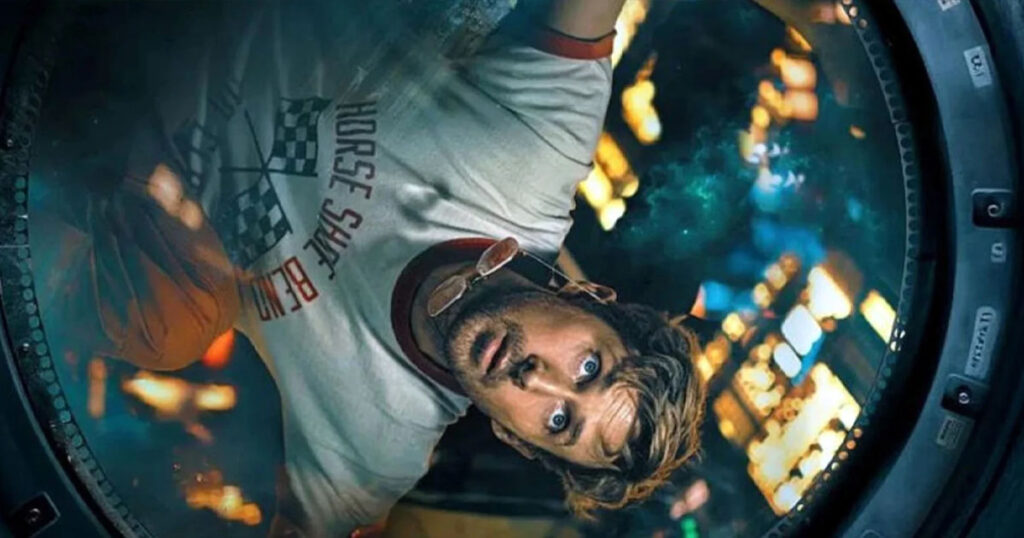
Let’s talk about the performances, because this movie would completely fall apart without the right leading man. Ryan Gosling is doing some of his best crowd-pleasing work here. Carrying a movie by yourself in a tiny room for a massive chunk of the runtime requires a very specific kind of charisma, and Gosling delivers. He balances the innate geekiness of Ryland Grace with a subtle, simmering vulnerability. He’s not a superhero; he’s a terrified teacher doing his best, and Gosling’s physical comedy and expressive face make him instantly lovable.
Back on Earth (in the flashbacks), the MVP is undoubtedly Sandra Hüller (Anatomy of a Fall) as Eva Stratt, the terrifyingly efficient task force leader given absolute, unchecked global authority to get the Hail Mary project off the ground.
For the book fans, Stratt’s character adaptation has been a major talking point. In Andy Weir’s novel, Stratt is an uncompromising, almost sociopathic bulldozer of a human being who doesn’t care whose lives she ruins to save the planet. In the film, Hüller’s portrayal softens the edges just a bit. She is still intimidating and commanding, but the script gives her a few more moments of visible empathy and humanity. Some book purists miss the ruthless “ice queen” from the novel, but most critics agree that Hüller brings a necessary emotional gravity to the Earth-bound scenes, acting as the perfect straight-faced foil to Gosling’s quirky science-nerd energy.
The True Heart of the Film: An Unlikely, Cross-Species Bromance
I will tread very carefully here to avoid ruining the magic for those who go in completely blind, but it’s impossible to review this film without discussing its second act.
The true magic of Project Hail Mary isn’t the mission to save the Sun; it’s what happens when Grace realizes he isn’t the only one looking for a cure. The introduction of an unexpected ally (known to book fans as “Rocky”) shifts the movie from a solitary survival tale into one of the greatest buddy-comedies/dramas in recent sci-fi history.
The way the film handles the communication barrier between two entirely different species is nothing short of brilliant. Rather than relying on a magical “universal translator,” the movie spends a significant amount of time showing the painstaking, logical, and often hilarious process of two scientists trying to understand each other using math, music, and physical models.
The visual effects team deserves a massive round of applause here. The design and animation of Grace’s extraterrestrial counterpart are incredibly tactile and expressive, despite lacking traditional human facial features. The chemistry between Gosling and this CGI creation is the absolute heartbeat of the film. It is genuinely moving, deeply funny, and ultimately profound. You will walk out of the theater caring more about this friendship than you have for most human-to-human romances on screen this year.
A Visual Feast Hindered by Minor Pacing Issues
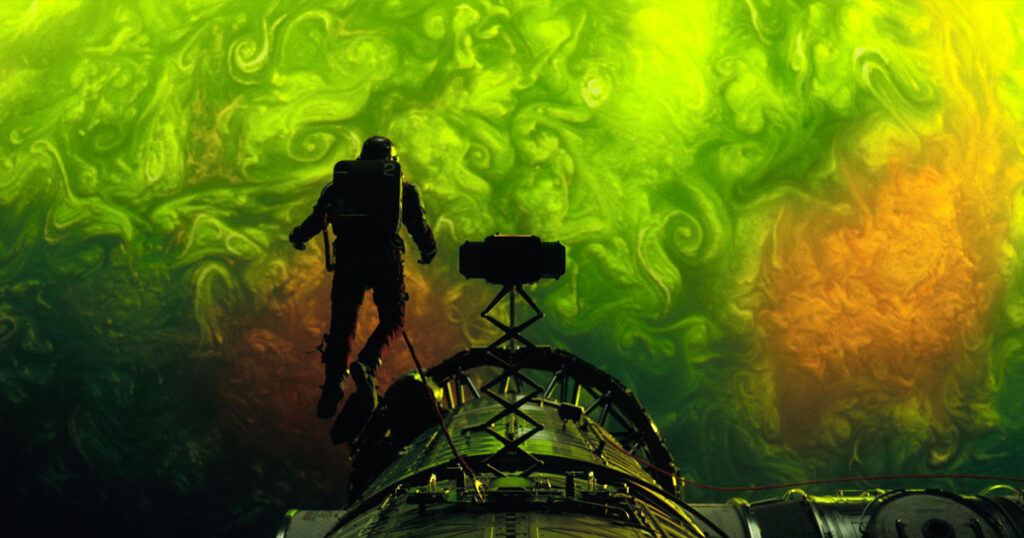
From a production standpoint, the movie is a triumph. The production designers built massive, practical sets for the interior of the Hail Mary, which gives the ship a grounded, lived-in feel. When the movie does transition to CGI for the exterior space shots or the depiction of the Astrophage, the rendering is flawless. If you have the opportunity, this is absolutely a movie that demands to be seen on the largest IMAX screen possible. The auditory experience is equally crucial—especially considering how sound and music play into the plot—and the sound mixing is phenomenally immersive.
If there is one major critique to level at the film, it’s the pacing in the final act. Clocking in at a hefty 2 hours and 36 minutes, the movie feels its length during the climax. Much like The Lord of the Rings: The Return of the King, Project Hail Mary suffers slightly from “multiple ending syndrome.” There are about three different moments in the last 40 minutes where the screen could have faded to black, but the story kept going.
While everything that happens is essential to wrapping up the plot (and stays incredibly faithful to the book), it does start to drag. A tighter edit, perhaps trimming 15 to 20 minutes of the highly technical problem-solving in the third act, would have elevated this from a “great” movie to an undisputed masterpiece.
Final Verdict: Is It Worth the Hype?
In a word: Absolutely.
Project Hail Mary is a triumph of optimistic storytelling. It’s a love letter to the scientific method, the resilience of the human spirit, and the universal power of friendship and collaboration. It proves that you don’t need a villain with a laser beam or a dystopian wasteland to make a compelling, high-stakes blockbuster. Sometimes, you just need a really smart teacher, a whole lot of duct tape, and a refusal to give up.
If you are looking for dark, brooding sci-fi that leaves you questioning the meaning of existence, you might find this movie a bit too sweet and overly eager to please. But if you want a genuinely entertaining, surprisingly emotional, and visually spectacular ride that will leave you smiling from ear to ear as the credits roll, this is the ticket.
Phil Lord, Christopher Miller, and Ryan Gosling have delivered a massive crowd-pleaser that honors its beloved source material while cementing its own place as one of the most memorable space adventures of the decade. Do not miss it.