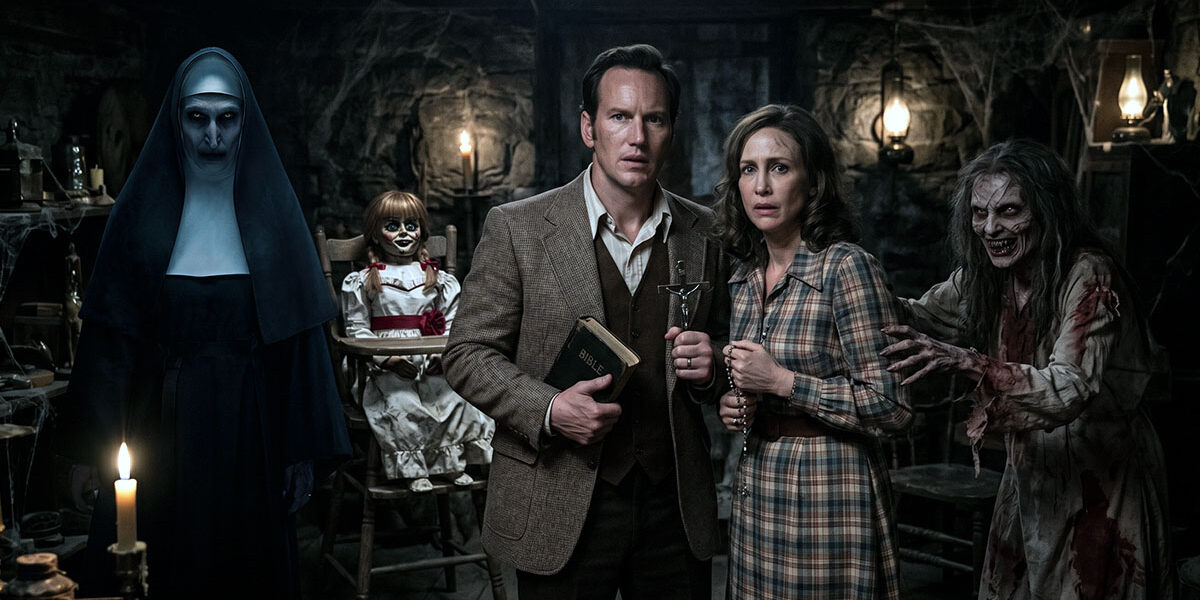
When you think of modern horror cinema, one massive, terrifying franchise immediately comes to mind. The Conjuring Universe has completely redefined the landscape of supernatural horror over the past decade. Unlike the slasher films of the 1980s or the found-footage craze of the 2000s, this meticulously crafted cinematic universe has grounded its scares in deep-rooted demonic lore, historical settings, and compelling character drama.
Since its explosive debut in 2013, the franchise has expanded into a sprawling web of interconnected sequels, prequels, and spin-offs. It has achieved unprecedented box office dominance, proving that audiences have an insatiable appetite for classic, atmospheric ghost stories.
In this comprehensive guide, we will explore the complete history of The Conjuring Universe. We will dive deep into the visionary mind of director James Wan, his profound fascination with demonology, the heavy involvement of real-life paranormal investigators Ed and Lorraine Warren, the definitive chronological timeline, the franchise’s monumental success, and what the dark future holds for this cinematic behemoth.
The Genesis of Fear: The History and Origins
The story of the most successful horror franchise in cinema history began not with a grand master plan, but with a singular, chilling vision. In the early 2010s, the horror genre was heavily saturated with “torture porn” and shaky-cam found-footage movies. Audiences were becoming desensitized to gore and jump scares that lacked narrative substance.
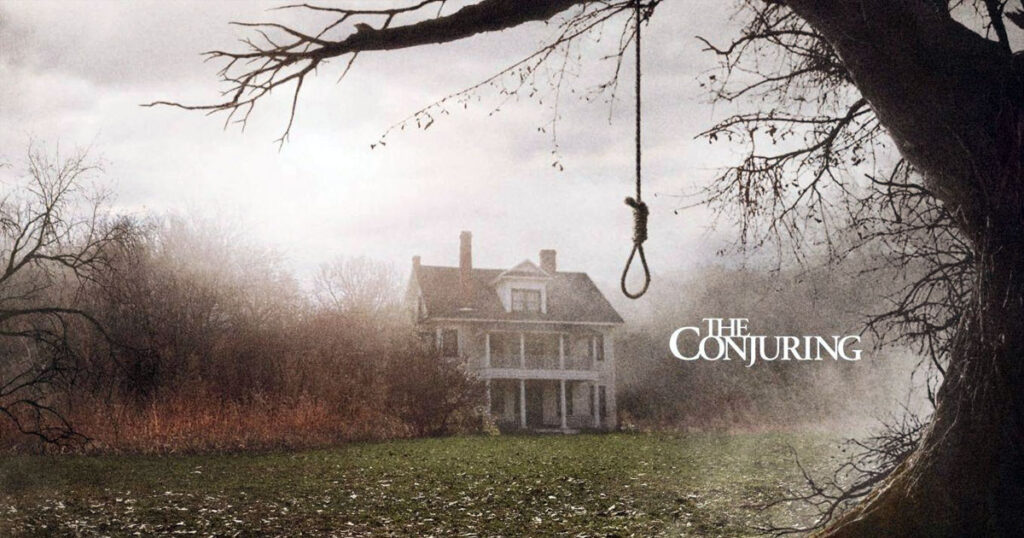
Enter The Conjuring (2013). Directed by James Wan, the film took a sharp pivot back to the classic, slow-burn haunted house aesthetic reminiscent of 1970s horror classics like The Exorcist and The Omen.
The concept originated when producer Tony DeRosa-Grund acquired the rights to the case files of Ed and Lorraine Warren. He spent nearly 14 years trying to get the movie made. When the script—focusing on the terrifying experiences of the Perron family in a Rhode Island farmhouse—finally landed at New Line Cinema, the studio brought in James Wan.
Wan was already a recognized name in horror, having launched the Saw and Insidious franchises. However, he wanted to prove he could create absolute terror without relying on buckets of blood. The result was a masterful exercise in tension building, practical effects, and emotional weight. The film was a massive critical and commercial hit, immediately prompting studio executives to look at the Warrens’ extensive vault of case files as the perfect blueprint for an interconnected cinematic universe.
James Wan and the Deep Fascination with Demonology

To understand the soul of The Conjuring Universe, one must understand James Wan’s approach to horror. While Wan made his mainstream debut with the brutal thriller Saw, his true passion has always aligned closer to the supernatural, the unseen, and the demonic.
Wan is known for his extensive research into demonology, folklore, and occult literature. He understood that the most effective horror taps into universal, primal fears—specifically, the fear of malevolent entities that challenge our spiritual and religious beliefs. His interest in the subject matter dictated the tone of the entire franchise.
Instead of creating arbitrary monsters, Wan drew heavily from established texts of demonology. The character of Valak (The Nun), for instance, is not entirely a Hollywood invention. In real-world demonology, specifically within the Ars Goetia (a section of the Lesser Key of Solomon), Valak is described as a mighty Great President of Hell. While the historical text depicts Valak as a boy riding a two-headed dragon, Wan and his creative team brilliantly reimagined the entity as a demonic nun to strike directly at the core of religious faith.
Wan’s fascination with these dark subjects allowed the films to feel authentic. The rituals, the Latin incantations, the rules of possession (infestation, oppression, possession), and the theological weight given to the Catholic Church’s rites of exorcism are all presented with a deadly serious tone. This pseudo-documentary reverence for the occult elevates the films from mere ghost stories to theological thrillers.
The Real-Life Connection: Ed and Lorraine Warren
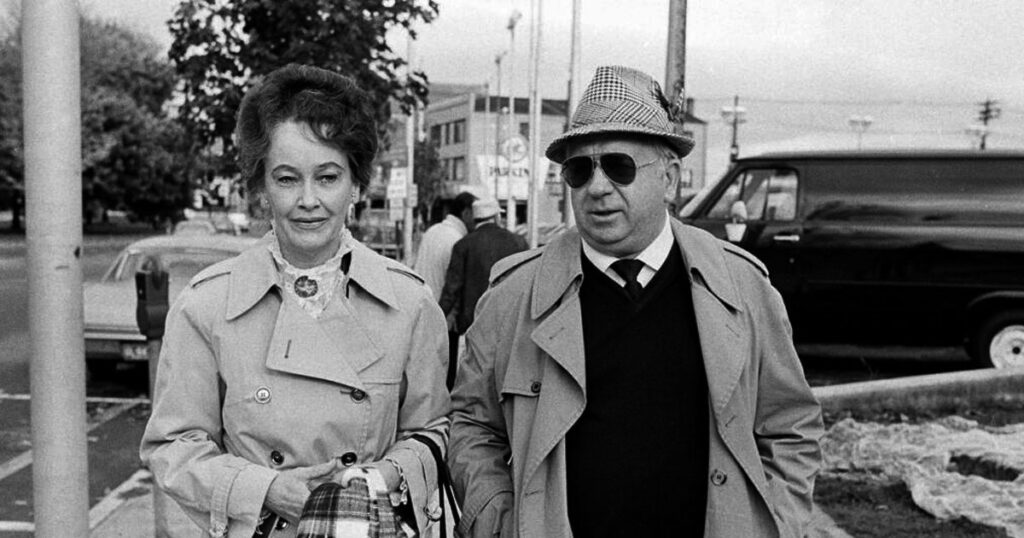
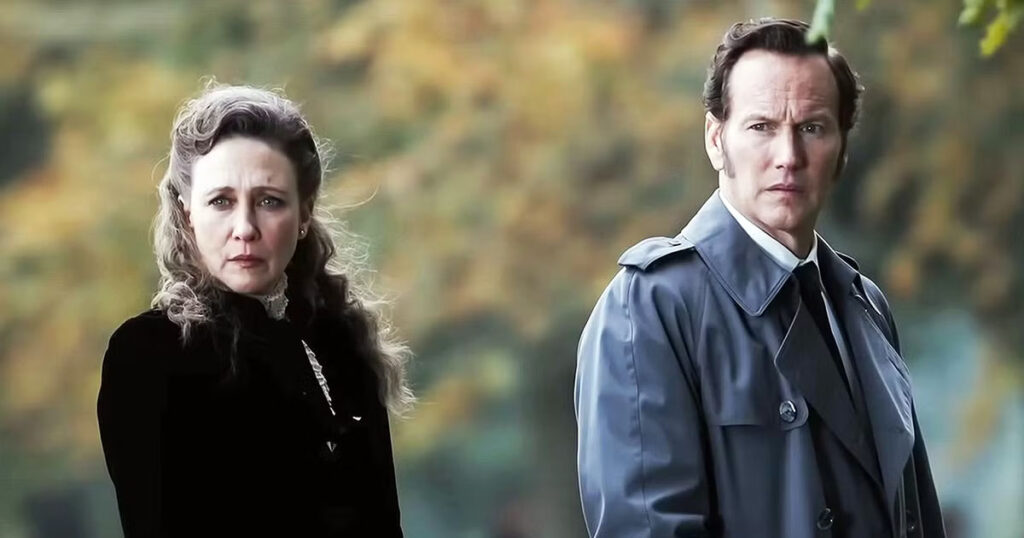
The beating heart of The Conjuring Universe is undeniably the relationship between Ed and Lorraine Warren, portrayed with incredible warmth and chemistry by Patrick Wilson and Vera Farmiga. But who were the real Warrens, and how involved were they in the creation of these films?
Ed Warren was a self-taught demonologist, author, and lecturer, while his wife, Lorraine, was a professed clairvoyant and light trance medium. Together, they founded the New England Society for Psychic Research in 1952. Over decades, they claimed to have investigated over 10,000 cases of paranormal phenomena.
While Ed passed away in 2006, well before the films were made, Lorraine Warren was heavily involved as a consultant during the early development of the franchise. She invited James Wan, Patrick Wilson, and Vera Farmiga to her home in Connecticut, granting them access to her legendary “Occult Museum”—the real-life resting place of the infamous Annabelle doll.
Lorraine spent hours speaking with Farmiga, ensuring that the portrayal of their relationship was accurate. The filmmakers understood that amidst the terror and demonic entities, the core of the movies had to be the unshakable love story between Ed and Lorraine. Their unwavering faith in each other and their religion served as the ultimate weapon against the darkness.
It is important to note that the Warrens are highly controversial figures in real life. Many skeptics and investigators have heavily criticized their methods, accusing them of being frauds who exploited vulnerable families. However, The Conjuring Universe smartly bypasses this real-world skepticism. In the context of the films, the Warrens are undeniable heroes, and the demonic threats they face are absolutely, terrifyingly real.
The Complete Conjuring Universe Timeline Explained
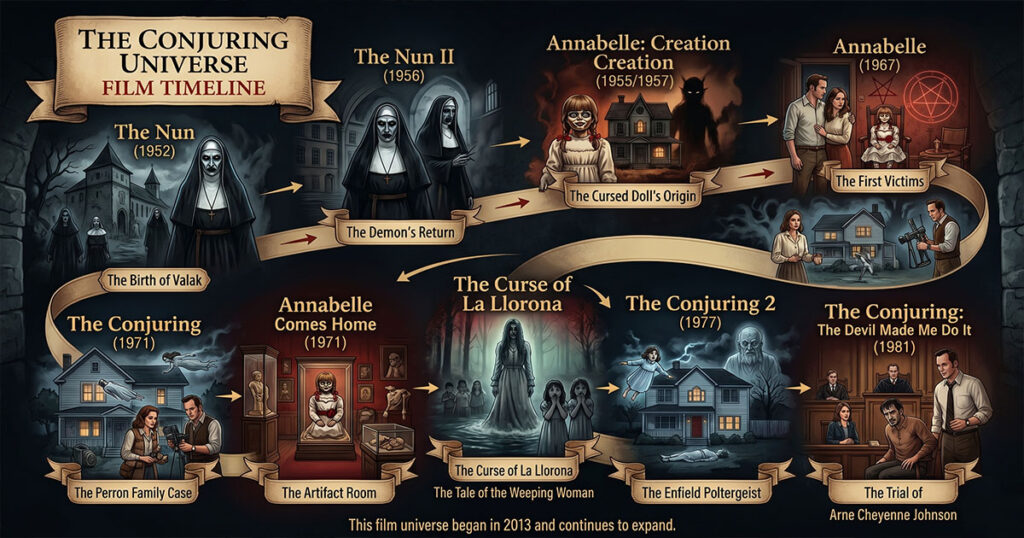
One of the most engaging aspects of this franchise is its complex, interconnected timeline. While the movies were released in a specific order starting in 2013, the chronological events within the universe span several decades. For fans looking to experience the narrative as a continuous historical journey, here is the complete chronological timeline of The Conjuring Universe.
1. The Nun (Set in 1952)
The earliest point in the timeline takes us to a remote, cloistered abbey in Romania. After a young nun takes her own life, a priest with a haunted past (Father Burke) and a novitiate on the threshold of her final vows (Sister Irene) are sent by the Vatican to investigate. Here, we witness the origins of the demonic entity Valak, the great evil that will eventually haunt Lorraine Warren decades later.
2. Annabelle: Creation (Set in 1955)
This film serves as a prequel to the first Annabelle spin-off. It explores the tragic origin of the cursed doll. A dollmaker and his wife, mourning the loss of their young daughter, invite a nun and several girls from a shuttered orphanage into their home. They soon become the target of the dollmaker’s possessed creation. This film brilliantly bridges the gap back to the original Annabelle movie in its final moments.
3. The Nun II (Set in 1956)
Four years after the events at the Romanian abbey, Sister Irene is once again called upon to face the demon Valak. The evil has spread to a boarding school in France, possessing Irene’s friend, Maurice (Frenchie). This movie further solidifies Valak’s motivations and deepens the lore of the universe’s most iconic villain.
4. Annabelle (Set in 1967)
The first spin-off released, but fourth in chronological order. We see the Annabelle doll bring terror to a young couple, Mia and John Form, in Santa Monica. A satanic cult attack leads to the spirit of a cultist (Annabelle Higgins) attaching itself to the vintage doll, beginning a fresh reign of terror.
5. The Conjuring (Set in 1971)
The movie that started it all. Ed and Lorraine Warren are called to a secluded farmhouse in Harrisville, Rhode Island, to help the Perron family. They are being terrorized by a dark presence identified as Bathsheba, a witch who cursed the land in the 19th century. This film establishes the Warrens’ expertise and introduces their artifact room to the audience.
6. Annabelle Comes Home (Set in 1972)
Taking place shortly after the Warrens bring the Annabelle doll back to their Occult Museum, this film is essentially “Night at the Museum” with demons. When the Warrens leave town for a night, a babysitter’s friend foolishly opens Annabelle’s glass case, unleashing a multitude of evil spirits upon the Warrens’ young daughter, Judy.
7. The Curse of La Llorona (Set in 1973)
While its connection to the main universe is subtle, it features the character of Father Perez (from the 1967 Annabelle film) who references his past encounter with the doll. Set in Los Angeles, it follows a mother protecting her children from the weeping woman of Mexican folklore.
8. The Conjuring 2 (Set in 1977)
The Warrens travel to North London to assist a single mother raising four children alone in a house plagued by malicious spirits. Known as the Enfield Poltergeist, this case becomes one of their most terrifying. It is also here that Lorraine finally confronts Valak, the demonic nun who has been haunting her visions, successfully sending the demon back to hell.
9. The Conjuring: The Devil Made Me Do It (Set in 1981)
Breaking away from the standard haunted house formula, the third mainline film dives into a real-life murder trial. Arne Cheyenne Johnson is accused of murder but claims demonic possession as his defense—a first in U.S. history. The Warrens must uncover a satanic curse and a sinister occultist to save Arne’s soul.
An Unprecedented Box Office Success
The financial triumphs of The Conjuring Universe are nothing short of legendary. To date, the franchise has grossed over $2.2 billion at the global box office, officially making it the highest-grossing horror franchise in cinematic history, easily surpassing legacy series like Halloween, Friday the 13th, and A Nightmare on Elm Street.
What makes these numbers even more staggering is the return on investment. Horror films are traditionally cheaper to produce than massive superhero blockbusters, and New Line Cinema capitalized on this perfectly. The original Conjuring was made on a modest budget of $20 million and grossed nearly $320 million worldwide. Similarly, The Nun, made for just $22 million, pulled in an astonishing $365 million globally.
This success can be attributed to excellent quality control, brilliant marketing, and the “event-izing” of the horror genre. By linking the films together with recurring characters, Easter eggs, and post-credit sequences, audiences felt compelled to watch every installment, much like they do with the Marvel Cinematic Universe. Furthermore, by keeping the R-rating intact, the studio ensured the scares remained visceral and terrifying, appealing deeply to adult horror fans globally.
The Future: What Lies Ahead for The Conjuring Universe?
As the universe continues to expand, the future looks both thrilling and somewhat final for our beloved paranormal investigators.
The most anticipated upcoming project is The Conjuring: Last Rites. Directed by Michael Chaves, this film is widely reported to be the final mainline entry featuring Patrick Wilson and Vera Farmiga as Ed and Lorraine Warren. While plot details are strictly under wraps, fans are expecting a massive, emotional conclusion to the core story that started over a decade ago. Given the title, it promises to test the Warrens’ faith more than ever before.
However, the end of the main series does not mean the end of the universe. Warner Bros. Discovery has officially announced that a Conjuring television series is currently in development for their streaming platform, Max. James Wan is on board as an executive producer. The series is expected to continue the story established in the feature films, potentially focusing on the vast array of cursed artifacts locked inside the Warrens’ Occult Museum. Each item has a dark history, providing endless episodic potential.
There are also constant rumors of further spin-offs. Fans have long clamored for a film focused on “The Crooked Man,” the terrifying entity introduced in The Conjuring 2. Although James Wan previously stated that the project was shelved, the nature of Hollywood means that no profitable intellectual property is ever truly dead.
Conclusion
The Conjuring Universe has cemented its legacy as a titan of modern cinema. By blending real-world folklore, the controversial yet fascinating case files of Ed and Lorraine Warren, and James Wan’s masterful grasp of cinematic tension, the franchise resurrected the classical supernatural horror genre.
It taught the film industry that interconnected universes aren’t just for superheroes; they work perfectly for ghosts, demons, and cursed dolls, too. As we look forward to the emotional conclusion of the main series with Last Rites and the dawn of a new era on television, one thing remains absolutely certain: the dark, terrifying, and immensely entertaining world of The Conjuring will haunt our screens for many years to come.