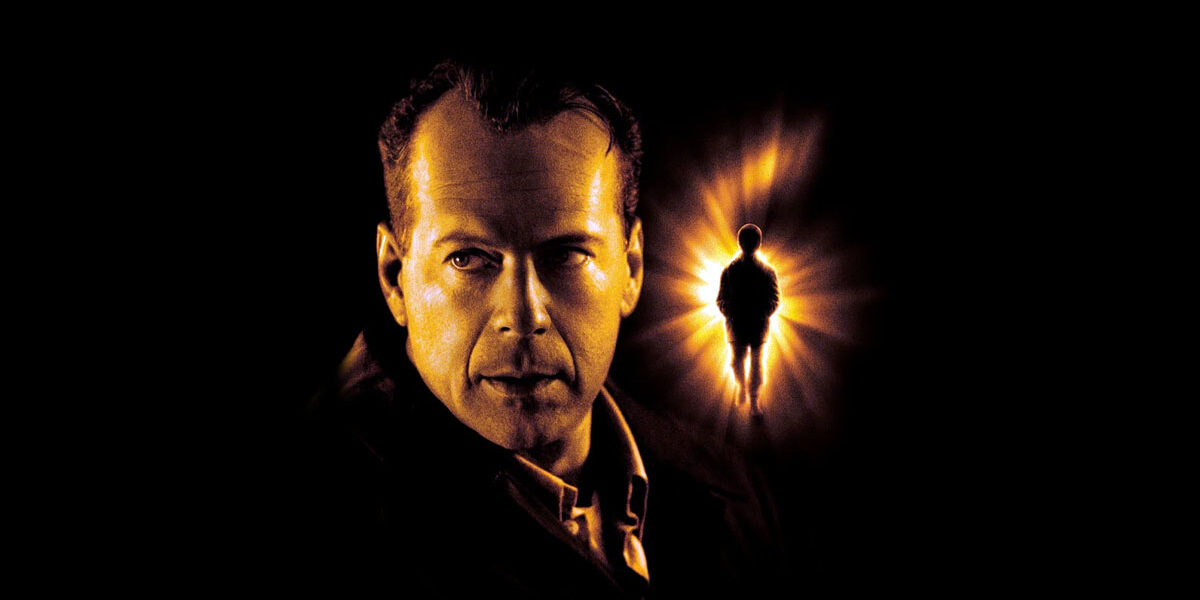
The year 1999 is widely regarded by film historians and critics as one of the greatest years in cinematic history. It was a monumental twelve months that gave birth to groundbreaking visual spectacles like The Matrix, culturally defining satires like Fight Club, and breathtaking dramas like American Beauty. Yet, amidst this crowded landscape of cinematic titans, a relatively quiet, remarkably atmospheric thriller emerged from the shadows to capture the collective imagination of audiences worldwide. Directed by a then-virtually unknown filmmaker named M. Night Shyamalan, The Sixth Sense did not just dominate the box office; it fundamentally rewired the blueprint for the modern psychological thriller.
Decades after its release, The Sixth Sense stands tall not merely as a relic of 90s nostalgia, but as a masterclass in tension, emotional storytelling, and cinematic misdirection. It is a film that etched itself into the very fabric of pop culture, gifting us with one of the most immortal lines in movie history and popularizing a storytelling device that would define an entire subsequent era of Hollywood filmmaking. But what exactly makes this film so enduringly brilliant? Let’s delve into the anatomy of this 90s masterpiece, exploring its legendary impact, its flawless execution, and why its legacy remains completely untouchable today.
The Architect of Suspense: M. Night Shyamalan’s Breakout
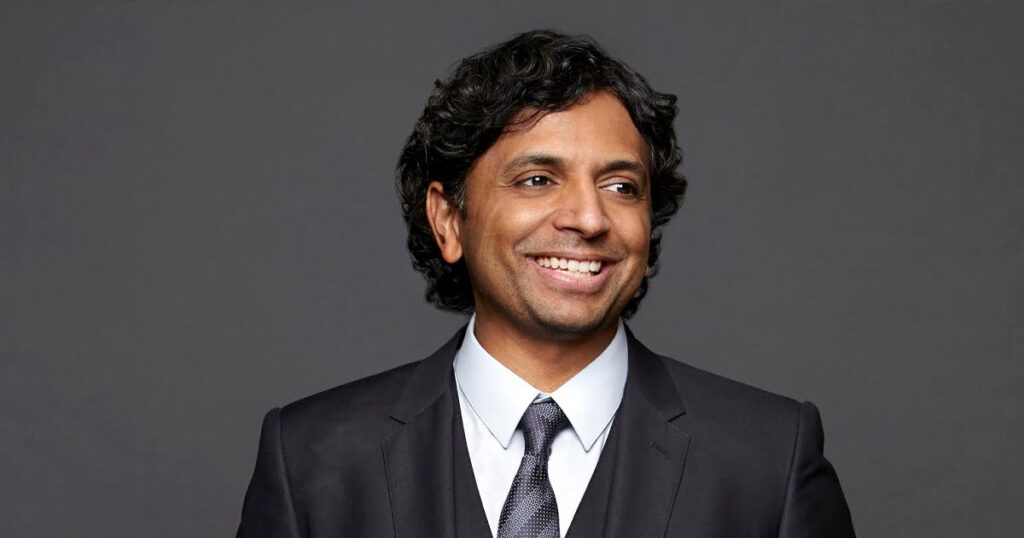
Before 1999, M. Night Shyamalan was not a household name. He had written and directed a couple of smaller projects, but nothing that hinted at the seismic impact he was about to have on the industry. The Sixth Sense changed everything. Almost overnight, Shyamalan was heralded as the heir apparent to Steven Spielberg and Alfred Hitchcock—a heavy crown, but one that was entirely justified by the sheer craftsmanship of this film.
What made Shyamalan’s direction so revolutionary at the time was his profound restraint. In an era where horror and suspense films were increasingly leaning into gratuitous gore, excessive jump scares, and frenetic MTV-style editing, Shyamalan took a drastic step back. He opted for a slow, agonizingly deliberate burn. He understood that true fear does not come from what jumps out of the closet; it comes from the agonizing anticipation of what might be inside.
Shyamalan utilized long takes, meticulously framed static shots, and a deeply unsettling use of negative space. He made the audience actively search the corners of the screen, fostering a persistent, suffocating sense of dread. Coupled with James Newton Howard’s hauntingly beautiful and understated score, the film’s atmosphere wraps around the viewer like a cold, inescapable blanket. Shyamalan didn’t just tell a ghost story; he crafted an environment where the supernatural felt grounded, intimate, and profoundly terrifying precisely because it felt so real.
The Emotional Core: A Symphony of Subdued Performances
A thriller is only as effective as the characters anchoring it, and the success of The Sixth Sense lies heavily in its deeply emotional, character-driven core. This is not a film about monsters; it is a film about profound human grief, isolation, and the desperate need for connection and communication.
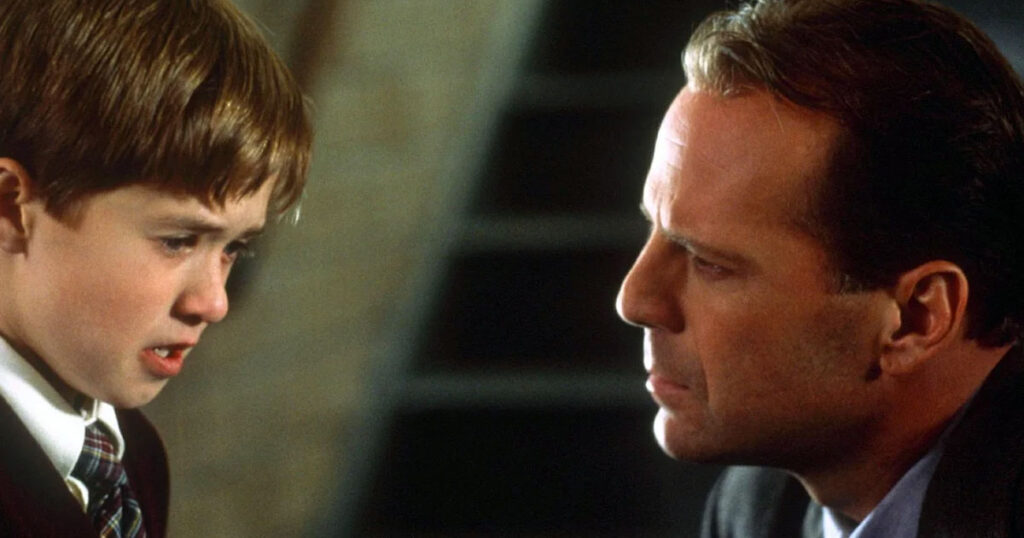
Bruce Willis, known primarily at the time as the wisecracking action hero of the Die Hard franchise or the rugged savior in films like Armageddon, delivered arguably the most nuanced and subdued performance of his career. As Dr. Malcolm Crowe, a child psychologist grappling with a past failure and a crumbling marriage, Willis sheds all his action-star bravado. He is quiet, melancholic, and deeply vulnerable. His performance grounds the supernatural elements of the film in a heartbreaking reality.
However, the undeniable beating heart of the film is Haley Joel Osment. At only eleven years old, Osment delivered a performance of such staggering depth, maturity, and raw terror that it earned him a well-deserved Academy Award nomination. As Cole Sear, the boy burdened with a terrifying gift, Osment’s wide, haunted eyes and hushed, trembling voice carry the immense psychological weight of the narrative. The dynamic between Willis and Osment is pure magic—a quiet mentorship born out of mutual brokenness.
Equally vital, though sometimes overshadowed by the central duo, is Toni Collette as Cole’s mother, Lynn. She represents the agonizing frustration and unconditional love of a parent who cannot comprehend the torment her child is enduring. The emotional climax of the film—a quiet conversation in a car—relies entirely on Collette’s astonishing ability to transition from confusion to terrified realization, and finally, to overwhelming, tearful acceptance. It remains one of the most powerful scenes of the decade.
An Immortal Line Etched in Pop Culture
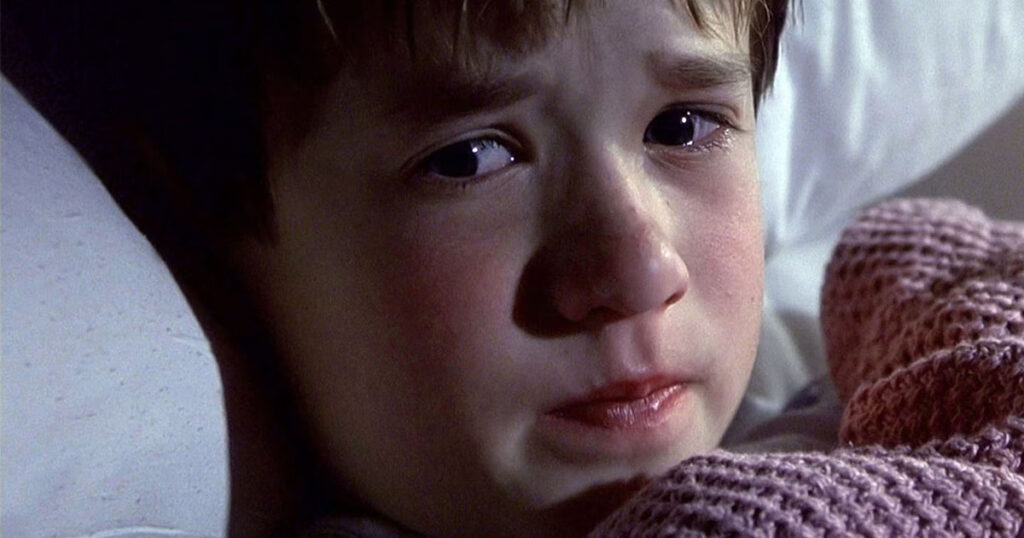
“I see dead people.”
It is a simple sentence of just four words. Yet, whispered from beneath a hospital blanket by a terrified Haley Joel Osment, it became a cultural phenomenon. Very few lines in the history of cinema have transcended their source material to become so universally recognized.
This line is the exact fulcrum upon which the entire film pivots. It shifts the narrative from a psychological drama about a troubled boy into a full-blown supernatural thriller. The genius of the quote lies not just in the words themselves, but in the delivery. Osment does not scream it. He whispers it, leaning in as if confessing an unbearable sin, immediately following it up with the chilling clarification: “They don’t see each other. They only see what they want to see. They don’t know they’re dead.”
This moment instantly elevated the film from a great thriller to an iconic piece of pop culture. It was parodied in countless comedy sketches, referenced in other films, and integrated into everyday language. But stripping away the decades of pop culture osmosis, returning to the film and hearing that line in its original, terrifying context still manages to send a genuine shiver down the spine.
The Anatomy of a Legendary Twist
It is impossible to discuss The Sixth Sense without discussing the twist. While avoiding outright spoilers for the rare uninitiated viewer, it is safe to say that the final moments of this film feature one of the most legendary, jaw-dropping rug-pulls in the history of storytelling.
What elevates the ending of The Sixth Sense above a mere cinematic gimmick is its absolute fairness. A bad twist ending feels like the writer is cheating the audience, pulling a rabbit out of a hat with no prior setup just for the sake of shock value. A masterpiece twist, however, recontextualizes the entire film. It is a paradigm shift that makes you instantly want to rewind the tape to the very beginning.
Shyamalan didn’t just trick the audience; he hid the truth in plain sight. Upon rewatching, the film is littered with meticulous, brilliant clues—the framing of conversations, the strategic use of the color red, the careful blocking of characters in a room, and the subtle ways people interact (or fail to interact). The ending doesn’t negate the emotional journey of the characters; it amplifies it. It turns a chilling thriller into a deeply tragic, poignant story about finding peace and the courage to say goodbye. It is the gold standard by which all cinematic twists are judged, and rarely, if ever, has it been surpassed.
The Birth of the “Twist Era”
The monumental success of The Sixth Sense (grossing over $670 million worldwide against a $40 million budget) caused a massive ripple effect in Hollywood. It essentially single-handedly birthed an entire era of thriller filmmaking. Suddenly, every studio was desperately searching for the next script with a mind-bending “gotcha” moment in the final reel.
Throughout the early to mid-2000s, audiences were inundated with films heavily reliant on third-act revelations. Alejandro Amenábar’s brilliant gothic horror The Others (2001), starring Nicole Kidman, successfully captured a similar atmospheric dread and delivered a phenomenal twist of its own. Films like Identity (2003), The Machinist (2004), Hide and Seek (2005), and even Shyamalan’s own subsequent films like Unbreakable (2000) and The Village (2004), all operated in the shadow cast by The Sixth Sense.
While some of these films succeeded wildly in their own right, many others fell flat, treating the twist as a mandatory checklist item rather than an organic narrative conclusion. This wave of imitators only served to highlight just how difficult it was to replicate Shyamalan’s lightning in a bottle. The Sixth Sense worked not because it had a twist, but because it was an exceptionally well-made, emotionally resonant movie before the twist even happened.
A Legacy Written in the Shadows
Looking back at the cinema of the 1990s, The Sixth Sense endures as a shining beacon of storytelling craft. It proves that you do not need excessive violence, massive explosions, or convoluted mythology to captivate a global audience. All you need is a compelling mystery, characters we deeply care about, and an atmosphere thick enough to cut with a knife.
M. Night Shyamalan created a film that is as emotionally devastating as it is terrifying. It is a movie that invites you in with the promise of a ghost story, only to break your heart with a profoundly human tragedy. Decades later, whether you are watching it for the first time or the fiftieth, the temperature in the room still seems to drop a few degrees when Cole Sear whispers from beneath his blankets. The Sixth Sense is, and will forever remain, an absolute titan of 90s cinema.