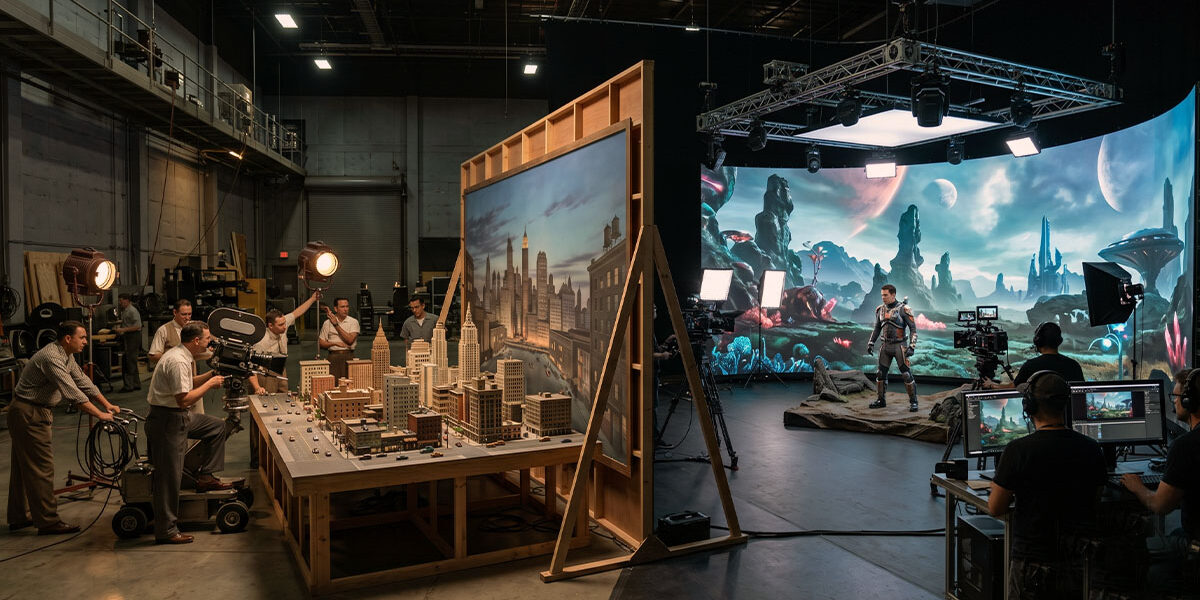
Cinema is, at its absolute core, the art of grand deception. Since the very first time a train seemingly charged out of a projection screen and sent audiences scrambling for the exits, filmmakers have been locked in a perpetual arms race to show us the impossible. To truly appreciate the cinematic landscapes of today’s blockbusters, understanding the evolution of VFX is absolutely essential.
The journey from hand-painted film strips to neural-rendered digital avatars is not just a timeline of technological upgrades. It is a chronicle of human imagination constantly outgrowing the boundaries of physical reality. Let’s pull back the curtain on how Hollywood learned to dream with its eyes wide open.
The Dawn of Illusion: In-Camera Tricks and Miniatures
Long before computers entered the cinematic lexicon, visual effects were a highly tactile, dangerously experimental craft. The pioneers of early Hollywood were less like today’s software engineers and more like theatrical magicians, relying on smoke, mirrors, and impeccable timing.
Georges Méliès and the Birth of Movie Magic
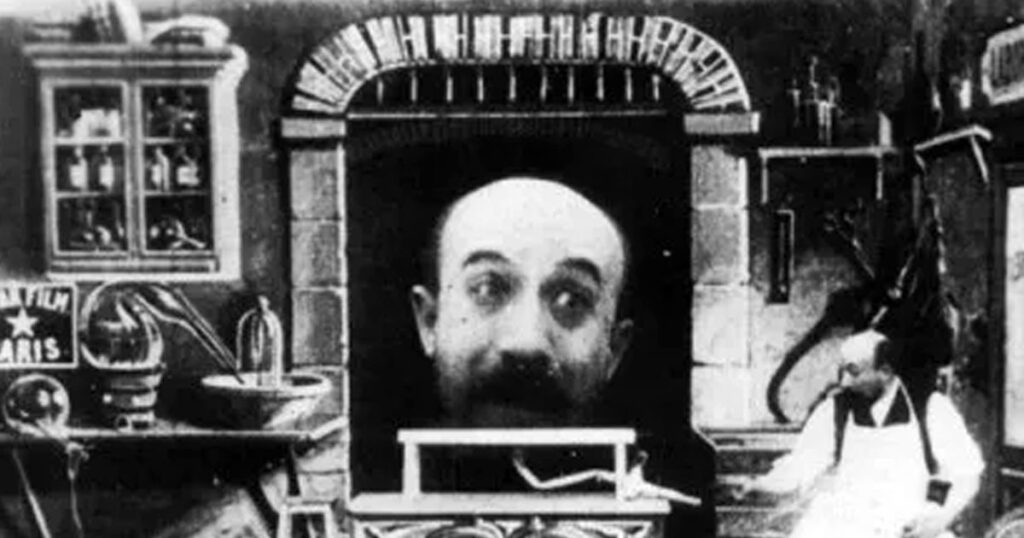
The story of visual effects begins with a happy accident. Legend has it that in 1896, French illusionist turned filmmaker Georges Méliès was filming a street scene in Paris when his camera jammed. By the time he fixed it and resumed cranking, a bus had moved out of frame, replaced by a hearse. When he played the film back, the bus seemingly transformed into the hearse by magic.
This was the birth of the “substitution splice,” the foundational trick of cinematic VFX. Méliès would take this rudimentary technique and build entire universes around it, most notably in his 1902 masterwork, A Trip to the Moon. By utilizing multiple exposures, time-lapse photography, and hand-painted color framing, Méliès established that the camera was not just a tool for documenting reality—it was an instrument for inventing it.
The Golden Age of Miniatures and Stop-Motion
As the industry matured, so did its ambitions. The grand sci-fi visions of the 1920s required massive cityscapes that simply did not exist. Enter the Schüfftan process, heavily utilized in Fritz Lang’s Metropolis (1927). By using a carefully angled half-silvered mirror, filmmakers could seamlessly combine live-action actors with exquisitely detailed miniature sets in a single, in-camera shot.
But miniatures were static. To bring monsters to life, filmmakers turned to stop-motion animation. Willis O’Brien set the gold standard with King Kong (1933). O’Brien painstakingly manipulated a small armature model of the great ape, shooting it one frame at a time. The result was a creature that possessed a tangible, terrifying weight.
O’Brien’s protégé, the legendary Ray Harryhausen, would later refine this process into “Dynamation.” By using rear-projection screens to composite his stop-motion creatures directly into live-action plates, Harryhausen unleashed skeletons, cyclopes, and hydras upon a generation of awe-struck moviegoers throughout the 1950s and 60s.
The Optical Era: Matte Paintings and Compositing
As Hollywood entered its Golden Age, the demand for sprawling vistas and fantastical worlds outpaced the physical limitations of backlots. The solution was found in the delicate brushstrokes of matte painters and the mechanical precision of the optical printer.
The Art of the Matte
Matte painting is one of the oldest and most enduring visual effects techniques. Artists would paint hyper-realistic landscapes onto large sheets of glass, leaving a specific section blank (the matte) where the live-action footage would be inserted.
This technique gave us the sweeping, emerald approach to the Emerald City in The Wizard of Oz (1939) and the dizzying, perilous drops in Alfred Hitchcock’s Vertigo (1958). These artists were the unsung heroes of the studio system, extending sets and creating infinite depth with little more than oil paints and a masterful understanding of perspective and lighting.
The Blue Screen Revolution
Combining moving actors with separate backgrounds required a more complex solution than glass paintings. The optical printer—a device linking one or more film projectors mechanically to a movie camera—allowed filmmakers to re-photograph one or more strips of film.
This led to the widespread adoption of the traveling matte, most commonly achieved via the “blue screen” process. Actors would perform in front of an intensely lit blue backdrop. In post-production, optical printers used high-contrast film stock to isolate the actors, creating a “hole” in the background footage where the live-action performance could be dropped.
Disney famously innovated a variation called the sodium vapor process (or “yellow screen”) for Mary Poppins (1964). By using a specially designed camera and a prism that split the light spectrum, they achieved flawlessly clean mattes that even preserved the fine details of Mary Poppins’ translucent veil.
A New Hope: The Dawn of the Blockbuster Era
By the 1970s, visual effects had hit a plateau. The optical techniques of the 1950s were still the standard, and the seams were beginning to show. It took a young filmmaker from Modesto, California, to tear the system down and rebuild it for the modern era.
Star Wars and the Birth of ILM
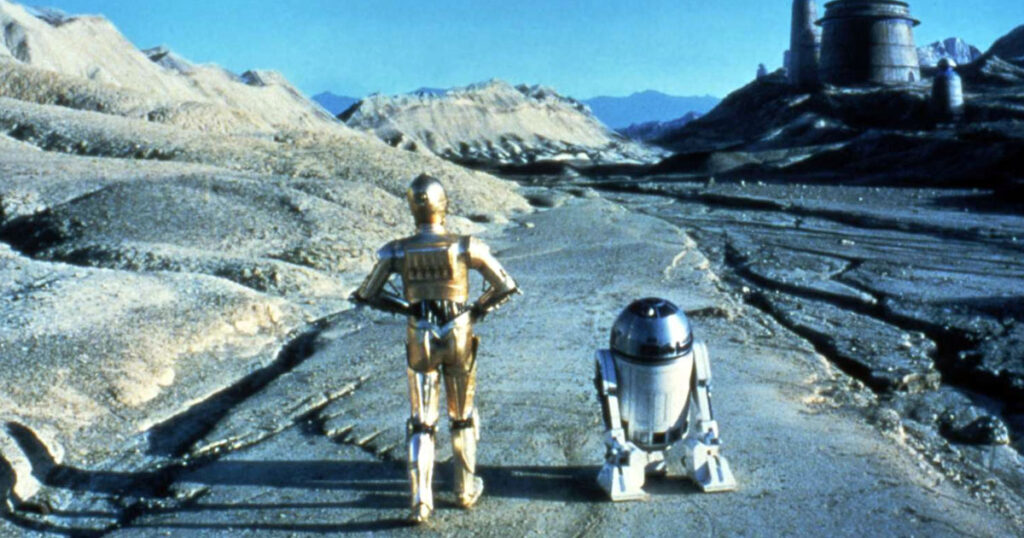
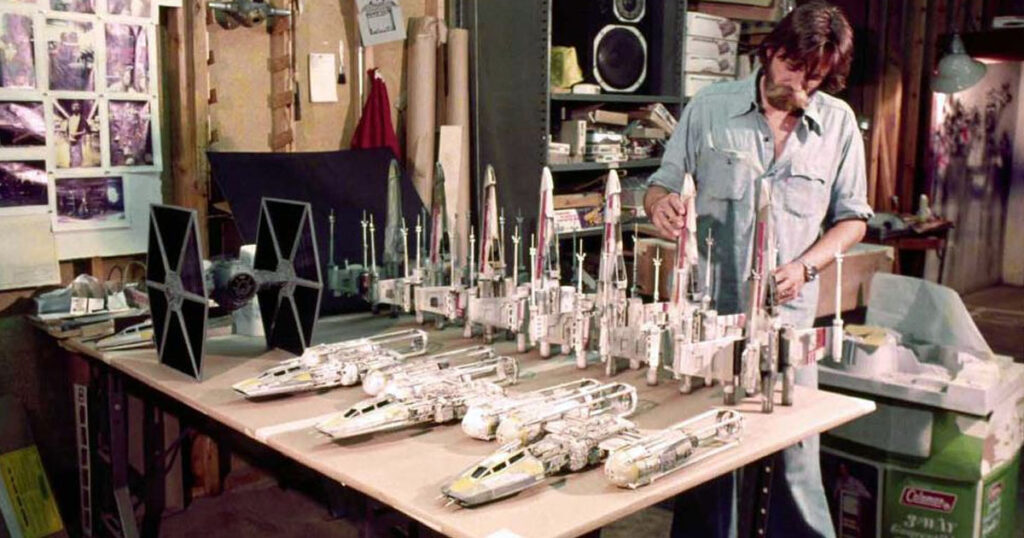
When George Lucas began pre-production on Star Wars in 1975, he realized the effects department at 20th Century Fox had been shuttered. The technology to realize his vision of fast-paced, dogfighting spaceships simply did not exist. So, he founded Industrial Light & Magic (ILM).
Under the supervision of John Dykstra, ILM developed the “Dykstraflex,” a custom-built, computer-controlled camera system. For the first time, a camera could execute complex, dynamic movements around a stationary miniature, and then repeat that exact same movement flawlessly, dozens of times. This allowed ILM to composite multiple passes of spaceships, laser blasts, and background stars into a single, cohesive optical shot without the jitter that plagued earlier effects.
Pushing Optical to Its Absolute Limits
The late 1970s and early 1980s represent the absolute zenith of practical and optical effects. Douglas Trumbull brought an unprecedented level of photographic reality to the glowing mothership in Close Encounters of the Third Kind (1977) and the dystopian, neon-soaked miniatures of Blade Runner (1982).
However, optical compositing had a physical limit. Every time a piece of film was copied in an optical printer, it degraded slightly, accumulating grain. A complex shot with dozens of elements would suffer from severe “generation loss.” The industry needed a new canvas. It needed the digital realm.
The Digital Revolution: CGI Changes the Game
The transition to Computer-Generated Imagery (CGI) was not overnight. It was a slow creep, born out of academic computer science labs and championed by a few visionary directors who saw the potential in rendering 3D space with ones and zeros.
Early Digital Milestones
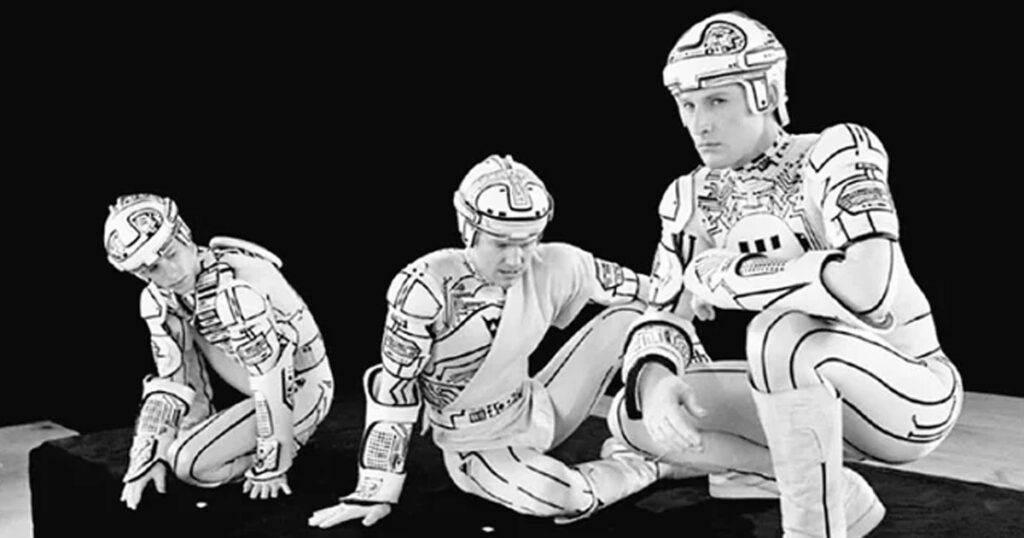
The first major breakthrough was 1982’s Tron, which combined live-action with extensive, neon-lit computer-generated environments. Despite its visual brilliance, the industry viewed Tron largely as an expensive novelty.
True integration began with subtler applications. In 1984, The Last Starfighter became the first film to replace physical miniatures entirely with CGI spaceships. A year later, ILM created the first fully computer-generated, photorealistic character: the stained-glass knight in Young Sherlock Holmes (1985).
The Water Tentacle and the T-1000
The true tipping point arrived courtesy of James Cameron. For 1989’s The Abyss, ILM was tasked with creating a sentient “pseudopod” made entirely of water. This required groundbreaking software that could accurately simulate the refraction and reflection of the surrounding physical set.
Cameron pushed the envelope further with Terminator 2: Judgment Day (1991). The liquid-metal T-1000 was a revelation. It morphed seamlessly from the digital realm into live-action actor Robert Patrick, proving that CGI could be more than just spaceships and glowing shapes; it could be organic, terrifying, and completely convincing.
The Jurassic Paradigm Shift
If T2 proved CGI could work in short bursts, Steven Spielberg’s Jurassic Park (1993) proved it could carry an entire film.
Dinosaurs Walk the Earth
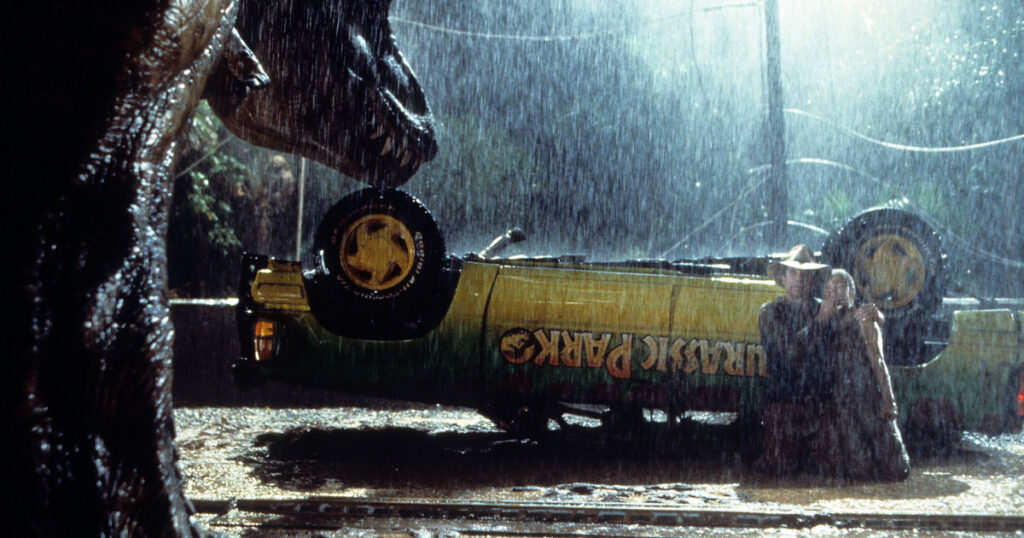
Spielberg initially planned to use full-scale animatronics by Stan Winston and advanced “go-motion” miniatures by Phil Tippett for the dinosaur shots. However, when ILM’s Dennis Muren secretly produced a wireframe CGI test of a T-Rex running, the plan changed entirely.
The resulting film is a masterclass in the evolution of VFX, perfectly blending Winston’s heavy, terrifying physical animatronics for close-ups with ILM’s fluid, dynamic CGI for wide shots. When Tippett saw the digital dinosaurs, he famously quipped, “I’ve just become extinct”—a line Spielberg loved so much he wrote it into the script.
The Ripple Effect
The success of Jurassic Park changed Hollywood overnight. The latter half of the 1990s saw a massive boom in digital effects. Toy Story (1995) proved that feature-length computer animation was viable. The Matrix (1999) introduced “Bullet Time,” utilizing an array of still cameras seamlessly blended with digital interpolation to alter the flow of time itself. The digital genie was out of the bottle.
The Modern Era: Photorealism and Performance Capture

As processing power grew exponentially in the 2000s, the focus shifted from creating fantastical things to recreating reality perfectly.
Pushing the Uncanny Valley
The early 2000s saw the rise of Wētā FX (formerly Weta Digital) in New Zealand, driven by Peter Jackson’s The Lord of the Rings trilogy. Wētā perfected performance capture, translating actor Andy Serkis’s nuanced physical and facial performance into the digital character of Gollum. They also pioneered “subsurface scattering” software, which accurately simulated how light penetrates and bounces around inside human skin, giving digital flesh a lifelike translucency.
James Cameron returned to completely upend the industry again with Avatar (2009). Cameron developed a “virtual camera” that allowed him to look through a monitor on a completely empty mo-cap stage and see his actors rendered in real-time as ten-foot blue aliens within a lush digital jungle.
A few years later, the Planet of the Apes reboot trilogy proved that performance capture could be taken out of the pristine studio environment and shot entirely on location, tracking actors’ micro-expressions in the rain, mud, and snow.
The Marvel Cinematic Universe and the VFX Pipeline
The 2010s were dominated by the industrialization of VFX, largely driven by the Marvel Cinematic Universe. Blockbusters became massive logistical puzzles. Films were entirely pre-visualized (pre-vis) in computers before a single frame was shot.
Today, a single Marvel film might feature upwards of 2,500 VFX shots, divided among dozens of visual effects houses across the globe. We have reached an era where digital environments and fully CG characters (like Thanos or Rocket Raccoon) are so ubiquitous and photorealistic that audiences simply take them for granted.
The Volume and the Future: Real-Time Rendering
Just as optical printers gave way to digital compositing, the traditional green screen is now facing its own existential threat: real-time rendering.
The Mandalorian and StageCraft
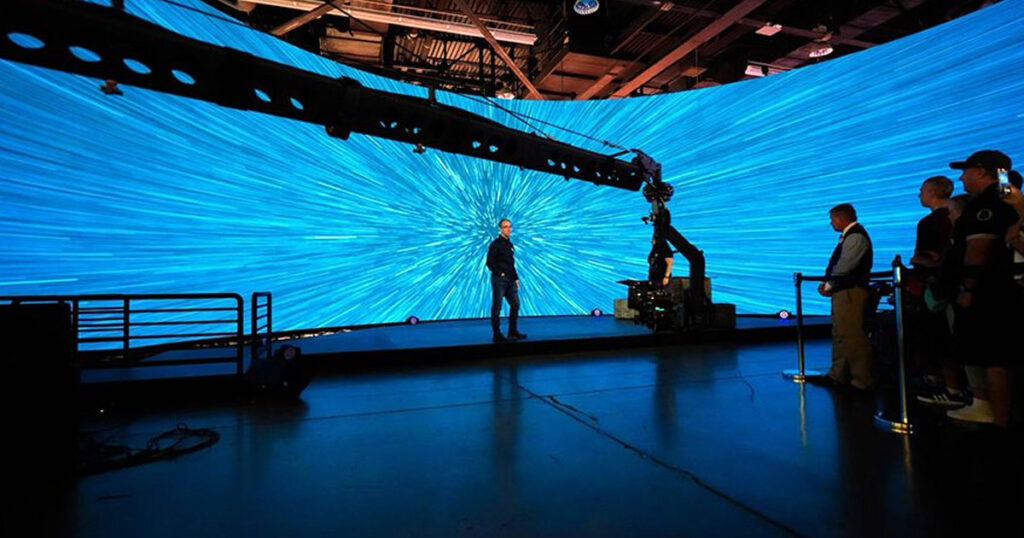
Driven by the technology of video game engines (like Unreal Engine), ILM introduced “StageCraft” (often referred to as “The Volume”) for the series The Mandalorian.
The Volume is a massive, curved wall of high-resolution LED screens. Instead of shooting actors against a green screen and adding the background later, the photorealistic, 3D digital background is displayed on the screens in real-time during the shoot. As the physical camera moves, the digital background shifts perspective with perfect parallax.
This “In-Camera Visual Effects” (ICVFX) approach solves a major problem of the green screen era: lighting. Because the LED walls emit light, the actors and physical props are bathed in the accurate reflections and color temperatures of the digital environment, creating a seamless blend between the physical and the virtual.
AI and Machine Learning in VFX
The next frontier, which is already rapidly arriving, is Artificial Intelligence and machine learning. We are currently seeing neural networks being used for flawless digital de-aging, automated rotoscoping (separating actors from backgrounds without a green screen), and upscaling textures. Machine learning algorithms are now capable of studying hours of footage of an actor to generate entirely synthetic, photorealistic facial performances.
The Final Frame
Reflecting on the evolution of VFX reveals a fascinating paradox. We have spent over a century inventing incredibly complex technology, all in service of creating images that look like they didn’t require any technology at all. The goal of the modern VFX artist is invisibility.
Yet, as we enter an era where AI can generate cinematic landscapes from a simple text prompt, we are witnessing a quiet cultural shift. Audiences are beginning to feel a creeping fatigue toward weightless, perfectly smooth digital spectacle. There is a renewed hunger for the tangible—for the practical explosions of Mad Max: Fury Road or the in-camera jet fighter sequences of Top Gun: Maverick.
Ultimately, the future of visual effects doesn’t lie in a binary choice between practical magic and digital perfection. The most breathtaking cinema of tomorrow will belong to the filmmakers who understand that VFX is not a crutch to fix a movie in post-production, but rather the ultimate paintbrush. The tools will inevitably change, the pixels will become smaller, and the algorithms will become smarter. But the core directive remains exactly what it was for Georges Méliès in 1896: sit down in the dark, look at the screen, and prepare to be amazed.