If there is a single year in cinematic history that film buffs point to as a definitive turning point for modern cinema, it is undoubtedly 1994. The year was an absolute juggernaut of cultural phenomenons. Audiences were weeping to Forrest Gump, being inspired by The Shawshank Redemption, and singing along to Disney’s The Lion King. The competition was staggering. Yet, emerging from the independent film scene like a shot of adrenaline straight to the heart, came Quentin Tarantino’s Pulp Fiction.
It was bold, it was brash, and it broke every conventional rule of screenwriting. Fast forward decades later, and Pulp Fiction remains one of the most relentlessly entertaining, fiercely debated, and deeply influential movies ever made. But what exactly makes this non-linear crime comedy so enduring? Today, we are diving deep into a complete Pulp Fiction analysis, exploring the unsolved mysteries that still haunt internet forums, revisiting those legendary scenes, and looking back at how a quirky indie film conquered the 1994 box office.
The 1994 Phenomenon: An Indie Film Conquers the World
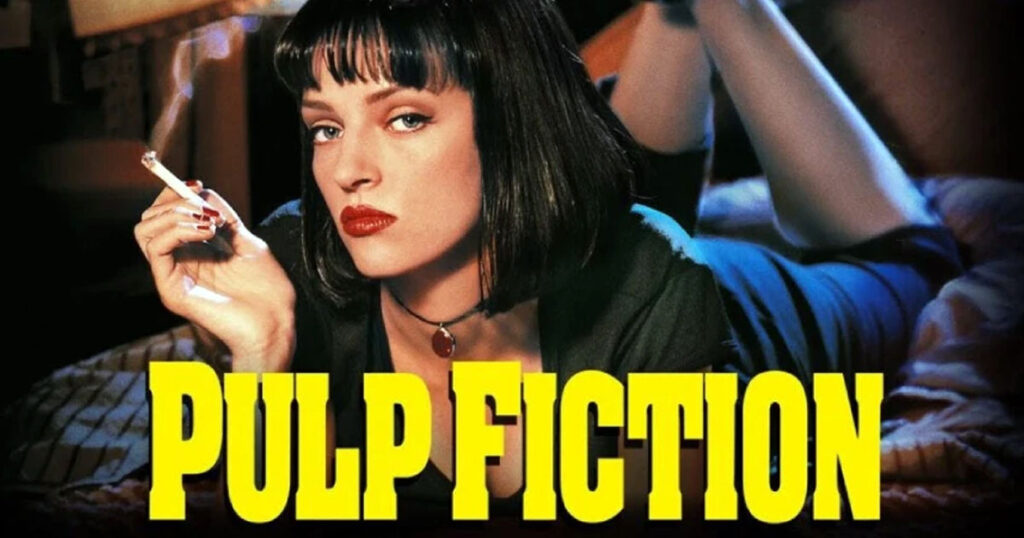
To truly appreciate the magnitude of Pulp Fiction, you have to understand the cinematic landscape of 1994. Mainstream cinema was dominated by traditional, linear storytelling with clear-cut heroes and villains. Then Tarantino arrived with a script that folded in on itself, featured hitmen having casual conversations about European fast food, and killed off its main star halfway through the movie—only for him to return in the next scene due to the fragmented timeline.
Despite the fierce competition from massive studio blockbusters, Pulp Fiction was a commercial titan. Produced on a relatively modest budget of around $8 to $8.5 million (with a large chunk of that going to the stellar cast), the film went on to gross nearly $214 million worldwide. It won the prestigious Palme d’Or at the Cannes Film Festival and earned seven Academy Award nominations, taking home the Oscar for Best Original Screenplay.
The film proved that audiences were hungry for something different. It wasn’t just a movie; it was a cultural reset. It spawned a decade of imitators, but none could capture the razor-sharp dialogue, the effortless cool, and the pure, unadulterated fun of Tarantino’s masterpiece.
Iconic Scenes That Defined a Generation
Pulp Fiction is essentially a collection of masterfully crafted short stories interwoven together, resulting in an incredibly high density of iconic, unforgettable scenes. Even if you haven’t seen the film in years, these moments are permanently burned into the pop culture consciousness.
“Royale with Cheese”
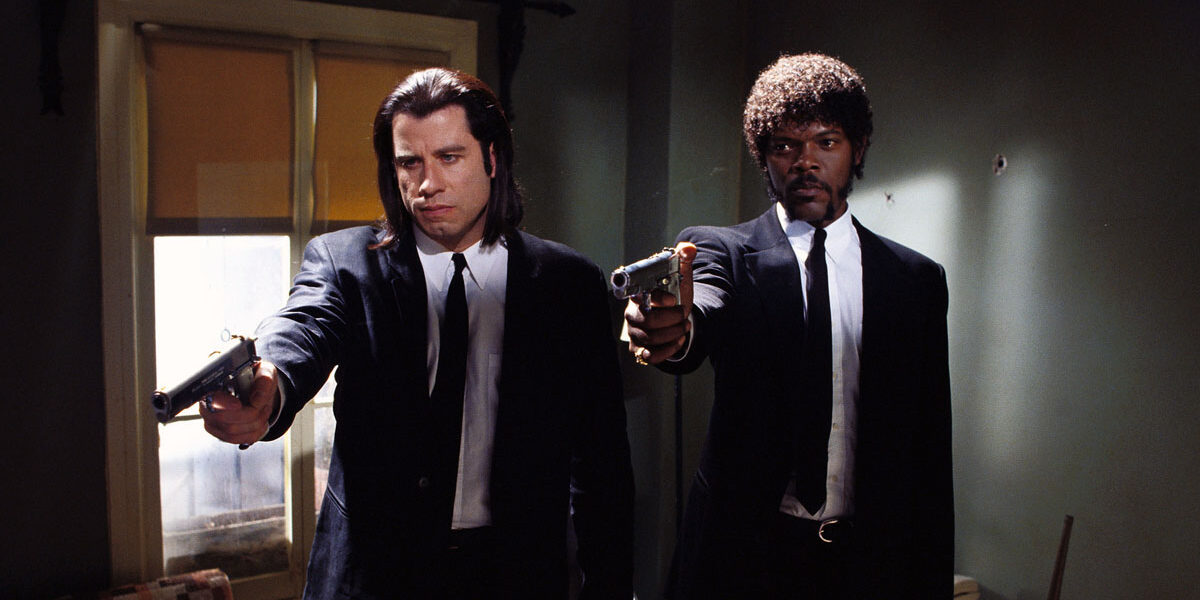
The film opens with Vincent Vega (John Travolta) and Jules Winnfield (Samuel L. Jackson) driving to a hit. In any other movie, they would be discussing the mission. In Pulp Fiction, they are casually debating the differences between American and European McDonald’s. The “Royale with Cheese” conversation is the perfect introduction to Tarantino’s signature dialogue: mundane, hyper-realistic conversations spoken by dangerous people. It humanizes the killers before we see them do their gruesome work.
The Ezekiel 25:17 Monologue
Samuel L. Jackson’s booming delivery of the pseudo-biblical verse Ezekiel 25:17 is arguably one of the greatest character introductions in cinema. “And I will strike down upon thee with great vengeance and furious anger…” It’s terrifying, it’s theatrical, and it perfectly sets up Jules’s character arc from a cold-blooded killer to a man seeking spiritual redemption.
The Jack Rabbit Slims Dance Contest
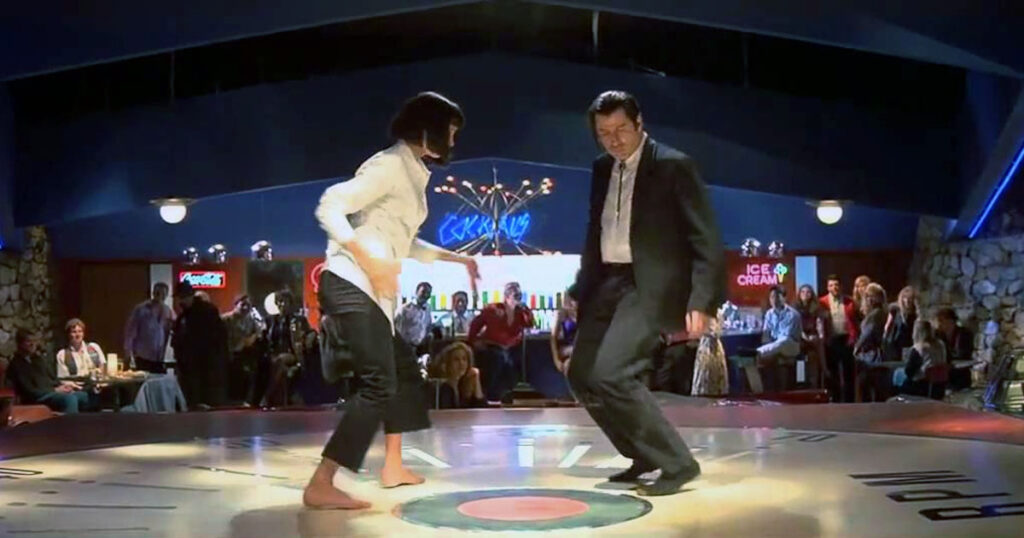
No scene screams “90s cool” quite like Vincent and Mia Wallace (Uma Thurman) entering the twist contest at Jack Rabbit Slims to the tune of Chuck Berry’s “You Never Can Tell.” Taking inspiration from classic French New Wave cinema and blending it with Americana nostalgia, the scene is electric. It also served as a brilliant reminder to the world of John Travolta’s incredible dancing roots, effectively resurrecting his career from the ashes.
The Adrenaline Shot
Just as the audience gets comfortable with the playful dynamic between Vincent and Mia, the film takes a dark, chaotic turn when Mia overdoses. The sequence that follows—a frantic drive to a drug dealer’s house and the subsequent plunging of an adrenaline needle directly into Mia’s heart—is a masterclass in tension building. It’s stressful, darkly comedic, and visceral, cementing the film’s reputation as a wild, unpredictable ride.
The Unsolved Mysteries: What We Still Don’t Know
For all its brilliant dialogue and stylish violence, Pulp Fiction is also famous for what it doesn’t tell us. Tarantino deliberately left several elements open to interpretation, giving birth to decades of fan theories.
What is in the Briefcase?
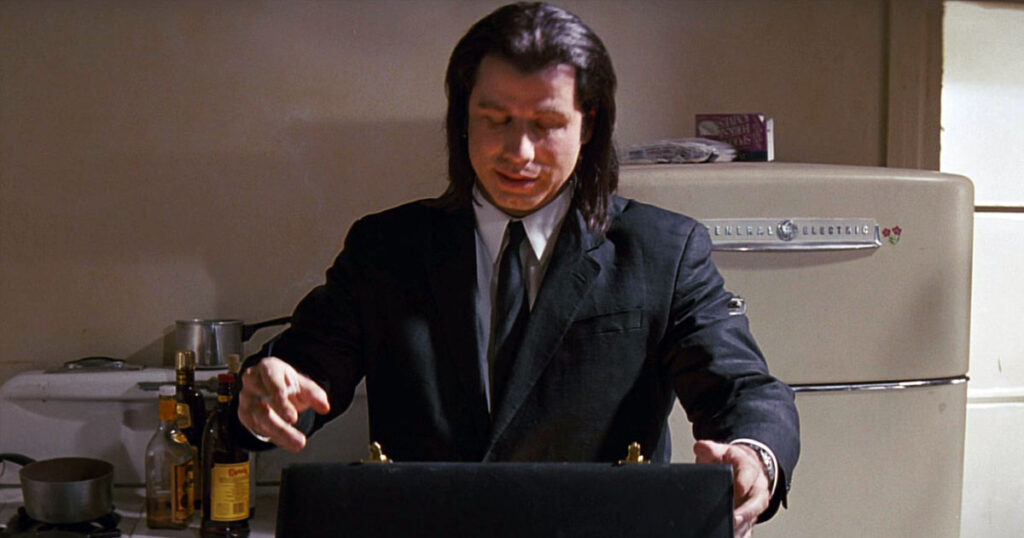
It is the ultimate MacGuffin. Throughout the film, characters are tasked with retrieving a mysterious black briefcase for their boss, Marsellus Wallace. Whenever the case is opened, a beautiful, mesmerizing golden glow bathes the face of whoever looks inside. But what is it?
- The Soul of Marsellus Wallace: The most popular fan theory suggests that Marsellus sold his soul to the devil and is trying to buy it back. The combination to the briefcase is 666. Proponents of this theory also point out the band-aid on the back of Marsellus’s neck, claiming that according to some mythologies, the devil extracts the soul from the back of the neck.
- The Diamonds from Reservoir Dogs: A more grounded theory suggests it contains the stolen diamonds from Tarantino’s previous film, Reservoir Dogs.
- The Golden Suit of Elvis: Some comedic theories suggest it’s the legendary golden suit worn by Elvis Presley.
So, what is the real answer? According to Tarantino himself, there is no answer. The briefcase contains whatever the audience wants it to contain. It is simply a plot device designed to drive the narrative forward. Yet, the mystery is so alluring that we can’t help but keep guessing.
The Miracle of the Missed Bullets
When a young man bursts out of a bathroom with a massive hand cannon and fires point-blank at Vincent and Jules, not a single bullet hits them. Jules views this as an act of divine intervention, a literal miracle that prompts his decision to retire from the life of a hitman. Vincent dismisses it as a freak occurrence—”dumb luck.”
The mystery here isn’t how the bullets missed, but what it means. Was it a sign from a higher power? The film leaves it ambiguous, focusing instead on how the two men interpret the event differently. Jules’s belief in the miracle saves his life later in the diner, while Vincent’s skepticism and refusal to change his ways ultimately lead to his demise. It is a profound philosophical mystery wrapped inside a gritty crime story.
The Band-Aid on Marsellus Wallace’s Neck
As mentioned in the soul theory, the band-aid on Marsellus Wallace’s neck has sparked endless debate. Is it the scar of a soul extraction? Is it a symbol of his vulnerability? The reality, as revealed by actor Ving Rhames, is hilariously mundane: Rhames simply cut himself while shaving his head before the shoot, and Tarantino liked the look of the band-aid so much that he told him to keep it on. It’s a perfect example of how accidents on set can become legendary cinematic mysteries.
A Revolutionary Structure and Enduring Legacy
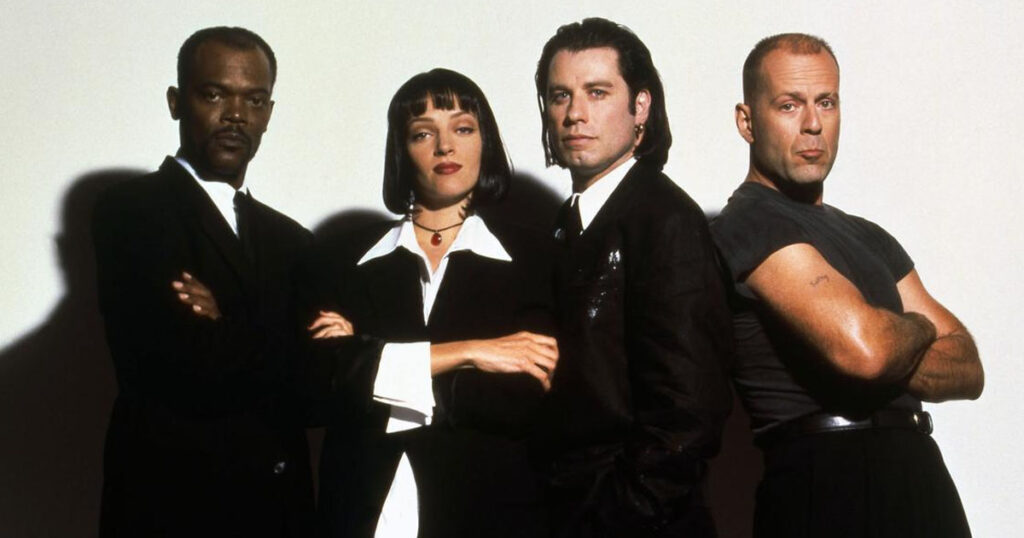
Beyond the mysteries and the memorable quotes, the true genius of Pulp Fiction lies in its structure. By slicing the timeline into out-of-order chapters, Tarantino turns a series of pulp crime tropes into a fresh, exhilarating experience. The ending of the movie—the robbery at the diner—is chronologically the middle of the story. Yet, emotionally and thematically, it is the perfect conclusion. We see Jules navigate a volatile situation not with violence, but with peace, bringing his character arc to a satisfying close.
Furthermore, the film’s soundtrack is legendary. Eschewing a traditional orchestral score, Tarantino curated a jukebox of forgotten surf rock, soul, and pop tracks, primarily from the 1960s and 70s. Songs like Dick Dale’s “Misirlou” and Urge Overkill’s cover of “Girl, You’ll Be a Woman Soon” became inexorably linked to the film, proving that a well-placed needle drop can be just as impactful as original music.
Conclusion: Why It Remains a Masterpiece
Writing a Pulp Fiction analysis feels like peeling an onion; there is always another layer, another reference, another brilliant line of dialogue to uncover. Despite being released in 1994 amidst some of the greatest films ever made, it stands tall as a beacon of independent filmmaking.
It is a film that doesn’t just ask you to watch it; it demands that you experience it. It is wildly fun, unapologetically violent, incredibly funny, and surprisingly philosophical. Whether you are mesmerized by the glowing briefcase, tapping your foot to the soundtrack, or simply marveling at the chemistry of the cast, Pulp Fiction remains an absolute joyride. It is a testament to the power of original screenwriting and proof that sometimes, the most entertaining stories are the ones that don’t play by the rules.