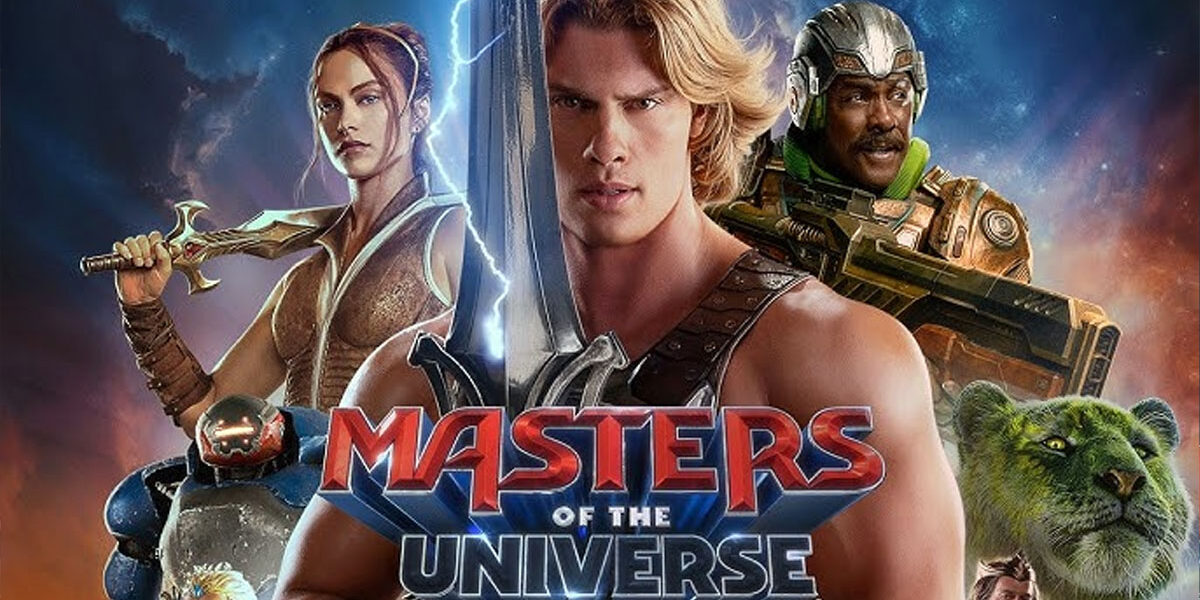
The modern blockbuster landscape has spent the last decade trapped in a predictable, almost exhausting cycle of self-aware irony. Heroes wink at the camera, villains make quips about the absurdity of their own apocalyptic plans, and films constantly apologize for their comic-book origins through layers of cynical detachment. It is a cinematic safety net—if a movie makes fun of itself first, the audience can’t point and laugh. But what happens when a filmmaker absolutely refuses to play by these cynical rules? Enter Masters of the Universe 2026, directed by Travis Knight.
By taking the reins of a wildly flamboyant franchise built on muscular barbarians, talking green tigers, and skull-faced sorcerers, Knight has achieved something genuinely radical in today’s cinematic climate. He hasn’t modernized He-Man by making him edgy, dark, or self-deprecating. Instead, he has resurrected the pure, unadulterated sincerity of the 1980s, proving that you don’t need to apologize for high camp when you have genuine, beating heart at the center of your story.
The 20-Year Curse of Castle Grayskull
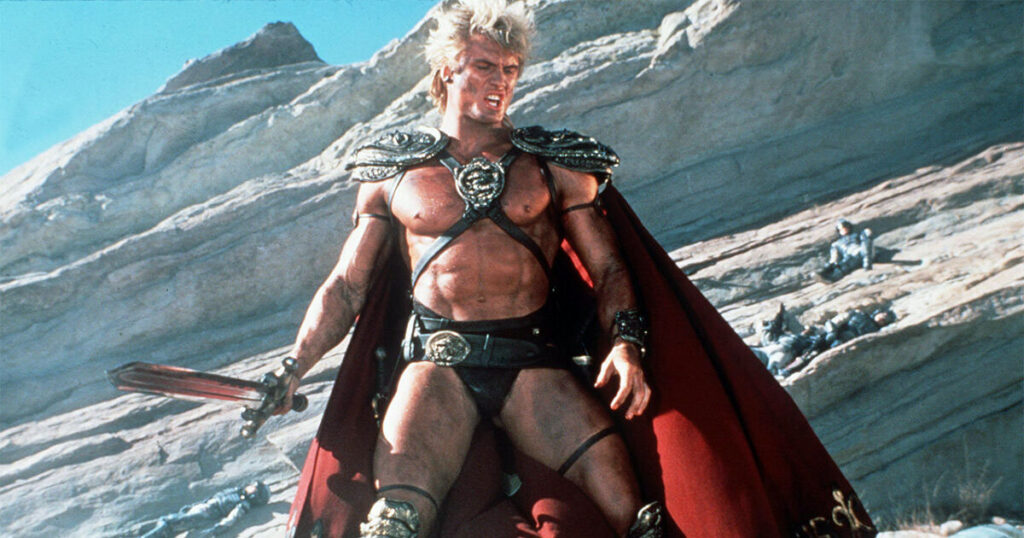
To fully appreciate the miracle of this film’s existence, one must first understand the absolute developmental hell it escaped. For nearly two decades, a live-action Masters of the Universe movie was Hollywood’s white whale. Since the early 2000s, the property bounced from studio to studio like a cursed artifact. Directors like John Woo, Jon M. Chu, McG, and the Nee Brothers all took swings at it. Scripts penned by heavyweight writers like David S. Goyer were tossed into the incinerator. At one point, Noah Centineo was even cast as He-Man before the project collapsed at Netflix due to skyrocketing budget concerns. Studios hesitated, terrified of how to translate an inherently ridiculous 1980s toy line for a modern audience without recreating the infamous, delightfully bizarre 1987 Dolph Lundgren misfire.
The turning point was securing Travis Knight. Coming off the massive critical success of Bumblebee—a film that miraculously injected desperate, emotional life into the cold metal of the notoriously chaotic Transformers franchise—and his stop-motion masterpieces at LAIKA (Kubo and the Two Strings), Knight was the perfect visionary. He didn’t view Eternia as a punchline to be updated; he saw it as a rich mythology to be respected. Knight understands that the aesthetics of childhood playtimes are deeply tethered to profound adult emotions, and he applied that exact philosophy to Prince Adam’s cinematic journey.
The Era of “Extreme Sincerity” vs. Modern Irony
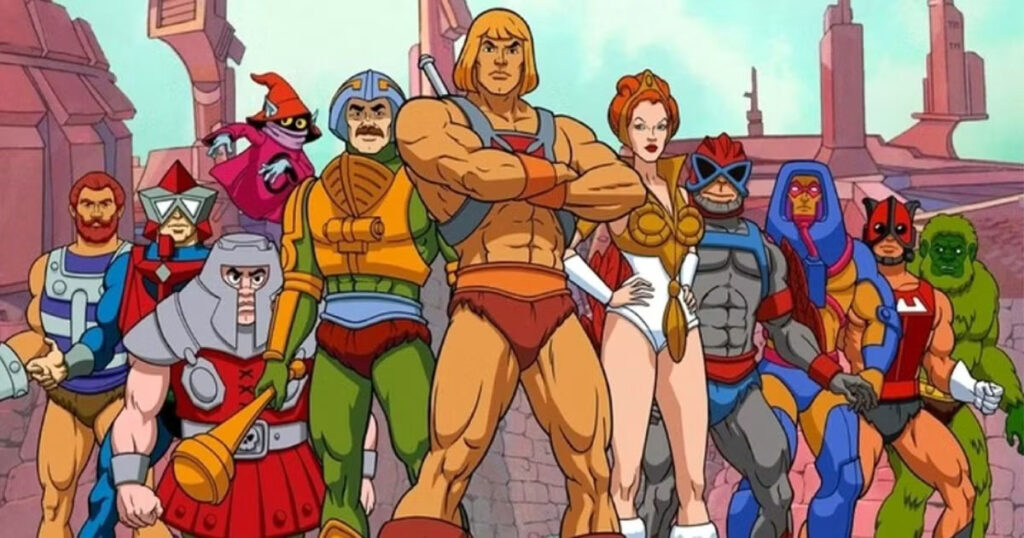
At the core of Masters of the Universe 2026 is an ideology Knight himself coined during his recent global press tour: “Extreme Sincerity.” In an era dominated by the Marvel Cinematic Universe’s relentless quipping and the post-modern satire of properties like The Boys or Deadpool, filmmakers are terrified of being perceived as “cringe.” If a character wears a bright spandex suit or wields a magically glowing broadsword, the script almost mandates a meta-joke pointing out how silly it all is.
Knight categorically rejects this trope. Nicholas Galitzine’s portrayal of Prince Adam is a revelation of earnestness. When he raises the Power Sword to the storm-filled sky and shouts the iconic incantation—”By the power of Grayskull!”—there is no sly wink to the audience. There is no side character standing in the background making a sarcastic remark about the volume of his voice or the sudden appearance of his armor. The film treats this transformation with the sweeping, operatic gravitas of Shakespearean fantasy.
By fully embracing the “camp” and the flamboyant 80s aesthetic with absolute seriousness, Knight forces the audience to buy into the world on its own terms. He recognized that the only way to make an 8-year-old’s fantasy work on a grand, 150-million-dollar cinematic scale is to treat the emotional core of the characters with utter respect. When Prince Adam struggles with the crushing, isolating burden of his destiny, the pain is palpable. The film demands that we care, and surprisingly, because it never undercuts its own drama with cheap humor, we actually do.
Forging Skeletor and Evil-Lyn: The Architecture of Villany
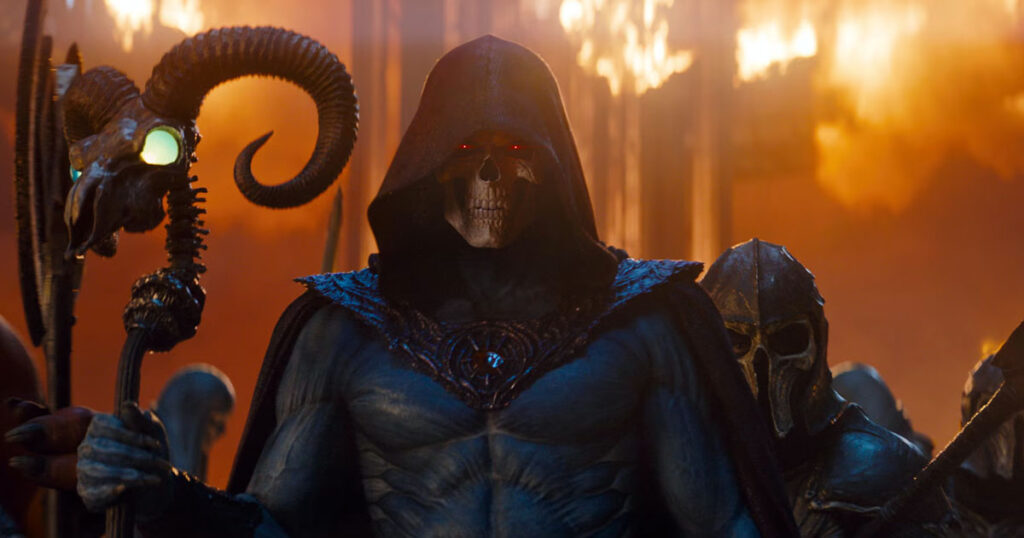
While He-Man provides the film’s beating heroic heart, the dark, decaying soul of Eternia belongs entirely to Jared Leto’s Skeletor. Leto is no stranger to polarizing method acting, but here, his intense commitment finds its perfect, chaotic vessel. Refusing to rely solely on motion capture or floaty CGI face replacements, Leto insisted on acting through heavily constructed, terrifying practical prosthetics designed by Academy Award-winning makeup artists.
Behind-the-scenes accounts from the set have already become the stuff of modern Hollywood legend. Leto reportedly prowled the massive soundstages in full skeletal armor, smearing theatrical blood on his face to cultivate an aura of genuine dread among the cast and crew. While this might sound extreme for a film based on an action figure, it serves a brilliant narrative purpose. In a cinematic landscape plagued by weightless, pixelated villains fighting in green-screen voids, Leto’s Skeletor feels dangerously tangible. His cruelty is visceral. Skeletor isn’t just a Saturday morning cartoon villain plotting to conquer a castle; Leto plays him as a fanatical cult leader, a decaying tyrant dripping with Shakespearean malice.
Crucially, Skeletor’s menace is amplified by the brilliant casting of Camila Mendes as Evil-Lyn. Rather than playing her as a subservient henchwoman, Mendes injects Evil-Lyn with a lethal, calculating intelligence. Their dynamic is less “master and servant” and more a toxic, symbiotic partnership of dark magic. Evil-Lyn serves as the grounded, strategic counterpoint to Skeletor’s unhinged megalomania, making the villains of this film feel like a genuinely insurmountable threat.
Beyond the Hero: Teela, Duncan, and the Masters
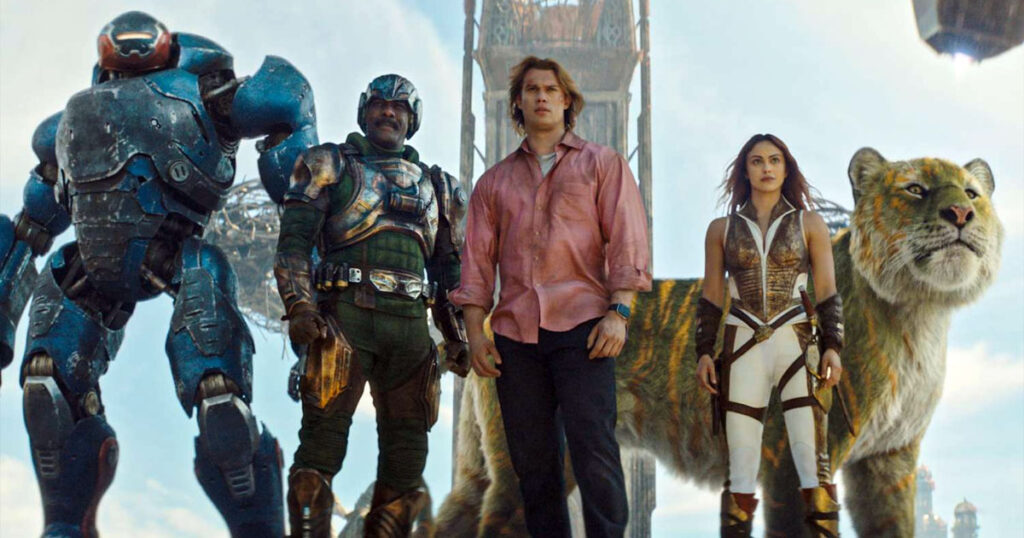
A hero is only as good as the allies who stand beside him, and Knight ensures that the supporting cast of Eternia receives their due. In past iterations, characters like Teela and Duncan (Man-At-Arms) were often relegated to pure exposition machines or damsels in distress. Masters of the Universe 2026 reinvents them while keeping their classic silhouettes intact.
As Teela, Captain of the Royal Guard, the film presents a fiercely capable warrior who serves as the skeptical, grounded anchor to Adam’s magical destiny. Her dynamic with Adam is fraught with tension; she respects the Prince but resents the secrets he keeps from her. Meanwhile, the veteran Man-At-Arms serves as the emotional father figure. The film spends considerable time in Duncan’s workshop, establishing him not just as a fighter, but as the brilliant engineer bridging Eternia’s ancient magic with advanced sci-fi technology. By fleshing out these relationships, the eventual battles feel earned because we care about the people swinging the swords.
Tactile Magic: The VFX and the Cringer Challenge
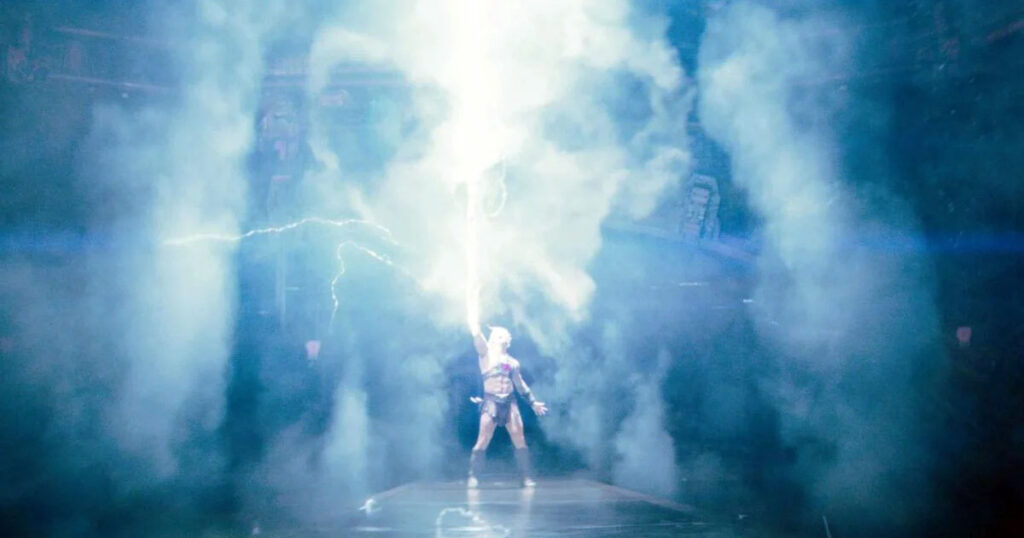
Visually, the film is a masterclass in nostalgic synthesis and practical filmmaking. Production designer Chris Butler—a long-time LAIKA collaborator of Knight’s—was tasked with an impossible mission: unify 40 years of disjointed lore. The film’s aesthetic beautifully harmonizes the chunky, colorful plastic of the original Mattel toys, the sleek rotoscoped animation of the Filmation cartoon, and subtle nods to the gritty production design of the 80s live-action movie. The result is an Eternia that feels ancient yet technologically advanced, a true “sword and planet” epic with massive physical sets that give the actors real environments to interact with.
Nowhere is Knight’s commitment to visual weight more apparent than in the execution of Cringer and his battle-ready alter ego, Battle Cat. Instead of a fully CGI creature that feels disconnected from the environment, the production utilized massive animatronic puppets for close-up interactions with the actors, augmented by cutting-edge CGI only for complex action sequences. When He-Man mounts Battle Cat, you can feel the weight, the fur, and the terrifying presence of a 10-foot armored tiger. It is a triumph of blending practical effects with digital wizardry.
The Missing Princess: The She-Ra Dilemma
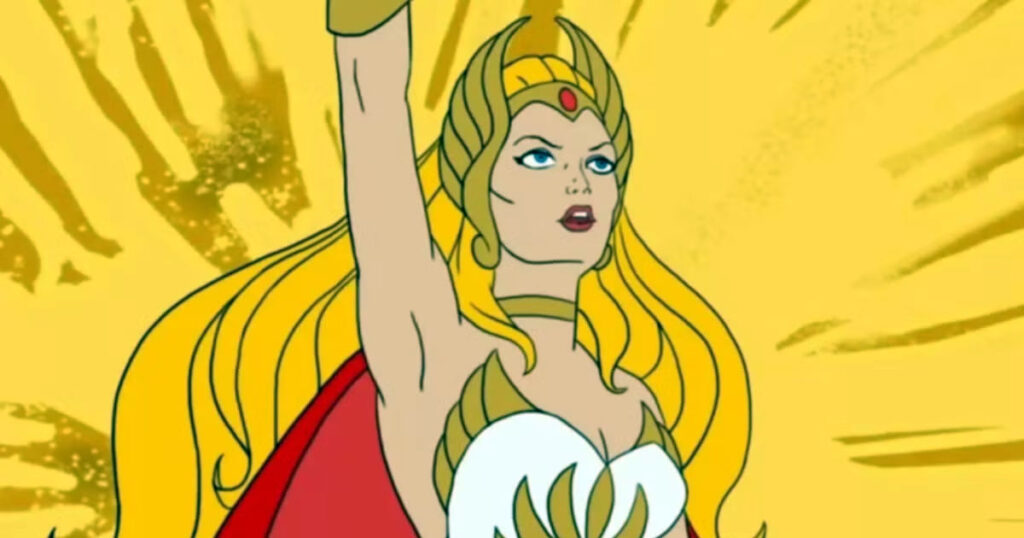
However, the expansive world-building does come with one notable absence that has sparked intense debate among the hardcore fandom: She-Ra. Early drafts of Knight’s script reportedly featured Princess Adora heavily, setting up a massive familial reunion to mirror the classic animated special The Secret of the Sword. Unfortunately, the convoluted corporate labyrinth of character rights—currently split across different studios and television deals following the successful Netflix animated series—forced her removal from the final script.
While the absence of He-Man’s twin sister is a bitter pill for legacy fans to swallow, Knight smartly uses this limitation to his advantage. By removing She-Ra from the equation, the narrative zeroes in completely on Adam’s isolation. He must bear the mantle of the universe’s protector entirely alone. He doesn’t have a super-powered equal to share the burden, which deepens the thematic weight of his hero’s journey.
The Future of Eternia: Will Prince Adam Return?
Despite the massive scale of the production, Travis Knight approached the film with a remarkably old-school mentality: treat it like it’s the only movie you’ll ever get to make. There are no blatant post-credit scenes teasing five different spin-offs, nor does the film end on an agonizing cliffhanger designed purely to trap audiences into buying a ticket for part two. The narrative arc of Masters of the Universe feels complete, functioning as a satisfying standalone epic.
Yet, box office numbers dictate reality in Hollywood. With the film generating massive buzz and strong ticket sales, discussions of a sequel are inevitable. Knight has hinted that if he returns to Grayskull, the focus will shift drastically. Having conquered the origin story, a sequel would delve into the psychological toll of being He-Man. How does Adam balance his fragile humanity with his near-invincible godhood? Furthermore, Knight has expressed a deep interest in exploring the evolving dynamics of Adam’s relationships with Teela—especially once his secret identity is fully dealt with—transitioning the franchise from a simple hero’s awakening to a complex saga of leadership, politics, and sacrifice.
A Love Letter to the 80s Kid
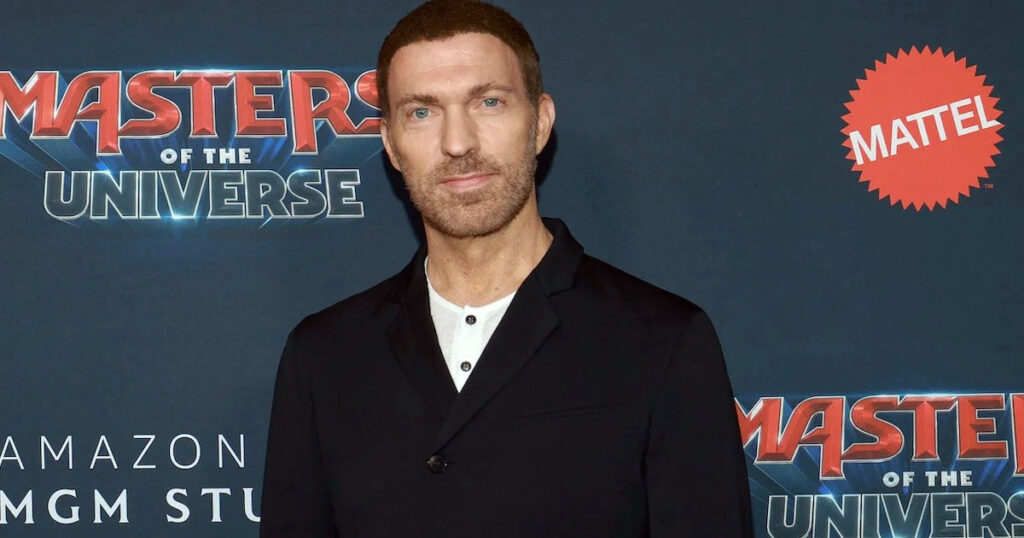
When Masters of the Universe premiered, the critical consensus was understandably divided. Many mainstream critics, conditioned by the slick, formulaic safety of modern superhero cinema, struggled with the film’s maximalist tone and unapologetic earnestness. They called it “overstuffed,” “too bright,” or “taking itself too seriously,” failing entirely to recognize that these aren’t bugs; they are carefully engineered features.
However, looking past the algorithmic, cynical critiques, the undeniable truth of Travis Knight’s film emerges. By daring to be deeply, wonderfully sincere, Masters of the Universe 2026 stands as an act of cinematic rebellion. It takes the fragmented memories of our childhoods—the plastic swords, the neon colors, the larger-than-life battles on living room carpets—and treats them with the exact level of epic respect we felt they deserved when we were eight years old.
It reminds us that heroism doesn’t need to be sarcastic to be relatable, and that sometimes, having the power is simply about having the courage to care. In a cinematic world full of irony, defensive humor, and dark anti-heroes, He-Man has returned to show us that extreme sincerity is the most radical superpower of all.