When it comes to action cinema, nothing gets the adrenaline pumping quite like the thrill of the biggest movie explosions. While computer-generated imagery has advanced rapidly over the years, the raw, visceral impact of practical, real-life detonations remains utterly unmatched on the silver screen. Filmmakers who dare to use thousands of liters of fuel, meticulously rigged charges, and high-grade explosives create cinematic moments that literally shake the audience in their seats. Today, we are counting down the top 20 most massive, awe-inspiring, and record-breaking blasts in film history. From classic bridge destructions to Guinness World Record-holding stunts, these are the legendary fiery spectacles that redefined blockbuster entertainment.
20. Armageddon (1998)
Michael Bay’s space-disaster blockbuster set a gold standard for late 90s cinema, and its depiction of a meteor strike on Paris remains one of the most memorable sequences of urban destruction ever put to film. When the rogue meteorites hit the French capital, the devastation is portrayed with a terrifying mix of massive practical fire effects and incredibly detailed scale miniatures. The filmmakers went to immense lengths to showcase iconic landmarks being wiped off the map in a fiery instant. While much of the city-wide destruction utilized early digital compositing, the sheer volume of practical pyrotechnics used to simulate the initial impacts on the ground earns it a solid spot on our countdown.
19. Lethal Weapon 3 (1992)

Why build an expensive set just to blow it up when you can destroy a real building? For the explosive opening sequence of this buddy-cop classic, director Richard Donner seized a rare opportunity. The production team was granted permission to completely demolish the abandoned former City Hall building in Orlando, Florida. Rigged with extensive explosive charges and carefully timed to collapse spectacularly on camera, the result is a colossal, totally authentic building collapse captured from multiple angles. The sheer authenticity of seeing an actual structure pancake under the force of a massive detonation makes this one of the most satisfying practical explosions of the early 90s.
18. The Matrix (1999)
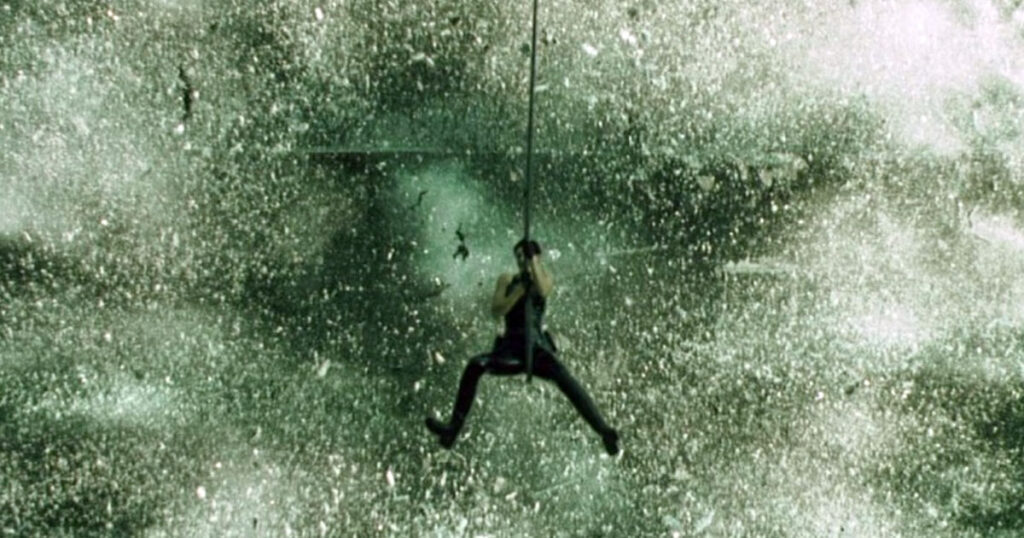
The Wachowskis revolutionized action cinema with their groundbreaking visual effects, but they also knew exactly when to rely on traditional, explosive practical stunts. The legendary sequence where Trinity and Neo crash a helicopter into a glass-paneled skyscraper resulted in a spectacular, glass-shattering explosion that blew audiences away. The combination of massive practical fireballs erupting outward and the groundbreaking “bullet-time” camera rig capturing the rippling effect of the blast created a uniquely massive, unforgettable visual moment. It was a perfect marriage of high-tech digital manipulation and raw, fiery practical destruction.
17. Transformers: Dark of the Moon (2011)
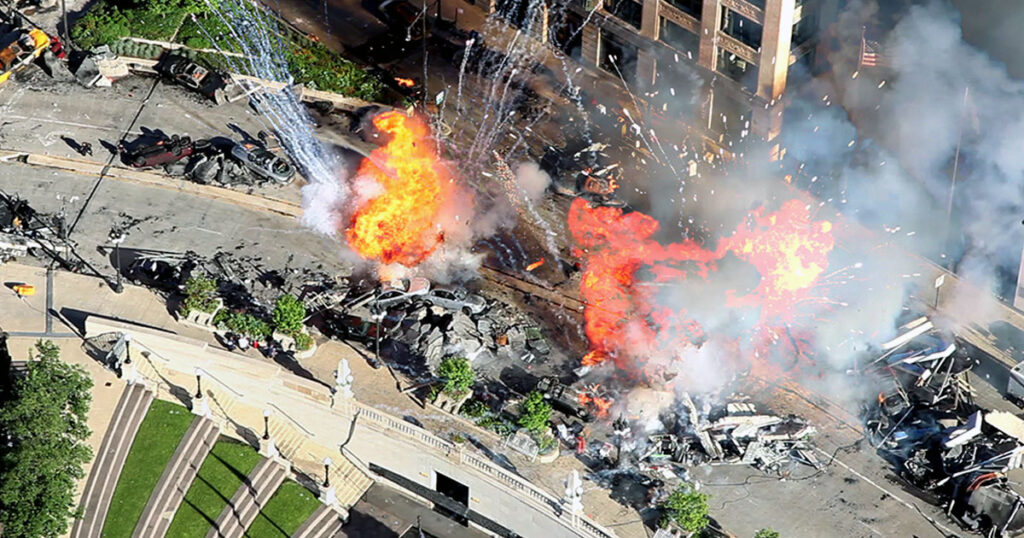
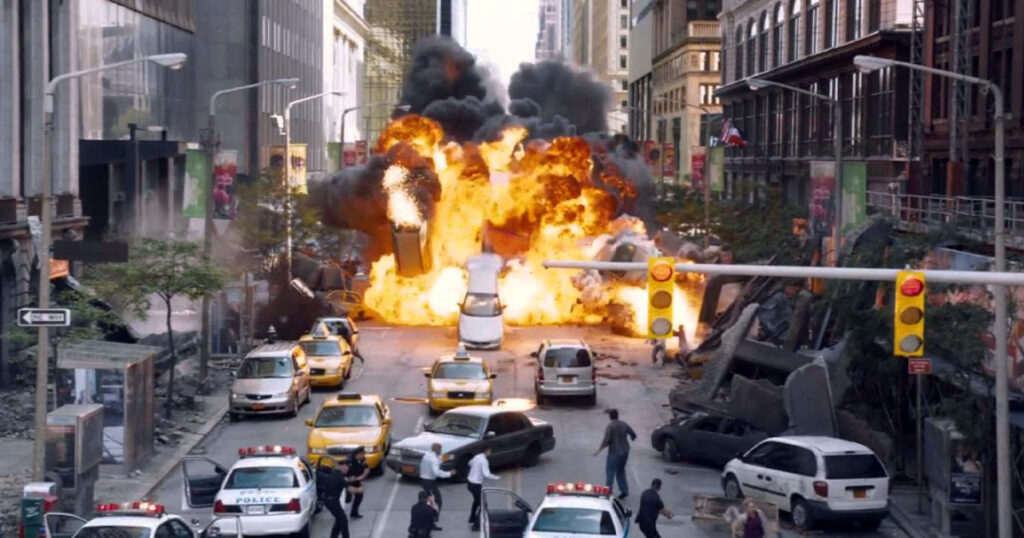
You simply cannot discuss the biggest movie explosions without bringing up Michael Bay multiple times. The climatic Battle of Chicago features some of the largest practical explosions ever blended with CGI in modern franchise filmmaking. Bay turned the actual streets of Chicago into a genuine, terrifying war zone. He utilized massive pyrotechnic rigs to flip real cars into the air and shatter the facades of buildings, creating a chaotic environment of thick black smoke and blinding orange fire. The practical blasts grounded the digital giant robots in a gritty reality, proving that even a CGI-heavy film needs real fire to feel weighty and dangerous.
16. Django Unchained (2012)
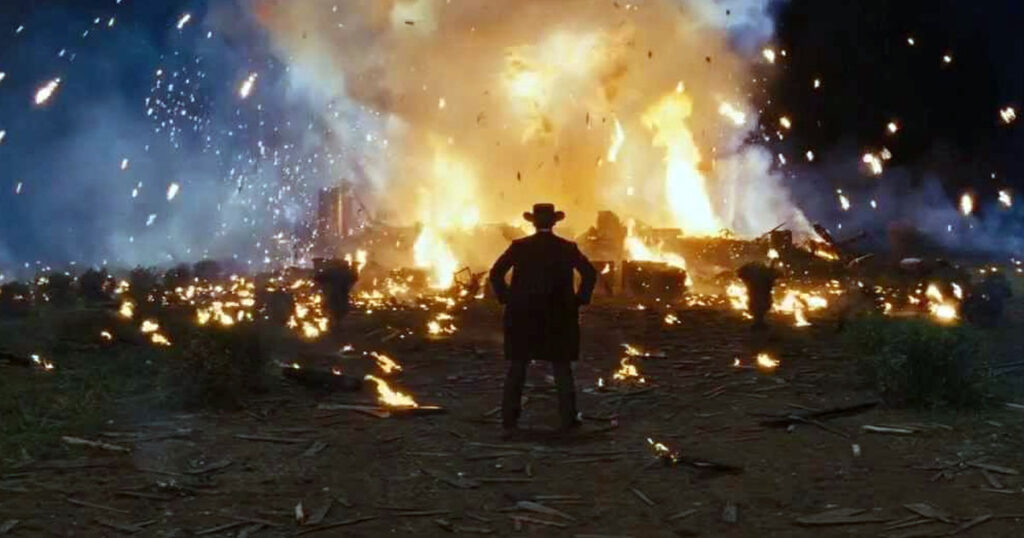
Quentin Tarantino loves a grand, theatrical finale, and the explosive destruction of the infamous Candyland mansion delivers catharsis on an epic scale. Rather than relying on digital trickery to erase the symbol of oppression, the production team built a meticulously detailed facade of the massive plantation house and rigged it with a staggering amount of real explosives. When Django finally lights the fuse, the entire structure erupts in a glorious, roaring fireball that fills the night sky. It is a massive, fiery, and deeply satisfying conclusion to the intense narrative, showcasing the raw power of a well-executed practical effect.
15. V for Vendetta (2005)
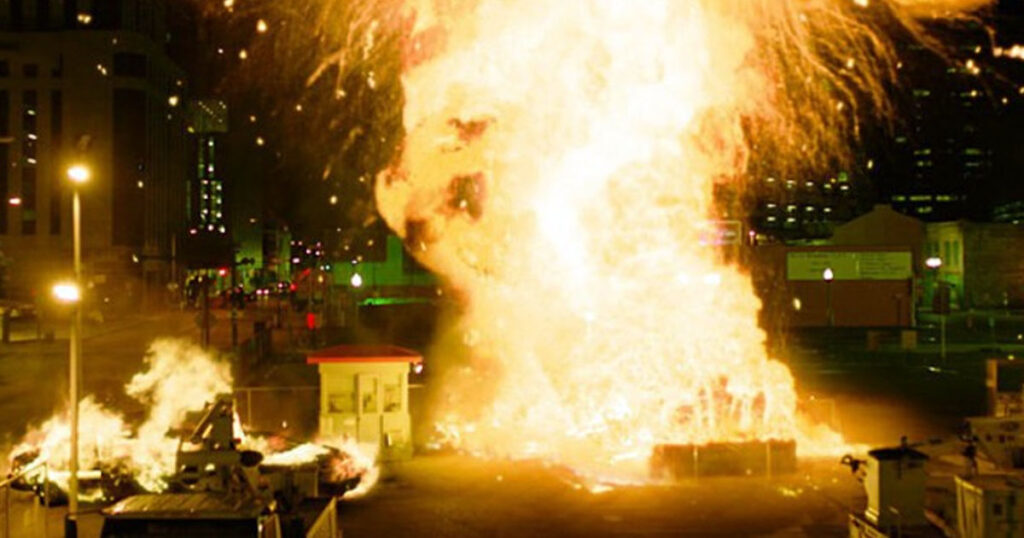
The grand finale of this dystopian thriller features the majestic and explosive demolition of the UK Parliament building. Accompanied by the triumphant swelling of Tchaikovsky’s 1812 Overture, the scene is a massive, highly stylized cinematic blast. The filmmakers utilized highly detailed, large-scale miniatures combined with a breathtaking array of practical fireworks and pyrotechnics to achieve the destruction. The result is an explosion that feels less like a gritty act of war and more like an explosive symphony—a towering inferno of ideas and rebellion that perfectly encapsulates the thematic core of the film.
14. Star Wars: Episode IV – A New Hope (1977)
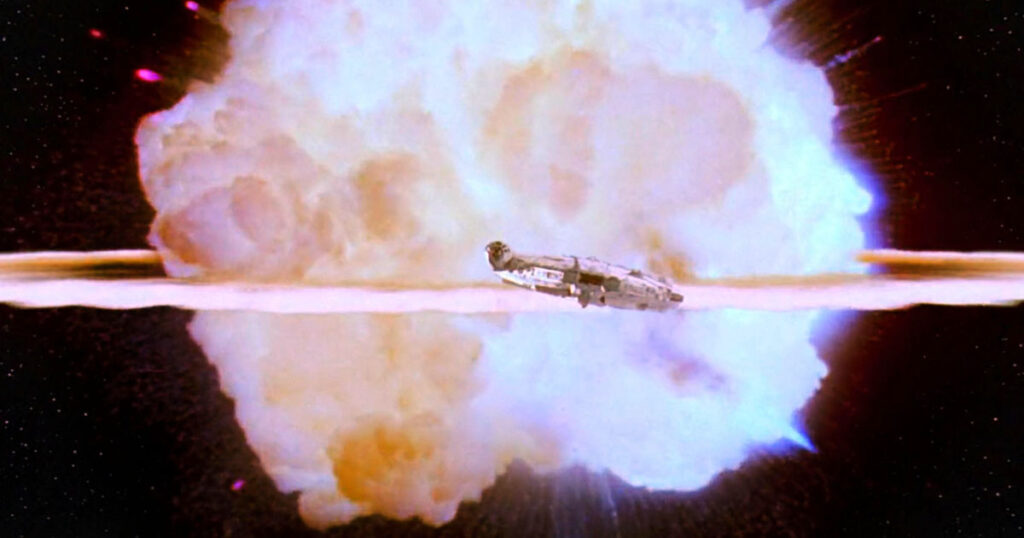
George Lucas and the brilliant minds at Industrial Light & Magic (ILM) changed the landscape of visual effects forever with the explosive climax of the original space opera. The destruction of the Death Star remains one of the most iconic cinematic moments of all time. While the effect was achieved using detailed miniatures rather than a full-scale physical location, the visual scale of the explosion in the context of the film’s universe was completely unprecedented. Filmed with high-speed cameras to give the expanding fireball a sense of immense mass and gravity, it set a new industry benchmark for how galactic destruction should look and feel.
13. Inception (2010)
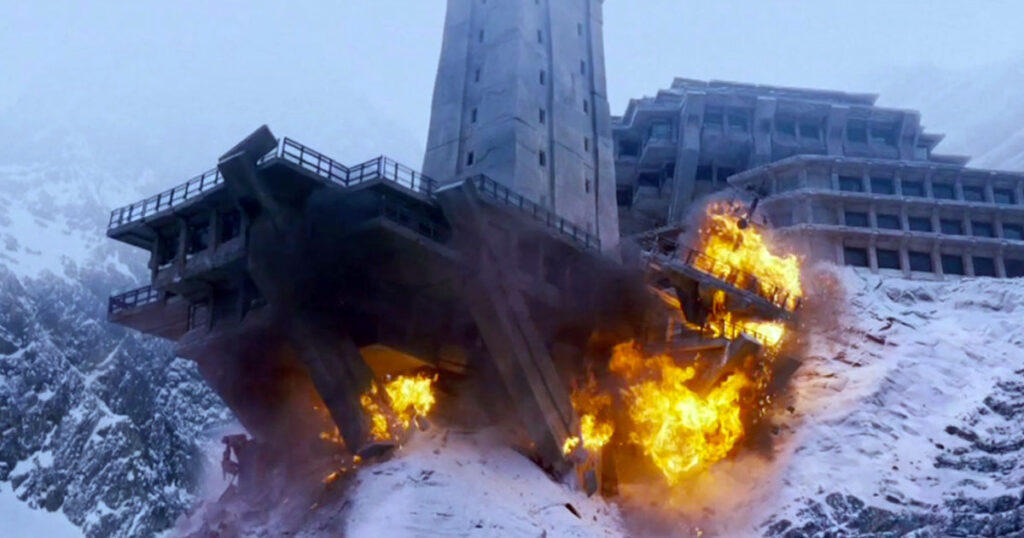
Christopher Nolan frequently pushes the boundaries of practical effects, and the Paris cafe explosion in this mind-bending thriller is uniquely brilliant due to its artistic, slow-motion execution. Instead of relying on traditional fiery pyrotechnics that would obscure the actors, the special effects team used high-pressure air cannons specifically designed to blast debris—fruits, books, and cafe furniture—into the air at incredible velocities. Shot at extremely high frame rates, it created a massive, dream-like wave of environmental destruction that felt both violently chaotic and incredibly poetic, proving that explosions don’t always need fire to be spectacular.
12. Independence Day (1996)
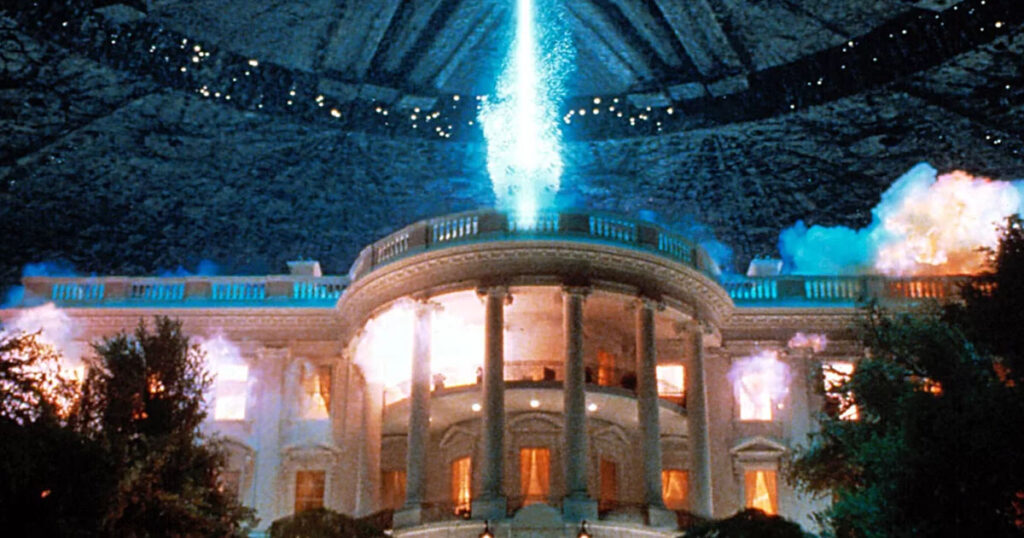
Roland Emmerich defined the modern disaster epic, and the alien laser obliterating the White House is arguably the defining pop culture image of 90s cinema. To achieve this monumental act of destruction, the effects team constructed a highly detailed, 1/12 scale model of the presidential residence, measuring over 14 feet wide. They strategically rigged it with dozens of explosive charges designed to detonate in a specific sequence, mimicking the downward thrust of an energy beam. The sheer visual scale of the resulting fireball, combined with the cultural weight of the target, cemented this blast in cinematic history.
11. The Bridge on the River Kwai (1957)
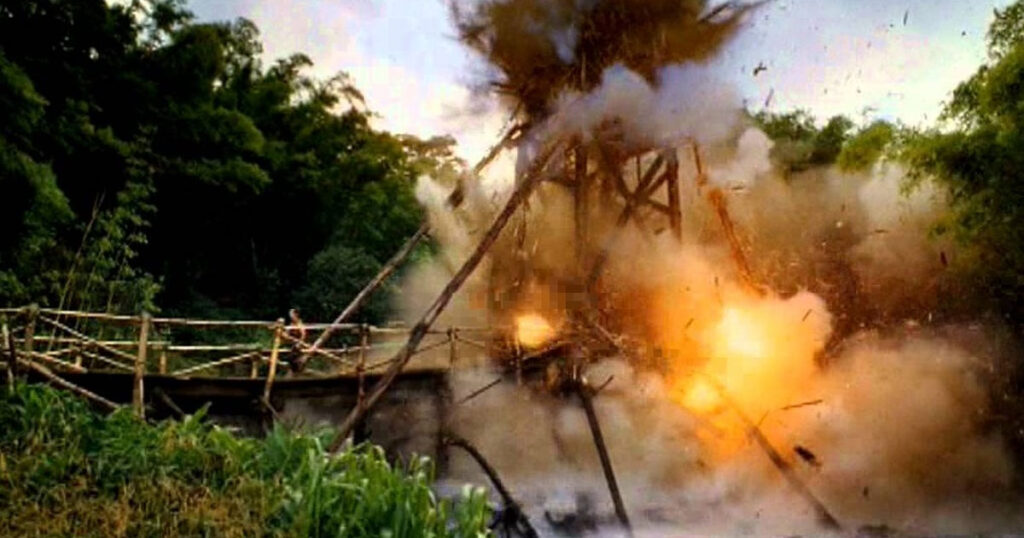
Long before the advent of computer-generated imagery, filmmakers had to build it to destroy it. In a monumental feat of classic, daring filmmaking, director David Lean and his crew spent months constructing a massive, fully functional wooden bridge in the jungles of Sri Lanka. For the film’s legendary climax, they drove an actual, full-sized steam train over the structure and detonated a massive array of real explosives, blowing the entire bridge and train to pieces. It was a one-take, unrepeatable stunt that showcased the staggering ambition and sheer scale of Golden Age Hollywood productions.
10. Terminator 2: Judgment Day (1991)
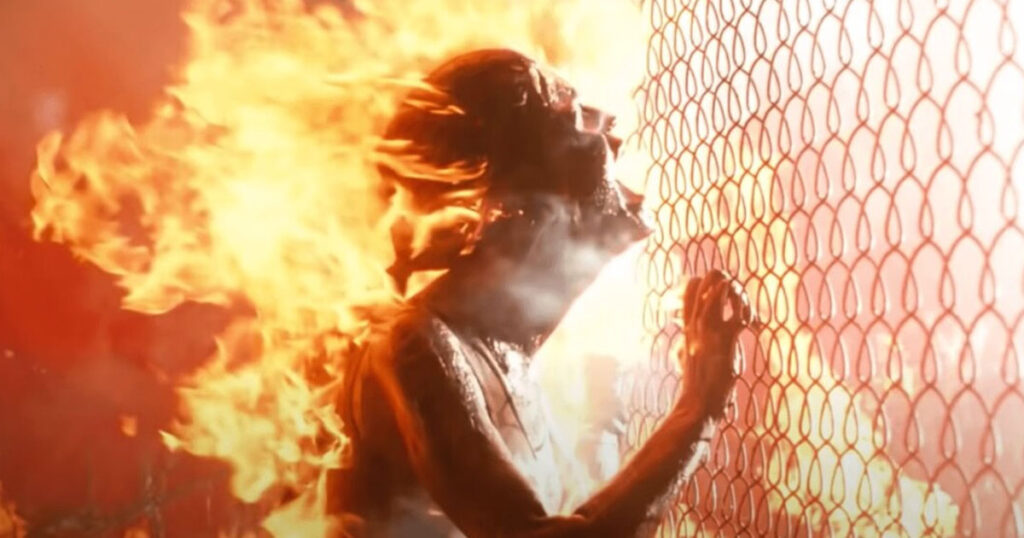
James Cameron is a master of blending practical and digital effects, but the nuclear nightmare sequence remains one of the most terrifyingly realistic depictions of an atomic blast ever visualized. Cameron and his team closely studied archival footage of actual nuclear tests to ensure harrowing accuracy. They constructed incredibly detailed miniature layouts of Los Angeles and systematically destroyed them using a combination of high-powered air cannons, bright practical backlighting, and early CGI to simulate the expanding shockwave. The fiery destruction set a new, horrifying standard for apocalyptic scale that has rarely been matched since.
9. Tropic Thunder (2008)
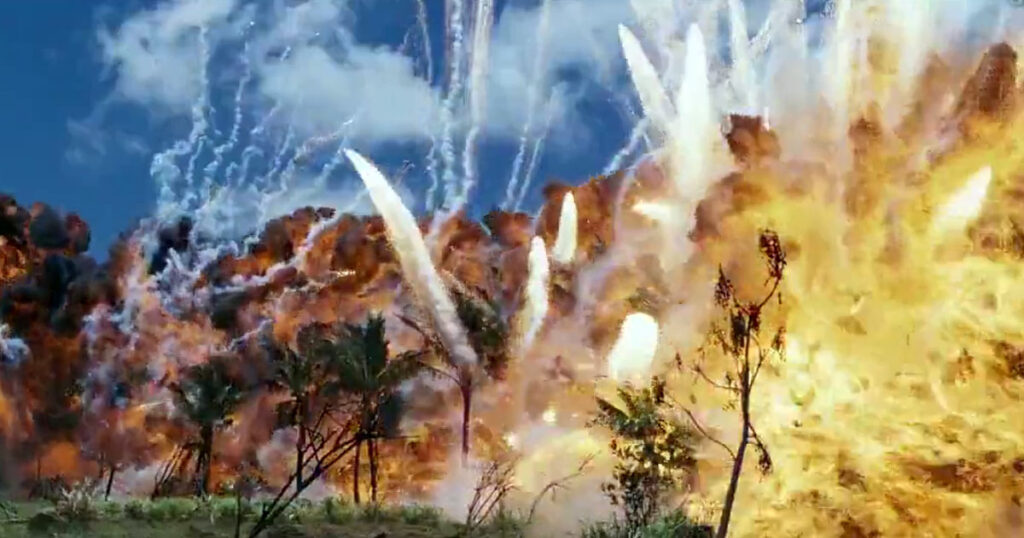
You might not expect a comedy to feature one of the most impressive practical explosions on this list, but the opening jungle sequence is jaw-droppingly huge. Directed by Ben Stiller, the production sought to parody the massive scale of Vietnam War epics by staging a staggeringly large, napalm-style explosion in a real jungle setting. The blast was created using over 1,000 gallons of gasoline and detonated much closer to the cast than typical Hollywood safety margins usually allow. The explosion was so massive, hot, and loud that the actors’ shocked, terrified reactions captured on film were completely genuine.
8. Mad Max: Fury Road (2015)
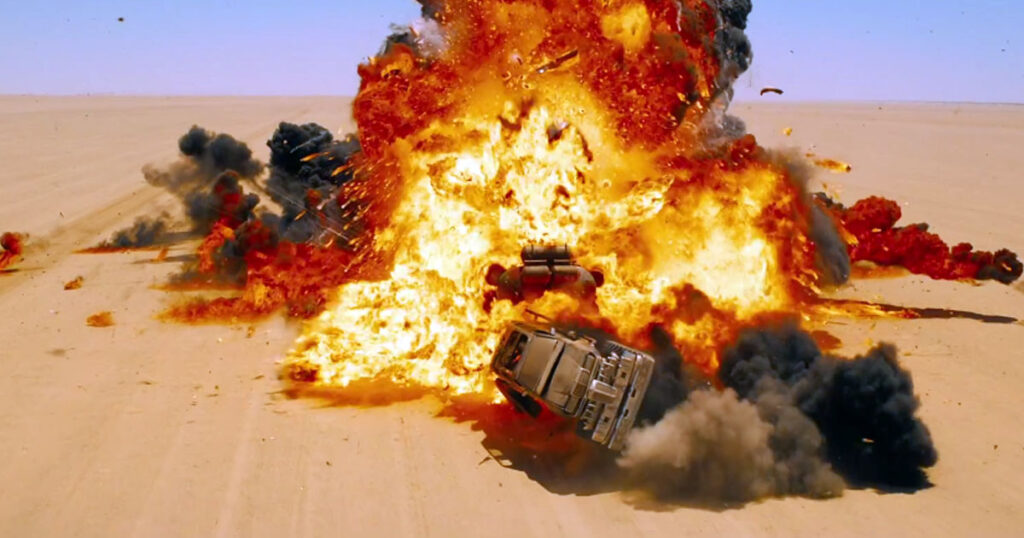
George Miller’s post-apocalyptic masterpiece is a relentless masterclass in practical vehicular stunts, culminating in the explosive finale involving the colossal War Rig. Instead of a green screen environment, the massive fireball rolling across the desert was achieved entirely practically in the dunes of Namibia. The special effects team executed highly coordinated, real-world explosions that ripped through the massive tanker while vehicles were actively driving at high speeds around it. The raw, chaotic energy of thousands of gallons of fuel combusting in a real environment gave the scene a visceral, gritty weight that CGI could never replicate.
7. Blown Away (1994)
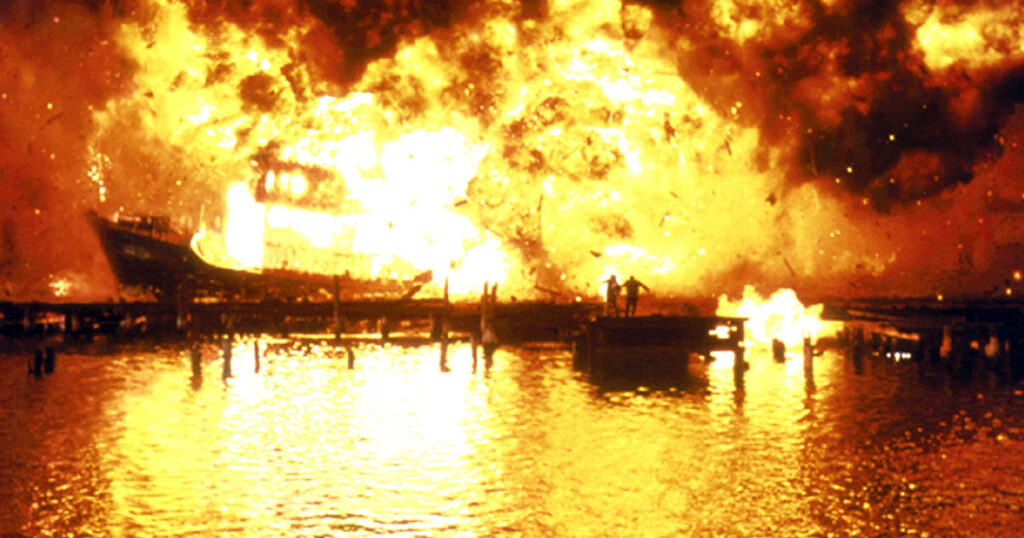
This intense 90s thriller centered entirely around bomb disposal experts features a phenomenal practical effect that has largely been forgotten by modern audiences. For the film’s spectacular climax, the production team purchased an actual, derelict ship and rigged it with an immense, unprecedented amount of high explosives. Detonated in Boston Harbor, the explosion was so massive and powerful that the shockwave reportedly shattered hundreds of windows in the surrounding city blocks. It was one of the largest physical explosions filmed at the time, shredding a massive steel vessel on screen with terrifying authenticity.
6. The Dark Knight (2008)

Heath Ledger’s legendary performance as the Joker is highlighted by the iconic sequence where he casually walks away from the explosive destruction of Gotham General Hospital. Staying true to his preference for in-camera realism, Christopher Nolan actually secured a real building—an abandoned Brach’s Candy factory slated for demolition—and rigged the entire structure to blow. Ledger famously improvised a moment of dark comedy when the sequential explosions briefly paused, furiously clicking his detonator before the massive main blast leveled the entire structure behind him. It is a perfectly timed, chaotic, and completely practical cinematic triumph.
5. Pearl Harbor (2001)
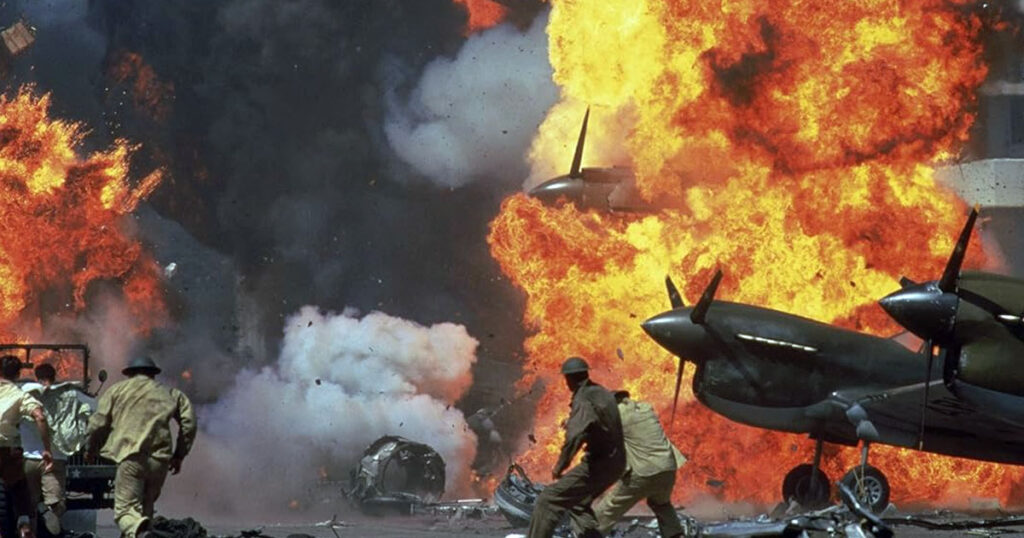
Michael Bay’s historical epic might have divided critics, but no one can deny the sheer, overwhelming scale of its central attack sequence. To recreate the infamous bombing of Battleship Row, the production executed a highly coordinated, massive practical stunt that involved hundreds of real explosives detonating across a massive harbor set. They utilized genuine active-duty Navy vessels, modified to appear older, alongside massive full-scale physical replicas. When the charges were set off, it created a continuous, rolling wall of fire and water that remains one of the most expensive and complex practical action sequences ever filmed.
4. Apocalypse Now (1979)
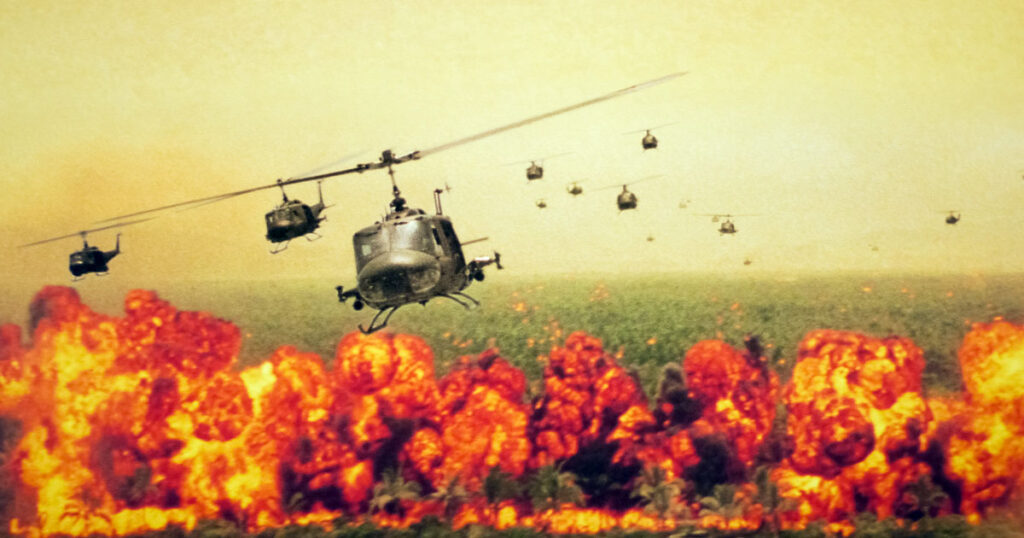
Francis Ford Coppola’s descent into the madness of the Vietnam War features the infamous “napalm in the morning” carpet-bombing scene, which stands as a legendary piece of rogue filmmaking. The crew used well over 1,200 gallons of pure gasoline, strategically laid out over a massive stretch of real Philippine jungle. When ignited, it created an apocalyptic wall of fire that completely devastated the landscape. The intense heat, thick black smoke, and towering flames created a hauntingly beautiful, terrifying, and deeply hypnotic visual that perfectly captured the devastating reality of modern warfare.
3. Oppenheimer (2023)
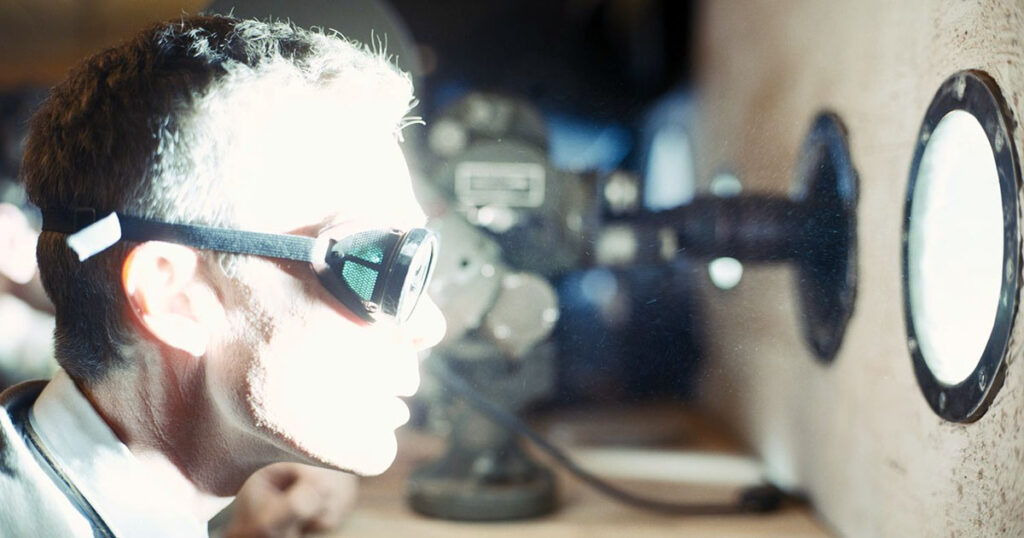
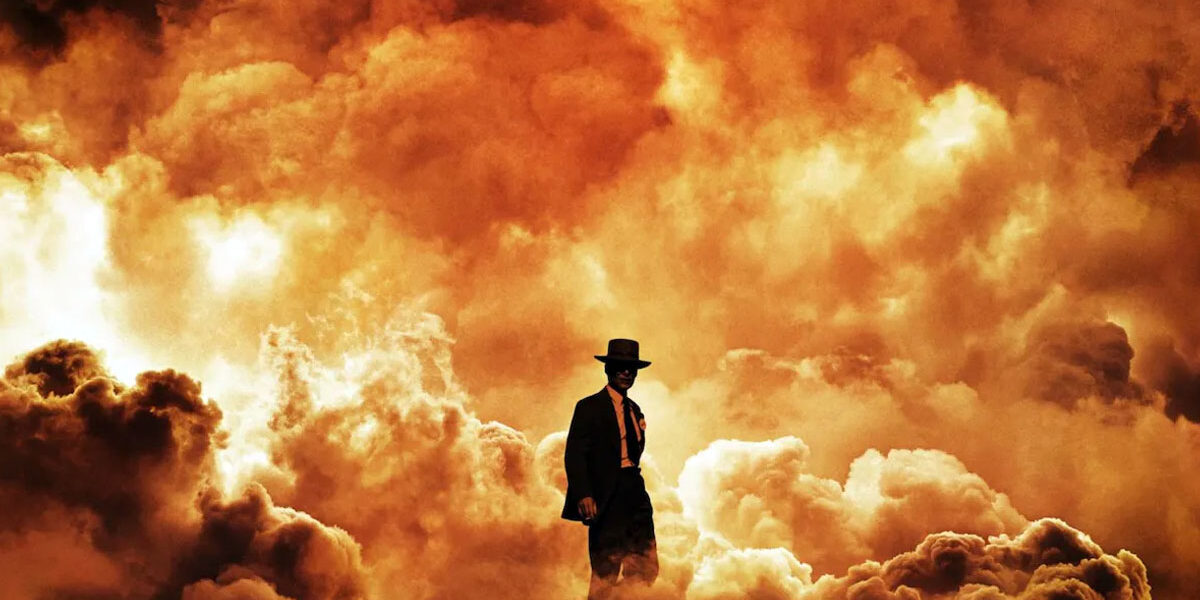
When tasked with recreating the Trinity Test—the first detonation of a nuclear weapon—Christopher Nolan famously and stubbornly refused to use computer graphics. Instead, his special effects team embarked on a massive scientific endeavor, combining vast quantities of gasoline, propane, aluminum powder, and magnesium. Filmed using forced perspective and extreme slow-motion on large-format IMAX cameras, the resulting practical chemical fire perfectly recreated the blinding, magnesium-white flash and the terrifying, roiling fiery mushroom cloud of a nuclear detonation. It is a modern miracle of practical realism that captured the terrifying birth of the atomic age.
2. No Time To Die (2021)
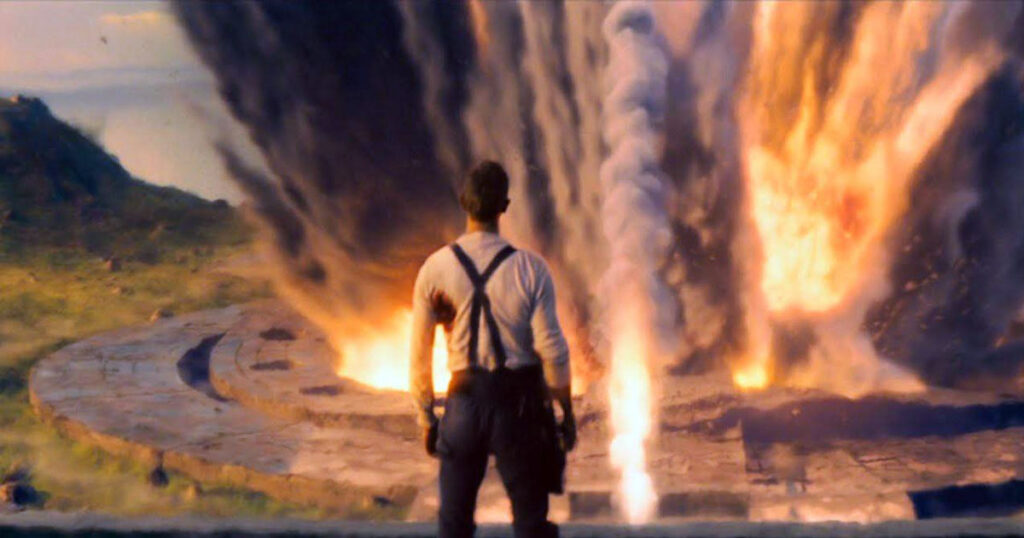
While it may not feature the tallest or widest fireball on our list, this recent James Bond film holds a very specific and terrifying Guinness World Record: the “Most high explosives detonated in a single film take.” During the climax on Safin’s island base, the production detonated an astounding 136.4 kilograms of TNT equivalent in one continuous, earth-shattering blast. By focusing purely on high-grade military explosives rather than just burning gasoline for visual flair, they created a blast with unimaginable concussive force, making it technically the most powerful and violently destructive explosion ever captured safely on a movie set.
1. Spectre (2015)
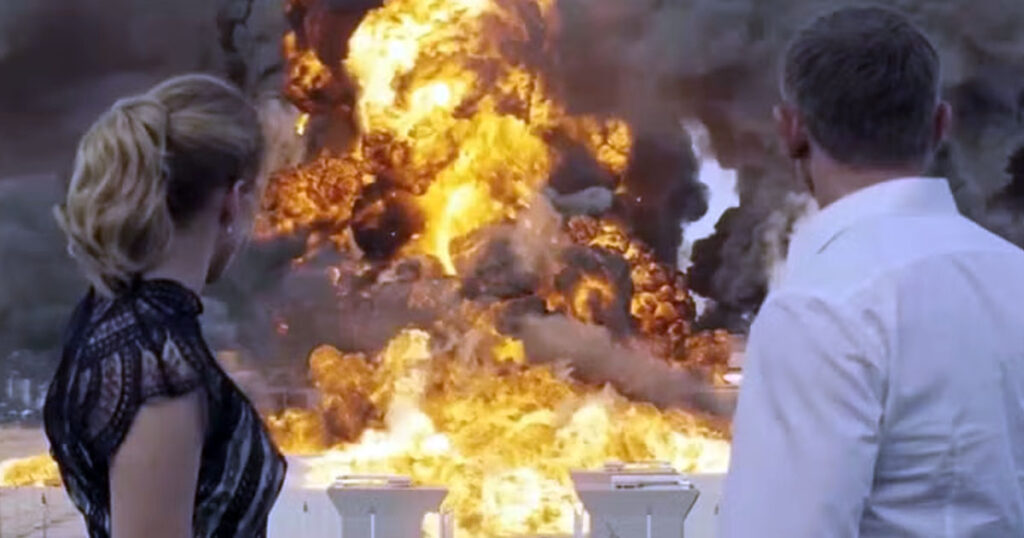
Taking the crown for the ultimate cinematic blast is another James Bond adventure. The destruction of Ernst Stavro Blofeld’s sprawling desert facility officially holds the Guinness World Record for the “Largest film stunt explosion” ever produced. Filmed in the remote deserts of Erfoud, Morocco, the special effects team utilized a mind-boggling 8,400 liters of fuel combined with 33 kilograms of explosives. The resulting detonation lasted for over seven seconds, creating an unbelievably massive, screen-filling fireball that illuminated the night sky for miles. In pure visual scale, heat, and awe-inspiring size, it stands uncontested as the pinnacle of explosive filmmaking.
The Enduring Power of Practical Effects
As widely noted by film critics, industry professionals, and passionate moviegoers alike, we are currently living in an era where digital effects can create literally anything the mind can imagine. Yet, there remains a palpable, collective fatigue toward weightless CGI destruction. Based on the overwhelming positive reactions to practical spectacles in modern films like Oppenheimer and Mad Max: Fury Road, it is clear that audiences crave authenticity.
In our view, the sheer heat, chaotic physics, and unpredictable nature of real fire create an emotional weight and a sense of genuine danger that perfectly rendered pixels simply cannot replicate. When an actor flinches from a real shockwave, the audience feels that impact. The biggest movie explosions on this list do far more than just dazzle the eyes with bright colors; they serve as a testament to the audacious lengths, meticulous planning, and sheer bravery filmmakers will employ to capture true cinematic magic in-camera. Practical effects are not just a nostalgic relic of the past; they are the beating, fiery heart of legendary action cinema.