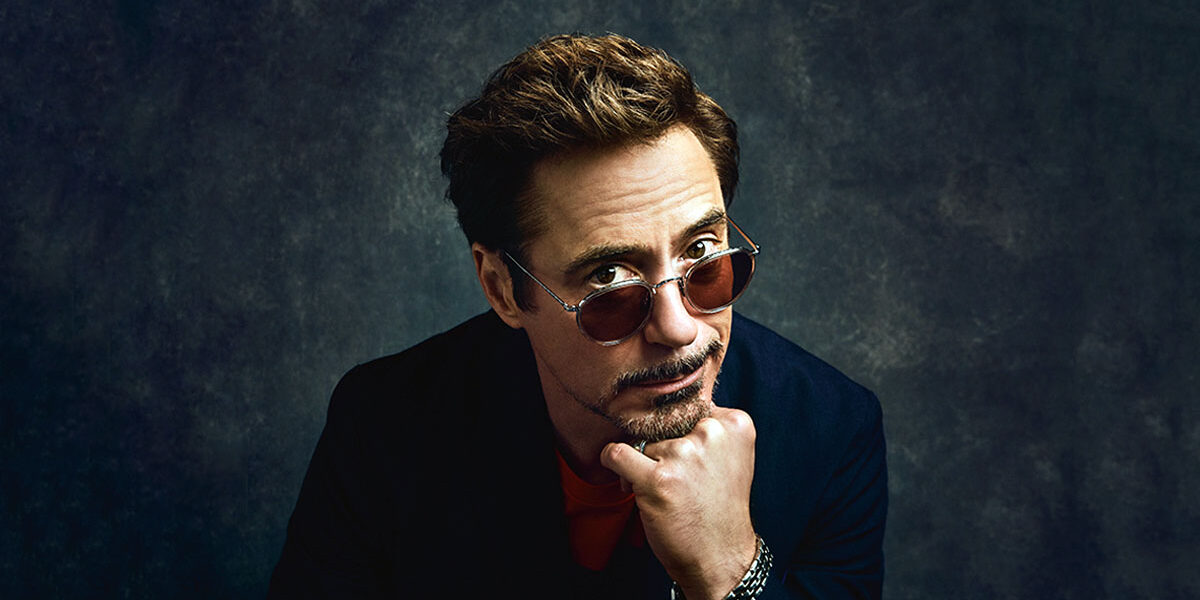
There are comeback stories, and then there is the story of Robert Downey Jr. In the sprawling, glittering, and often unforgiving history of Hollywood, few narratives are as spectacularly dramatic, heartbreakingly dark, and ultimately triumphant as his. From being hailed as the greatest actor of his generation to being written off as an uninsurable liability destined to become a tragic cautionary tale, Downey’s trajectory is nothing short of a modern mythological epic.
Today, he stands atop the cinematic world—an Academy Award winner, the undisputed godfather of the most lucrative film franchise in history, and an actor whose future seems just as thrilling as his past. To truly understand the magnitude of his success, one must trace his footsteps back to the very beginning, through the dazzling highs, the crushing depths, and the slow, arduous climb back to the summit.
A Childhood Steeped in the Unconventional
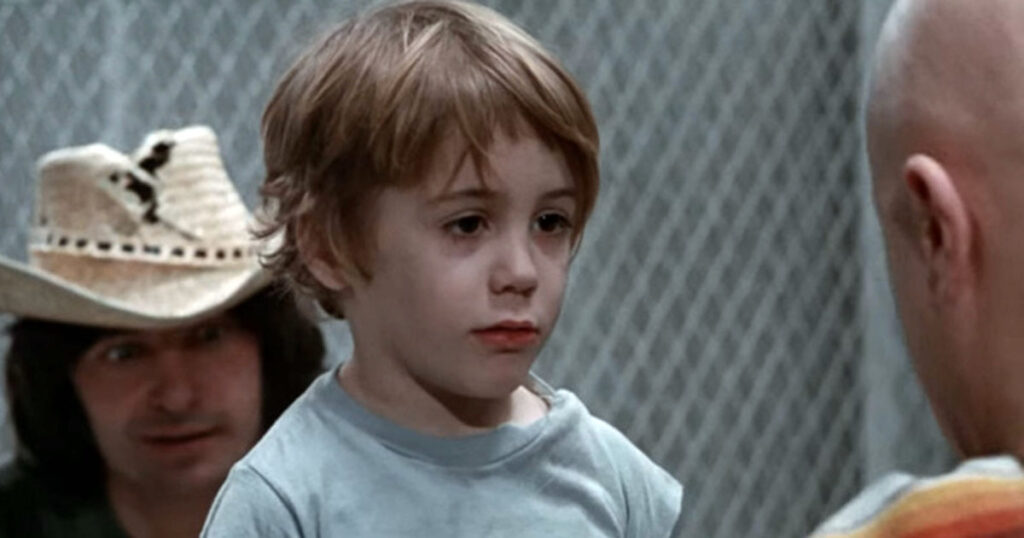
Robert John Downey Jr. was born on April 4, 1965, in Manhattan, New York. Cinema was quite literally in his blood. His father, Robert Downey Sr., was a prominent figure in the underground, avant-garde filmmaking scene, known for satirical and often provocative works. His mother, Elsie Ann, was an actress who frequently appeared in her husband’s films.
Growing up in this bohemian environment meant that Downey was exposed to the mechanics of filmmaking before he could even tie his shoes. He made his acting debut at the tender age of five, playing a sick puppy in his father’s absurdist comedy Pound (1970). However, this deeply artistic upbringing came with significant, dark caveats. Downey Sr. struggled with substance abuse, and in a tragic misstep that would haunt the family for decades, introduced his son to drugs at an alarmingly young age. For the young Downey, substance use became intertwined with emotional bonding—a toxic foundation that would later threaten to destroy his life and career.
Despite the chaotic household, Downey’s raw talent was undeniable. After his parents divorced, he moved to California with his father but ultimately dropped out of high school to move back to New York and pursue acting full-time. The stage was set for a prodigy to emerge.
The Rise of a Generational Talent
The 1980s marked Downey’s official entry into the competitive realm of show business. He cut his teeth in theater and landed a brief, one-season stint on Saturday Night Live in 1985. Though the sketch comedy format wasn’t his strongest suit, it provided a massive platform. He quickly pivoted to film, becoming tangentially associated with the “Brat Pack”—a group of young, highly successful actors defining the era’s teen movies. He delivered charismatic, scene-stealing performances in films like Weird Science (1985) and The Pick-up Artist (1987).
However, it was his role as the wealthy, drug-addicted Julian Wells in the 1987 film Less Than Zero that made critics sit up and take notice. His portrayal was painfully raw, hauntingly authentic, and universally acclaimed. Tragically, Downey later admitted that the role was an exaggeration of his own life at the time, and the character became a dark premonition of his own future.
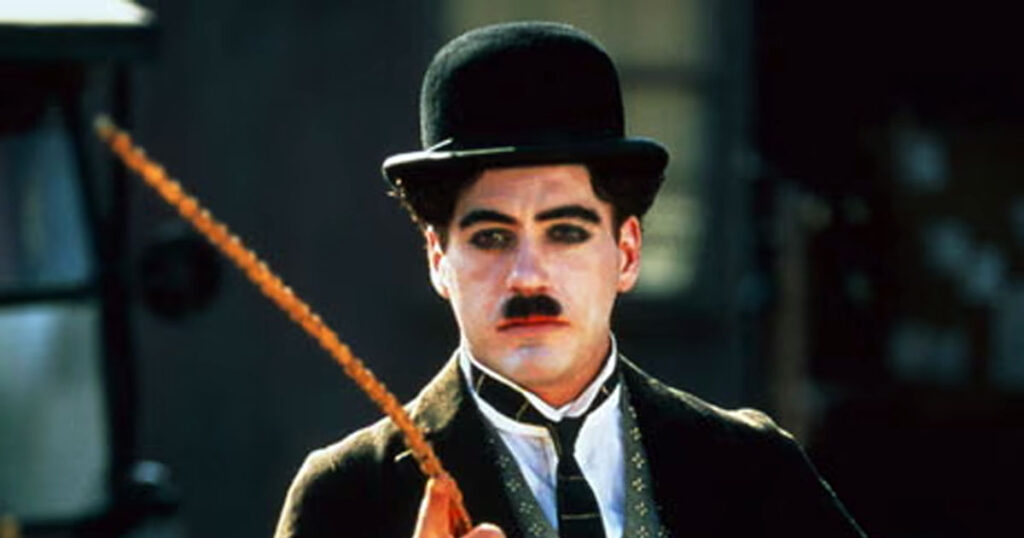
The crowning achievement of his early career arrived in 1992 when director Richard Attenborough cast him as the legendary silent film star Charlie Chaplin in the biopic Chaplin. Downey’s preparation was obsessive and legendary; he learned to play the violin, taught himself to play tennis left-handed, and worked with a coach to perfectly mimic Chaplin’s iconic posture and gait. The performance was a masterclass in physical comedy and dramatic depth, earning Downey his first Academy Award nomination for Best Actor. At 27, he was widely considered one of the finest actors alive.
The Fall from Grace and The Industry Blacklist
As the 1990s progressed, the demons of his childhood caught up with him. The recreational drug use escalated into a severe, life-threatening addiction to heroin and cocaine. What followed was a highly publicized, agonizingly public downward spiral that dominated tabloid headlines.
Between 1996 and 2001, Downey was caught in a revolving door of arrests, probation violations, and court-ordered rehab stints. The incidents were bizarre and deeply concerning: speeding down Sunset Boulevard naked while possessing a firearm and drugs, and notoriously wandering into a neighbor’s house and falling asleep in an empty bed. Despite multiple interventions, the grip of addiction was relentless.
In 1999, after repeatedly violating his probation, a judge sentenced him to three years in the California Substance Abuse Treatment Facility and State Prison in Corcoran. The golden boy of Hollywood was now inmate number P50522, earning eight cents an hour working in the prison kitchen.
He was unexpectedly released early in 2000 and immediately landed a role on the hit television show Ally McBeal. His addition revitalized the series; he was charming, witty, and won a Golden Globe for his performance. But the demons were not yet vanquished. Subsequent arrests in late 2000 and early 2001 led to him being unceremoniously fired from the show.
At this point, Hollywood washed its hands of Robert Downey Jr. He was deemed entirely uninsurable by completion bond companies, meaning no major studio could legally hire him. He was effectively blacklisted—a brilliant, burned-out star who had seemingly thrown away a once-in-a-lifetime gift.
The Climb Back and the Power of Rebuilding Trust
The turning point came in 2003. Famously, Downey has recounted a moment driving on the Pacific Coast Highway, stopping at a Burger King, eating a remarkably bad burger, and experiencing a sudden, profound moment of clarity. He drove to the ocean, threw his remaining drugs into the water, and finally committed to a life of sobriety.
Getting sober was only the first step; getting his career back required a miracle. That miracle came in the form of his friend Mel Gibson, who personally paid Downey’s insurance bond so he could star in The Singing Detective (2003). Slowly, Downey began to rebuild his reputation. He took roles in independent films and mid-budget thrillers.
A crucial moment occurred during the production of the 2003 thriller Gothika, produced by Joel Silver. It was here he met Susan Levin, a brilliant and disciplined film producer. They fell in love, but Susan gave him a strict ultimatum: she would not tolerate any relapses. Susan became his anchor, his creative partner, and eventually his wife.
Directors began taking calculated risks on him again. Shane Black cast him in the brilliant, razor-sharp neo-noir comedy Kiss Kiss Bang Bang (2005), which showcased his unparalleled rapid-fire delivery and comedic timing. David Fincher cast him as the obsessive journalist Paul Avery in the masterpiece Zodiac (2007). By 2007, the industry knew Downey was sober, professional, and still phenomenally talented. But he was still seen as a character actor, not a leading man capable of carrying a blockbuster.
“I Am Iron Man” – The Ultimate Hollywood Comeback
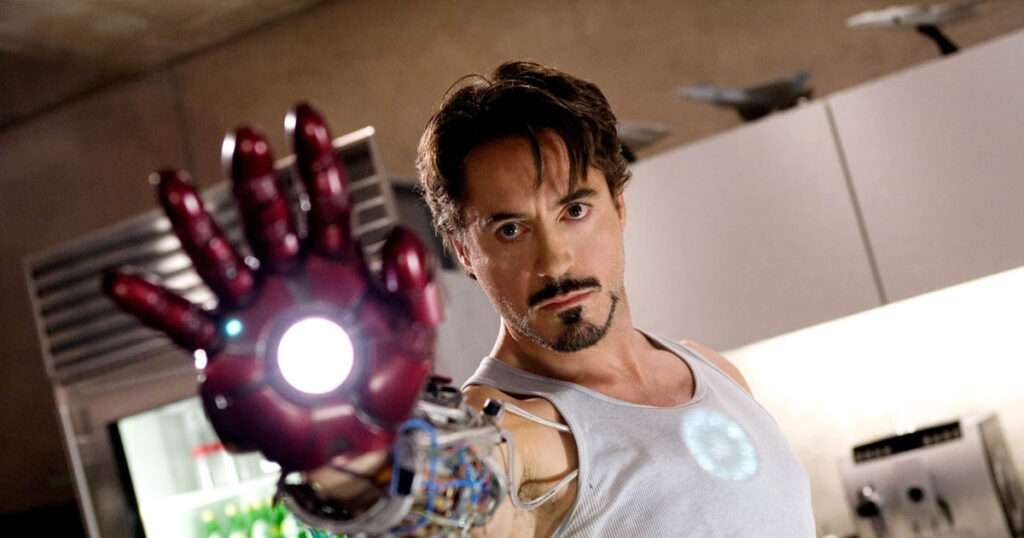
In the mid-2000s, Marvel Entertainment, attempting to claw its way out of bankruptcy, decided to produce its own movies. They staked their entire company on a B-tier comic book character: Iron Man. Director Jon Favreau had a wild idea for the lead role of Tony Stark, a genius, billionaire, playboy, philanthropist seeking redemption. Favreau saw the direct parallels between Stark’s fictional redemption arc and Downey’s real-life struggles.
The Marvel executives were fiercely opposed, reportedly telling Favreau that under no circumstances would they hire Robert Downey Jr. But Favreau fought relentlessly. He arranged a screen test for Downey, which went down in history as one of the best auditions ever recorded. Downey didn’t just play Tony Stark; he was Tony Stark.
Released in 2008, Iron Man was a monumental, paradigm-shifting success. Downey’s performance—infused with his own quick-witted improvisation, undeniable charisma, and underlying vulnerability—was unanimously praised. When he uttered the final, improvised line of the film, “I am Iron Man,” it was a declaration that echoed far beyond the screen. The King had returned.
Simultaneously, in the summer of 2008, he starred in Ben Stiller’s satirical comedy Tropic Thunder, playing Kirk Lazarus, an intense Australian method actor who undergoes controversial pigmentation alteration to play a Black soldier. It was an incredibly risky, highly controversial role that only Downey could pull off without alienating the audience. It earned him his second Academy Award nomination, proving he could balance massive commercial blockbusters with critical prestige.
For the next eleven years, Downey was the beating heart of the Marvel Cinematic Universe (MCU). He anchored The Avengers franchise, commanding unprecedented salaries and backend deals that made him one of the wealthiest actors on the planet. He also successfully launched another franchise, playing the legendary detective in Guy Ritchie’s Sherlock Holmes (2009) and its 2011 sequel.
His tenure as Tony Stark concluded with poetic perfection in Avengers: Endgame (2019), sacrificing his character to save the universe. It was an emotional farewell to a role that had fundamentally saved his life and reshaped modern cinema.
Post-Stark Renaissance and Academy Glory
Life after Marvel initially proved tricky. His passion project, Dolittle (2020), was a critical and commercial misfire. However, Downey quickly recalibrated. He turned his attention to producing, creating the deeply moving and personal documentary Sr. (2022), a touching tribute to his father and their complicated but loving relationship.
Then came Christopher Nolan. The visionary director cast Downey in his historical epic Oppenheimer (2023) as Lewis Strauss, the ambitious and ultimately vindictive Chairman of the Atomic Energy Commission.
Nolan demanded that Downey strip away the “Tony Stark charm.” He wanted subtlety, calculating coldness, and simmering resentment. Downey delivered a masterclass in restrained, psychological warfare. His portrayal of Strauss’s petty, bureaucratic destruction of J. Robert Oppenheimer was mesmerizing.
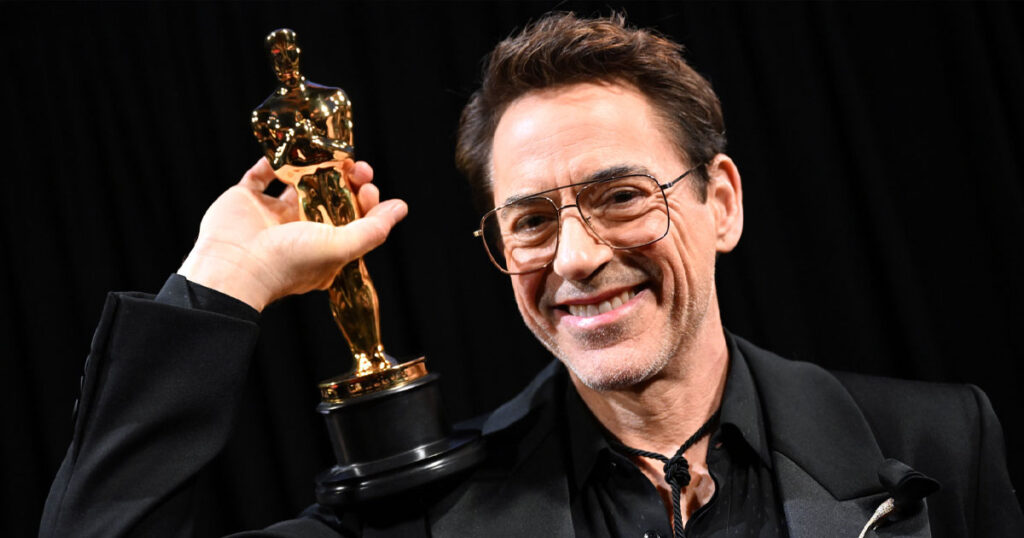
The industry recognized the sheer magnitude of the performance. During the 2024 awards season, Downey swept every major accolade. On the night of the Academy Awards, decades after his first nomination and nearly a quarter-century after standing in a prison uniform, Robert Downey Jr. won the Oscar for Best Supporting Actor. In his witty, self-aware acceptance speech, he thanked his “terrible childhood,” the Academy, and his wife Susan, whom he credited with “loving him back to life.” The redemption arc was complete.
What Lies Ahead?
Far from resting on his laurels, RDJ’s future schedule is fiercely ambitious. He recently showcased his incredible versatility by playing multiple distinct antagonist roles in the acclaimed HBO miniseries The Sympathizer (2024), a masterclass in character acting that reminded audiences of his roots.
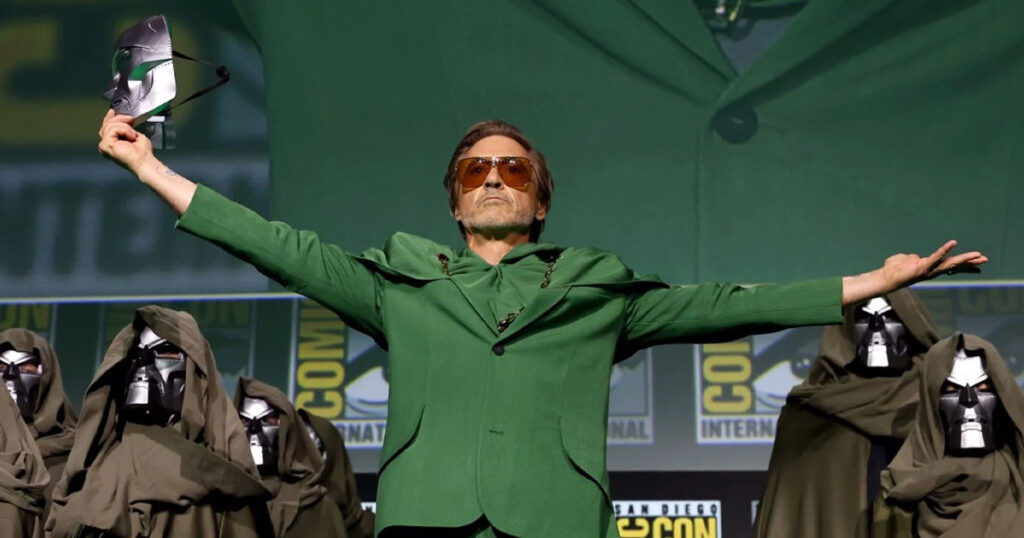
But the biggest shockwave came at the San Diego Comic-Con in July 2024. In a move that broke the internet, Marvel Studios announced that Robert Downey Jr. would be returning to the Marvel Cinematic Universe—not as Tony Stark, but as the ultimate comic book villain, Victor Von Doom (Doctor Doom). He is set to star in Avengers: Doomsday and Avengers: Secret Wars. This unprecedented casting move cements his status as the foundational pillar of the franchise, tasked with saving the cinematic universe once again in a completely reimagined avatar.
Additionally, fans eagerly await the long-gestating Sherlock Holmes 3, alongside various producing ventures through his company, Team Downey.
Conclusion: A Legacy of Resilience
Robert Downey Jr.’s life is a testament to the fact that talent alone is never enough, but resilience can move mountains. He survived the darkest depths of addiction, the crushing weight of public humiliation, and an industry that had completely discarded him.
By taking responsibility for his actions, committing to his recovery, and continuously honing his craft, he achieved a second act that is unparalleled in Hollywood history. He is no longer just a movie star; he is a cultural icon. The story of Robert Downey Jr. reminds us all that no matter how far one falls, the script can always be rewritten, and the best scene might just be the one yet to come.