Few names in the history of modern cinema evoke the same level of universal recognition, critical acclaim, and pop-culture fascination as Leonardo DiCaprio. For over three decades, DiCaprio has remained a titan of the silver screen, navigating the treacherous waters of child stardom to emerge as one of the most respected, bankable, and enigmatic actors of his generation.
He is a man of fascinating contradictions. He is the quintessential Hollywood A-lister who shuns the modern superhero franchise machine. He is a fiercely private individual whose romantic life is the subject of endless internet memes and statistical analysis. He is an actor who spent decades chasing the industry’s highest honor, yet utilizes his massive global platform primarily to advocate for the survival of our planet.
To truly understand Leonardo DiCaprio, one must examine the intricate tapestry of his life: his phenomenal rise to stardom, the profound professional relationships he forged (and those he fractured), his grueling and legendary quest for an Academy Award, his infamous dating preferences, and his relentless dedication to environmental activism. This is the comprehensive story of Leonardo DiCaprio.
The Boy Who Would Be King: Early Years and Critical Breakthrough
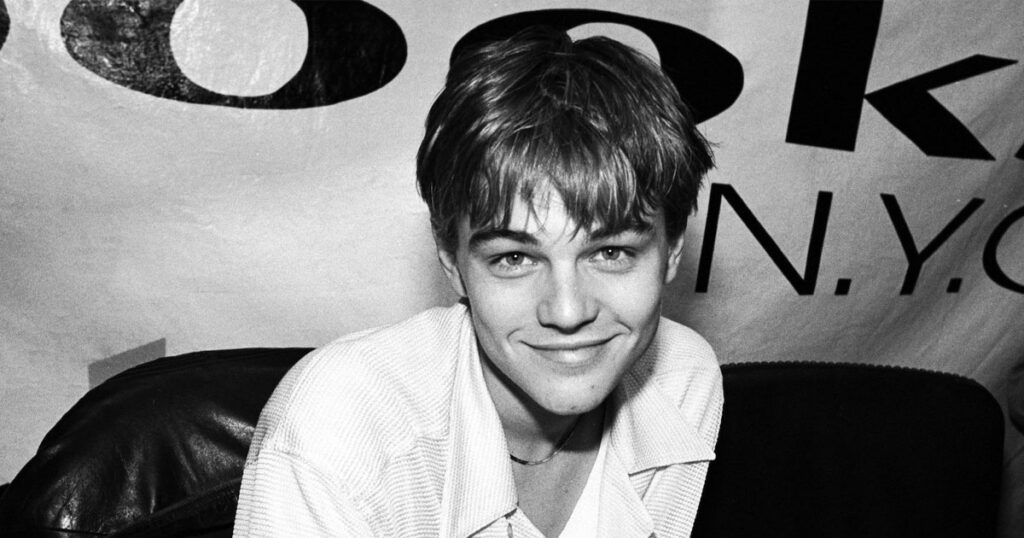
Born in Los Angeles in 1974, Leonardo Wilhelm DiCaprio was named, according to legend, because his pregnant mother felt him kick while looking at a Leonardo da Vinci painting in an Italian museum. Perhaps it was destiny that he would become an artist whose work would be observed and analyzed by millions.
Unlike many child actors who burn out, DiCaprio’s early trajectory was marked by a raw, undeniable talent. After a series of commercials and television roles—including a stint on the sitcom Growing Pains—he made a seismic impact in cinema in 1993. That year, he starred opposite Robert De Niro in This Boy’s Life, holding his own against the cinematic giant.
However, it was his performance in Lasse Hallström’s What’s Eating Gilbert Grape (1993) that truly announced his arrival. Playing Arnie Grape, a teenager with a developmental disability, DiCaprio delivered a performance so profoundly authentic and heartbreaking that it earned him his first Academy Award nomination for Best Supporting Actor at the tender age of 19. Critics were astounded. This wasn’t just a cute kid on screen; this was a generational talent.
He continued to build a resume of complex, edgy characters in films like The Basketball Diaries (1995) and Total Eclipse (1995), positioning himself as the indie darling of the 1990s. But Hollywood had bigger plans for his striking features and intense charisma.
The Yin and Yang of Leading Ladies: Claire Danes and Kate Winslet
As DiCaprio transitioned into leading-man status, his collaborations with two distinct co-stars would become legendary for very different reasons.
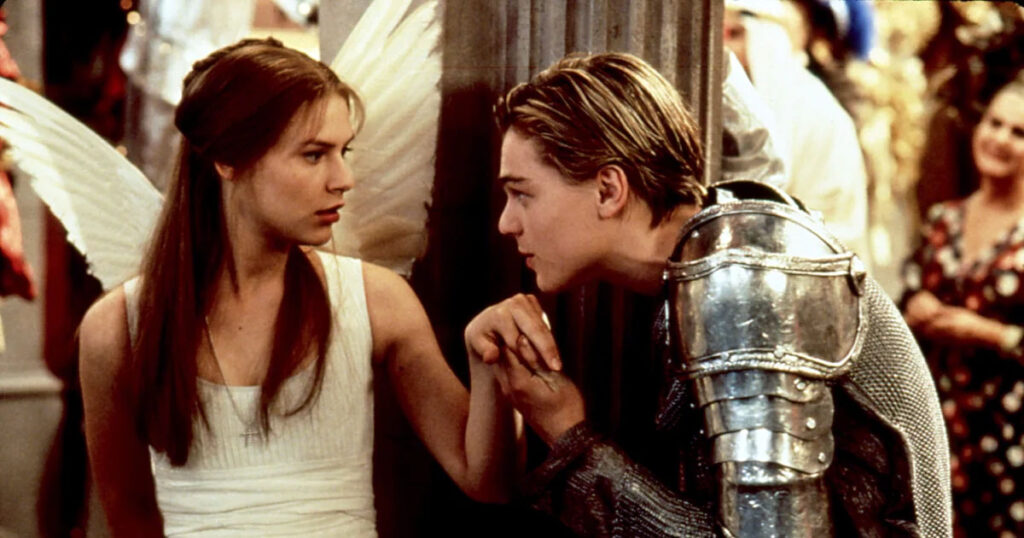
In 1996, Baz Luhrmann cast him as the titular Romeo in the hyper-kinetic, MTV-generation adaptation of Romeo + Juliet. His Juliet was Claire Danes. The film was a massive hit, and their on-screen chemistry was electric, defining tragic romance for the 90s youth. However, behind the scenes, the dynamic was far less romantic.
Reports from the set indicated a significant personality clash.Leonardo DiCaprio, then 21, was known for his playful, sometimes immature on-set antics, often playing practical jokes with his entourage. Danes, though only 16, was described as intensely serious and professional. She reportedly found his behavior exhausting and irritating, while he found her too uptight. The tension was palpable enough that years later, when DiCaprio was cast as the lead in Clint Eastwood’s J. Edgar (2011), Danes reportedly turned down the role of his secretary, explicitly stating she had no desire to work with him again. It serves as a fascinating reminder that sizzling on-screen chemistry rarely equates to off-screen harmony.
Contrast this sharply with his relationship with Kate Winslet. In 1997, James Cameron’s Titanic changed cinematic history, and it changed DiCaprio’s life forever. Playing the free-spirited artist Jack Dawson opposite Winslet’s aristocratic Rose DeWitt Bukater, DiCaprio became the catalyst for “Leo-Mania”—a global hysteria unparalleled since the days of The Beatles.
While Titanic propelled him into an uncomfortable stratosphere of global fame, it also gifted him a lifelong soulmate in Winslet. Unlike the friction with Danes, DiCaprio and Winslet formed an immediate, profound, and entirely platonic bond. They survived the grueling, notoriously difficult shoot of Titanic by leaning on each other. Their friendship has only deepened over the decades. They reunited on screen in 2008 for the heavy, emotionally taxing drama Revolutionary Road, playing a bitterly unhappily married couple. When Winslet won the Golden Globe for that performance, she famously declared her love for him from the stage, saying, “Leo, I’m so happy I can stand here and tell you how much I love you, and how much I’ve loved you for 13 years.” To this day, they remain fiercely loyal confidants, representing one of Hollywood’s most enduring and wholesome relationships.
The Arduous, Meme-Worthy Road to Oscar Glory
Following the astronomical success of Titanic, DiCaprio could have spent the rest of his career starring in lazy romantic comedies. Instead, he made a conscious choice to pivot back to his roots: challenging, dark, and complex cinema. To do this, he forged arguably the most important partnership of his career with legendary director Martin Scorsese.
Beginning with Gangs of New York (2002), the DiCaprio-Scorsese collaboration became the defining actor-director duo of the 21st century. Through The Aviator (2004), The Departed (2006), Shutter Island (2010), and The Wolf of Wall Street (2013), DiCaprio proved he was not just a pretty face; he was a ferocious powerhouse of an actor.
Yet, despite delivering consistently brilliant performances, the ultimate prize eluded him. He was nominated for Best Actor for The Aviator, Blood Diamond (2006), and The Wolf of Wall Street. Every time, he went home empty-handed. His agonizing wait for an Academy Award became a massive cultural phenomenon. The internet was flooded with memes, jokes, and even an 8-bit video game (“Leo’s Red Carpet Rampage”) dedicated to his desperate, seemingly cursed quest for the golden statue. The narrative shifted from “Will he ever win?” to “What extreme lengths will he go to in order to win?”
The answer came in 2015 with Alejandro G. Iñárritu’s brutal survival epic, The Revenant. Playing frontiersman Hugh Glass, Leonardo DiCaprio endured what he called the most difficult shoot of his life. He shot in sub-zero temperatures in remote wilderness, repeatedly waded into freezing rivers, slept in animal carcasses, and, despite being a strict vegetarian, ate a raw, bloody bison liver on camera to ensure authenticity.
The physical suffering finally paid off. At the 2016 Academy Awards, the entire room erupted in a standing ovation as Leonardo DiCaprio was finally named Best Actor. It was a cathartic moment for him, the industry, and his millions of fans. But true to his nature, he didn’t just use his speech to thank his colleagues; he used the biggest moment of his career to deliver an urgent warning about climate change, proving where his true passions lie.
The “Under 25” Rule: Hollywood’s Most Analyzed Dating Chart
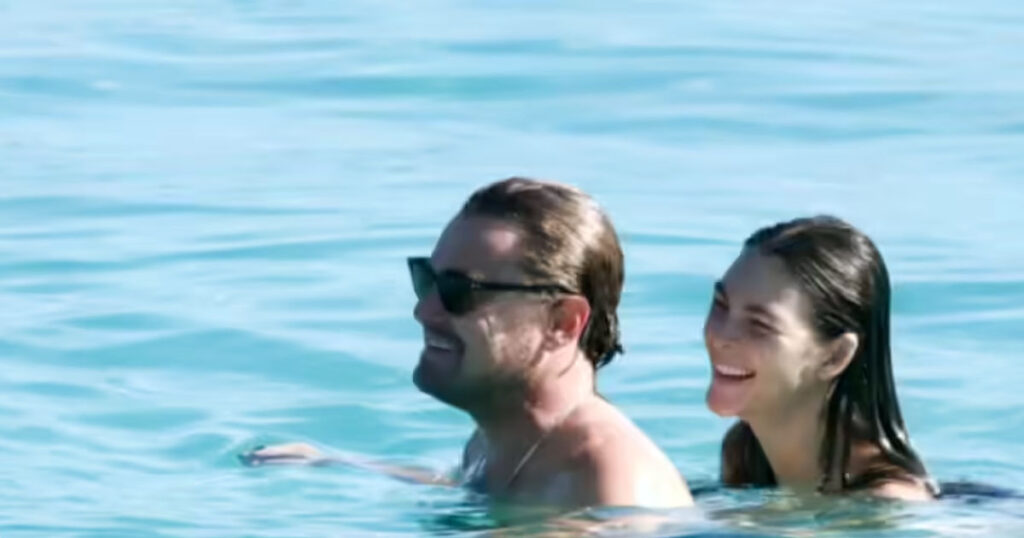
While DiCaprio is widely respected for his artistic choices and activism, his personal life—specifically his dating history—has become an inescapable part of his public persona. For over two decades, DiCaprio has almost exclusively dated much younger women, predominantly high-fashion models.
What started as tabloid gossip eventually morphed into a bizarrely consistent statistical anomaly that the internet loves to track. A famous infographic created by fans charts his romantic history over time. The data reveals a staggering pattern: regardless of how old DiCaprio gets (he is currently approaching 50), his girlfriends rarely, if ever, cross the age threshold of 25.
From his early relationships with Gisele Bündchen and Bar Refaeli (both of whom he dated until they were 25) to later romances with Blake Lively, Erin Heatherton, Toni Garrn, Kelly Rohrbach, Nina Agdal, and Camila Morrone (they split shortly after her 25th birthday), the pattern remains unbroken.
This “Under 25 Rule” has sparked countless debates, articles, and late-night comedy monologues. Some view it as a harmless, consensual lifestyle choice of a wealthy, handsome bachelor. Others critique it as a symptom of a Peter Pan syndrome, a reluctance to mature, or a concerning power dynamic. Regardless of public opinion, DiCaprio remains entirely unapologetic and tight-lipped about his private life. He never addresses the jokes, never confirms the rumors, and simply continues to live his life on his own terms. It adds a layer of superficial mystique to a man who is otherwise incredibly serious about his work and the world.
The Eco-Warrior: A Fierce Advocate for the Planet
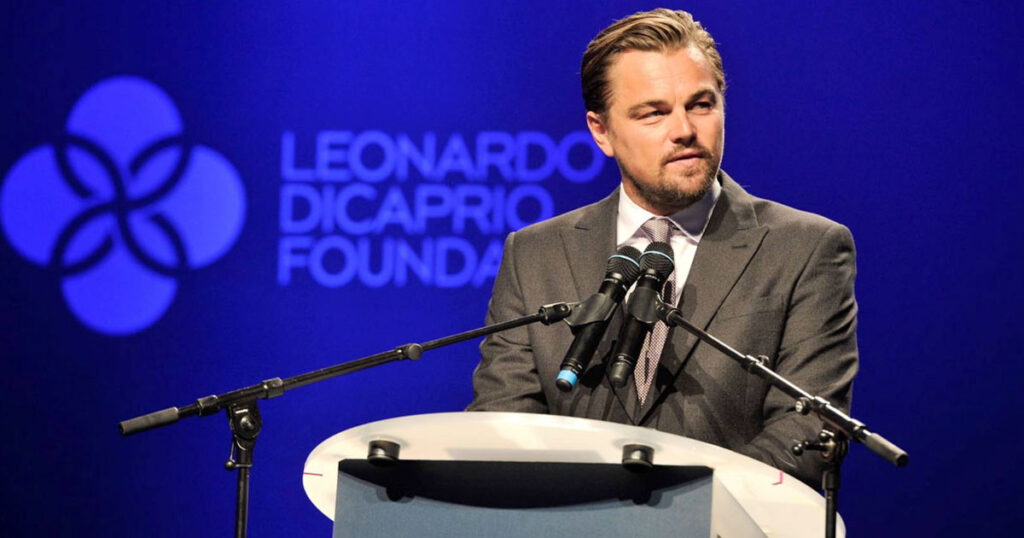
If cinema is Leonardo DiCaprio’s profession, environmental activism is his life’s calling. Long before it was fashionable for celebrities to adopt green causes, a young DiCaprio was establishing the Leonardo DiCaprio Foundation (LDF) in 1998, just a year after the release of Titanic.
Over the past 25 years, his commitment has been unwavering. He is not merely a figurehead who signs checks; he is a deeply educated, aggressively active participant in the fight against climate change, wildlife conservation, and Indigenous rights. His foundation has awarded over $100 million in grants to fund more than 200 high-impact projects in 50 countries across the globe.
DiCaprio uses his immense fame as a megaphone for the voiceless planet. He was designated as a United Nations Messenger of Peace with a special focus on climate change. He has produced and narrated several groundbreaking environmental documentaries, most notably The 11th Hour (2007) and the critically acclaimed Before the Flood (2016), where he traveled the globe meeting with scientists, world leaders, and activists to witness the devastating effects of climate change firsthand.
Even his social media presence is entirely dedicated to the cause. Unlike other celebrities who use Instagram for self-promotion or brand deals, DiCaprio’s feed is a constant stream of news about endangered species, ocean conservation, renewable energy, and political calls to action. He famously donated millions to the Amazon rainforest fire relief efforts and the Australian bushfire appeals. For DiCaprio, the glitz of Hollywood is clearly secondary to the survival of the Earth.
The Continuing Legacy
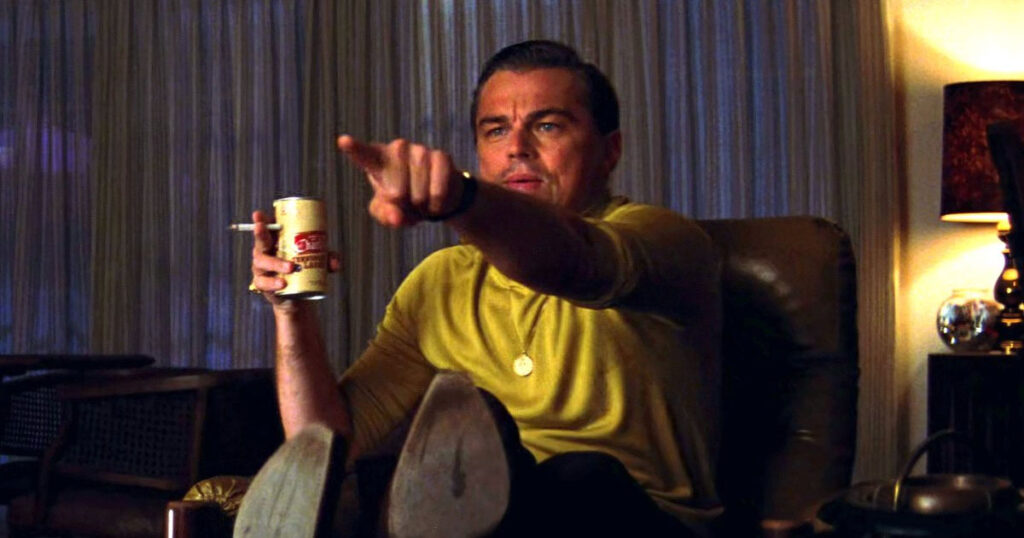
Leonardo DiCaprio is a rarity in modern Hollywood. He operates entirely outside the ecosystem of cinematic universes, sequels, and brand endorsements. He works strictly with auteur directors—Tarantino (Once Upon a Time in Hollywood), Nolan (Inception), McKay (Don’t Look Up), and continues his legendary run with Scorsese (Killers of the Flower Moon). He commands massive salaries, yet his films are almost always thought-provoking, original pieces of cinema.
He remains an enigma. He is the ultimate insider who often feels like an observer. He is the playboy on the yacht who spends his millions saving the tigers. He is the actor who waited 20 years for an Oscar, only to use his winning moment to talk about melting ice caps.
Whether you focus on his undeniable screen magnetism, his legendary friendships and feuds, his mathematically precise dating habits, or his fierce dedication to Mother Earth, one thing is certain: Leonardo DiCaprio has carved out a legacy that will be studied, admired, and debated for generations to come. He is more than just a movie star; he is a defining cultural figure of our time.