Faster than a speeding bullet. More powerful than a locomotive. Able to leap tall buildings in a single bound. We all know the iconic catchphrases, and we all recognize that legendary ‘S’ shield. But to truly understand the ultimate blueprint for the modern superhero, we have to dive deep into the history of Superman. From his humble, depression-era comic book origins to becoming a cinematic titan that has captured hearts worldwide for almost a century, Kal-El’s journey is just as fascinating behind the scenes as it is on the screen.
Get your popcorn ready. It’s time to take to the skies and explore how a pop-culture monolith was forged.
The Origins: A Depression-Era Dream
The Superman saga didn’t begin in a state-of-the-art Hollywood studio; it was born during the Great Depression from the vivid imaginations of two Jewish teenagers in Cleveland, Ohio. Writer Jerry Siegel and artist Joe Shuster shared a dream of creating a truly memorable character.
Interestingly, their initial concept was far from the Boy Scout we know today. The original iteration of Superman was actually a bald, telepathic villain! Thankfully, that idea was shelved. In 1938, they reimagined him as a champion of the oppressed—an alien immigrant from the doomed planet Krypton.
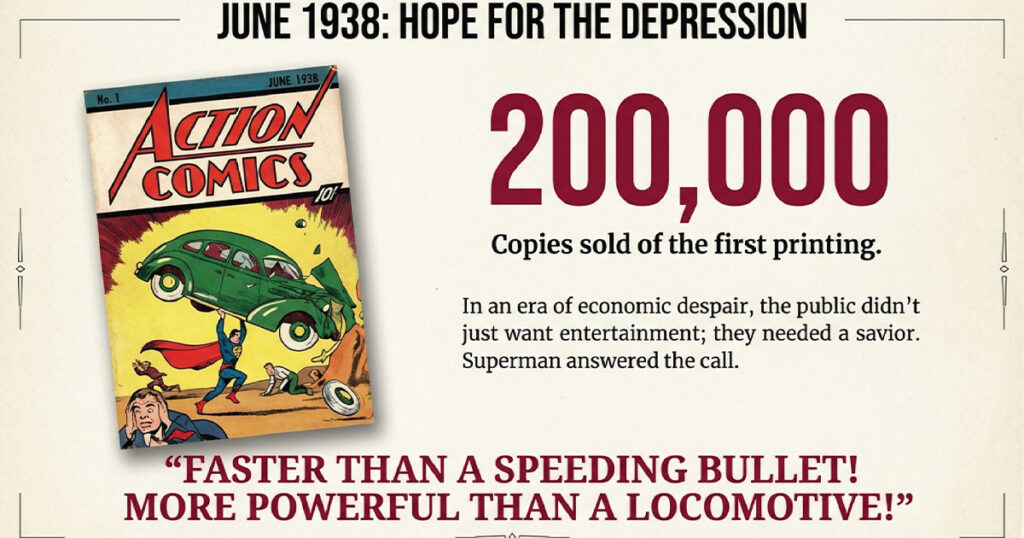
In June 1938, history was made. Superman debuted on the cover of Action Comics #1, lifting a green car above his head. The visual was striking, telling readers instantly that this was something unprecedented. The comic sold phenomenally well. In an era where people desperately needed a symbol of hope, Clark Kent—the clumsy, bespectacled reporter raised by Kansas farmers who transformed into the mighty Man of Steel—answered the call. His massive success officially birthed the superhero genre.
The First Flights: Serials and Television
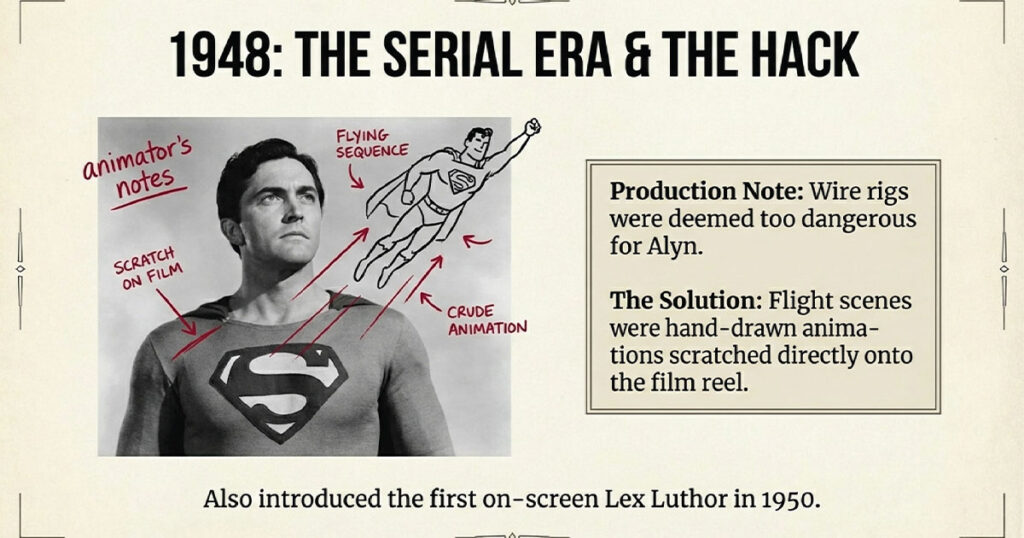
With such explosive popularity, the Man of Steel couldn’t stay confined to paper. In 1948, Superman took his first steps into live-action through theatrical film serials.
Kirk Alyn became the first actor to embody the hero on screen. The 15-chapter serial kept audiences returning weekly to watch him battle the villainous “Spider Lady.” Due to technological limitations, Alyn’s flying scenes were heavily reliant on hand-drawn animation layered over the film. While it might look charmingly retro to us now, it was absolute movie magic for audiences at the time.
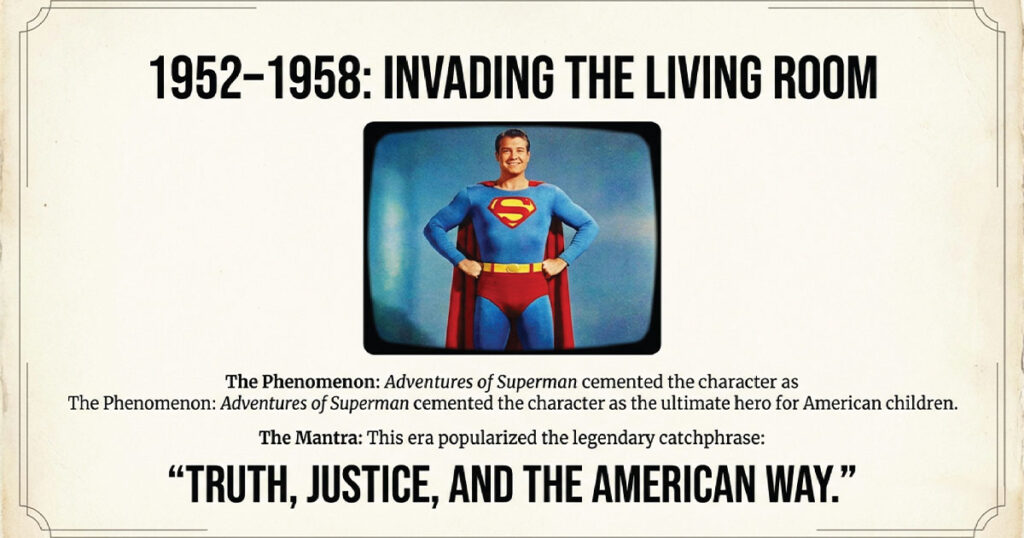
By 1952, Superman invaded living rooms with the Adventures of Superman TV series. Starring George Reeves, the show created a cultural phenomenon. Reeves became the definitive face of the hero for the 1950s, cementing the mantra “Truth, Justice, and the American Way” into the global lexicon.
Small Screens, Big Hearts: Expanding the Mythos
Television continued to be a rich testing ground for the character. In the 90s, Lois & Clark: The New Adventures of Superman took a massive detour from the standard superhero formula. Starring Dean Cain and Teri Hatcher, it leaned heavily into romantic-comedy territory, focusing on the undeniable chemistry between the two leads. It proved that audiences cared just as much about Clark the man as they did about Superman the god.
Then came Smallville, a legendary series that defied the odds to run for ten seasons. Starring Tom Welling, it explored Clark Kent’s teenage years. Operating under the strict “No Tights, No Flights” rule, the show masterfully delayed gratification, focusing instead on high school drama, his first love with Lana Lang, and the tragic, complex deterioration of his friendship with a young Lex Luthor.
Since then, the Arrowverse and shows like Superman & Lois (starring Tyler Hoechlin) have continued to keep the legacy alive on television, proving the character’s incredible adaptability.
You’ll Believe a Man Can Fly: The Golden Age of Cinema
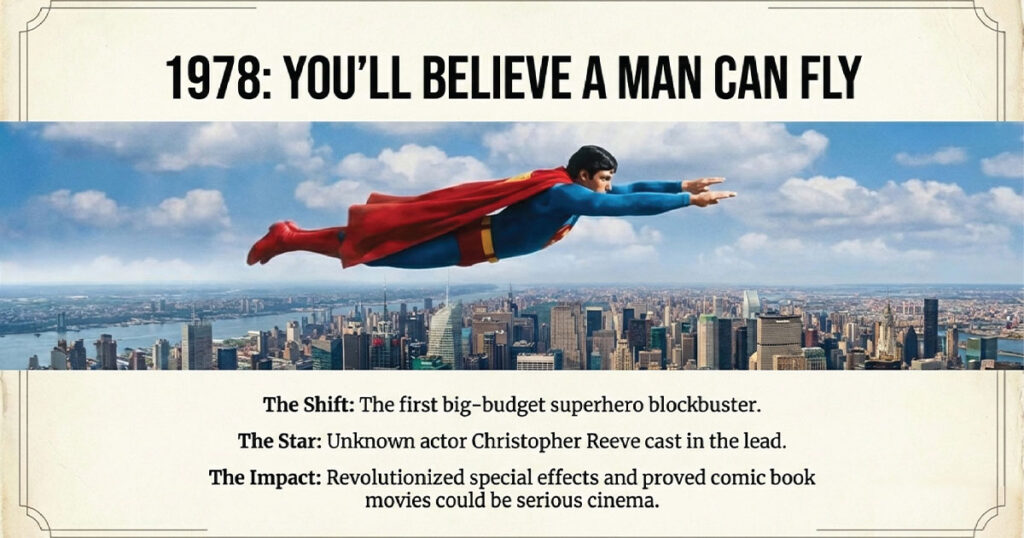
If we are talking about the undisputed peak of Superman’s cinematic glory, all roads lead to 1978. Richard Donner’s Superman: The Movie permanently altered the DNA of the blockbuster.
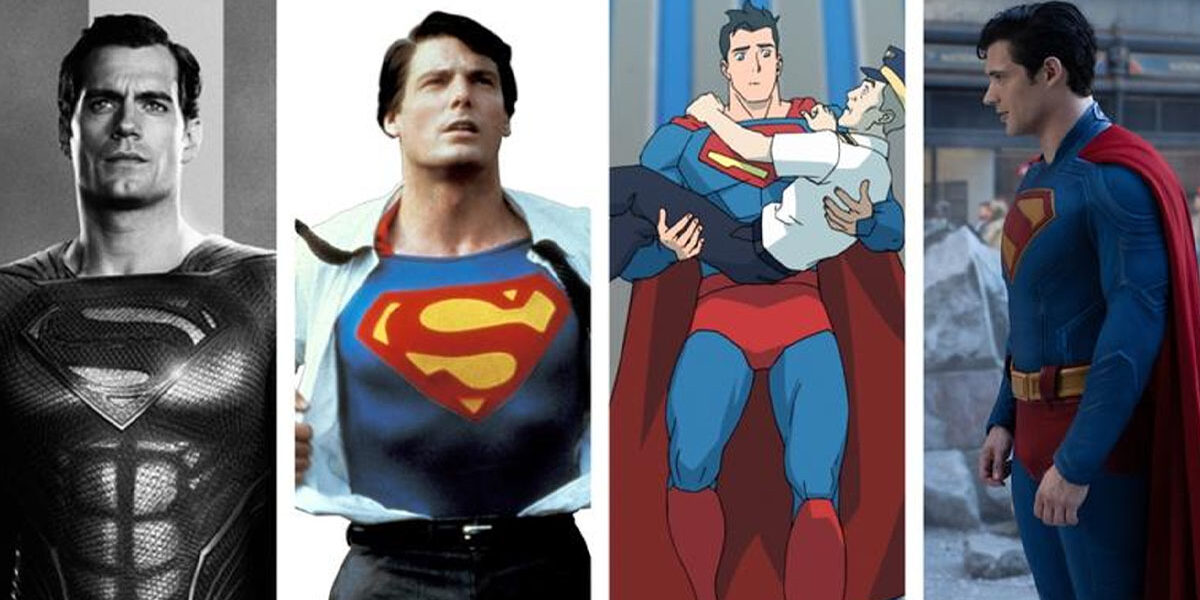
The studio cast a relatively unknown Christopher Reeve in the lead role, a decision that would define the character forever. Reeve was a revelation. He flawlessly bifurcated the role: his Clark Kent was delightfully bumbling and endearing, while his Superman radiated a majestic, quiet authority.
Backed by the tagline “You’ll believe a man can fly,” groundbreaking practical effects, and an instantly iconic, goosebump-inducing musical score by John Williams, the film was a masterpiece of heart and hope. While the franchise’s quality dipped through parts III and IV, Reeve’s performance remains the gold standard for superhero casting.
The Modern Rebirth: From the Snyderverse to the DCU
The 21st century brought a new set of challenges for the Man of Tomorrow. Following Brandon Routh’s nostalgic but financially underwhelming Superman Returns (2006), Warner Bros. initiated a complete reboot.
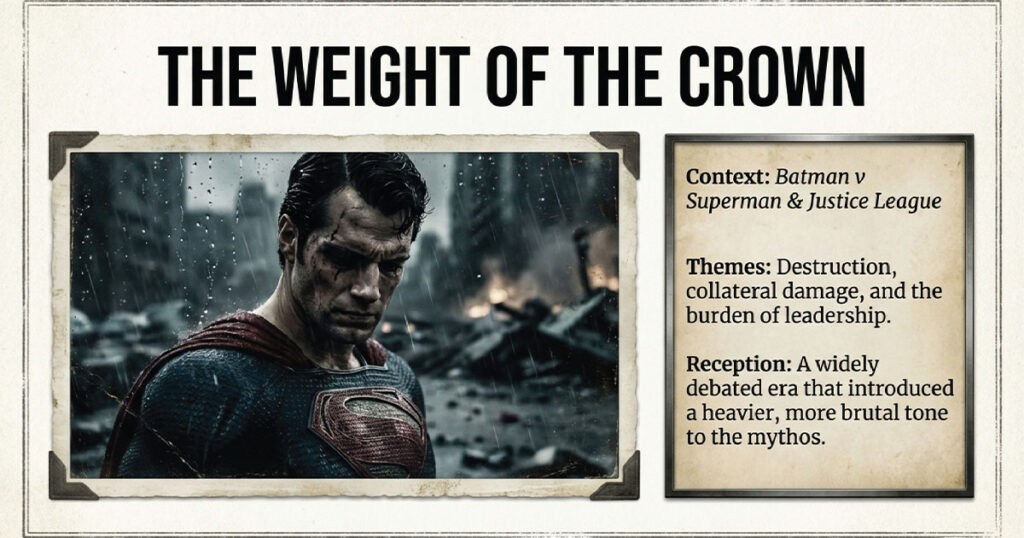
In 2013, the DC Extended Universe (DCEU) launched with Zack Snyder’s Man of Steel. Starring Henry Cavill, this film offered a drastically different perspective. Cavill’s Superman existed in a cynical, grounded world. He was darker, more introspective, and forced into brutal, city-leveling conflicts that sparked intense debate among critics and fans. Yet, regardless of the controversy, Cavill brought undeniable physical presence and a layered, internal conflict to the role, later reprising it in Batman v Superman and Justice League.
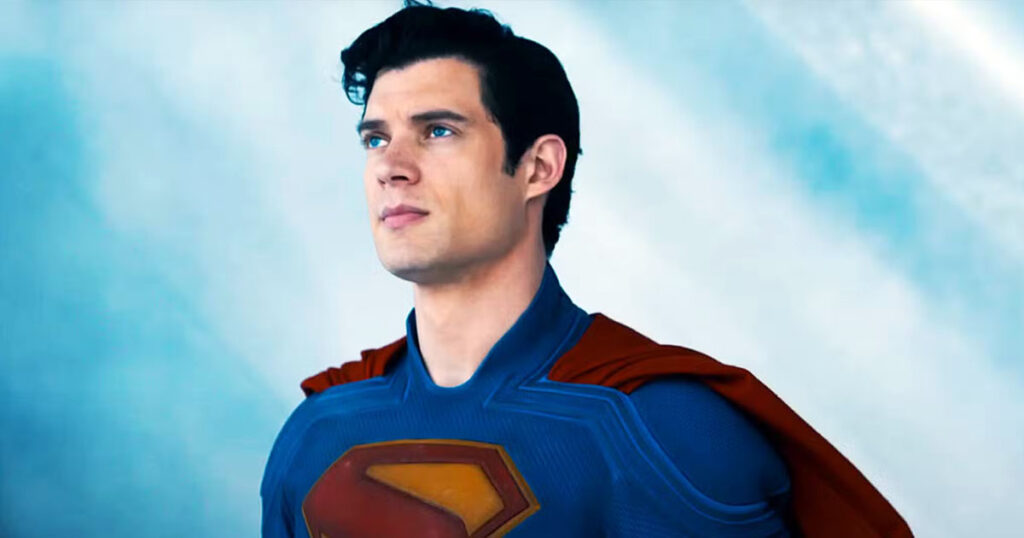
Following the end of the DCEU, the cinematic universe underwent a massive shift. Transitioning into the newly formed DCU under the leadership of James Gunn, the cape was passed to David Corenswet. Debuting in Gunn’s highly anticipated Superman (2025), this iteration brought a refreshing return to the character’s roots—focusing on his warmth and kindness in a world that often views such traits as old-fashioned. Having successfully launched the new era of DC films, Corenswet’s portrayal has already captured the hearts of a new generation, proving that the Man of Tomorrow is here to stay.
Conclusion
Cultural commentators and film critics often debate whether a character as purely good and seemingly invincible as Superman can survive in our modern, cynical era. Yet, looking back at the history of Superman, the answer is a resounding yes. From his origins in the 1930s to his recent, triumphant big-screen revival in the DCU, he has proven to be incredibly malleable without ever losing his core essence.
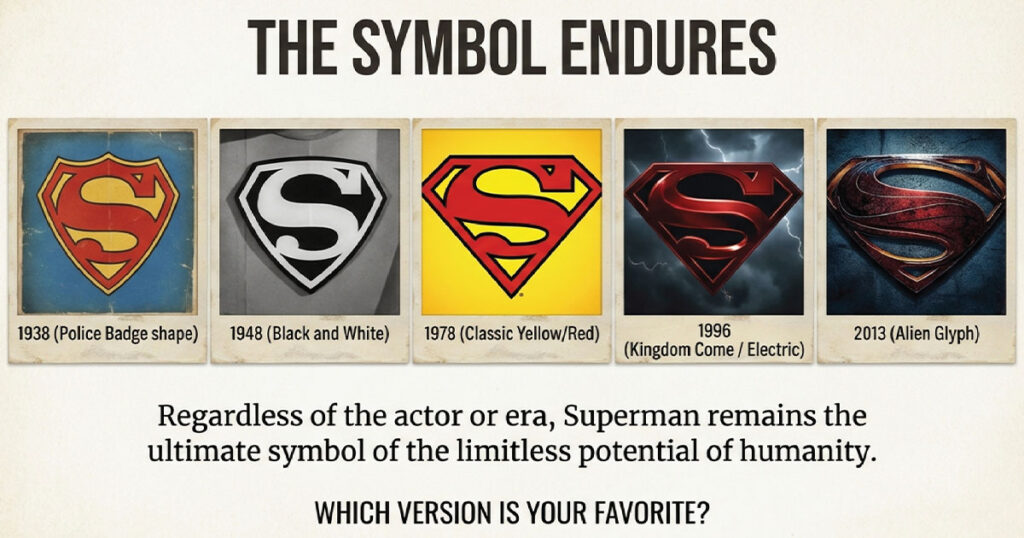
He is not just an alien with god-like powers; he is the ultimate immigrant story. He represents the boundless potential of humanity and serves as a mirror reflecting our own capacity for goodness. No matter how many anti-heroes dominate the box office, the legend of the Last Son of Krypton will endure, continuing to inspire us to look up at the sky and hope for something better.