There is a specific, electrifying moment in almost every great horror film when the screaming stops, the frantic running ceases, and a profound shift occurs. The predator realizes, often too late, that the prey has stopped fleeing. The girl who was supposed to be the final victim has instead become the ultimate survivor. These are the legendary final girls, a cornerstone of cinematic history that transcends mere genre tropes to reflect decades of shifting cultural anxieties, gender politics, and the raw human will to endure.
Coined in 1992 by academic Carol J. Clover in her seminal book Men, Women, and Chain Saws, the term originally described the last woman standing in a slasher film—the one who confronts the killer, survives to tell the tale, and is left to greet the morning sun. But long before the rules were written, and long after they were famously deconstructed, this character archetype has served as Hollywood’s most fascinating lens for female resilience.
We are not here to rank them. Survival is not a competition. Instead, we are looking back at the timeline of the silver screen to examine the foundational pillars of this archetype, exploring how the girl at the end of the movie evolved from a terrified bystander into an icon of empowerment.
The Progenitors: Survival Before the Rules
Before Hollywood fully understood the goldmine of the slasher formula, a few daring filmmakers were already experimenting with the concept of the lone female survivor. These women existed in a cinematic wild west, navigating terror without a blueprint.
Jess Bradford and the Right to Choose
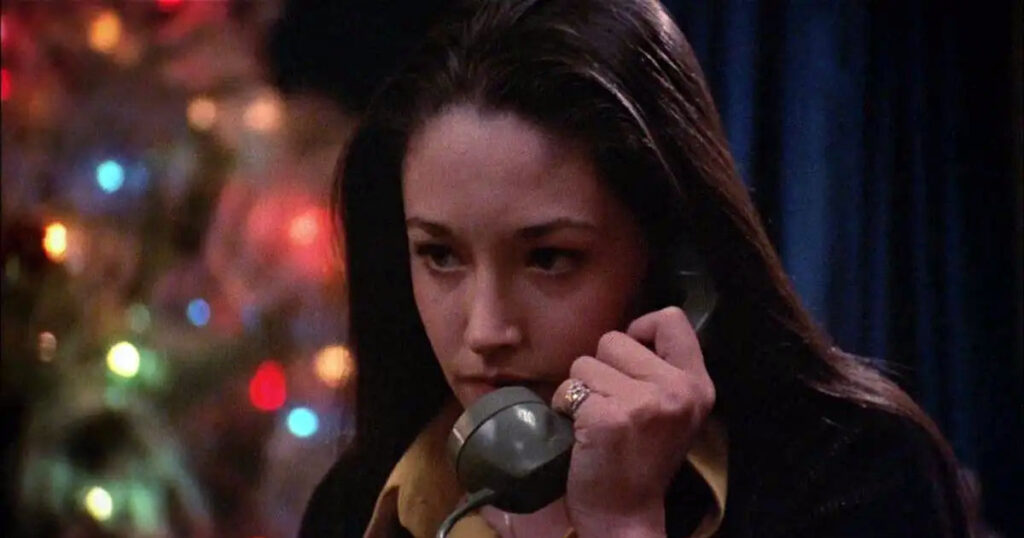
If we look past the Hitchcockian foundations laid by Lila Crane in Psycho (1960), the true modern genesis of the archetype arguably begins in 1974 with Bob Clark’s pioneering masterpiece, Black Christmas. The film gave us Jess Bradford, brilliantly played by Olivia Hussey. Jess was a revelation for her time. She wasn’t just surviving a maniac hidden in the attic of her sorority house; she was actively navigating the complex social politics of the 1970s.
Unlike the chaste, puritanical survivors that would dominate the next decade, Jess was a pregnant college student steadfast in her decision to get an abortion, openly defying her controlling boyfriend. Her survival was not framed as a reward for moral purity, but as a byproduct of her pragmatic, level-headed nature. She was an adult dealing with adult problems, making her confrontation with the shadowy, infantile killer “Billy” a profound clash of maturity versus mindless, chaotic violence.
Sally Hardesty and the Endurance of Terror
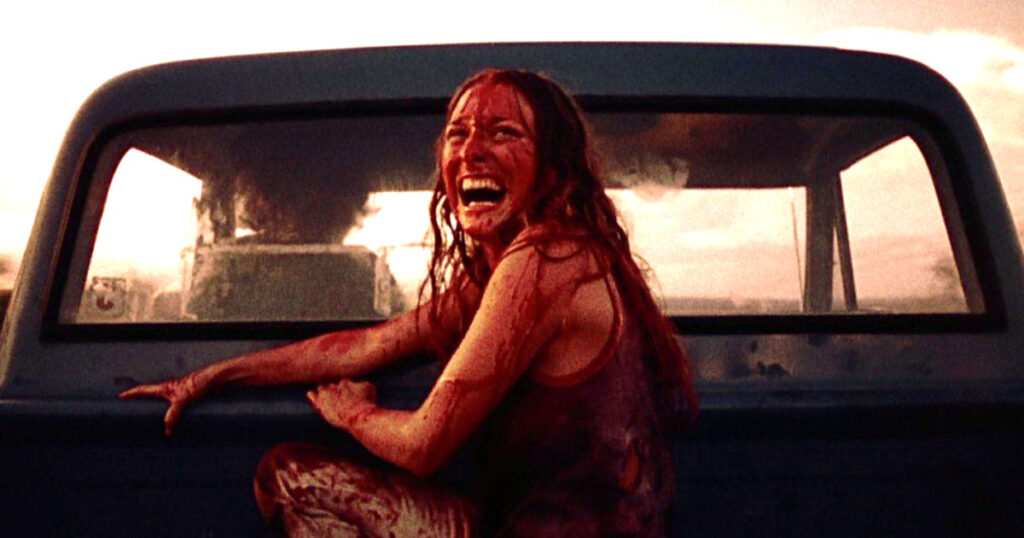
That same year, Tobe Hooper unleashed The Texas Chain Saw Massacre upon an unsuspecting public. Marilyn Burns’ portrayal of Sally Hardesty offered a wildly different take on the survivor. Sally is not a tactical mastermind. She does not set elaborate booby traps or engage in witty banter with Leatherface.
Instead, Sally represents the sheer, primal endurance of the human spirit. The final forty-five minutes of Chain Saw are an exhausting, relentless assault on the senses, consisting almost entirely of Sally running, bleeding, and screaming at the top of her lungs. Her survival is a visceral, ugly triumph. When she finally escapes in the back of a pickup truck, covered in blood and laughing maniacally, it is not a moment of empowerment—it is a snapshot of absolute psychological fracture. Sally taught audiences that surviving doesn’t mean walking away whole.
The Architect: Laurie Strode and the Birth of a Legend
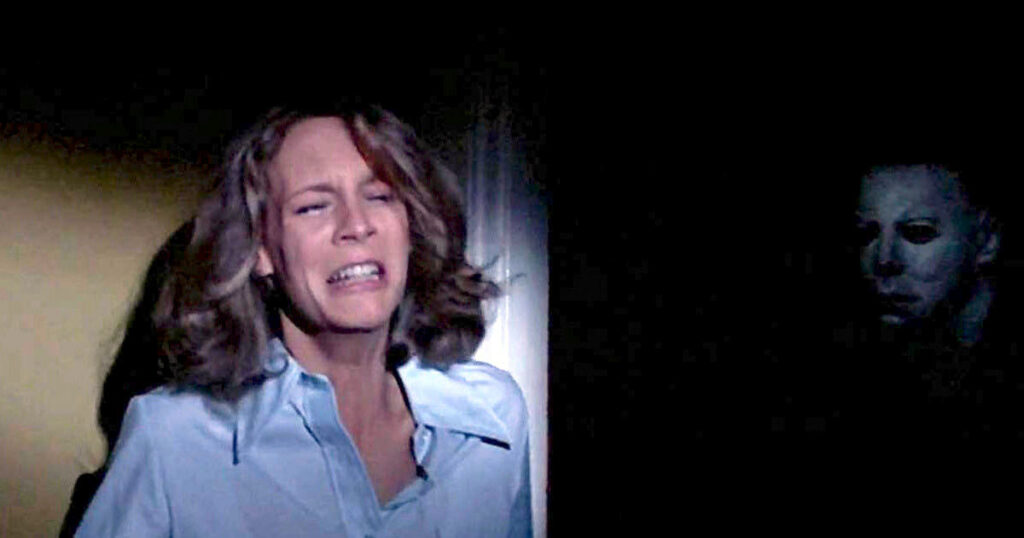
If Jess and Sally laid the foundation, it was John Carpenter and Debra Hill who built the house. When Halloween premiered in 1978, it didn’t just introduce a terrifying new boogeyman in Michael Myers; it introduced the undisputed architect of the modern survivor trope: Laurie Strode.
Played with incredible nuance by a then-unknown Jamie Lee Curtis, Laurie became the definitive blueprint. She established the “rules” that would govern the genre for a decade. Laurie was the bookish, observant, virginal babysitter. While her friends were distracted by sex, drugs, and the superficial concerns of teenage life, Laurie was looking out the window. She was paying attention.
What makes Laurie so enduringly compelling is her profound sense of responsibility. When the shape of evil finally breaches her suburban sanctuary, she does not merely run to save herself. She fights to protect the children in her care. Curtis imbued Laurie with a trembling, breathless vulnerability that made her eventual turn to violence—stabbing Michael with a knitting needle, a coat hanger, and his own knife—feel incredibly earned. Laurie Strode was the girl next door forced to look pure evil in the eye and say, “No.”
Her legacy is so monumental that she is the only survivor on this timeline to have been resurrected, rebooted, and revisited across four different decades, allowing audiences to watch her transform from a traumatized teenager into a battle-hardened grandmother holding onto the ghosts of her past.
The Sci-Fi Bridge: Ellen Ripley
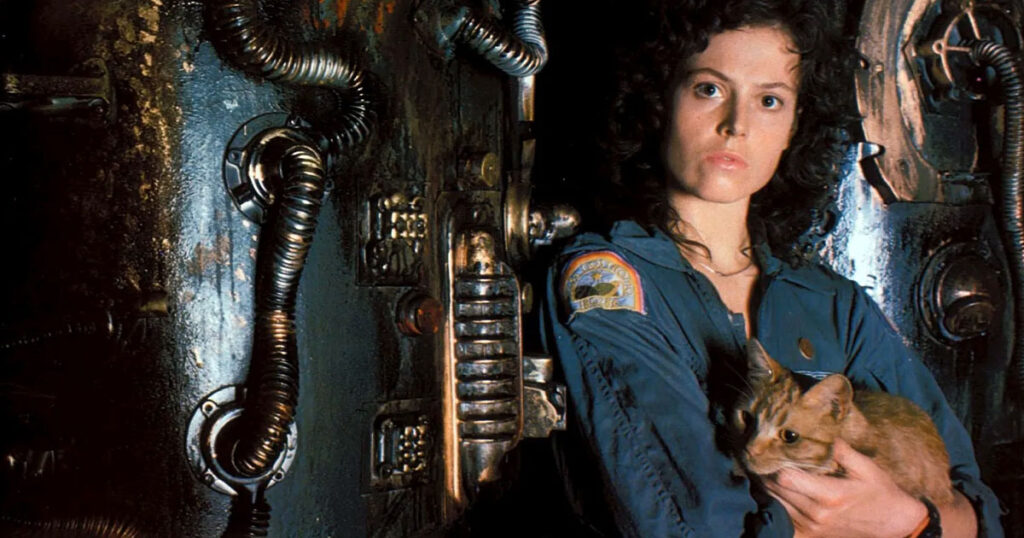
Though technically operating within the confines of a science fiction masterpiece, it is impossible to discuss iconic cinematic survivors without mentioning Ridley Scott’s Alien (1979). Sigourney Weaver’s Ellen Ripley took the DNA of the horror survivor and launched it into the stratosphere.
Ripley is vital to the evolution of the archetype because she entirely bypassed the gendered expectations of the slasher genre. Written originally as a gender-neutral character, Ripley’s survival has nothing to do with her sexuality or her morality. She survives because she is highly competent, fiercely intelligent, and strictly adheres to quarantine protocols that her male colleagues foolishly ignore. Ripley proved that the “last girl” didn’t need to be a screaming teenager; she could be a commanding warrant officer, paving the way for more mature, heavily armed survivors in the years to come.
The 1980s Slasher Boom: The Weaponized Mind
As the 1980s arrived, the slasher genre exploded into a highly profitable, heavily replicated formula. The “rules” became rigid. The pure girl lives; the promiscuous teens die. But within this heavily sanitized framework, a new type of survivor emerged—one who realized that simply running and hiding was no longer sufficient.
Nancy Thompson and the Subversion of the Suburbs
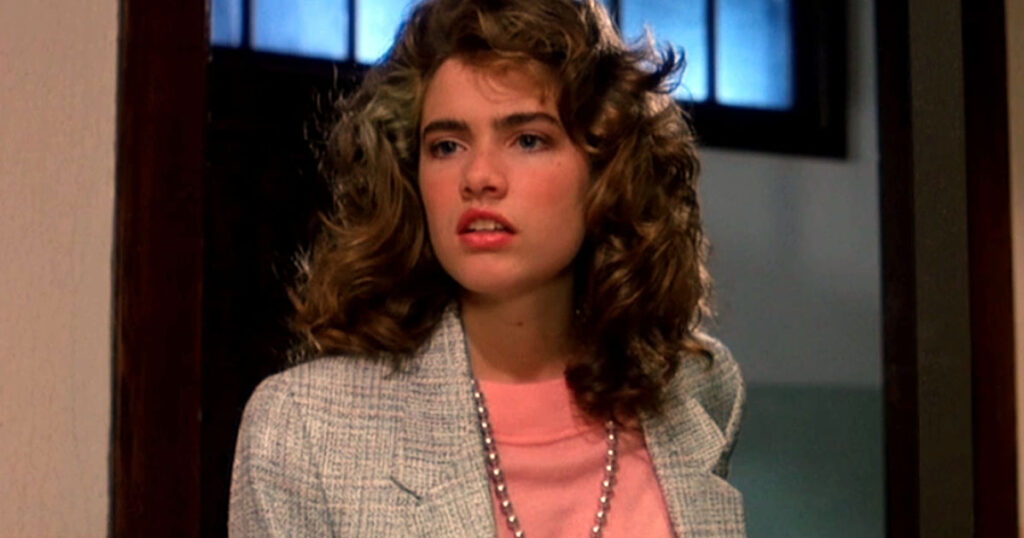
In 1984, Wes Craven introduced audiences to the dreamscape horrors of A Nightmare on Elm Street, and in doing so, he gave us Nancy Thompson (Heather Langenkamp). Nancy is a monumental figure in horror history because she represents a fundamental shift in agency.
When Nancy realizes that her parents are either too deeply in denial, too drunk, or too deceitful to protect her from Freddy Krueger, she takes matters into her own hands. Nancy weaponizes her own mind. She reads survival manuals, sets elaborate booby traps throughout her home, and willfully pulls a supernatural demon out of the dream world and into reality so she can physically beat him. Nancy is the quintessential 80s survivor: proactive, heavily caffeinated, and aggressively unwilling to be a victim of the sins of the previous generation.
The 90s Meta-Awakening: Refusing the Victim Narrative
By the mid-1990s, audiences had grown tired of the slasher formula. The tropes had become punchlines. It took the brilliant pairing of screenwriter Kevin Williamson and director Wes Craven to resurrect the genre by holding a mirror up to it.
Sidney Prescott: Trauma and Irony
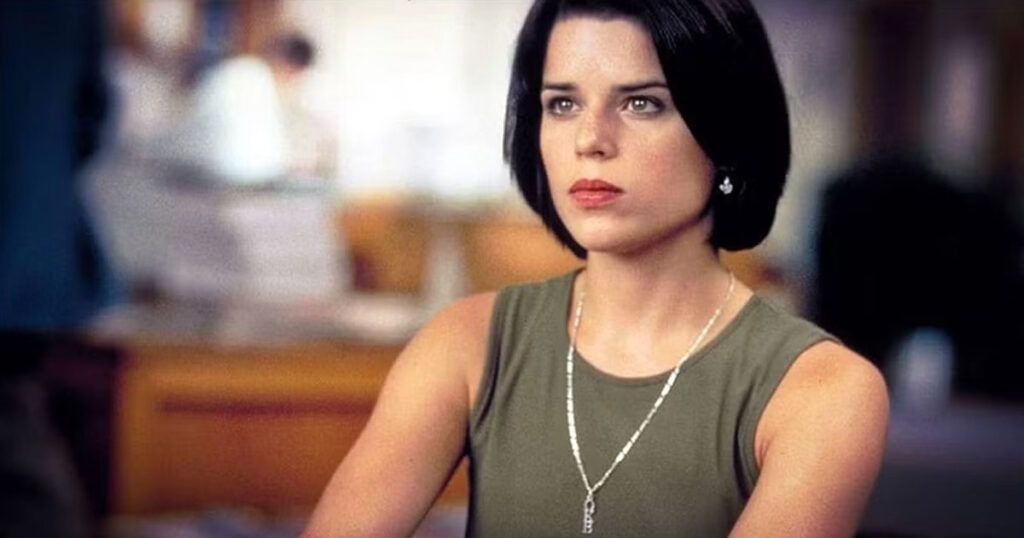
Scream (1996) changed everything, and Neve Campbell’s Sidney Prescott was the bleeding heart at the center of the postmodern joke. Sidney is arguably the most fully realized human being to ever hold the title of the last girl standing. She enters the film already burdened by immense trauma, grieving the brutal murder of her mother.
Sidney is acutely aware of the cinematic rules she is trapped in. In a stroke of brilliant writing, she openly criticizes the passive women in horror movies who “run up the stairs when they should be running out the front door,” only to be forced into that exact situation minutes later. Furthermore, Scream actively dismantled the puritanical rules of the 80s. Sidney loses her virginity to her boyfriend and still survives, shattering the “purity” mandate forever.
Across the Scream franchise, Sidney’s journey is an exploration of sustained psychological damage. She transitions from a targeted victim to a woman in hiding, and eventually into a fierce protector who actively runs toward the danger to save a new generation. Sidney Prescott doesn’t just survive the horror; she looks at the killer and tells them their motive is garbage. She stripped the monsters of their mystique and reclaimed her own narrative.
The Modern Era: Trauma, Elevation, and the Nu-Final Girl
As cinema moved into the 21st century and eventually into the era of “elevated horror” and A24-style psychological dread, the archetype shifted once again. The modern survivor is no longer defined by her opposition to a masked killer. Often, she is fighting systemic abuse, cults, toxic relationships, or her own fracturing sanity.
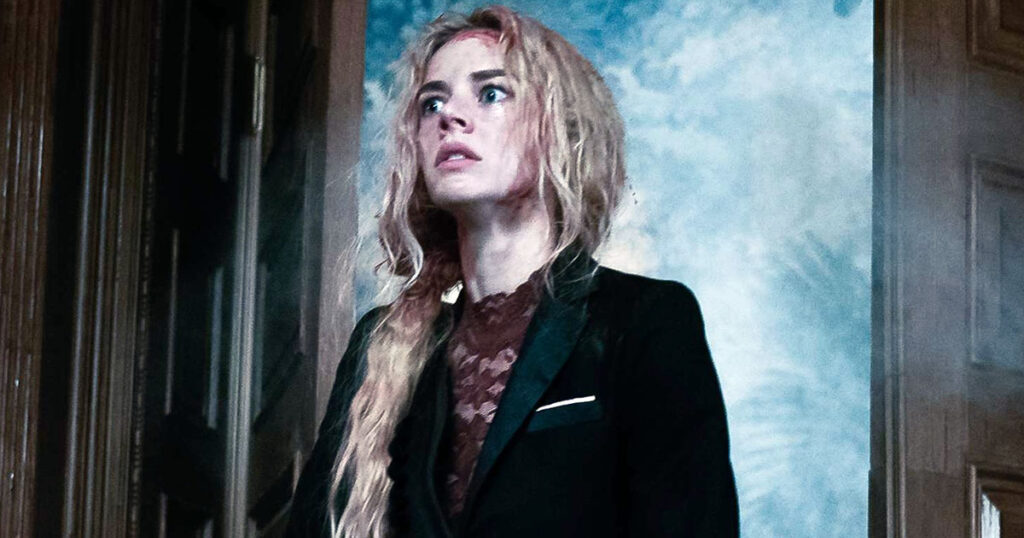
The contemporary landscape has completely obliterated the requirement of moral perfection. In films like Ready or Not (2019), we see Grace (Samara Weaving) chain-smoking in a shredded wedding dress, fighting off her wealthy, satanic in-laws with a manic, blood-soaked fury. She isn’t pure; she’s just incredibly angry.
Similarly, the critically acclaimed X trilogy has given us Maxine Minx (Mia Goth), an adult film star whose fierce mantra, “I will not accept a life I do not deserve,” makes her a ruthless survivor. The modern era allows women in horror to be selfish, ambitious, and sometimes just as terrifying as the monsters hunting them. Films like The Descent (2005) and Midsommar (2019) push this even further, asking a chilling question: What if surviving the ordeal requires you to lose your humanity entirely?
The Enduring Reflection
When we trace the lineage from the frantic screams of Sally Hardesty to the tactical brilliance of Nancy Thompson, the defiant resilience of Sidney Prescott, and the unapologetic ferocity of today’s cinematic survivors, we are not just tracking movie tropes. We are watching a fascinating cultural synthesis.
These legendary final girls act as a barometer for society’s shifting understanding of female trauma and power. They have moved from being punished for their independence to being celebrated for their flaws. They remind us that the cinematic experience of horror is not merely about the thrill of the chase, but the profound, cathartic release of witnessing someone pushed to the absolute edge of human endurance—who looks into the abyss, refuses to blink, and fights their way back into the light. The monsters may change their masks, but the girl at the end of the movie remains our greatest, most enduring avatar for survival.