Quentin Tarantino is a filmmaker whose name is instantly recognizable, not just for his dialogue, non-linear storytelling, or hyper-stylized violence, but for his distinct visual language. Among his many recurring motifs—the bare feet, the fictional brands (hello, Red Apple Cigarettes), the elaborate tracking shots—one specific cinematic technique stands out as uniquely his own: the trunk shot.
This low-angle perspective, looking up from the confined space of a car’s boot, has become synonymous with Tarantino’s brand. But why does he use it? What does it signify, and how did a simple camera placement become one of the most celebrated auteur signatures in modern cinema? Let’s dive deep into the trunk and explore the history, meaning, and enduring legacy of this iconic shot.
The Origins: A Practical Solution Becomes a Motif

The trunk shot wasn’t entirely invented by Tarantino. You can spot similar low-angle shots in earlier films, often associated with film noir or classic crime cinema, like Richard Brooks’ In Cold Blood (1967) or Arthur Hiller’s The Out-of-Towners (1970). However, Tarantino weaponized it, taking it from a stylistic flourish to a recurring narrative device.
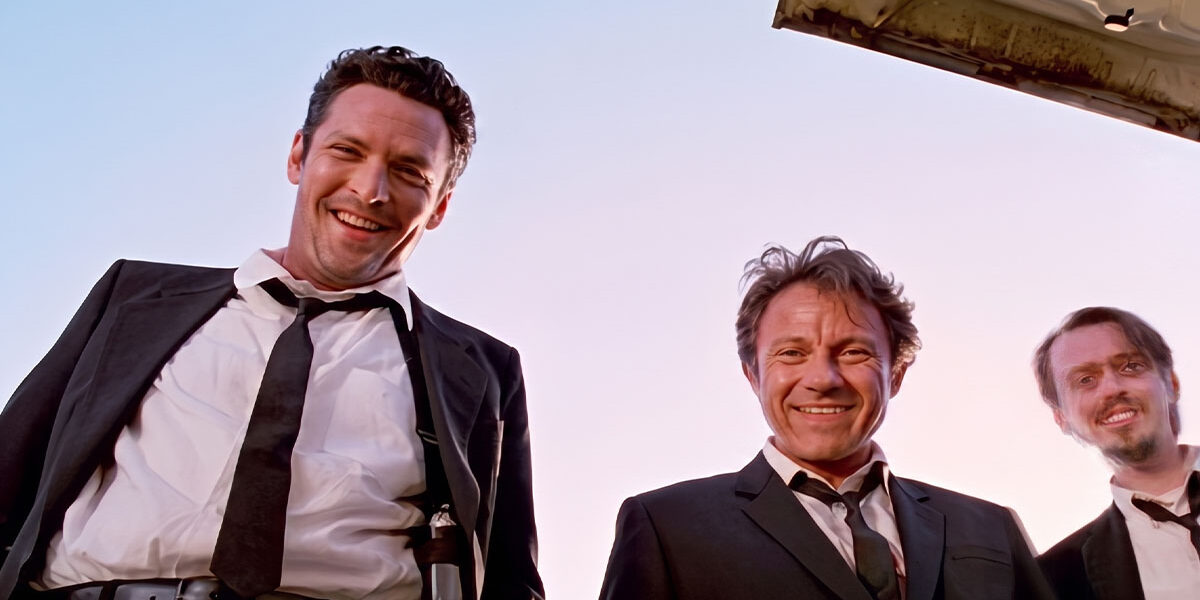
The shot made its blazing debut in his explosive 1992 directorial debut, Reservoir Dogs. Picture the scene: Mr. Blonde, Mr. White, and Mr. Pink peer down into the trunk of a car, staring intensely at a captive police officer. The audience is thrust into the victim’s perspective. It’s claustrophobic, intimidating, and undeniably cool.
But the origin of this shot wasn’t purely born out of high-minded artistic intent; it was partially a practical decision. Reservoir Dogs was shot on a shoestring budget. Capturing that scene from any other angle in that tight alleyway would have been difficult and costly. Throwing the camera in the trunk was a fast, cheap way to get an incredibly dynamic shot that conveyed a massive power shift.
What started as an independent filmmaker’s clever problem-solving immediately struck a chord. It looked so distinct and conveyed the danger of the characters so perfectly that it cemented itself in his visual vocabulary.
Breaking Down the Psychology of the Trunk Shot
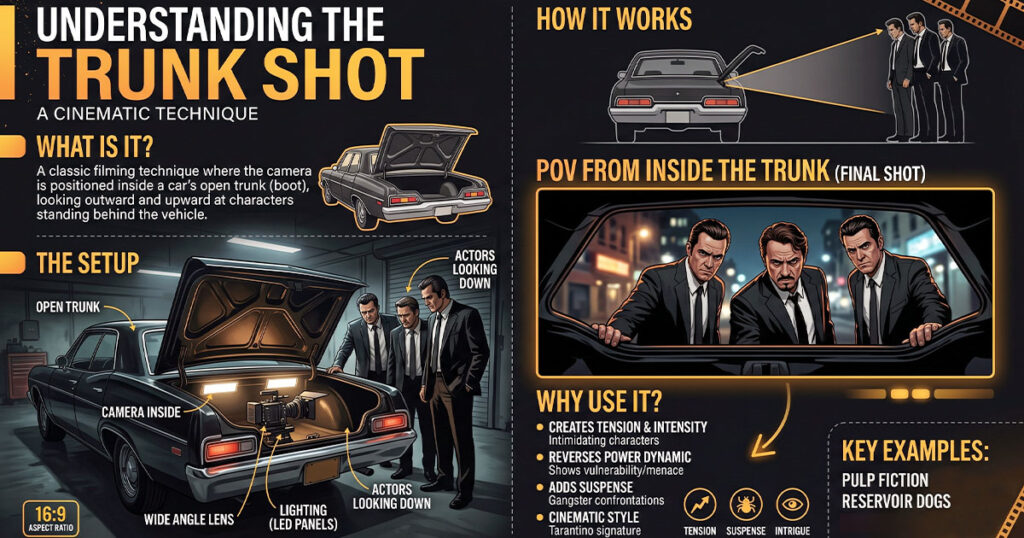
Why does the trunk shot work so well? It’s not just about looking cool; it manipulates the audience’s psychological state.
The Dynamics of Power
First and foremost, it’s a profound statement on power. When the trunk opens, the characters looking down are entirely in control. They hold the fate of whatever (or whoever) is inside in their hands. They loom large, their figures often dominating the frame against the sky. By placing the camera in the trunk, Tarantino forces the audience into the most vulnerable position possible—that of the victim. We are looking up at our captors, feeling the oppressive weight of their dominance. It’s a literal representation of being “under someone’s thumb.”
The Unveiling of the Grotesque or the Prize
The trunk shot is almost always a moment of revelation. The opening of the lid is a curtain rising. Sometimes, it reveals something horrific—a kidnapped victim, a bloody mess, or the aftermath of extreme violence. Other times, it reveals a prize, a cache of weapons, or the MacGuffin that drives the plot. In either case, the audience is aligned with the object of desire or disgust, making the reveal visceral and immediate.
The Connection to the Pulp Aesthetic
Tarantino is famously obsessed with “pulp”—cheap, gritty, sensationalistic stories. The trunk shot feels inherently pulpy. It evokes the imagery of hardboiled detective novels and gritty B-movies, where bodies are often disposed of in the back of a sedan. By elevating this trope with his stylized direction, he pays homage to the genres he loves while making them undeniably his own.
The Trunk Shot Through the Tarantino Canon
Tarantino hasn’t just repeated the shot; he has evolved it, using it in different contexts to achieve different emotional beats. Let’s look at how it appears across his filmography.
Reservoir Dogs (1992): The Blueprint

As discussed, this is where it all began. The low-angle shot of Harvey Keitel, Tim Roth, and Michael Madsen looking down at the captive cop is arguably the most famous iteration of the trope. It establishes the ruthless nature of the characters and the precarious situation of the victim. It’s raw, unfiltered, and deeply unnerving.
Pulp Fiction (1994): The Tool Selection

In his masterpiece, Pulp Fiction, the trunk shot is used twice, and both times it’s about preparation rather than captivity.
First, Vincent Vega (John Travolta) and Jules Winnfield (Samuel L. Jackson) open the trunk to retrieve their “tools” (guns) before a hit. The shot is less about intimidation and more about the casual nature of their extreme violence. They are just going to work.
Later, the shot appears again, this time from the trunk’s perspective, looking up at Vincent and Jules as they change into their goofy “dork” clothes after cleaning up the messy Marvin situation. This flips the script; instead of looking intimidating, the characters look ridiculous, undermining the power dynamic usually associated with the shot.
Jackie Brown (1997): The MacGuffin Reveal
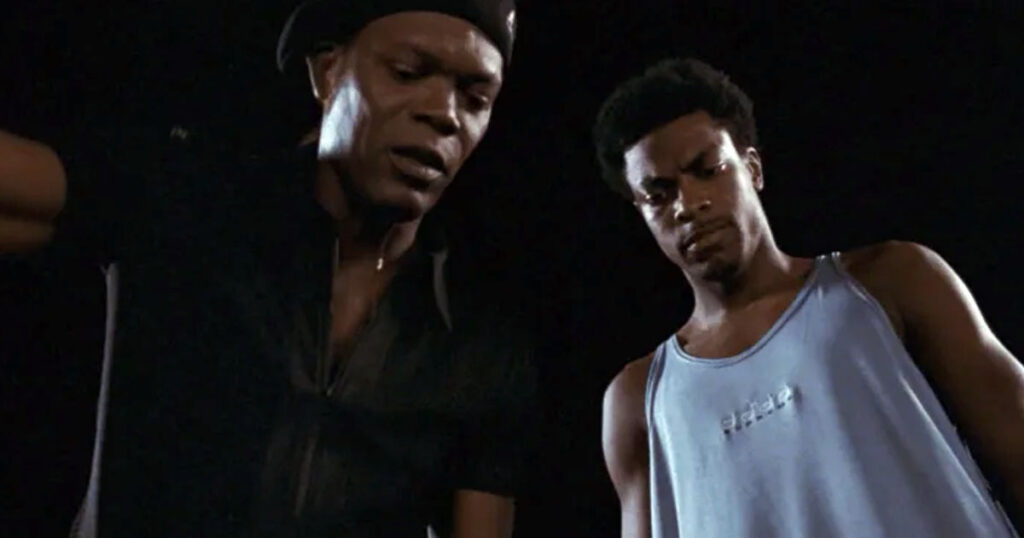
Here, the trunk shot is all about the money. Ordell Robbie (Samuel L. Jackson) opens the trunk to reveal the cash he so desperately wants. The audience is literally placed in the position of the loot. It highlights the driving force of the film: the pursuit of wealth at any cost.
Kill Bill: Vol. 1 (2003): The Aftermath

The Bride (Uma Thurman) throws Sofie Fatale (Julie Dreyfus) into the trunk of her car after brutally amputating her arm. When the trunk is opened later, it’s not to intimidate, but to interrogate. The shot emphasizes Sofie’s sheer terror and helplessness in the face of The Bride’s relentless quest for vengeance. It’s a chilling reminder of the consequences of crossing Beatrix Kiddo.
Death Proof (2007): The Vehicle as a Weapon

This is where things get interesting. In Death Proof, the car is the weapon. Stuntman Mike (Kurt Russell) uses his reinforced car to murder women. While there isn’t a traditional “trunk shot” looking up from the boot, the entire film is an exploration of the car as a space of violence and control, essentially expanding the psychological space of the trunk to encompass the entire vehicle. The claustrophobia and vulnerability are constant.
Inglourious Basterds (2009): A Twist on the Trope
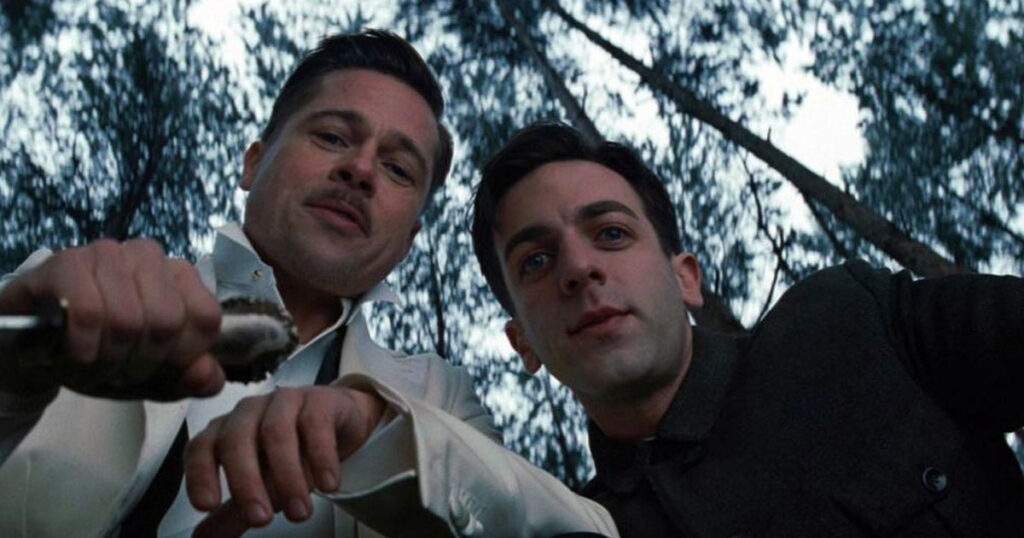
Tarantino playfully subverts expectations here. We see the Basterds, led by Aldo Raine (Brad Pitt), looking down at a captive Nazi. However, the camera isn’t in a trunk; it’s looking up from the ground, where the Nazi has just had a swastika carved into his forehead. The power dynamic is identical to a trunk shot, but the context is shifted, showing how Tarantino can adapt his visual grammar to fit different settings (in this case, WWII-era France where sedans were less common for body disposal).
Django Unchained (2012) and The Hateful Eight (2015): The Evolution Continues
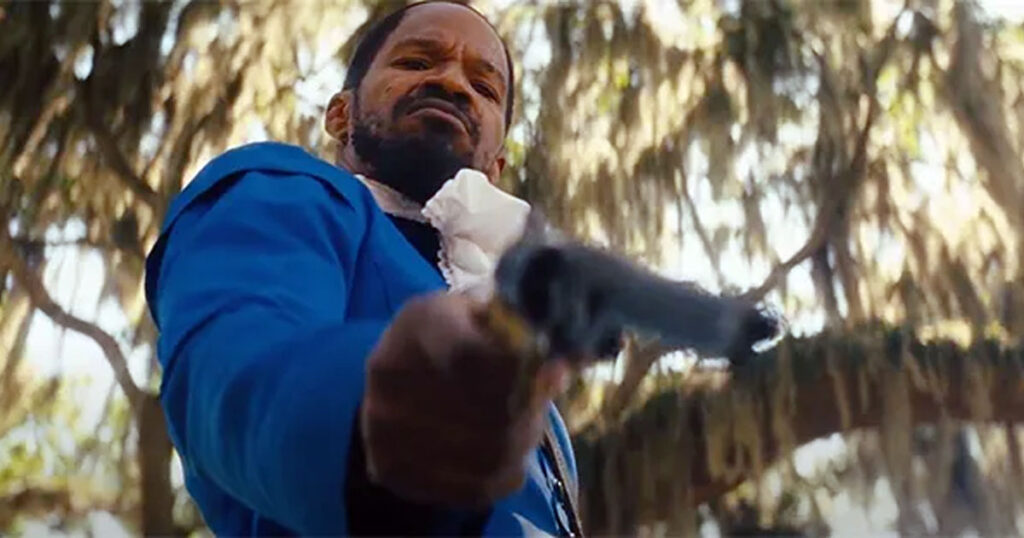
While these films lack cars with trunks, the feeling of the trunk shot remains. Tarantino often uses low angles to establish dominance. In The Hateful Eight, the cramped, claustrophobic setting of Minnie’s Haberdashery creates a similar tension to being trapped in a small space. The characters are confined, and the camera angles frequently emphasize power imbalances within that confined space.
Once Upon a Time in Hollywood (2019): The Notable Exception
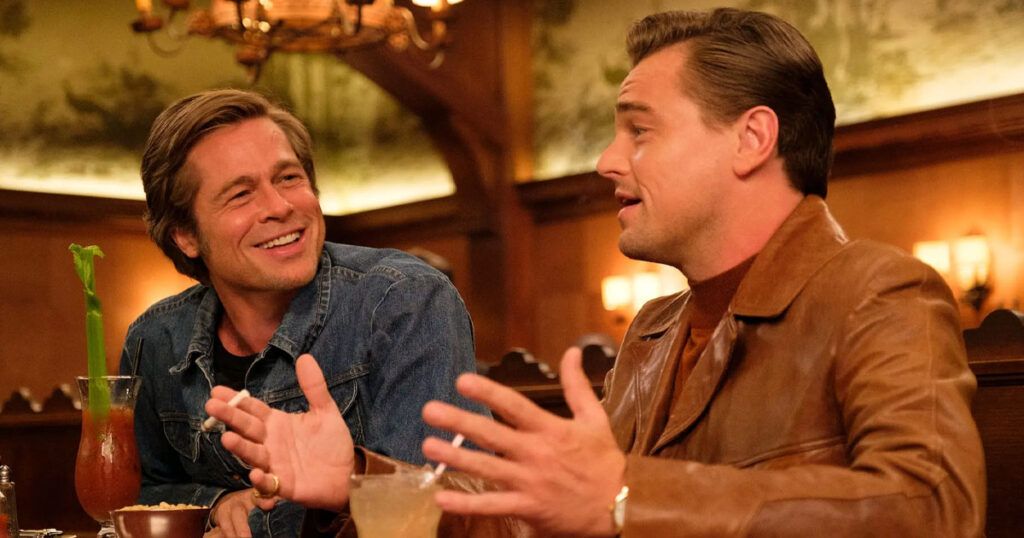
Interestingly, Once Upon a Time in Hollywood is one of the rare Tarantino films that actively avoids a traditional trunk shot. While cars play a massive role in the film’s 1969 Los Angeles aesthetic, and Cliff Booth (Brad Pitt) does retrieve a tire iron from a trunk at Spahn Ranch, Tarantino chooses not to use his signature low-angle forced perspective here. This restraint is telling; it shows his evolution as a filmmaker. He no longer feels the need to rely on his visual trademarks if they don’t serve the specific relaxed, atmospheric tone of the film. The absence of the shot becomes a statement in itself.
The Cultural Impact and Imitation
Tarantino’s trunk shot has transcended his own films. It has become a recognizable cinematic trope, parodied and paid homage to countless times in television shows, commercials, and other movies. When you see a low-angle shot from inside a confined space looking up at dominant figures, you immediately think, “Tarantino.”
This level of influence is rare. It speaks to the potency of the image. He managed to take a functional camera setup and turn it into a shorthand for a specific kind of cinematic cool, danger, and suspense. Directors like Edgar Wright, Robert Rodriguez, and even shows like Breaking Bad and The Simpsons have tipped their hats to this iconic framing.
Why the Trunk Shot Matters
In an era where much of cinema is heavily reliant on CGI and complex, kinetic camera movements, the trunk shot remains remarkably analog. It relies on forced perspective, physical space, and the raw presence of the actors.
It matters because it’s a perfect distillation of auteur theory. It shows how a director’s unique vision and recurrent choices shape the language of their films. For Tarantino, the trunk shot isn’t just a stylistic crutch; it’s a vital storytelling tool. It instantly communicates character relationships, ratchets up tension, and reminds the audience exactly whose world they are inhabiting.
It’s a testament to the idea that sometimes the most effective camera angle isn’t the most expansive or the most complex, but the one that puts the audience in the most uncomfortable, revealing position possible.
Conclusion: The Enduring Legacy of the View from the Boot
Quentin Tarantino’s trunk shot is more than just a cool camera angle; it’s a masterclass in visual storytelling. By consistently forcing the audience into a position of vulnerability or aligning us with the object of desire, he manipulates our emotional response with precision.
From the gritty alleyways of Reservoir Dogs to the sun-drenched streets of Pulp Fiction, the trunk shot has evolved, adapted, and cemented its place in film history. It is a signature as distinct as Hitchcock’s cameos or Kubrick’s one-point perspective. It’s a reminder that in the hands of a master filmmaker, even the darkest, most confined spaces can be illuminating. The next time you watch a Tarantino film, pay attention when that lid pops open—you’re not just looking at a shot; you’re looking at a piece of cinematic history.